
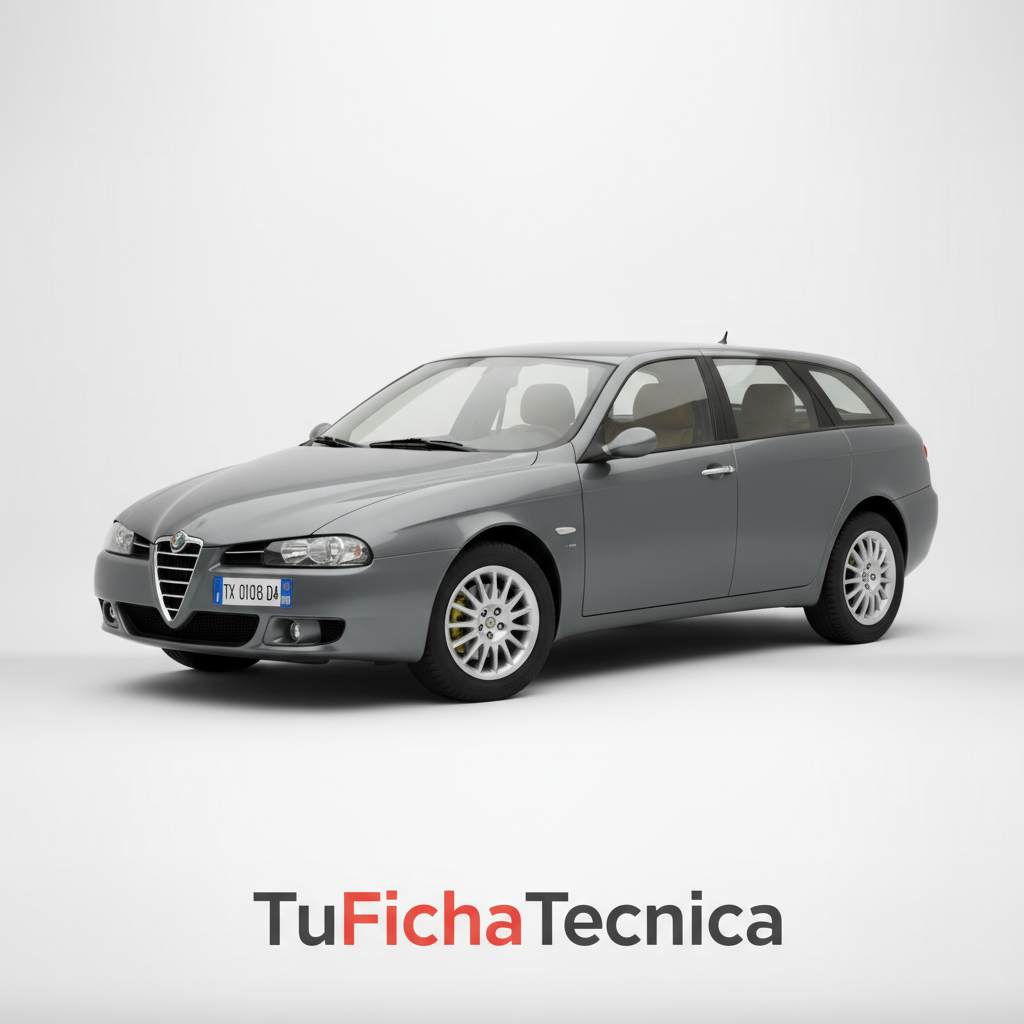
Especificaciones y análisis del Alfa Romeo 156
Power
166HP
Torque
206Nm
Consumption
8.9l/100
Emissions
-g/km
0-100 km/h
8.2s
Top Speed
220km/h
Weight
1410kg
Price
28,752€
Technical summary
Gasolina
Manual 5v
FWD
5 / 5 doors
360 L
63 L
122 kW
Current
Technical specifications
Engine
Capacities
Detailed analysis of the Alfa Romeo 156 Sportwagon 2.0 JTS 165 CV Distinctive (2003-2005)
General description
The Alfa Romeo 156 Sportwagon is not just an estate car, it's a statement of intent. Launched in its second phase in 2003, this model combines the practicality of a family body with the soul and 'cuore sportivo' that only Alfa Romeo knows how to imprint on its creations. It's a car that appeals directly to the heart, to those who refuse to sacrifice the passion for driving at the altar of space.
Driving experience
Getting behind the wheel of the 156 Sportwagon with the 166 hp 2.0 JTS engine is a visceral experience. The direct-injection engine pushes with contagious energy from low revs, delivering its 206 Nm of torque in a linear and addictive way. The precise and communicative steering connects you directly to the asphalt, while the chassis, with its sophisticated double-wishbone front suspension, carves through curves with an agility and poise that make you forget you're driving an estate. The sound of the engine as it revs is pure Italian melody.
Design and aesthetics
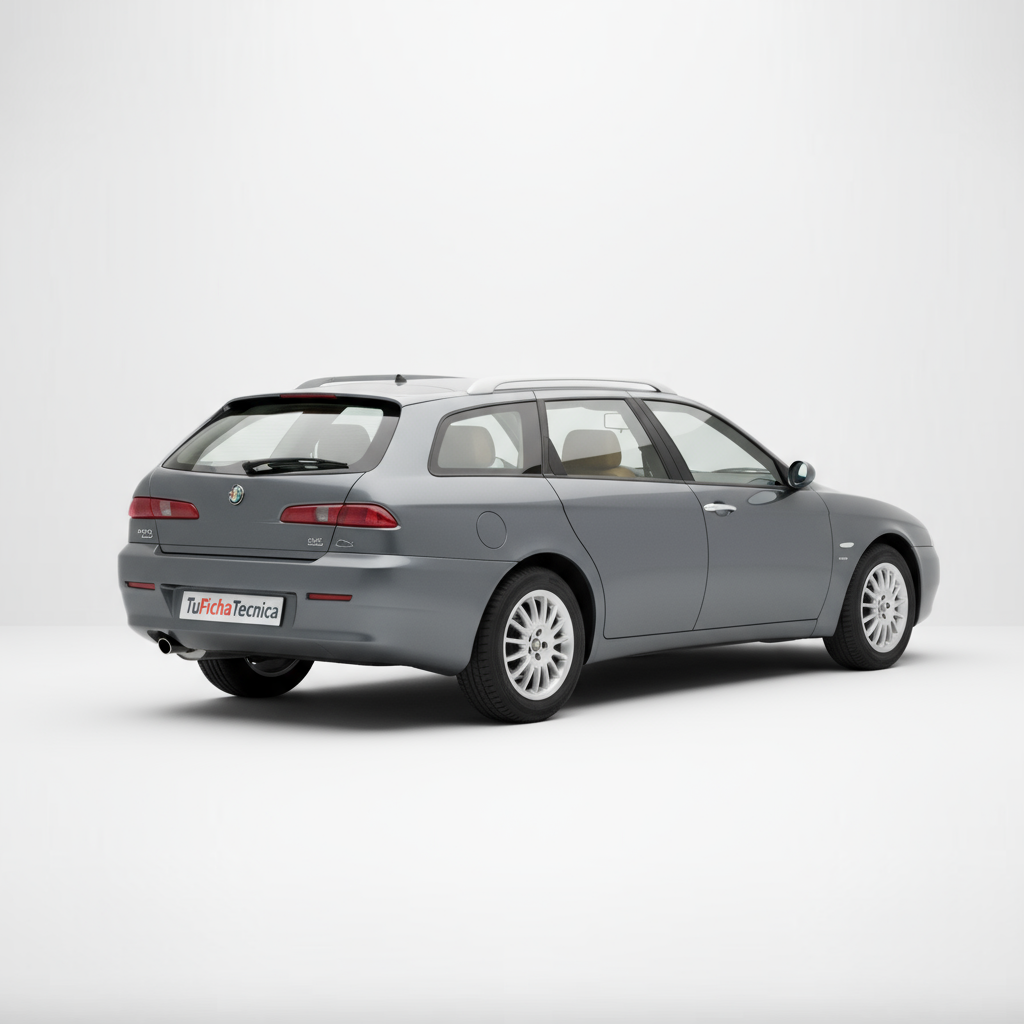
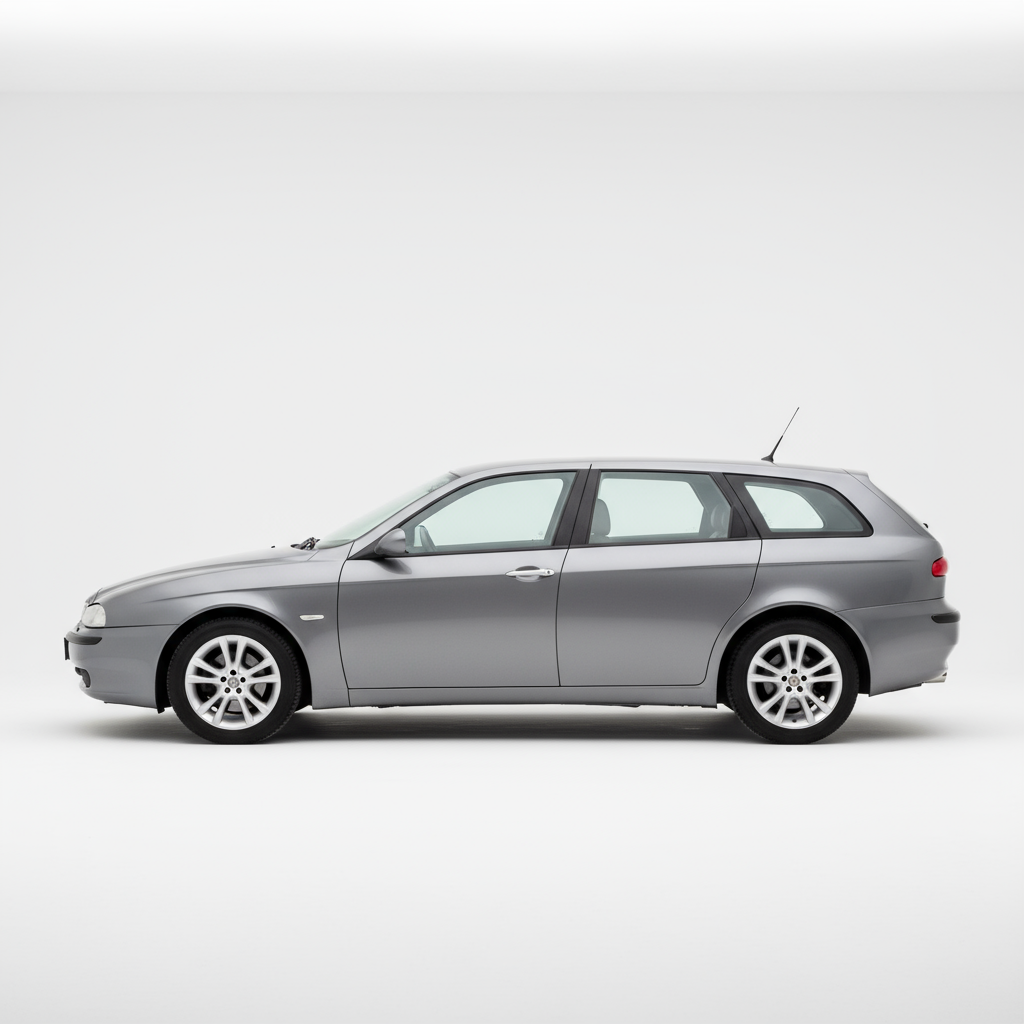
The design of the 156 Sportwagon, refined by Giugiaro in this phase, is a work of art on wheels. Every line flows with timeless elegance and sportiness. The rear handle hidden in the C-pillar, an iconic feature, gives it a coupé profile, deceiving the eye and the heart. The sharp front end, with the classic 'scudetto' grille, gives it an aggressive and magnetic look. It is a car that, even today, turns heads and elicits sighs.
Technology and features
Under its Italian-designed skin, the 156 Sportwagon 2.0 JTS housed advanced technology for its time. It was one of the first mass-produced gasoline engines to incorporate direct injection (Jet Thrust Stoichiometric), seeking a balance between performance and efficiency. Although its combined consumption of 8.9 l/100km is not low by today's standards, at the time it represented an effort to modernize the mechanics. The chassis, with its elaborate front suspension, was a clear example of Alfa Romeo's focus on driving dynamics.
Competition
In its heyday, the Alfa Romeo 156 Sportwagon faced the German titans of the segment, such as the BMW 3 Series Touring and the Audi A4 Avant. While its rivals stood out for their build quality and sobriety, the Alfa offered a different soul, an unmistakable Latin character. It competed not only in space or performance, but in emotion. It was the alternative for those looking for a car with personality and a driving experience that prioritized pure sensations.
Conclusion
The Alfa Romeo 156 Sportwagon 2.0 JTS is much more than a used car; it is a piece of automotive history with immense character. It represents an era when design and passion for driving could define a family car. Despite its quirks and a reliability that demands attention, the emotional rewards it offers are incalculable. It is a future classic, a car to be driven and felt, an Italian jewel that continues to beat strongly.