
Can you imagine saving more than ever in 2026 while traveling without limits around the city? Eco-label cars will be the key to moving without restrictions and reducing daily expenses. In this article, we help you find the perfect model for your budget and lifestyle. You will discover what the ECO label is, why it is essential for savings and urban mobility, the advantages it offers, how to choose wisely, and an analysis of the 7 best models to truly save. Get ready to compare and choose your next efficient car!
What is the ECO label and why is it important in 2026?
Are you wondering why more and more people are looking for eco-label cars for 2026? This distinction has become the key to moving without limits around the city, saving daily, and betting on more sustainable mobility. Understanding how it works and what advantages it offers will help you choose the model that best suits your needs and budget.
Definition and requirements of the ECO label
The ECO label is an environmental badge granted by the DGT that identifies the most environmentally friendly eco-label cars, such as hybrids, micro-hybrids, and bifuel models (LPG or CNG). To obtain it, vehicles must comply with Euro 4 gasoline and Euro 6 diesel standards, guaranteeing low emissions.
Unlike the ZERO label, reserved for pure electric or plug-in hybrids with extended range, and the C or B labels, the ECO offers an ideal balance between sustainability and practicality. Examples of eco-label cars include non-plug-in hybrids like the Toyota Yaris, mild-hybrids like the Seat León eTSI, and bifuel like the Dacia Sandero ECO-G.
Regulations will continue evolving in 2026, with stricter emission requirements and possible inclusion of new engine types. If you want to compare specifications between models and versions, you can easily do so at the ECO Label Cars Comparison.
Advantages of having an ECO label car
Owning an eco-label car provides real benefits in daily life, especially in large cities.
- Free access to low emission zones (LEZ), even on high pollution days.
- Reduction or exemption from circulation tax and discounts on regulated parking.
- Permission to drive when other vehicles face restrictions.
- Use of BUS-HOV lanes on certain roads, saving travel time.
- Access to subsidies and aids, such as the Moves Plan, which reduce purchase costs.
These advantages make eco-label cars an attractive and profitable option for those seeking mobility without limits or financial surprises.
Market trends and demand in 2026
The market for eco-label cars is booming, and forecasts for 2026 are very positive. Each year, sales of hybrids and mild-hybrids grow, driven by urban restrictions and environmental awareness.
In Spain, registrations of these models have recently broken records, and more cities are expected to adopt LEZs, increasing demand. Consumers increasingly value sustainable mobility and the economic benefits offered by eco-label cars, positioning them as market leaders.
Statistics show that preference for these vehicles is rising, reflecting a shift in drivers’ perceptions and priorities.
How the ECO label helps save money
Choosing eco-label cars is a smart decision for your finances. These vehicles stand out for their low consumption and lower maintenance costs compared to traditional models.
For example, annual fuel savings can exceed 400 euros compared to a conventional car, and servicing costs are usually lower. Additionally, advantages in leasing and the second-hand market help eco-label cars retain their value over time.
In cities like Madrid or Barcelona, savings are even greater thanks to parking discounts and freedom to drive under any circumstance. Choosing eco-label cars means betting on savings and peace of mind in 2026.
Criteria to choose the best ECO car to save money in 2026
Choosing among different eco-label cars may seem challenging, but with the right criteria, the process becomes much simpler and more effective. Analyzing each aspect will allow you to find the model that fits your budget and daily life. Here we help break down the key points so you can make an informed decision.
Consumption and energy efficiency
Consumption is one of the most important factors when comparing eco-label cars. Pay attention to the official combined consumption under the WLTP cycle, as this figure reflects real-world fuel use on different types of trips.
There are notable differences between full hybrids, mild-hybrids, bifuel, and plug-in hybrids. For example, full hybrids usually offer lower consumption, especially in city driving. Models like the Toyota Yaris Hybrid or Hyundai Ioniq stand out for their efficiency, translating into lower annual fuel costs.
Driving style and trip type (urban, interurban, or highway) influence actual consumption. Mainly urban use favors hybrid models. Comparing annual fuel costs among different eco-label cars can help visualize long-term savings.
Purchase price and value for money
The initial price is key, but you should also analyze value for money. Many eco-label cars have attractive offers thanks to public aids like the Moves Plan, reducing acquisition costs.
Consider financing or leasing costs, and don’t forget resale value, as some models retain their price better over time. Standard equipment can make a difference, especially if it includes features that contribute to savings, such as ECO driving modes or advanced infotainment systems.
According to the analysis of the best-selling ECO label cars in Spain, the most demanded models stand out for their balance between price, equipment, and efficiency, helping maximize savings.
Technology and equipment for savings
Technology makes a difference in eco-label cars. Systems like regenerative braking or energy recovery during driving help reduce consumption and extend vehicle life.
Many models include ECO driving modes and efficiency assistants that optimize every trip. Additionally, connectivity and specific apps allow real-time consumption monitoring, facilitating decisions to save more.
Safety and comfort equipment also influence daily costs. Innovations like intelligent climate control or efficient electric energy management have become common in 2026 models, improving experience and savings in eco-label cars.
Intended use and driver needs
The intended use of the vehicle defines which eco-label cars are most suitable for you. If you mainly drive in the city, a compact and agile model will be ideal, while for long or family trips, look for more space and autonomy.
Trunk capacity, seat modularity, and charging ease (for plug-in hybrids) are aspects to consider. Maintenance and servicing costs tend to be lower in hybrid and mild-hybrid models compared to traditional ones.
Analyze examples of eco-label cars adapted to different profiles: from urban like the Toyota Aygo X, to family cars like the Renault Arkana. This way, you can choose the model that best fits your needs and maximizes your savings.
7 Best Eco-Label Cars in 2026 to Save Money
Are you thinking about changing your car and looking for the best eco-label cars to save money in 2026? You’re in the right place! We have analyzed the most outstanding models, comparing prices, consumption, advantages, and usage profiles. This way, you can choose the model that best suits your daily life and budget. Remember that eco-label cars not only mean economic savings but also greater freedom to drive in cities and fewer worries about restrictions.
Below, we present the definitive ranking with the 7 best eco-label cars so your next purchase is a total success.
Toyota Yaris Hybrid
If you seek efficiency and reliability, the Toyota Yaris Hybrid is one of the most recommended eco-label cars for 2026. This model stands out for its low official consumption of only 3.8 l/100 km and its self-charging hybrid 116 HP engine, perfect for city driving and daily trips without worrying about recharging batteries.
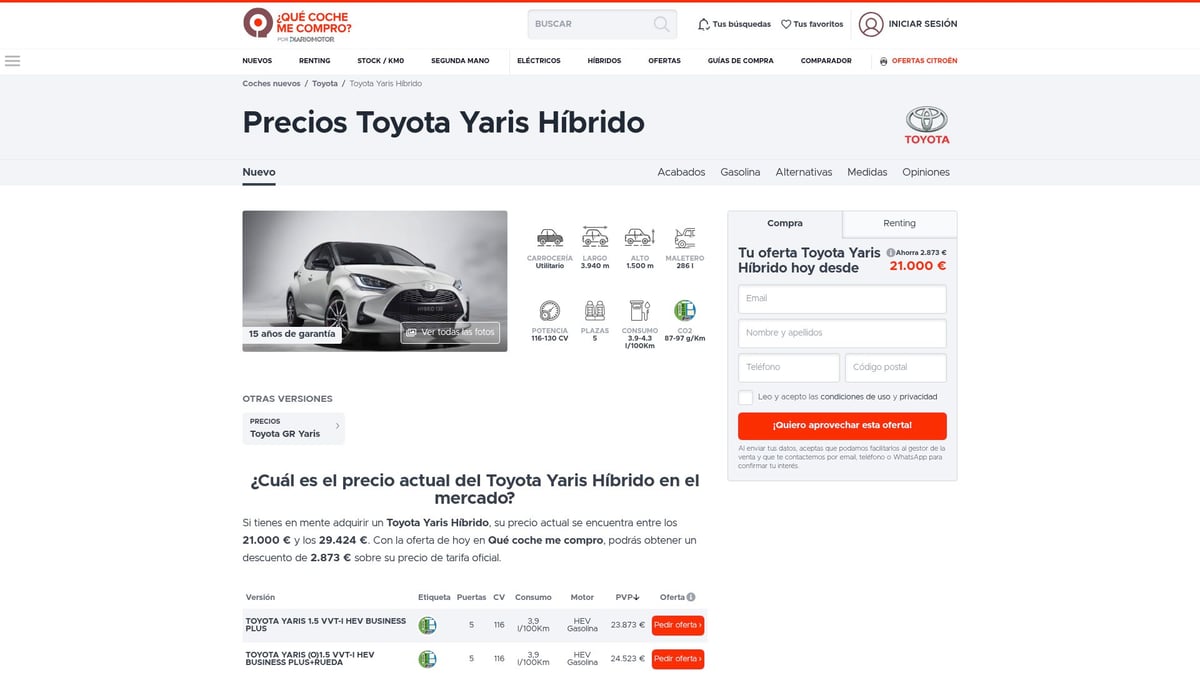
Among the main advantages of this eco-label car are its economical maintenance, Toyota’s warranty of up to 15 years, and advanced hybrid technology that ensures smooth and efficient operation. Additionally, its compact size facilitates parking and urban mobility, two key points for those looking to save time and money daily.
Pros and cons of the Toyota Yaris Hybrid:
| Pros | Cons |
|---|---|
| 15-year warranty | Noisy CVT during acceleration |
| Very economical maintenance | Slightly tight cabin space |
| Very low consumption |
This model competes directly with other eco-label cars like the Renault Clio and Peugeot 208 but stands out for its reliability and running costs. If you prefer a hassle-free car with great saving potential, the Yaris Hybrid is a safe bet for 2026.
Renault Arkana E-Tech Full Hybrid
The Renault Arkana E-Tech Full Hybrid represents one of the best eco-label car options for families seeking space, style, and efficiency. This coupe SUV combines attractive design with a spacious trunk and a 143 HP hybrid engine, achieving consumption from 4.7 l/100 km.
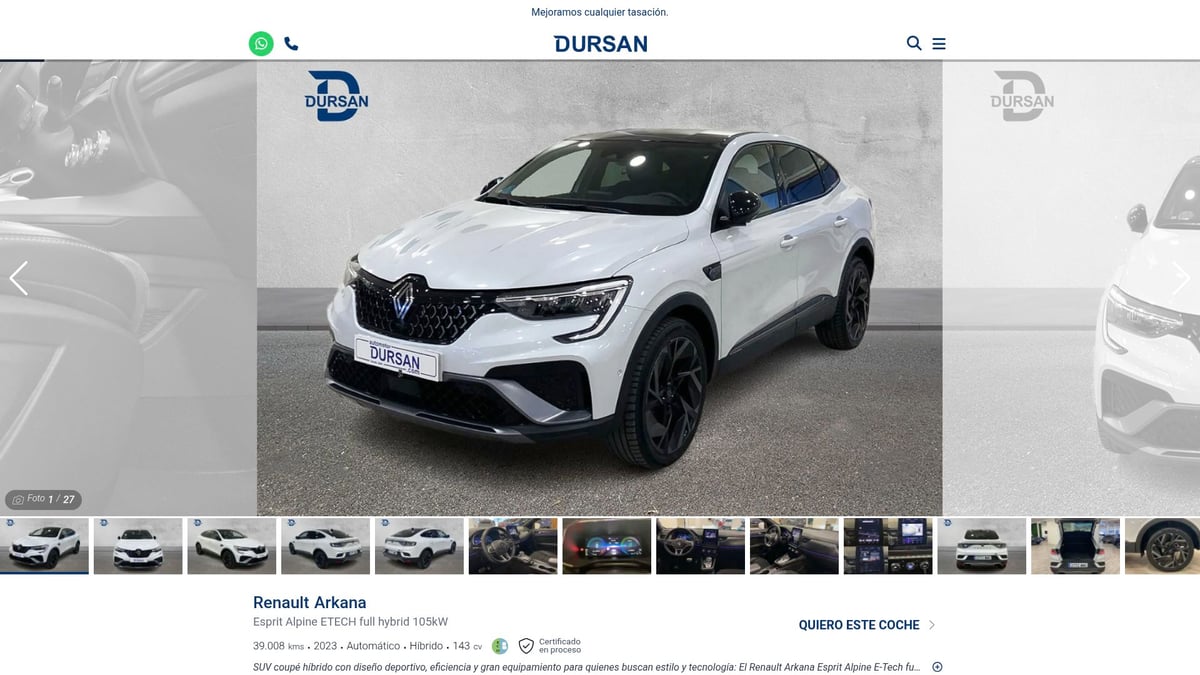
It stands out for its technological equipment and sporty aesthetics, offering low real consumption in mixed driving. The estimated price is around €25,490 in the 2023 second-hand market, making this model a competitive alternative against other hybrid SUVs like the Toyota C-HR or Kia Niro.
Comparison table: Renault Arkana vs rivals
| Model | Consumption (l/100km) | Trunk (L) | Power (HP) | Price (€) |
|---|---|---|---|---|
| Renault Arkana | 4.7 | 513 | 143 | 25,490 |
| Toyota C-HR | 4.9 | 358 | 140 | 26,000 |
| Kia Niro | 4.6 | 451 | 141 | 24,800 |
Among the cons, there is somewhat limited rear visibility and a slightly higher price than compact cars. However, its eco-label guarantees tax benefits and LEZ access. If you want to compare more Renault alternatives, you can check the full list of Renault ECO Cars.
Hyundai Ioniq Hybrid
The Hyundai Ioniq Hybrid positions itself as one of the most efficient sedans among eco-label cars. Its combined consumption from 4.1 l/100 km and 141 HP hybrid engine make it ideal for those seeking a versatile car for city and highway.
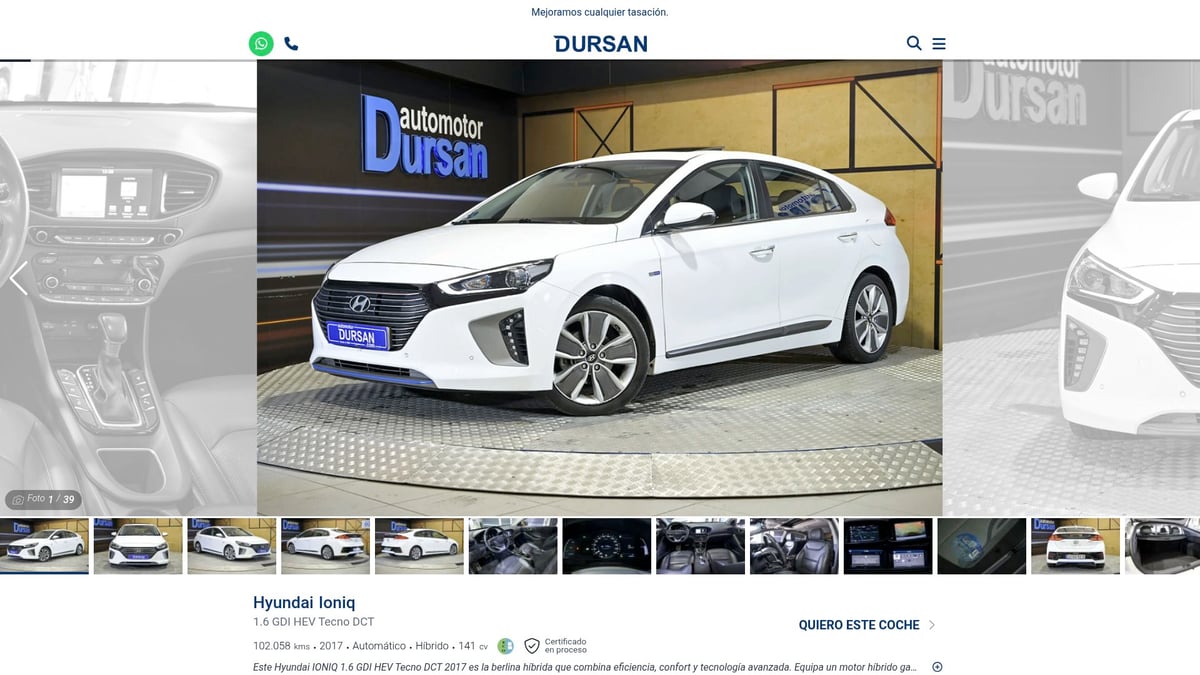
This model stands out for its large trunk, reliability, and very contained maintenance cost. Additionally, its equipment is quite complete, even in second-hand versions, increasing its value against rivals like the Toyota Prius and Kia Niro.
Key advantages of the Hyundai Ioniq Hybrid:
- Low real consumption and eco-label
- Excellent value for money in the used market
- Good habitability and spacious trunk
As cons, its design is less striking and it has fewer technological updates compared to newer models. However, if you want to save and have a reliable eco-label car for all types of trips, the Ioniq Hybrid is a very smart and accessible option.
Seat León 1.5 eTSI (Mild Hybrid)
The Seat León 1.5 eTSI is one of the most balanced compact cars among eco-label cars. Thanks to its mild-hybrid technology, this model offers agile and efficient driving, with combined consumption from 5.3 l/100 km and a powerful 150 HP gasoline engine.
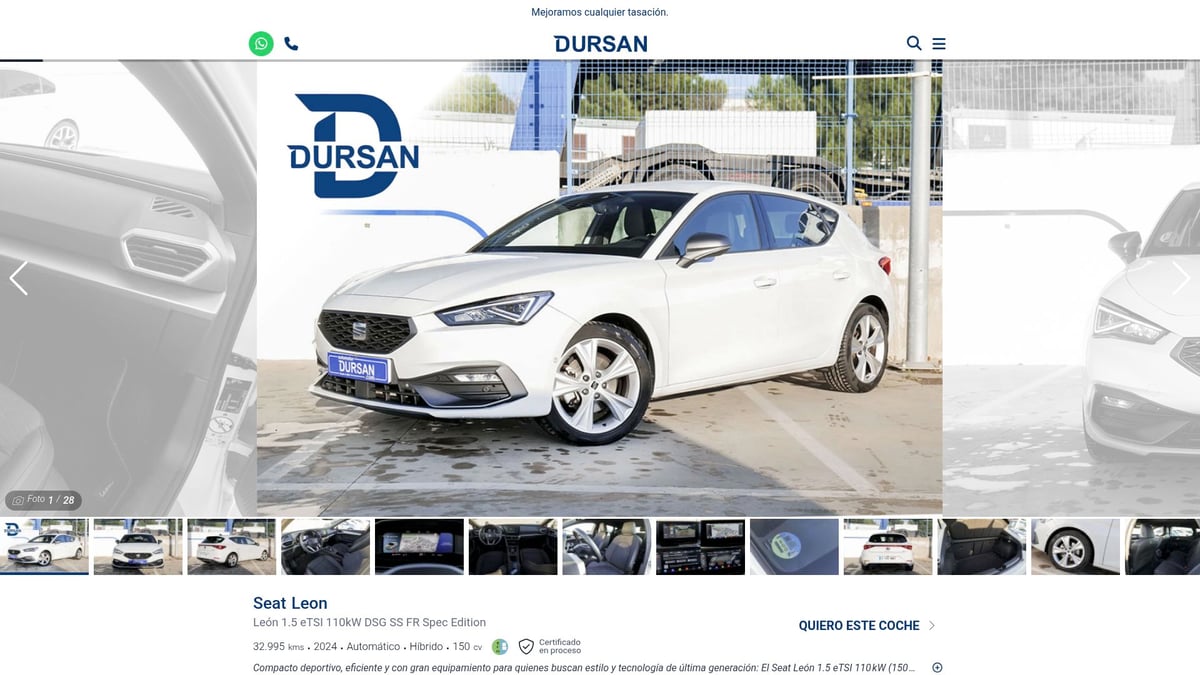
This eco-label car stands out for its FR equipment, 7-speed DSG gearbox, and good resale value. It is perfect for those seeking sportiness and efficiency without plugging in.
Pros and cons of the Seat León 1.5 eTSI:
| Pros | Cons |
|---|---|
| Latest generation technology | Slightly higher consumption than hybrids |
| Good resale value | Tight rear space |
| Eco-label and agile driving |
If you want a well-equipped compact with an eco-label to save on fuel and maintenance, the León eTSI is one of the best alternatives against models like the Ford Focus EcoBoost Hybrid.
Lexus NX 300h
The Lexus NX 300h is the premium option among eco-label cars. With combined consumption from 5.8 l/100 km and a 197 HP hybrid engine, it combines luxury, efficiency, and eco-label, allowing access to all tax and mobility benefits.
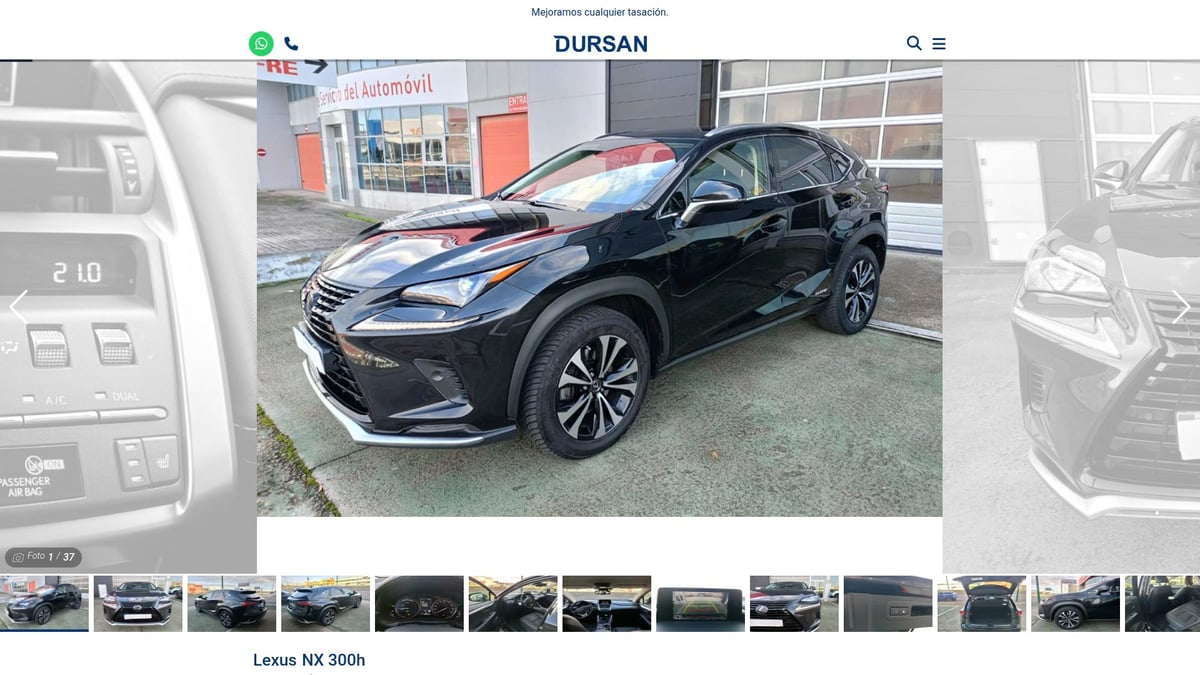
This SUV is ideal for those seeking a spacious, comfortable car with high-end equipment. Its finish quality and Lexus reliability reputation place it as a benchmark among hybrid SUVs. Its strengths include ride comfort, safety equipment, and exclusive design.
Comparison table: Lexus NX 300h vs rivals
| Model | Consumption (l/100km) | Power (HP) | Drive | Price (€) |
|---|---|---|---|---|
| Lexus NX 300h | 5.8 | 197 | Front/All-wheel | 24,690 |
| Toyota RAV4 Hybrid | 5.5 | 218 | All-wheel | 27,000 |
| BMW X3 mild-hybrid | 6.2 | 184 | All-wheel | 32,000 |
Cons include higher maintenance costs than average and size that may hinder city use. If you want to explore the full range of Lexus eco-label cars, check out Lexus ECO Models.
Audi Q3 Sportback 35 TFSI Mild Hybrid
The Audi Q3 Sportback 35 TFSI Mild Hybrid is the perfect choice for those seeking image, technology, and unrestricted mobility. Among eco-label cars, this coupe SUV stands out for its premium design and 48V mild-hybrid system, paired with a 150 HP gasoline engine and consumption from 6.4 l/100 km.
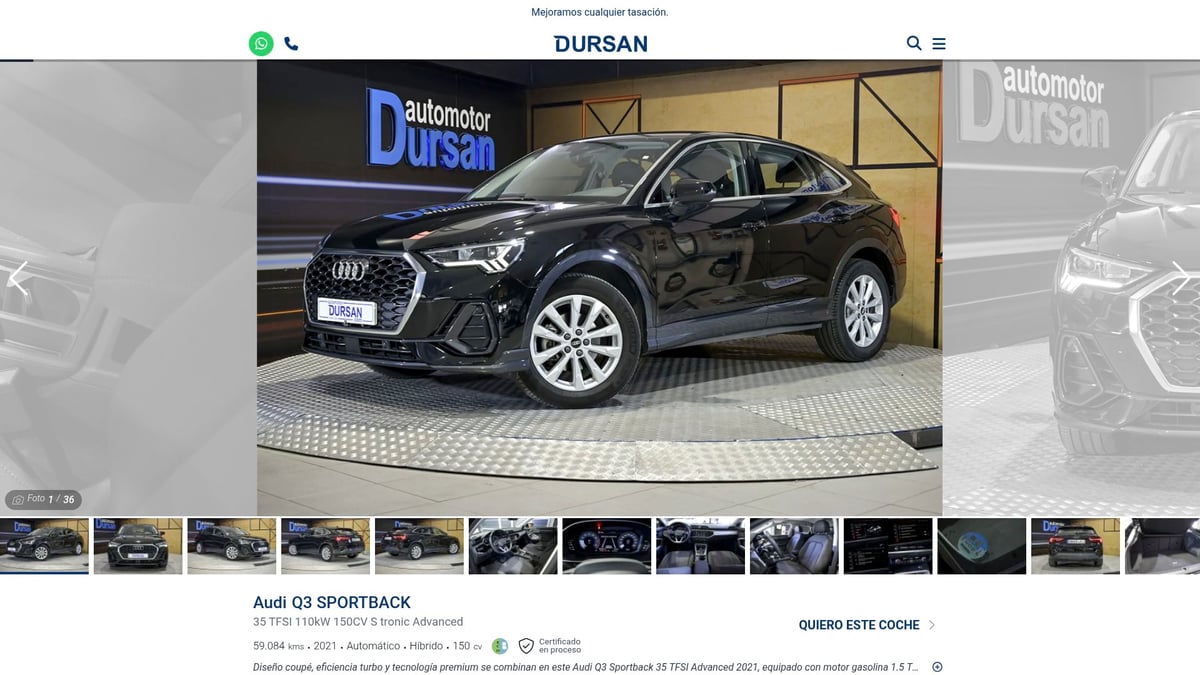
Its strengths include advanced equipment, spacious trunk, and Audi-level ride comfort. It is ideal for those who value technology and flexible use in urban environments and long trips.
Advantages and disadvantages of the Audi Q3 Sportback:
- Attractive and exclusive coupe design
- Eco-label for LEZ access and tax benefits
- High price compared to full hybrids
- Higher consumption than other eco-label cars
Compared to the BMW X2 or Mercedes GLA mild-hybrids, the Q3 Sportback positions as a premium alternative, though with a higher price. If you want an SUV with image and eco-label, it is an option to consider in 2026.
Toyota Aygo X Hybrid
The Toyota Aygo X Hybrid is the most urban of the eco-label cars in the ranking. Its combined consumption from 4.8 l/100 km, compact dimensions, and hybrid engine make it the ideal companion for moving around the city without worrying about parking or restrictions.

Among its main advantages are low maintenance cost, Toyota warranty, and agility for driving and parking in urban environments. It is perfect for those seeking affordable, efficient mobility with an eco-label.
Quick comparison: Aygo X vs urban rivals
| Model | Consumption (l/100km) | Power (HP) | Price (€) |
|---|---|---|---|
| Toyota Aygo X | 4.8 | 72 | 19,100 |
| Fiat Panda Hybrid | 4.9 | 70 | 15,500 |
| Dacia Sandero ECO-G | 5.4 | 100 | 13,700 |
Its main downside is reduced interior space and lower power for long trips. However, among eco-label cars, it is one of the most economical and practical for daily city use.
Have you already decided your favorite? Remember that eco-label cars not only help you save but also make city life easier and care for the environment. Analyze your needs and compare well before deciding.
Compare specifications and versions with TuFichaTecnica
Do you want to easily compare the best eco-label cars on the market? With TuFichaTecnica, you can consult technical sheets, prices, consumption, and versions all in one place, hassle-free.
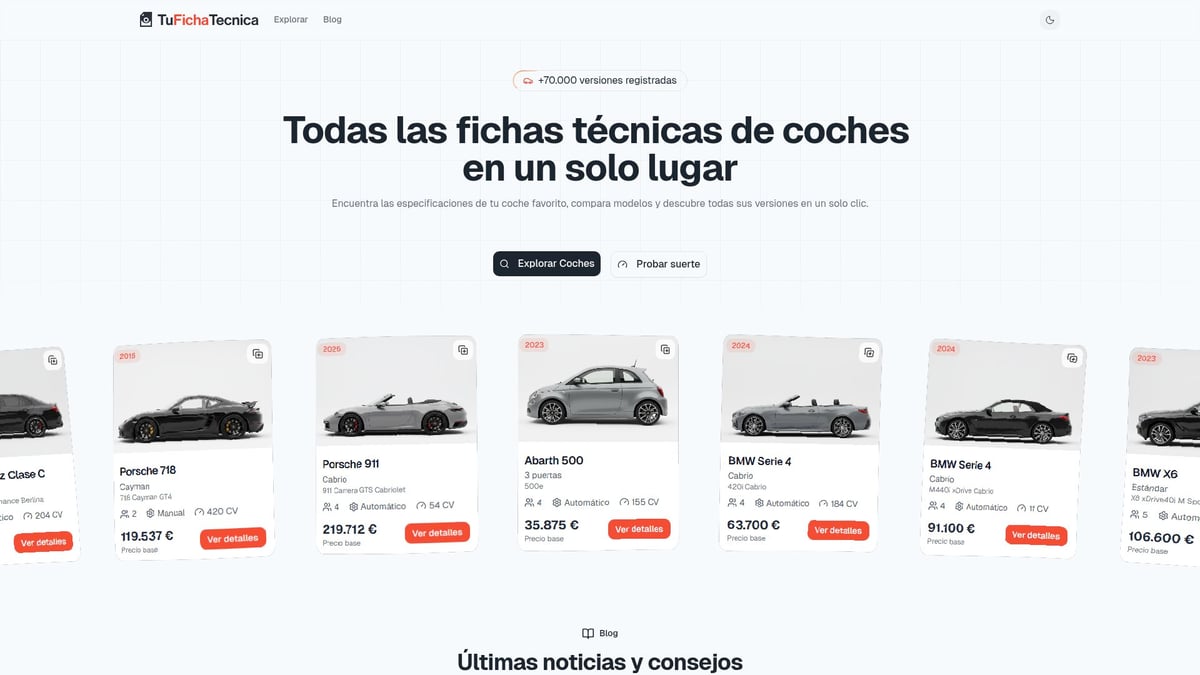
The platform allows you to analyze and compare the 7 highlighted models in this ranking, as well as explore alternatives and configurations for every need. You have access to comparison tools, detailed analyses, and a blog with always updated rankings and guides.
Thanks to its focus on sustainable mobility, you can discover leading brands in the ECO label, such as Hyundai, with its guide to hybrid and ECO brands available to delve even deeper into the segment. Thus, making informed decisions about eco-label cars is much easier, faster, and free, with no registration required. Additionally, expert support is available to resolve any doubts.
After reviewing together the best ECO label cars to save money in 2026, you surely have some models in mind that fit what you’re looking for. Remember that every detail counts: from consumption and price to equipment and comfort for your daily life. If you would like to easily compare specifications or discover all versions of your favorites, I invite you to do it together. It’s simple, fast, and hassle-free. This way, making the best decision will be much easier for you and for all of us who bet on efficient mobility.
Check your favorite cars