

Are you wondering if choosing a gasoline car in 2025 is still a good decision? Although electric and hybrid vehicles are advancing strongly, the gasoline car maintains its prominence due to its versatility, price, and range.
In this article, you will discover the 7 best gasoline car options for those seeking performance, efficiency, and the best price this year. We will analyze outstanding models, their advantages, prices, and who they are ideal for.
We offer technical data, comparisons, and practical advice so you can choose the model that best suits your needs. If you want to make an informed decision and feel confident when buying your next car, keep reading!
Gasoline Car Market Trends in 2025
The gasoline car market in 2025 is undergoing a significant transformation but continues to maintain its relevance. Although electric and hybrid vehicles are gaining ground, many drivers still prefer gasoline cars for their balance between price, range, and ease of use. We analyze how demand is evolving, innovations in engines, and key factors to make the best purchase decision this year.
Evolution of Gasoline Car Demand
In 2025, the demand for gasoline cars remains significant thanks to several factors. Despite the advance of electric vehicles, charging infrastructure is still limited in many regions. This makes gasoline cars the preferred option for those who need autonomy and quick refueling.
The lower initial price and the wide range of compact and urban SUVs also contribute to their popularity. According to recent data, gasoline cars maintain a relevant market share, especially in the used car market and urban segments. In Spain and Latin America, consumer perception is evolving towards greater environmental awareness, but many still value the flexibility and affordable cost of gasoline cars.
Forecasts indicate that, although market share will slightly decrease, gasoline cars will continue to be prominent in key segments. Users who travel long distances or live in rural areas are the ones who most rely on this type of vehicle.
Technological Innovations in Gasoline Engines
Gasoline car technology has advanced significantly in recent years. Manufacturers have introduced improvements to increase efficiency and reduce emissions, responding to environmental demands. Mild hybrid technology (MHEV), turbocharging, and systems like start&stop are now common in the latest models.
These innovations allow gasoline cars to offer lower consumption and emissions that comply with current regulations. For example, engine downsizing manages to maintain good performance with smaller displacements. ECO and C labels facilitate access to urban areas, expanding usage possibilities.
If you are interested in delving deeper into these advances, you can check this analysis on Innovations in Gasoline Engines 2025, which explains the technological trends transforming the sector.
Key Factors When Choosing a Gasoline Car in 2025
When choosing a gasoline car in 2025, it is essential to consider several aspects. Real consumption, maintenance cost, and model reliability make a big difference day to day. The purchase price is usually more competitive than that of electric or hybrid cars, which helps many drivers decide on this technology.
Resale value and depreciation are also relevant, especially in the second-hand market. Additionally, the environmental label influences access to urban areas and possible tax benefits or available subsidies. Before deciding, it is advisable to compare options and analyze which best fits your needs and budget.
Why Choose a Gasoline Car in 2025?
Choosing a gasoline car in 2025 remains a smart decision for many drivers despite the advance of electric and hybrid vehicles. Wondering why this technology continues to be relevant? Let's discover it together by analyzing its advantages, disadvantages, and who it is really best for.
Advantages Compared to Other Technologies
Gasoline cars offer clear advantages compared to options like electric or hybrid vehicles. Their greater range allows long-distance travel without worrying about recharging. Refueling is quick and easy since gas stations are available almost everywhere. Also, the initial cost of a gasoline car is usually lower, making the investment more accessible.
Maintenance is another strong point, as workshops specialized in gasoline cars are well established and repairs tend to be less expensive. The reliability of current engines has improved notably, providing peace of mind to those seeking a durable vehicle for daily use or long trips.
For example, those living in rural areas or frequently traveling by road still find gasoline cars a practical and efficient solution.
Disadvantages and Limitations
Not everything is perfect when talking about gasoline cars. In large cities like Madrid or Barcelona, there are access restrictions for certain models, which can limit urban mobility. Also, the energy efficiency of a gasoline car is lower compared to a pure electric, especially on short and urban trips.
The future of emission regulations also poses challenges. It is likely that in the coming years, requirements will become stricter, which could affect resale value. Fuel prices are another factor to consider, as they can vary and increase long-term expenses.
In some cases, such as for those who only drive in the city or have easy access to charging, a hybrid or electric vehicle may be a better alternative.
Ideal Buyer Profile for a Gasoline Car
Who should bet on a gasoline car in 2025? Mainly drivers who prioritize price, versatility, and range. Families who take long trips, young people looking for their first vehicle, or professionals who need to cover varied distances will find gasoline cars a balanced option.
It is also ideal for those who value compact, urban, or sporty models with a competitive price. If you need to compare specifications and prices, the Gasoline Car Comparator will help you find the model that best suits your needs.
In summary, gasoline cars remain a solid alternative for many profiles thanks to their balance between performance, cost, and ease of use.
7 Best Gasoline Car Options in 2025
Choosing the best gasoline car in 2025 can be a challenging task, but here we help you make the ideal decision. We analyze outstanding models, their advantages, prices, and who they are perfect for. Ready to discover your next gasoline car?
Kia Ceed 1.5 MHEV (140HP) DCT Drive
The Kia Ceed 1.5 MHEV is one of the most balanced bets in the gasoline car segment this year. Its 140HP mild hybrid engine offers optimal power and reduced consumption, ideal for those seeking efficiency without giving up driving pleasure. The ECO label not only facilitates access to restricted urban areas but also provides peace of mind regarding future regulations.
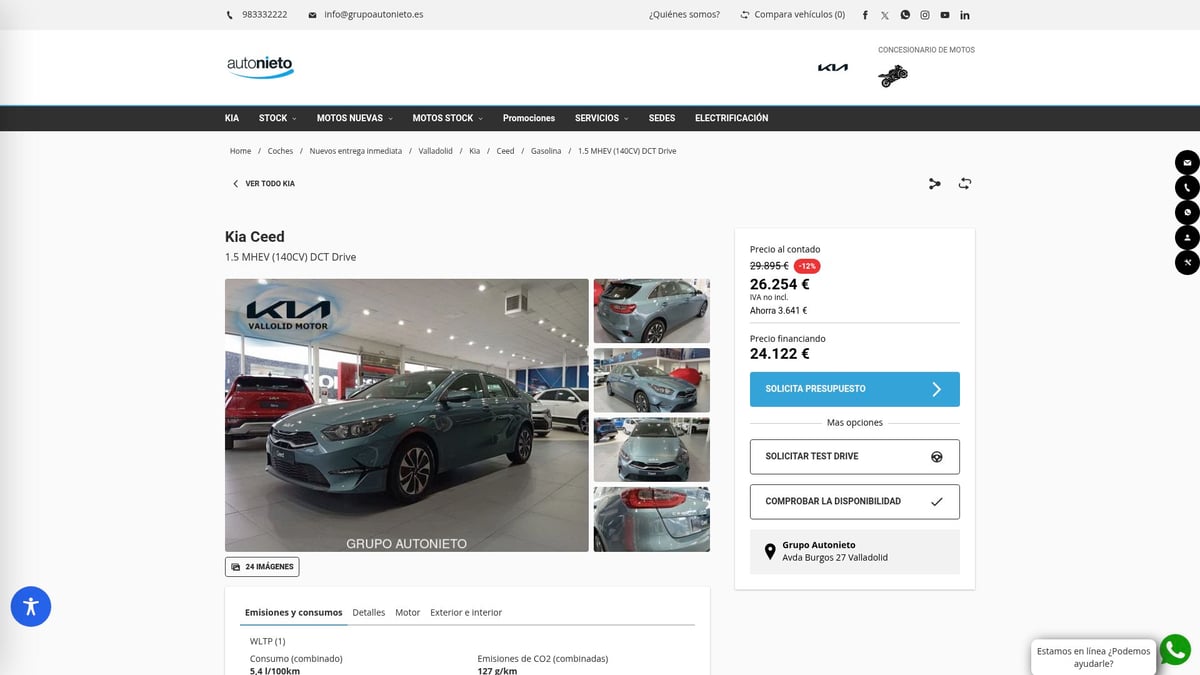
Its strong points include the DCT automatic transmission, which guarantees smooth driving. Additionally, it comes equipped with driving assistants and state-of-the-art technology, making it very attractive for young families and urban users. The price, from €24,122 financed, positions it as a competitive option against other similar gasoline cars.
Pros:
- Balance between power, consumption, and technology.
- Good value for money.
- ECO label.
Cons:
- Trunk space somewhat limited compared to rivals.
This model is perfect for those looking for an efficient, modern gasoline car with advanced equipment. If you are interested in exploring more options from this brand, you can check the Kia gasoline models list 2025 and compare different alternatives.
SEAT Ateca 1.0 TSI 81kW Style XL
The SEAT Ateca is a compact SUV that has adapted well to the needs of those seeking a versatile and economical gasoline car in 2025. Its 1.0 TSI turbo engine with 110HP offers more than enough performance for daily use, combining low consumption and agile driving both in the city and on the road.
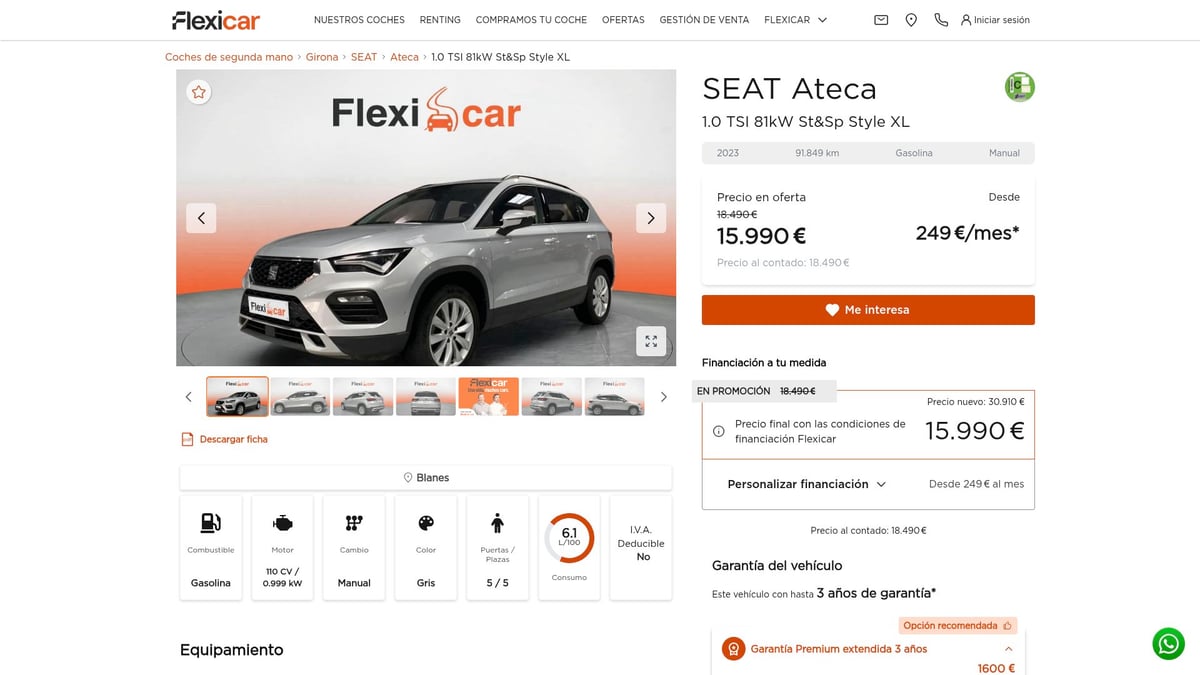
The used price, from €15,990, makes it one of the most attractive alternatives for families or drivers who prioritize interior space and safety. The C label allows access to most cities, although it is important to consider consumption under intensive use.
Pros:
- Good value for money.
- Complete equipment.
- Attractive SUV design.
Cons:
- Higher consumption under intensive use.
- Entry-level version limited in power.
The SEAT Ateca is ideal for those who want a spacious, reliable gasoline car with good presence. If you want to discover more options from this manufacturer, visit the current SEAT gasoline range and find the model that best suits you.
Renault Clio Limited Energy TCe 90
The Renault Clio is a classic among urban gasoline cars. Its 90HP turbo engine and low consumption, around 5 l/100km, make it ideal for daily commutes and short trips. The used price, from €7,990, makes it a very accessible option, especially for young people and those looking for their first car.
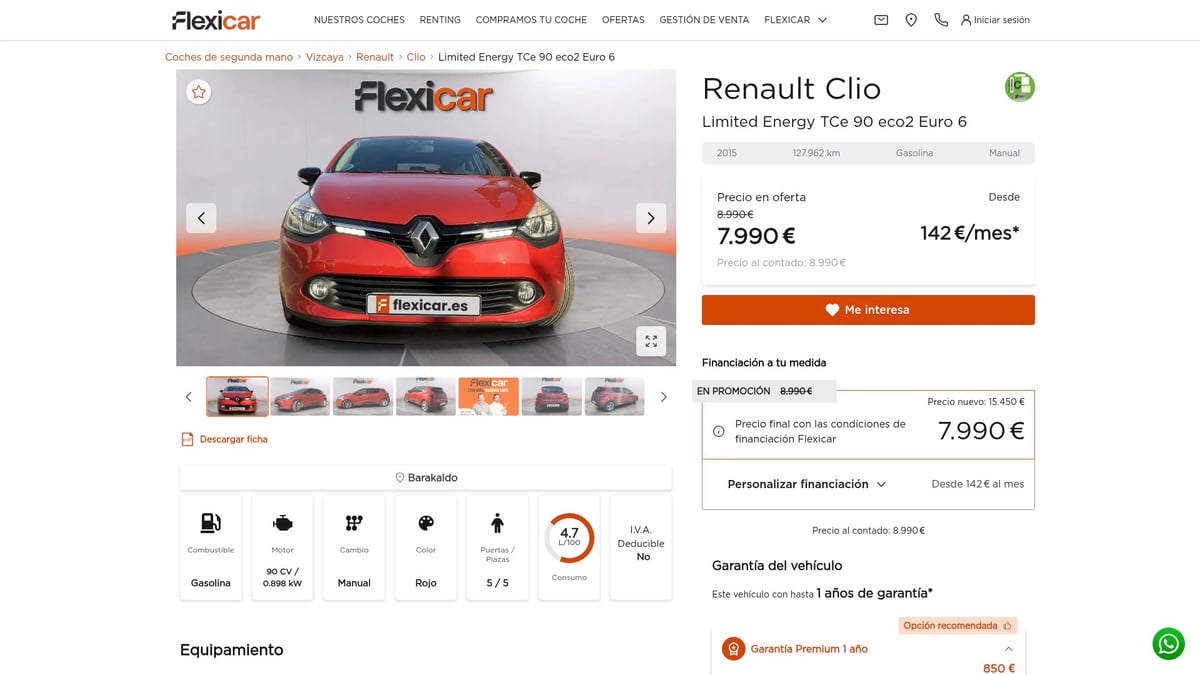
The C label facilitates circulation in most cities and its maintenance is simple and economical. The compact size and ease of parking are two great advantages, although power may be insufficient for long trips or when the car is fully loaded.
Pros:
- Excellent consumption.
- Compact size for city.
- Economical maintenance.
Cons:
- Limited power for long trips or loaded.
This gasoline car is perfect for those seeking reliability, low cost, and ease of daily use. If you are interested in knowing more offers from the brand, you can check the Renault gasoline offers and choose the version that best suits your needs.
Kia Stonic 1.0 T-GDi MHEV 100HP Drive
The Kia Stonic is the crossover option for those who want a modern and efficient gasoline car. With a 1.0 T-GDi mild hybrid 100HP engine and consumption of 5.5 l/100km, this model stands out for its ECO label, allowing free circulation in urban areas.
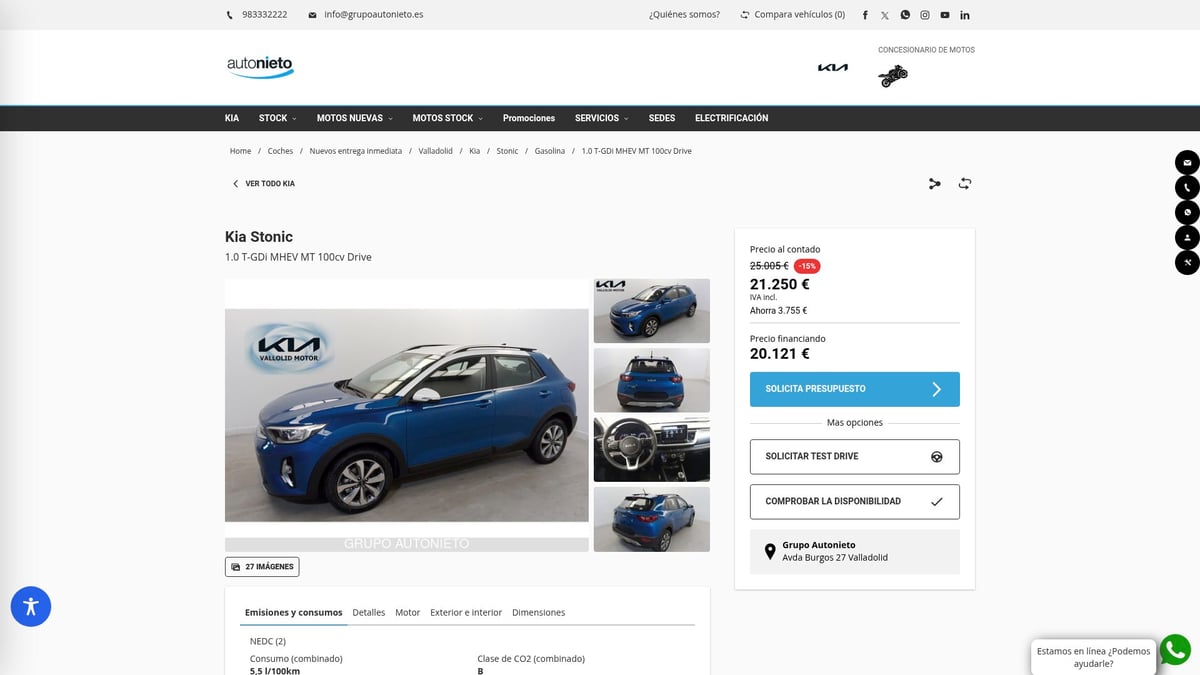
Its youthful design, typical SUV height, and technological equipment make it especially attractive for young people, couples, and users seeking a current image. The price, from €20,121 financed, is competitive for a gasoline car with these characteristics.
Pros:
- SUV height and youthful design.
- Technological equipment.
- Adjusted consumption and ECO label.
Cons:
- Limited trunk compared to some rivals.
The Kia Stonic is a gasoline car designed for those who value versatility, connectivity, and efficiency in urban use.
Volkswagen Arteon Elegance 1.5 TSI DSG
For those seeking a premium sedan at a competitive price, the Volkswagen Arteon is one of the best gasoline car options in 2025. With a 1.5 TSI 150HP engine and DSG automatic transmission, it offers a real consumption of about 6 l/100km and a smooth, comfortable driving experience.
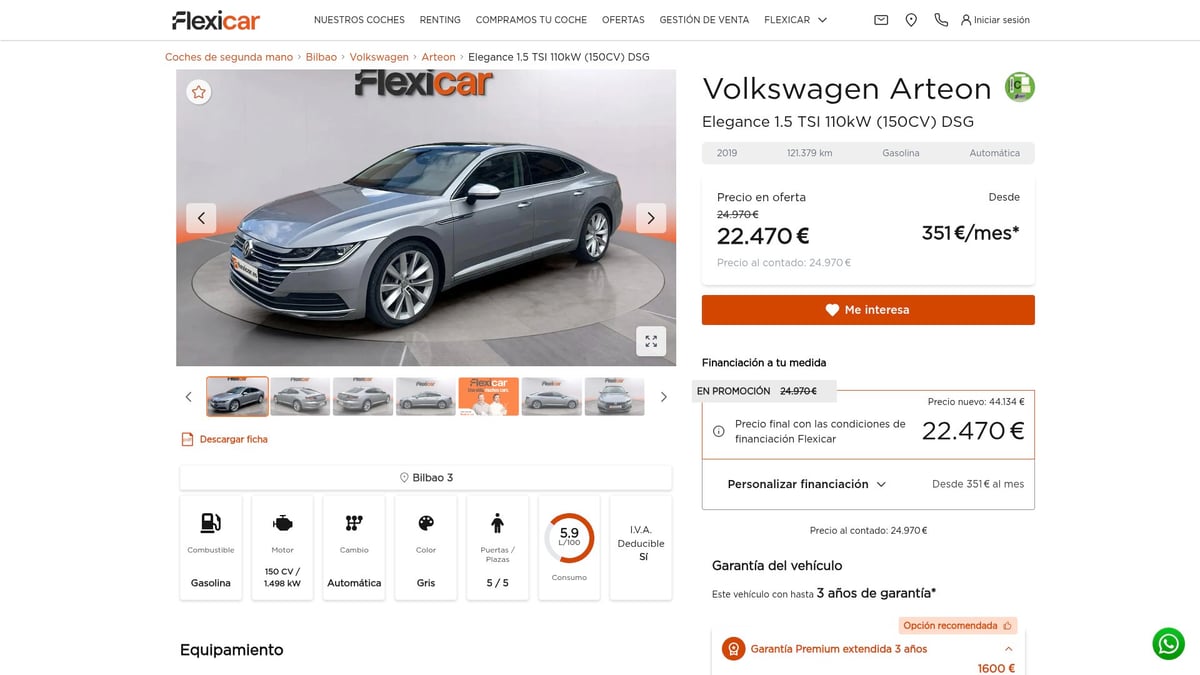
The price, from €22,470 used, is very attractive for a sedan of these characteristics. Its C label allows access to most cities, and the spacious interior makes it ideal for families or executives seeking comfort and elegance.
Pros:
- Elegant design and advanced technology.
- Excellent road behavior.
- Large space and comfort.
Cons:
- Higher maintenance cost.
- Large size for city.
The Arteon is the perfect gasoline car for those seeking distinction, technology, and a superior driving experience without giving up efficiency.
Hyundai i10 1.2 Tecno
The Hyundai i10 is one of the most demanded urban gasoline cars in 2025. Its 1.2 gasoline engine offers very low consumption, around 5 l/100km, and its small size facilitates mobility and parking in the city.
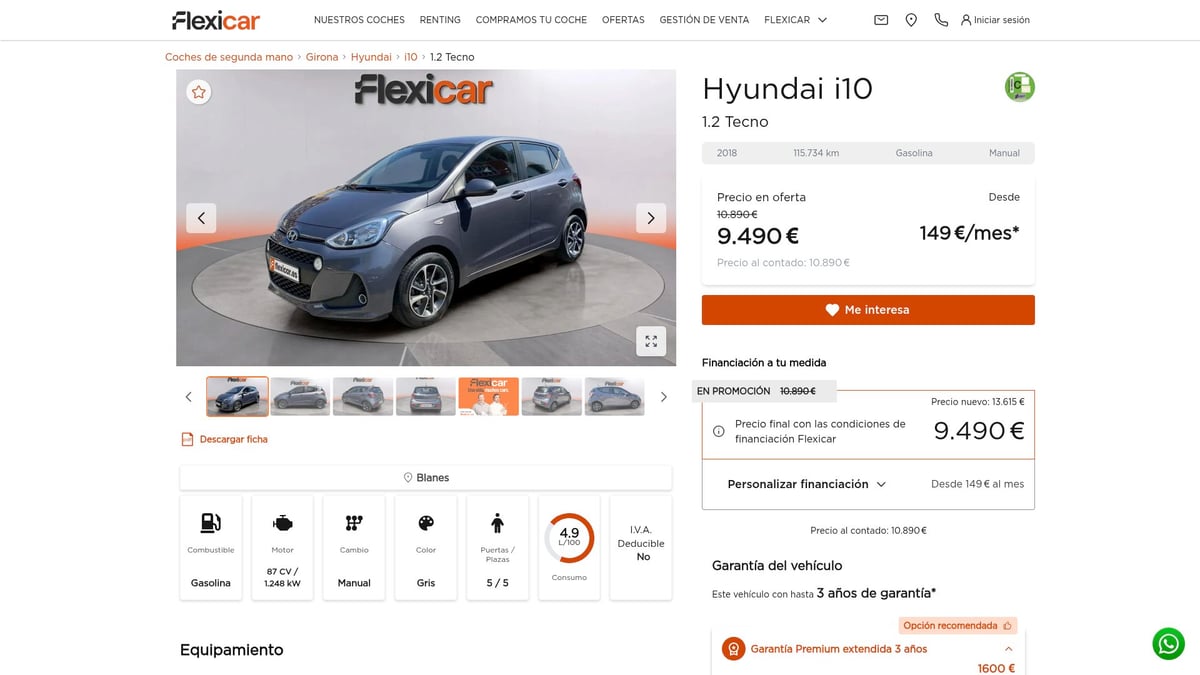
For a price from €9,490 used, this gasoline car is ideal for students, elderly people, or those looking for a practical and reliable second vehicle. The C label guarantees access to main urban areas, and its maintenance is simple and affordable.
Pros:
- Small size and easy to park.
- Very low consumption.
- Reliability and affordable maintenance.
Cons:
- Limited rear space.
- Limited power for long trips.
The Hyundai i10 is an excellent option for those who prioritize practicality, savings, and ease of daily use in the city.
Kia Sportage 1.6 T-GDi MHEV 160HP 4x2 Drive
The Kia Sportage 1.6 T-GDi MHEV is the ideal alternative for families and frequent travelers seeking a gasoline car with space, power, and technology. Its 160HP mild hybrid engine and consumption of 6.6 l/100km position it as one of the most complete SUVs on the market.
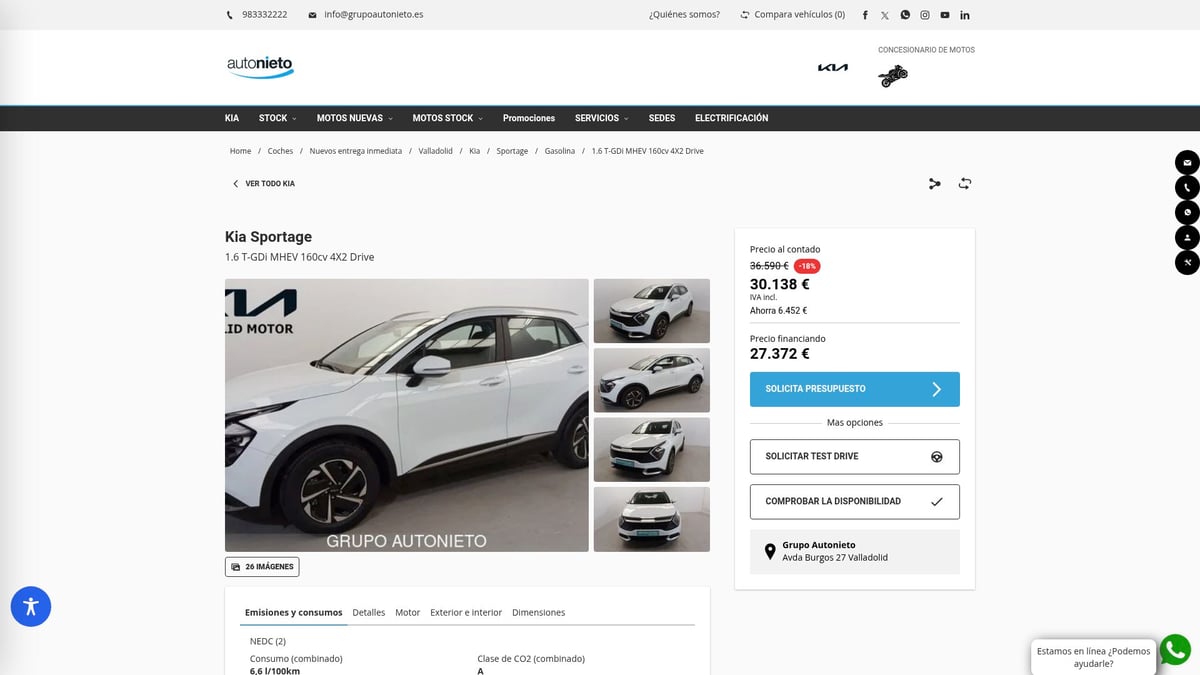
With an ECO label, it allows unrestricted access to urban areas, and its advanced equipment guarantees comfort and safety on every trip. The price, from €27,372 financed, is competitive for an SUV of its category.
Pros:
- Large interior space and technology.
- Dynamic and efficient behavior.
- ECO label for urban circulation.
Cons:
- Higher price than other compact SUVs.
- Slightly higher consumption.
The Kia Sportage is the perfect gasoline car for those who do not want to give up versatility, comfort, and technology in their family or leisure trips.
How to Compare and Choose the Best Gasoline Car for You
Choosing the best gasoline car in 2025 may seem challenging, but with the right criteria and tools, the decision becomes much easier. Wondering where to start? Here we guide you step by step to make the best choice for your lifestyle and budget.
Key Comparison Criteria
When comparing a gasoline car, it is essential to analyze several aspects to ensure your investment is right. These are the points you should not overlook:
- Real vs. official consumption: Don't rely only on official data. Check user tests and specialized media to know the real consumption of your favorite gasoline car.
- Acquisition price: New or used? Evaluate the initial cost and compare with similar models.
- Equipment and safety: Assess assistance systems, connectivity, and comfort. A good gasoline car should offer technology adapted to your needs.
- Environmental label: Check if the model has a C or ECO label, which affects access to restricted zones and possible tax advantages.
- Maintenance and resale value: Consider how easy maintenance is and how the model depreciates over time.
A comparative table can facilitate evaluation:
| Criterion | New | Used |
|---|---|---|
| Price | Higher | More affordable |
| Warranty | Full | Limited |
| Depreciation | Higher initially | Lower long term |
Having these criteria clear will make choosing a gasoline car a positive and surprise-free experience.
Tools and Resources to Compare Models
Nowadays, comparing gasoline car models is easier than ever thanks to digital resources. Use online comparators and specialized websites that offer technical sheets, test drives, and real user reviews. This way, you can quickly see differences in equipment, consumption, and prices.
Don't limit yourself to basic information. Look for in-depth analysis and tests under real conditions. Platforms like automotive forums and comparative videos will help you see the pros and cons of each gasoline car in everyday situations.
Also, staying updated on automotive injection technology trends will allow you to better understand innovations that can make a difference in efficiency and performance. These resources give you a more complete view to compare and choose confidently.
Practical Tips for Buying
Before deciding on a gasoline car, keep these practical tips in mind to make your purchase much safer and more satisfying:
- Take a test drive: Nothing replaces the experience of driving the model you are interested in.
- Define the main use: Do you need it for city, highway, or mixed use? This way you choose the gasoline car that best fits.
- Evaluate space and budget: Consider your real needs for interior space, trunk, and available money.
- Review financing and offers: Take advantage of promotions, financing plans, and extended warranties that can add value to your purchase.
- Check after-sales services: Good after-sales service facilitates maintenance and extends the useful life of your gasoline car.
Remember, the key is to inform yourself and compare without rushing. This way, you can find the ideal gasoline car for you and your family, enjoying every kilometer in 2025 and beyond.
After reviewing together the best gasoline car options for 2025 and all the details that really matter — from real consumption to each model's advantages — I know choosing the perfect car can seem challenging. But you don't have to do it alone. At TuFichaTecnica you can easily compare specifications, prices, and versions of all the models that caught your attention in this article, and many more. This way, we make informed decisions together and find exactly what you are looking for with total confidence. Ready to take the next step? You can Review your favorite cars here.