

Are you thinking about changing your car in 2025 and wondering if diesel is still a valid option?
Although electric and hybrid cars are trendy, diesel cars still offer unique advantages that many drivers appreciate every day.
In this article, you will discover the 7 most compelling reasons to choose a diesel car in 2025.
We invite you to keep reading and explore why this option might be the smartest choice for your next purchase.
7 Reasons to Choose a Diesel Car in 2025
When deciding which diesel car to buy in 2025, it’s natural to ask if this option still makes sense in a market increasingly oriented towards electric and hybrid vehicles. However, far from becoming obsolete, diesel vehicles have evolved and maintain advantages that many drivers value daily.
In this section, we will discover together the 7 main reasons why choosing a diesel car in 2025 can be an intelligent, efficient decision perfectly adapted to current needs. We will analyze everything from fuel consumption to reliability, including technology, power, and resale value. Ready to learn all the key points? Let’s go!
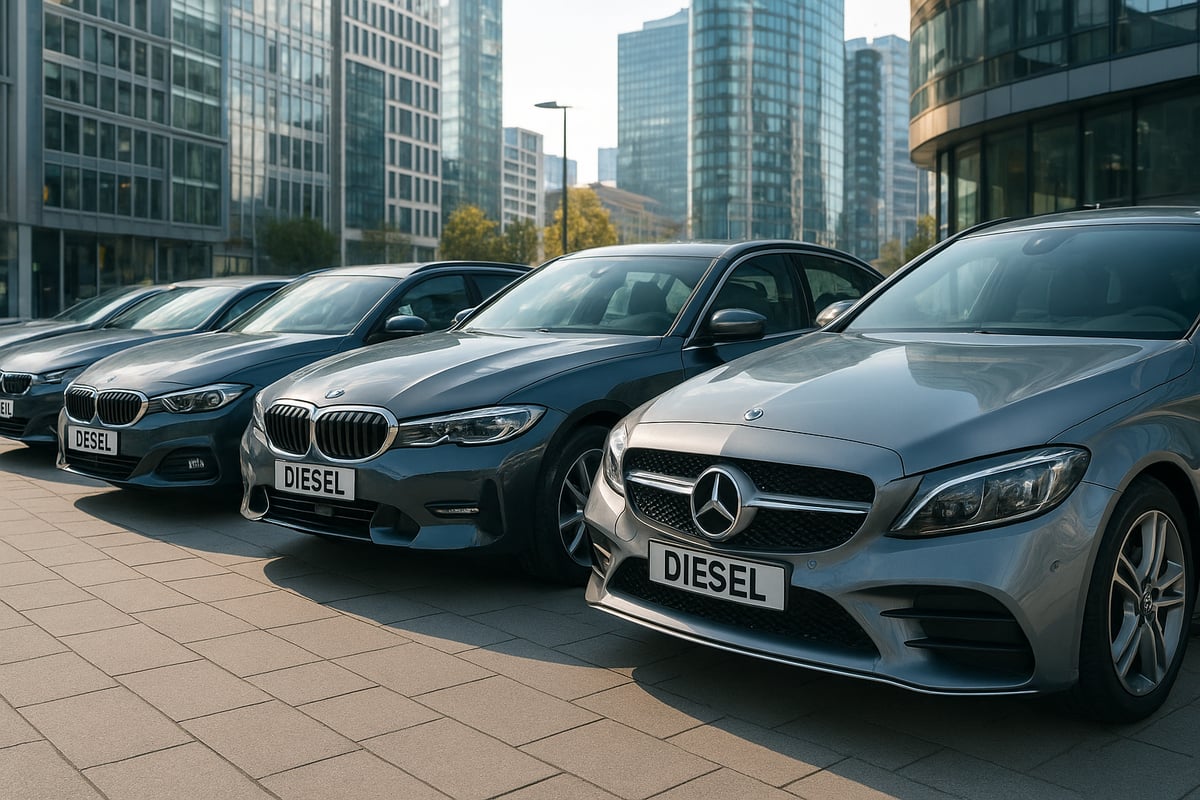
1. Low Fuel Consumption and Superior Range
One of the strongest arguments for betting on a diesel car in 2025 remains the low fuel consumption and the range they offer compared to other alternatives. Modern diesel engines, thanks to technological optimization, achieve consumption starting from 4.5 l/100 km in real driving. If you drive many kilometers per year or often travel on highways, this figure makes a difference.
For example, the micro-hybrid diesel Mercedes C-Class, one of the efficiency benchmarks, achieves real consumption between 4.5 and 5.1 l/100 km. This allows covering distances over 1,000 km with a single tank, a figure difficult to match by gasoline or electric cars. The extended range of a diesel car is especially useful for long routes, family trips, or professionals who depend on the vehicle daily.
Additionally, diesel car consumption varies less depending on driving style. While gasoline engines can spike fuel use in urban trips or frequent accelerations, diesel maintains efficiency, helping control the monthly fuel budget.
Fleet companies and the commercial sector continue prioritizing diesel cars for their range and low cost per kilometer. To give you a clear idea, here is a simplified comparison:
| Model | Consumption (l/100 km) | Range (km) |
|---|---|---|
| Mercedes C-Class Diesel | 4.5 - 5.1 | 1,000+ |
| SEAT León Diesel | 4.7 - 5.3 | 950+ |
| Average Electric (2025) | 15 - 20 kWh/100 km | 350-450 |
If you want to compare consumption and range more deeply for each model, you can check the diesel car technical sheets, a very useful tool to see objective and updated data.
In short, low consumption and great range make the diesel car an ideal option for those seeking efficiency and freedom of movement in 2025.
2. More Competitive Cost per Kilometer
Saving money is a priority for those who choose a diesel car. In 2025, diesel prices usually remain below gasoline prices, resulting in lower monthly expenses for those who drive many kilometers. Moreover, periodic maintenance of a modern diesel car is less frequent than some gasoline engines, helping further reduce total ownership costs.
Let's take a practical example: a driver who covers 30,000 km per year can save several hundred euros on fuel compared to an equivalent gasoline car. This advantage is especially valued by professionals, taxi drivers, and leasing users seeking maximum efficiency on every trip.
The cost per kilometer of a diesel car remains the lowest on the market for long distances. This is due to the combination of lower consumption, fuel price, and diesel engine durability. When analyzing amortization, price differences between diesel and gasoline versions usually pay off in less than three years for intensive vehicle users.
For those who want to dive deeper into when it is advantageous to choose a diesel car over a gasoline one, this diesel vs gasoline car comparison in 2025 offers a detailed and updated analysis.
In summary, the diesel car offers a clear competitive advantage for those seeking efficiency, savings, and quick amortization, becoming the preferred choice for a very broad driver profile.
3. Modern Engines: Lower Emissions and More Technology
The image of the diesel car has changed a lot in recent years. Current diesel engines comply with the strict Euro 6d regulations, meaning a drastic reduction in NOx and particulate emissions. Thanks to the incorporation of systems like AdBlue and advanced particulate filters, the environmental impact of new diesels is much lower than previous generations.
A standout example is the 48V micro-hybrid diesel Mazda CX-60, which combines efficiency, power, and ECO label, allowing access to low-emission zones in major cities. Micro-hybridization and electronic management technologies have made the diesel car more environmentally friendly.
Another great improvement in modern diesel engines is the reduction of vibrations and noise, as well as better engine response across the entire rev range. This translates into a more pleasant driving experience and less fatigue during long trips.
Recent data shows new diesels emit up to 80% less NOx compared to models from ten years ago, demonstrating the sector's strong commitment to sustainability. Engineering advances have made the diesel car a technologically advanced and environmentally respectful alternative.
If you care about ecological impact and seek a balance between efficiency and low emissions, modern diesel models represent a reliable and sustainable option in 2025.
4. Power, Torque, and Towing Capacity
If you are looking for a vehicle that is not only efficient but also powerful and capable of facing any challenge, the diesel car remains a safe bet. Diesel engines stand out for their high torque, making them ideal for towing caravans, boats, or transporting heavy loads effortlessly.
The performance of a diesel car is especially notable at mid-range RPMs, facilitating overtaking and offering safe and comfortable driving on highways. For example, the BMW 3 Series diesel includes engines from 190 hp, with strong response and optional xDrive all-wheel drive for those needing even more control.
This towing capacity and response make the diesel car the preferred option for rural users, transport professionals, and traveling families. Diesel SUVs and station wagons surpass most hybrids or electrics in towing capacity, which is key in demanding situations.
Driving long distances or routes with steep inclines is more comfortable since the engine works less strained at low revs, also contributing to greater mechanical durability. If your life requires versatility and power, the diesel car will not disappoint.
5. Versatility and Market Offer
Despite the reduced offer in some segments, the diesel car remains present in a wide variety of models, from urban compacts to family SUVs and high-end sedans. Manufacturers have adapted their catalogs to meet the demand of those who value efficiency and range.
Models like the Skoda Octavia, SEAT León, or Volkswagen Tiguan offer diesel versions with modern equipment and cutting-edge technology. The availability of options both in traditional purchase and in renting and leasing ensures any user can find the diesel car that best suits their needs and budget.
The versatility of the diesel car is reflected in the wide variety of body styles, finishes, and engine options available. Also, in certain rural areas or for professional uses, it remains the only viable option due to its range and load capacity.
Manufacturers continue developing more efficient diesel engines for the European market, aware that there is a driver profile that values these features above trends. If you seek variety and flexibility, the diesel car remains a safe bet in 2025.
6. Resale Value and Long-Term Reliability
One of the great attractions of the diesel car is its resale value. In the second-hand market, especially in rural areas or for professional use, diesels depreciate less than other fuels. This means that after several years of use, you can recover a larger part of your initial investment.
The reliability of diesel mechanics is well proven. Engines like the Skoda Octavia diesel are famous for their durability and low maintenance cost, even surpassing 300,000 km without major interventions. Advances in lubrication and cooling have reduced wear and serious breakdowns compared to some modern turbo gasoline engines.
For those planning to keep the car for many years or sell it in the future, the diesel car represents a safe bet. The combination of reliability, low maintenance, and good resale value makes these vehicles a smart investment.
If you seek peace of mind and long-term profitability, the diesel car remains one of the most solid options on the market.
7. Realistic Alternative to Electric and Hybrid Cars in 2025
Although electric vehicles have advanced a lot, they still present range limitations and an insufficient charging network outside large cities. In this context, the diesel car consolidates as the most practical option for those who make long trips, live in rural areas, or cannot install a charging point at home.
For these users, the diesel car offers total flexibility and eliminates range anxiety, as it can be refueled in minutes at any service station. Also, hybrids do not always achieve the same savings on highways as an efficient diesel, especially on long trips.
The diesel car is the perfect transition while electric technology and charging infrastructure continue evolving. If you seek independence, reliability, and the peace of mind to make any trip without limitations, the diesel car is, today, a realistic and sensible alternative in 2025.
TuFichaTecnica: The Essential Tool to Choose Your Diesel Car in 2025
Looking for the perfect diesel car in 2025? With so many options and technology, choosing well can be a challenge. That’s why TuFichaTecnica is your ideal ally: it allows you to compare consumption, prices, and versions of all current diesel models, all on a clear and simple platform.

Additionally, you can analyze technical sheets, compare diesel cars with hybrids or electrics, and access buying guides and market analyses. If you want to go even deeper, we recommend checking the Diesel Cars Guide 2025: Is It Still Worth It?, where you will find practical information and featured models.
At TuFichaTecnica, the experience is easy, free, and designed so that both individuals and professionals find the diesel car that best suits their real needs.
After learning all the real advantages a diesel car can offer you in 2025, choosing the ideal model is much easier when you have the right information at hand. At TuFichaTecnica, you and I can compare specifications, see real consumption, and discover all the details of our favorite cars in seconds. This way, we make an informed decision together, tailored to what you really need. If you’re curious or want to see what options are available, I invite you to Check Your Favorite Cars and find that perfect diesel for you.