
Can you imagine what moving around the city will be like in 2025? The mobility revolution is already here, and eco cars are the protagonists of this change. More and more people are looking for sustainable, efficient, and environmentally friendly alternatives.
In this article, we will help you discover the 8 most outstanding eco cars for 2025. We have selected these models for their efficiency, innovation, value for money, and environmental advantages. We will analyze their strengths, features, and who they suit best.
Ready to find the ideal eco car for your life? Join us and discover it!
What is an eco car and why are they key in 2025?
We hear more and more about eco cars and their essential role in the mobility of the future. But what does it really mean for a vehicle to be considered eco? Let's discover together why these models are at the center of the shift towards cleaner and more sustainable cities.
Definition and categories of eco cars
An eco car, according to the DGT (Spanish Traffic Authority), is one that uses efficient technologies to reduce emissions and consumption. Within eco cars, there are several categories:
- Conventional hybrids (HEV): combine gasoline and electric motors, like the Toyota Corolla Hybrid.
- Mild hybrids (MHEV): use an electric support system, like the Volkswagen Golf eTSI.
- Plug-in hybrids (PHEV): allow battery recharging and driving in electric mode, like some Hyundai models.
- Bifuel (LPG, CNG): run on gasoline and gas, like some Renault Clio models.
- 100% electric: only electric motor and ZERO emissions label.
The DGT differentiates between ECO label (hybrids, mild hybrids, bifuel) and ZERO label (pure electric and plug-in hybrids with electric range over 40 km). Regulations have evolved to promote eco cars and reduce the environmental impact of the vehicle fleet.
Environmental and user advantages
Adopting eco cars has direct benefits for everyone. These vehicles generate a smaller carbon footprint, helping reduce pollutant emissions that affect air quality. They also facilitate access to low emission zones and urban areas with restrictions, increasingly common in large cities.
Eco car users enjoy tax reductions, lower circulation taxes, and often discounts on parking. Maintenance tends to be cheaper, and according to the DGT and several city councils, annual savings on fuel and fees can exceed €1,000 compared to conventional models. Thus, driving eco cars is not only good for the planet but also for our wallets.
Eco car market trends for 2025
The eco car market is booming. Sales have steadily grown in recent years, and the range of models keeps expanding. Brands compete in innovation, improving electric vehicle range and optimizing hybrid efficiency.
Charging infrastructure is advancing rapidly, making daily use easier. Moreover, consumer habits are changing: more people prioritize sustainability and technology when choosing a car. To explore more about these trends and their impact on the sector's future, check the analysis of Key Trends in the Automotive Industry in 2025.
Criteria to select the most outstanding eco cars
To choose the most relevant eco cars for 2025, we evaluated several key criteria:
- Consumption and emissions: models with low emissions and energy efficiency.
- Technological innovation: advanced propulsion systems and modern equipment.
- Value for money: affordability and value for the investment.
- User and expert opinions: popularity and real satisfaction.
- Adaptability: options for different driver profiles, from urban to families.
These factors help us identify the eco cars that best suit current needs, ensuring sustainable and practical mobility for all.
8 Most Outstanding Eco Cars for 2025
Choosing among the best eco cars for 2025 may seem complicated, but here we help you discover the most interesting and efficient options on the market. We analyze each model in detail so you can find the eco car that best fits your daily life and needs.
Hyundai Kona Hybrid/Electric
The Hyundai Kona is one of the most versatile and demanded eco cars for 2025. Available in conventional hybrid, mild hybrid, and 100% electric versions, it stands out for its efficiency and customization options. The price starts from €25,170, competitive within the urban SUV segment.
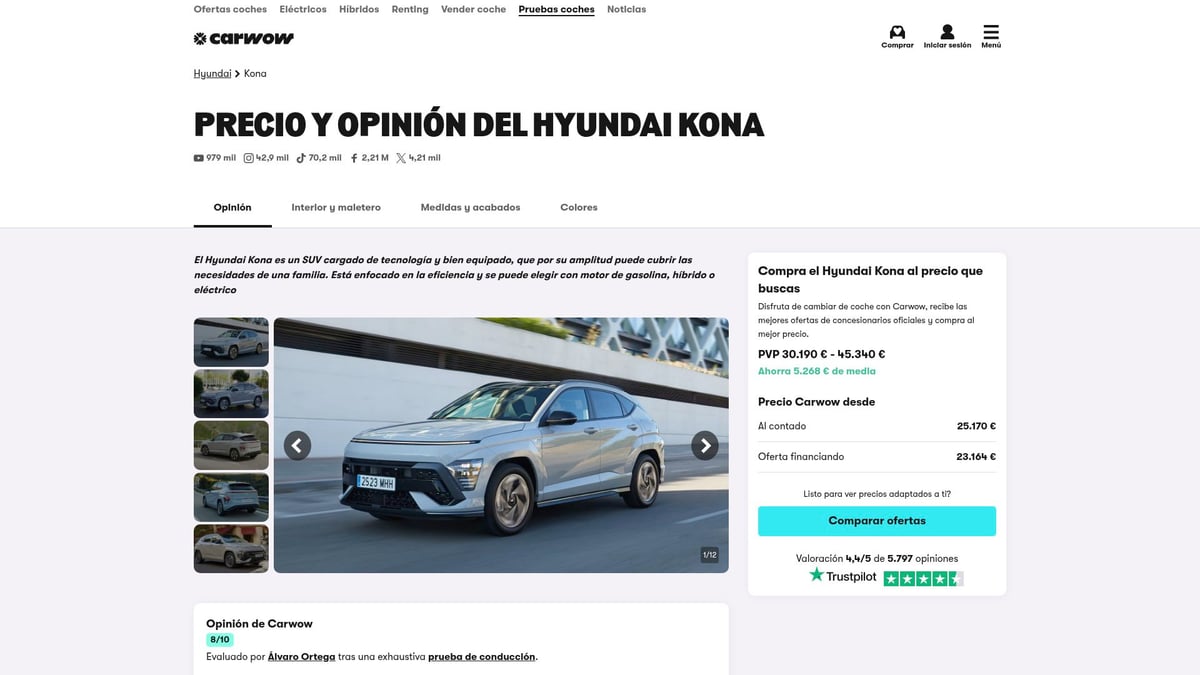
It offers an electric range of up to 514 km in the electric version and very tight combined consumption in the hybrid variants. The interior space is generous for its size, with a trunk of 374 liters, ideal for families.
Among its equipment highlights are safety assistants, advanced connectivity, and a modern design. Eco cars like the Kona allow driving with ECO or ZERO labels, facilitating access to restricted zones. For more on technology and versions, check this Hyundai eco cars guide.
Pros:
- Wide variety of eco powertrains
- Spacious trunk and good habitability
- Cutting-edge technology and driving aids
Cons:
- High price in top electric versions
- Simple suspension in entry trims
The Hyundai Kona is perfect for urban families seeking an eco car with technology and space for everyday use.
Toyota Corolla Hybrid
The Toyota Corolla Hybrid maintains its position as a benchmark among eco cars, thanks to its reliability and efficiency. Its price starts at €25,989 and it features a self-charging hybrid system that grants it the ECO label.
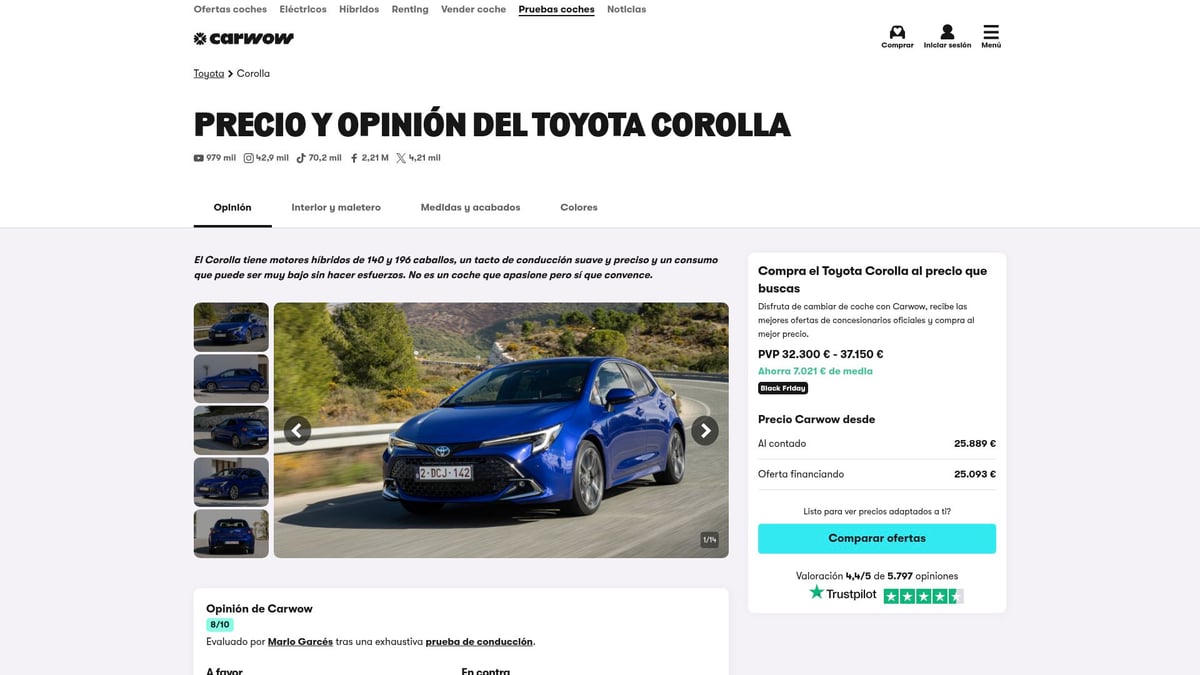
It offers real consumption from 4.5 l/100 km and low emissions, ideal for those who prioritize sustainability without sacrificing quality. The new multimedia system and driving aids improve the onboard experience.
Among the Corolla's strengths are its low running costs, mechanical reliability, and a notable balance between performance and comfort. However, interior space and trunk may be tight for large families or long trips.
Pros:
- Very low consumption and simple maintenance
- High recognized reliability
- Good standard equipment
Cons:
- Small trunk
- Limited rear space
The Toyota Corolla Hybrid is ideal for urban and suburban drivers who want efficient and reliable eco cars.
Renault Clio Hybrid
The Renault Clio Hybrid establishes itself as one of the most complete urban eco cars. Its E-Tech hybrid engine combines efficiency and agility, with a starting price from €22,531. The ECO label allows it to drive with fewer restrictions in the city.

Mixed consumption is around 4.2 l/100 km, making it an ideal option for urban and interurban trips. The innovative transmission and adaptive driving modes provide a dynamic and simple experience.
Regarding technology, the Clio offers an intuitive multimedia system and advanced safety assistants. Eco cars like this stand out for their low running costs and access to tax benefits.
Pros:
- Very low consumption and agile driving
- Easy-to-use technology
- ECO label for urban mobility
Cons:
- Slightly tight trunk
- Higher price than basic gasoline versions
The Renault Clio Hybrid is perfect for young professionals and urban users seeking a practical and modern eco car.
MG ZS Hybrid+
The MG ZS Hybrid+ presents itself as one of the most affordable and spacious eco SUVs. Its price starts at €18,540, making it a very competitive option for young families.
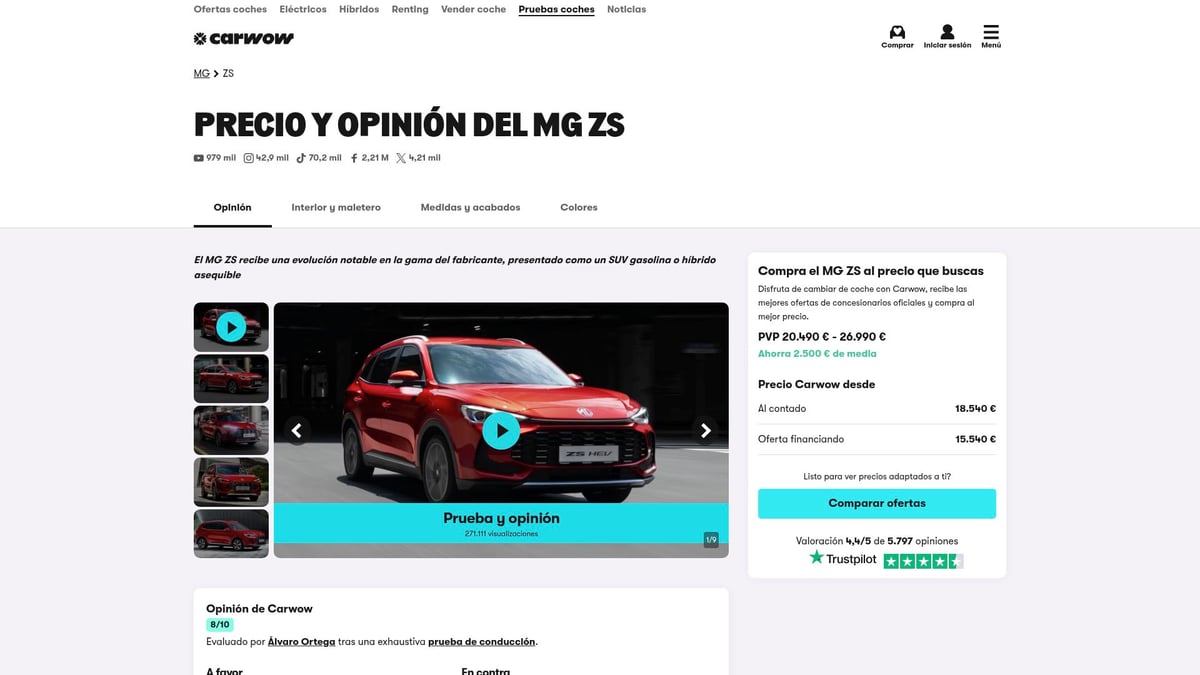
The ECO label and hybrid powertrain allow free city driving, while its interior space and 448-liter trunk make it ideal for daily use. Consumption remains low, around 5.5 l/100 km, and driving is smooth and comfortable.
In equipment, the MG ZS Hybrid+ includes a touchscreen, safety assistants, and full connectivity. Eco cars like this offer a balance between efficiency, price, and functionality.
Pros:
- Very competitive price
- Spacious interior
- Generous equipment
Cons:
- Somewhat limited performance
- Driving dynamics could improve
The MG ZS Hybrid+ is ideal for those seeking an economical, efficient SUV ready for family use.
Toyota Aygo X Hybrid
The Toyota Aygo X Hybrid is one of the quintessential urban eco cars. Compact and agile, its price starts from €19,100 with offers, and its ECO label makes it a perfect ally for city mobility.

Consumption is really low, barely 4 l/100 km in real use, translating into considerable savings. Its 15-year warranty and modern design attract those seeking reliability and style.
Among its advantages are the ideal size for parking, Toyota's robustness, and low maintenance cost. On the downside, interior space and performance outside the city are limited, but it performs excellently in its natural environment.
Pros:
- Minimal consumption and great reliability
- Perfect size for the city
- Extensive warranty
Cons:
- Reduced rear space and trunk
- Modest road performance
The Toyota Aygo X Hybrid is the ideal choice as a first eco car or for those prioritizing urban mobility.
Volkswagen Golf eTSI (Mild Hybrid)
The Volkswagen Golf eTSI stands out among eco cars for its balance between efficiency and performance. With a price from €27,305, it offers mild-hybrid technology, ECO label, and a premium driving experience.
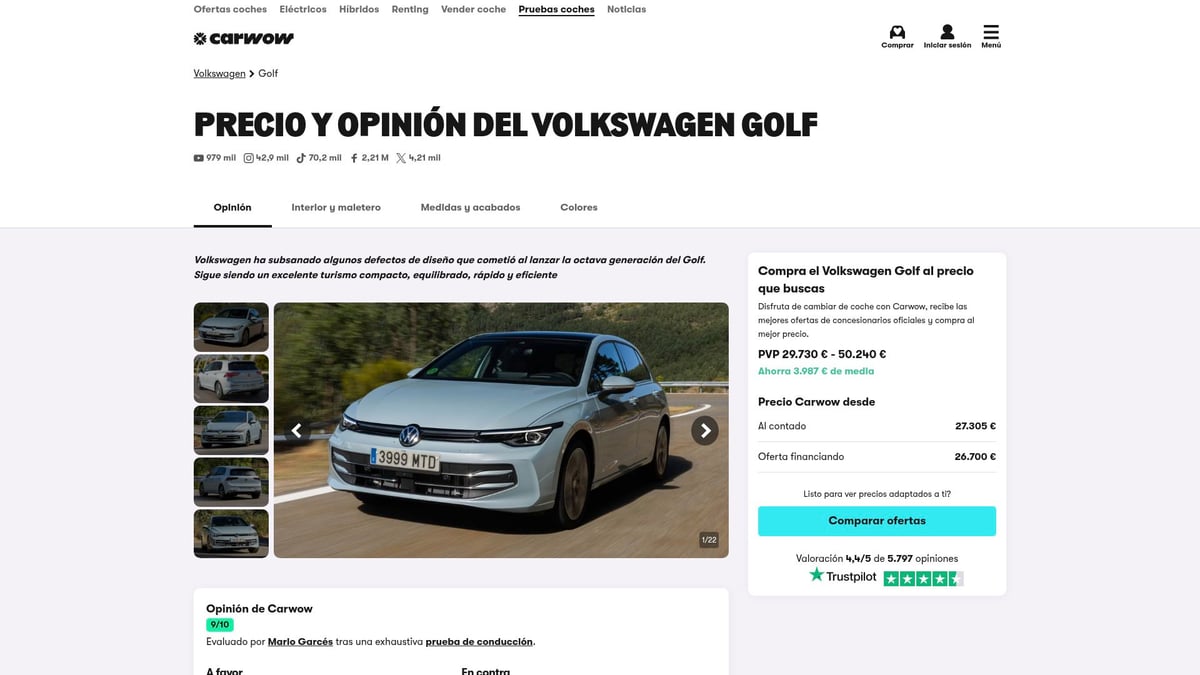
Its range of gasoline mild-hybrid engines allows consumption from 5 l/100 km and low emissions. The interior is spacious and high quality, with connectivity systems and state-of-the-art safety assistants.
Advantages include a wide range of versions, ride quality, and comfort on long trips. Less favorable points are the price and some finish details that may not convince all users.
Pros:
- Wide range of mild-hybrid versions
- Quality interior and advanced technology
- Balanced driving
Cons:
- High price compared to rivals
- Some multimedia glitches and plastics could improve
The Golf eTSI is a perfect eco car for those seeking an efficient, safe, and high-level compact.
Toyota Yaris Hybrid
The Toyota Yaris Hybrid is one of the most popular eco cars among urban drivers. Its price starts from €21,000 (with offers) and its hybrid system guarantees very low consumption, from 3.8 l/100 km.

The ECO label allows access to restricted zones and tax benefits. Among eco cars, it stands out for reliability, silence in electric mode, and advanced safety equipment.
Interior space is somewhat tight, especially in rear seats and trunk, but it compensates with maneuverability and ease of use in the city. Maintenance cost is low, making it very attractive for those seeking savings.
Pros:
- Leading efficiency in the segment
- Advanced safety technology
- Very reliable and quiet
Cons:
- Limited habitability
- Higher price compared to gasoline versions
The Toyota Yaris Hybrid is the best choice for those wanting an efficient, easy-to-maintain urban eco car.
Honda Civic Hybrid
The Honda Civic Hybrid positions itself as an efficient and dynamic compact sedan among eco cars. Its 184 HP hybrid powertrain and ECO label make it ideal for long trips and daily use.
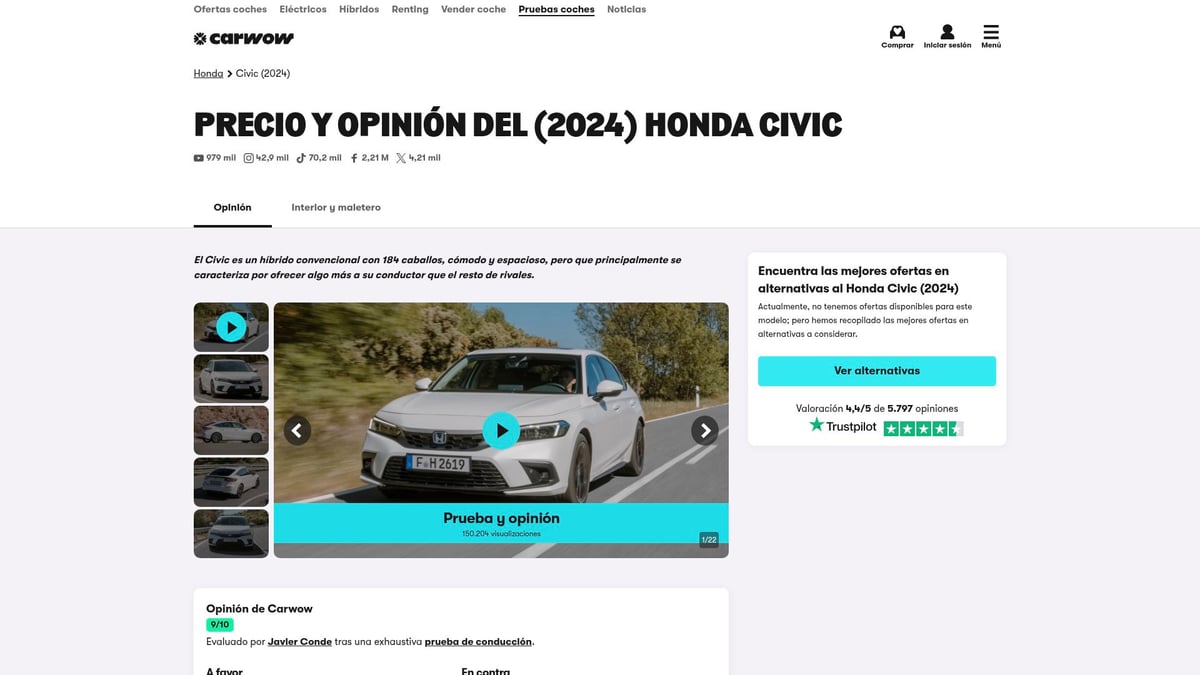
Ride comfort is outstanding, as well as rear space and ride quality. The advanced multimedia system and driving aids add a plus of safety and connectivity.
Consumption is around 4.7 l/100 km, placing it among the most efficient in its category. On the downside, it only has one hybrid powertrain option and the trunk is somewhat limited.
Pros:
- Low consumption and great comfort
- Spacious rear seats
- Advanced technology
Cons:
- Only one engine option
- Small trunk for long trips
The Honda Civic Hybrid is the recommended eco car for those seeking a dynamic, efficient sedan equipped for the future.
Quick comparison: Which eco car suits your profile best?
Wondering which 2025 eco car fits you? To help, we prepared a simple comparison highlighting key differences among the selected models. This way, you can easily identify the option that fits your daily life and expectations.
Key specifications comparison table
The following table summarizes the most relevant aspects of the outstanding eco cars for 2025:
| Model | Consumption (l/100km) | Electric Range (km) | Power (HP) | Trunk (L) | Approx. Price (€) |
|---|---|---|---|---|---|
| Hyundai Kona Hybrid/Electric | 4.9 - 15.4 (electric) | 484 (electric) | 141 - 218 | 374 - 466 | 25,170 |
| Toyota Corolla Hybrid | 4.5 | - | 140 - 196 | 361 | 25,989 |
| Renault Clio Hybrid | 4.2 | - | 140 | 301 | 22,531 |
| MG ZS Hybrid+ | 5.7 | - | 143 | 448 | 18,540 |
| Toyota Aygo X Hybrid | 4.5 | - | 116 | 231 | 19,100 |
| Volkswagen Golf eTSI | 5.1 | - | 110 - 150 | 381 | 27,305 |
| Toyota Yaris Hybrid | 3.8 | - | 116 | 286 | 21,000 |
| Honda Civic Hybrid | 4.7 | - | 184 | 410 | Consult |
As you can see, eco cars offer alternatives for different needs, from compact urban cars to family SUVs.
Usage analysis by driver type
Do you live in the city, travel often, or need space for family? There are eco cars for every profile:
- City: The Toyota Aygo X Hybrid and Renault Clio Hybrid are ideal for their compact size and low consumption.
- Families: The Hyundai Kona and MG ZS Hybrid+ stand out for interior space and generous trunk.
- Long trips: The Honda Civic Hybrid and Toyota Corolla Hybrid offer comfort and efficiency on the road.
- Tight budget: The MG ZS Hybrid+ and Renault Clio Hybrid combine competitive price and equipment.
Choosing among eco cars depends on both your budget and daily driving habits.
Advantages and disadvantages of each model by needs
Each eco car model has strengths and aspects to consider:
- Pros: savings on consumption, access to restricted zones, and lower maintenance.
- Cons: some have limited trunk or higher price in better-equipped versions.
- Real example: if you use the car only in the city, a small hybrid will give you maximum efficiency. For long trips, prioritize models with good comfort and range.
Remember to analyze not only the initial price but also the total long-term cost and possible public incentives available for eco cars.
Resources to compare and find the ideal eco car
Before deciding, use online tools to compare specifications and versions of eco cars. Platforms like Efficient MG Car Options offer detailed information on hybrid and electric ranges, facilitating your search.
Check user reviews, read independent tests, and stay updated on news and regulations. This way, you will choose the eco car that best suits your needs and lifestyle.
Frequently asked questions about eco cars in 2025
Do you have doubts before making the leap to eco cars? Here we answer the most common questions to help you make the best decision for 2025. We invite you to discover advantages, maintenance, and how to get better informed with clear data and practical tips.
What tax and circulation benefits do eco cars offer?
Eco cars offer very attractive benefits for city drivers. One of the main advantages is the reduction of taxes like IVTM and discounts on parking fees in cities such as Madrid and Barcelona.
Thanks to the ECO label, these vehicles can access low emission zones and circulate during high pollution episodes, increasingly relevant in 2025. It is also possible to use BUS-VAO lanes even with a single occupant, saving time on daily trips.
The difference between ECO and ZERO labels lies in even freer access and extra bonuses for the latter, but both groups enjoy significant advantages. Many users highlight annual savings on taxes and the convenience of moving without restrictions.
How does the ECO label affect resale and residual value?
The ECO label positively influences the resale of eco cars. Demand for these vehicles grows year after year, as more buyers seek models offering mobility advantages and long-term savings.
In the second-hand market, eco cars maintain their residual value better than conventional models, especially in large cities where restrictions increase. Moreover, forecasts for 2025 indicate that the popularity of these vehicles will continue to rise.
Factors influencing depreciation include technology type, mileage, and vehicle condition. According to recent studies, used eco cars sell faster and at more competitive prices, which is a plus for those thinking about the future.
What maintenance do eco cars require compared to conventional ones?
Maintenance of eco cars is usually simpler and cheaper than traditional vehicles. For example, hybrid and electric systems have fewer moving parts, reducing engine and brake wear.
In hybrids, regenerative braking extends the life of pads and discs. Also, these vehicles require fewer oil changes and less frequent periodic checks. Bifuel and mild hybrids also have fewer common breakdowns.
The reliability of eco cars is supported by user and manufacturer experience, although it is key to follow the manual recommendations and opt for preventive maintenance. This avoids surprises and maximizes the technological advantages of these new alternatives.
Where to find updated technical information and comparisons?
To compare specifications and choose among different eco cars on the market, the best is to use reliable and specialized sources. Online platforms allow consulting technical sheets, user opinions, and consumption tests.
For example, if you want to discover details of hybrid and bifuel models with ECO label, you can visit the section of Renault Models with ECO label, where you will find updated information and useful comparisons.
Also, it is recommended to read expert reviews, analyze versions and equipment, and check current regulations or public incentives for 2025. This way, you will have a complete view and can choose the eco car that best fits your lifestyle and needs.
Now that you know the 8 most outstanding eco cars for 2025 and have seen how they can fit your lifestyle, why not dive a little deeper together? At TuFichaTecnica you can find all the technical information, compare models, and discover the versions that interest you most, easily and quickly. We know choosing a car is an important decision, but here you don't have to do it alone — we are here to support you every step of the way. Ready to keep exploring and find the car that really fits you?
Check your favorite cars