
Have you ever wondered who really dominates the road when it comes to BMW vs Mercedes? Two German titans compete every year for the throne of luxury and innovation.
In 2025, the rivalry between BMW and Mercedes reaches a new level, with revolutionary changes in design, technology, and electrification. We will analyze the lineups, sales, user experience, and much more.
Our goal is to guide you with recent data, expert opinions, and key trends so you can make the best possible decision. If you seek clarity on which brand leads in 2025, here you will find answers.
Keep reading and discover the ultimate comparison. Get ready to resolve all your doubts and choose your favorite with confidence.
Brand History and Philosophy: BMW vs Mercedes
The BMW vs Mercedes rivalry is one of the most legendary in the automotive world. Both brands have evolved over more than a century, building a history full of innovation, passion, and prestige. Today, exploring their roots and values helps us understand why they continue to lead the premium segment in 2025.
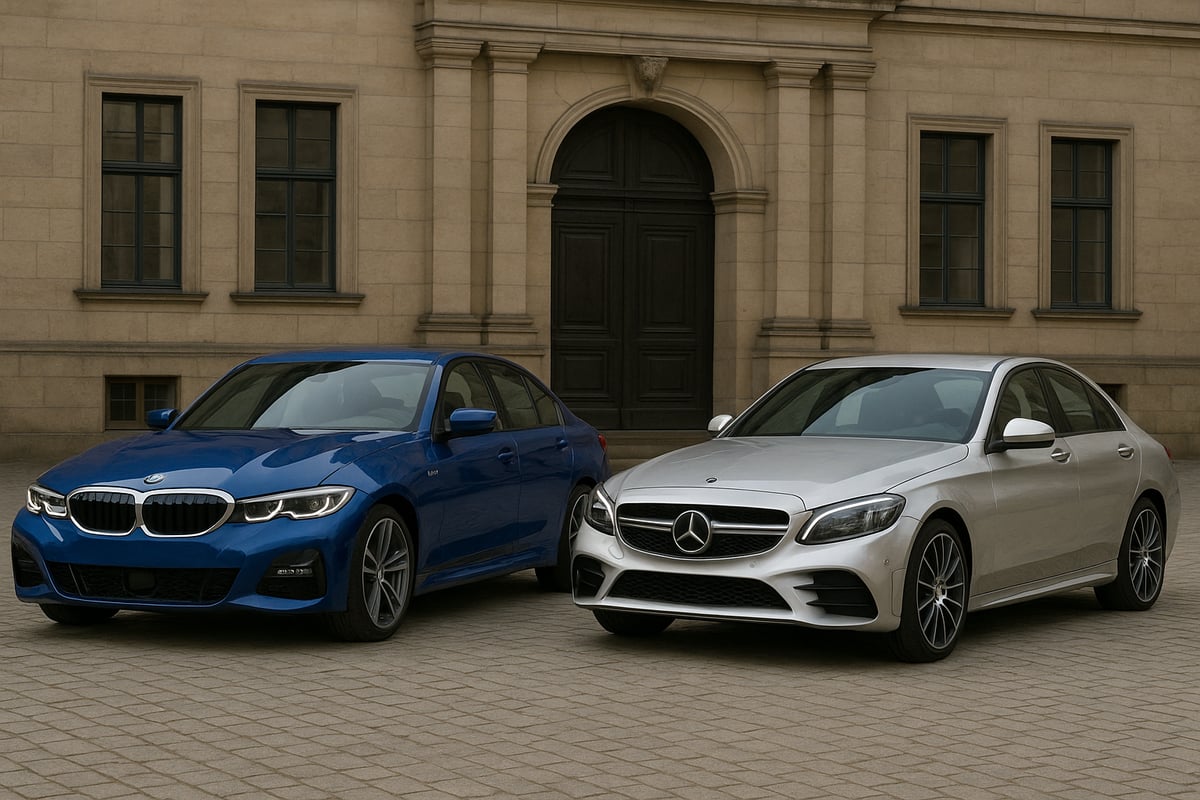
Historical trajectory and evolution of BMW and Mercedes
The origins of BMW vs Mercedes date back to the early 20th century. Mercedes-Benz was born in 1926 after the merger of Daimler and Benz, while BMW started manufacturing airplane engines in 1916 and launched its first car in 1928. Both manufacturers have marked milestones, such as the Mercedes 300 SL “Gullwing” and the BMW 3 Series, which set new standards in sportiness and technology.
Over the decades, the identity of BMW vs Mercedes has evolved, moving from traditional luxury vehicles to more dynamic and technological proposals. The premium positioning of both brands has been consolidated thanks to iconic models like the Mercedes C-Class and the BMW 3 Series, which remain benchmarks in their lineups today.
Design philosophy and driving experience
The philosophy of BMW vs Mercedes is reflected in every detail of their vehicles. BMW bets on the “pleasure of driving,” focusing on sportiness, precise response, and dynamism. Mercedes, on the other hand, prioritizes luxury and comfort, represented by its motto “The best or nothing.”
In current models, these philosophies translate into tangible differences: BMW opts for driver-oriented interiors and firmer suspensions, while Mercedes stands out for smooth ride quality and comfort-focused technology. Experts and drivers agree that, although both offer a premium experience, the feeling behind the wheel is unique to each brand, reinforcing the essence of BMW vs Mercedes.
Brand strategy in 2025
In 2025, BMW vs Mercedes show a clear adaptation to global trends. Both brands have strongly invested in electrification, digitalization, and sustainability. BMW has launched its revolutionary Neue Klasse lineup, marking the beginning of a new electric era, while Mercedes pushes its EQ family and renews classics like the C-Class and E-Class in hybrid and electric versions.
The differentiation of BMW vs Mercedes is also evident in their communication and offerings. BMW maintains its image of sportiness and innovation, covering everything from sedans to SUVs and sporty electric vehicles. Mercedes, in contrast, reinforces its luxury legacy with models that combine elegance and cutting-edge technology, adapting to an increasingly demanding and diverse audience.
Brand value and global recognition
The BMW vs Mercedes duel is also lived in international rankings. According to BrandZ and Interbrand, both brands always rank in the top 3 of the premium automotive sector, with BMW leading in awareness and Mercedes standing out in cultural prestige. In Europe and the U.S., BMW has a strong presence, while Mercedes maintains an image of exclusivity in global markets.
The influence of BMW vs Mercedes goes beyond automobiles: both brands have left their mark on culture, fashion, and lifestyle. For those who want to delve into the history, values, and technical analysis of this rivalry, the Vehicle Technical Platform offers a comprehensive view, updated data, and ideal tools to compare their strengths and evolution.
Model Lineup and 2025 Highlights
The BMW vs Mercedes battle reaches its peak in 2025, with renewed lineups and a full commitment to electrification and technology. Both brands present a range of options covering everything from classic sedans to SUVs and next-generation electric vehicles, aiming to conquer all tastes and needs.
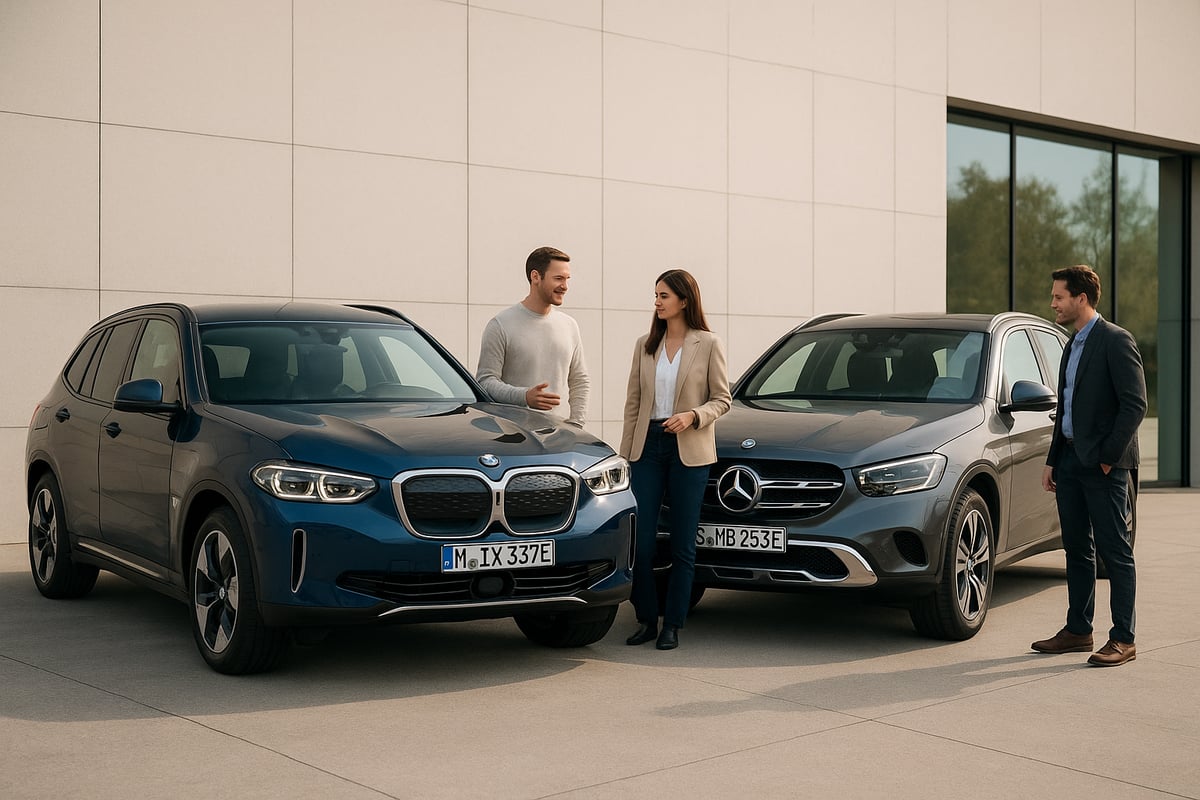
Lineup comparison: sedans, SUVs, and electrics
In 2025, the BMW vs Mercedes lineup is more varied than ever. BMW stands out with the 3 Series and 5 Series for sedans, SUVs like the X3, and the electric iX3. Mercedes responds with the C-Class, E-Class, the successful GLC, and its electric EQE line.
| Segment | BMW | Mercedes-Benz |
|---|---|---|
| Sedan | 3 Series, 5 Series | C-Class, E-Class |
| SUV | X3, iX3 | GLC, EQB |
| Electric | iX3, i4, i7 | EQE, EQS, EQA |
The diversity of the offer keeps the BMW vs Mercedes confrontation balanced on all fronts, with options ranging from family sedans to electrified sports cars.
Notable launches and updates
This year, the BMW vs Mercedes rivalry intensifies with key launches. BMW presents the Neue Klasse platform, redefining its electric models, along with updates to the 3 Series and 5 Series. Mercedes launches new versions of the C-Class and E-Class, as well as updates to its EQ lineup.
Both brands bet on bolder designs, hybrid and electric powertrains, and advanced technological integration. The BMW vs Mercedes of 2025 is also decided by innovation and the ability to surprise with each new model.
Equipment, finishes, and customization
BMW vs Mercedes is synonymous with luxury and personalization. BMW offers sporty M finishes, Luxury lines, and eco-friendly options, while Mercedes proposes AMG packages, Exclusive finishes, and sustainable alternatives.
Both brands allow high customization: exclusive colors, high-end upholstery, and cutting-edge infotainment systems. Drivers can choose from premium materials, handcrafted details, and state-of-the-art technology, reinforcing the appeal of BMW vs Mercedes.
Pricing positioning and value for money
Regarding prices, BMW vs Mercedes remains very competitive. For example, the BMW 3 Series and Mercedes C-Class start from similar ranges but vary in standard equipment and available options.
According to experts, BMW usually offers a sportier approach in its base versions, while Mercedes prioritizes comfort and technology. To compare technical sheets and prices, it is useful to use the Car Comparison Tool, ideal for those seeking precise data before deciding in the BMW vs Mercedes battle.
Special versions and limited editions
The BMW vs Mercedes duel is also experienced through their most exclusive editions. BMW M and Mercedes AMG offer sporty versions with high power and unique finishes. There are limited models for specific markets, such as the BMW M3 CS or the Mercedes-AMG C 63 S E Performance.
These editions not only elevate brand image but also generate desire and exclusivity among fans. In 2025, choosing between a BMW M or an AMG represents the pinnacle of BMW vs Mercedes, both in performance and distinction.
Technology, Innovation, and Electrification
The technological battle between BMW vs Mercedes in 2025 is more intense than ever. Both German manufacturers have heavily invested in advanced engines, smart connectivity, and electrification, setting trends in the premium segment. Who stands out more in each area? Let's discover together, section by section.
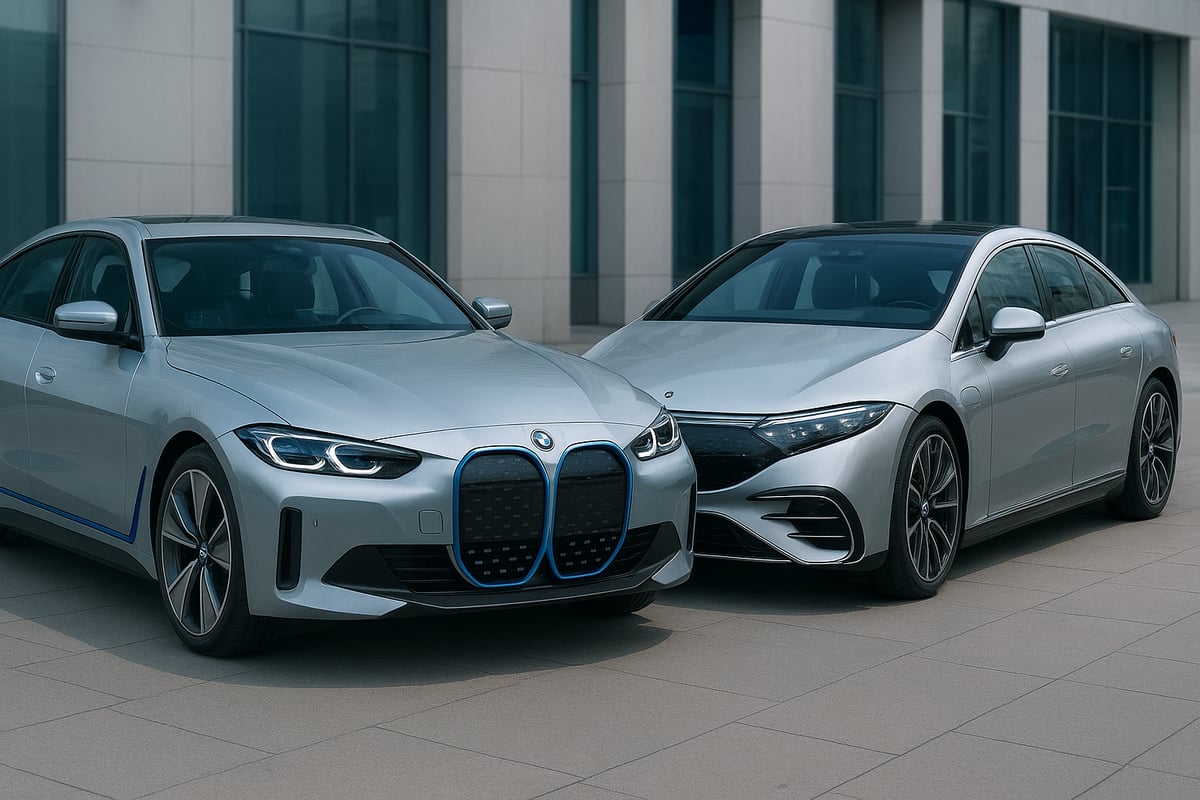
Engines, efficiency, and performance
In BMW vs Mercedes, the variety of engines is impressive in 2025. BMW offers everything from efficient three-cylinder engines to powerful six-cylinders, while Mercedes bets on turbo blocks and advanced hybrid systems. For example, the BMW 3 Series ranges from 150 to 530 hp, while the Mercedes C-Class goes from 163 to 421 hp. Both achieve competitive consumption and low emissions thanks to Mild Hybrid and plug-in hybrid technologies.
| Model | Power (hp) | Consumption (l/100km) | Emissions (g CO2/km) |
|---|---|---|---|
| BMW 3 Series | 150 - 530 | 4.7 - 8.9 | 124 - 210 |
| Mercedes C | 163 - 421 | 4.9 - 8.7 | 128 - 205 |
In WLTP tests, both comply with the most demanding standards, offering performance and efficiency that meet the expectations of those seeking the best in BMW vs Mercedes.
Infotainment systems and connectivity
In 2025, the digital experience is key in BMW vs Mercedes. BMW incorporates a 14.9-inch curved screen with BMW OS 8 operating system, while Mercedes bets on its 11.9-inch MBUX and artificial intelligence integration. Both allow voice control, OTA updates, and full smartphone compatibility.
Star features include personal assistants, predictive navigation, and high-speed Wi-Fi connectivity. Users value speed and ease of use, highlighting personalization and app integration for daily life. BMW vs Mercedes is synonymous with digital innovation.
Safety and driver assistance
Safety is a fundamental pillar in BMW vs Mercedes. Both have achieved 5-star Euro NCAP ratings in their most popular models. The BMW 3 Series achieves 97% adult occupant protection, while the Mercedes C-Class obtains 93%. Assistance systems include adaptive cruise control, autonomous braking, and lane-keeping.
Noteworthy are level 2 autonomous driving assistants, 360° sensors, and high-definition cameras. Tests confirm that both BMW and Mercedes offer maximum protection for occupants and pedestrians. Choosing between BMW vs Mercedes is betting on cutting-edge safety.
Electrification: hybrids and pure electrics
Electrification is the great battlefield in BMW vs Mercedes. BMW deploys its i range (iX3, i4, i7), while Mercedes competes with the EQ family (EQA, EQB, EQE, EQS). In range, both exceed 500 km in top models, with power rivaling combustion engines.
BMW grew 10% in pure electric sales in 2025, while Mercedes registered 42,600 electric vehicles only in the third quarter. Fast charging times are around 30 minutes for 80% battery. If you want to delve into BMW's electric offer, check the BMW Model Comparison for detailed specifications.
Exclusive innovations and recent patents
When we talk about BMW vs Mercedes, innovation is constant. BMW stands out with its latest generation eDrive technology and the Neue Klasse concept, introducing more efficient batteries and intelligent assistants. Mercedes responds with the MBUX Hyperscreen, biometric recognition, and even more advanced Mild Hybrid systems.
Among recent patents, dynamic ambient lighting and semi-autonomous highway driving functions stand out. Models like the BMW Neue Klasse and the electric Mercedes CLA represent the immediate future of premium mobility. The BMW vs Mercedes rivalry drives improvements year after year.
Sustainability and environmental commitment
Sustainability is now a central value in BMW vs Mercedes. Both use recycled materials in upholstery and interior plastics, as well as manufacturing processes powered by renewable energy. Their strategies aim to reduce carbon footprint and meet European emission targets.
BMW and Mercedes have received certifications and awards for their environmental commitment, such as the use of vegan leather and logistics optimization. In 2025, choosing between BMW vs Mercedes is also choosing a cleaner and more responsible future.
Sales Comparison, Market, and Trends 2025
The BMW vs Mercedes rivalry is more intense than ever in 2025, and global sales data prove it. Both German giants fight for the crown in the premium segment, adapting to a changing market. Let's analyze together figures, trends, and strategies defining the course of this legendary competition.

Global sales and market share
In 2025, BMW vs Mercedes shows a clear difference in sales: BMW reaches 1.59 million cars sold (+0.1%), surpassing Mercedes, which records 1.34 million (-9%). BMW's dominance consolidates especially in Europe and the U.S., while Mercedes loses ground in key markets like China and Europe.
| Brand | Sales 2025 | Annual Change |
|---|---|---|
| BMW | 1,590,000 | +0.1% |
| Mercedes | 1,340,000 | -9% |
BMW's leadership in the premium segment had been consolidating since 2024, as analyzed in BMW leads the premium market in 2024. This trend continues in 2025, reflecting the importance of global strategy and adaptation to new demands.
Performance in key markets: Europe, U.S., and China
Looking at BMW vs Mercedes by region, the contrast is even more noticeable. In Europe, BMW grows 8.6% while Mercedes falls 1%. In the U.S., BMW rises 24.9% in the third quarter, compared to a 17% drop for Mercedes. In China, both suffer, but Mercedes declines 27% and BMW only 0.4% in the same period.
These data show that preference for BMW intensifies in Western markets, while Mercedes faces greater challenges in Asia. The economic context, tariffs, and brand perception are key factors in this evolution.
Best-selling segments and consumer preferences
The BMW vs Mercedes battle is fought on all fronts, especially in sedans, SUVs, and electrics. In 2025, SUVs remain favorites, leading sales in both brands, with models like the BMW X3 and Mercedes GLC at the forefront. Sedans maintain relevance but lose prominence amid electrification and the rise of crossovers.
Electrics gain ground, reflecting a shift in preferences after the pandemic. Consumers seek technology, efficiency, and sustainability, choosing models like the BMW iX3 or Mercedes EQE.
Commercial and marketing strategies
Both brands deploy innovative strategies to attract customers in the BMW vs Mercedes war. Highlights include flexible financing offers, leasing, and digital campaigns that bring the premium experience closer to new audiences. BMW bets heavily on the Neue Klasse launch, while Mercedes promotes its electric range with the electric GLC and exclusive collaborations.
Marketing campaigns emphasize differential values: sportiness and dynamism in BMW, luxury and technology in Mercedes. Additionally, presence on digital platforms and exclusive events strengthens customer bonds.
Impact of electrification on sales
Electrification is a key battlefield in the BMW vs Mercedes confrontation. In 2025, BMW increases its hybrid and electric share by 8%, while Mercedes stagnates. BMW's growth in pure electrics is 10%, with models like the i4 and iX3 leading registrations. Mercedes, although selling 42,600 electrics in the third quarter, does not match its rival's expansion pace.
This electric advance positions BMW as a benchmark in sustainable mobility and anticipates a shift in future sales leadership.
Outlook and challenges for the near future
Looking towards 2026, the BMW vs Mercedes battle will intensify with new regulations arriving in Europe and the advance of Chinese brands. Key launches are expected, such as the expansion of the Neue Klasse and the renewal of Mercedes' EQ range. Challenges include adapting to more demanding consumers, maintaining innovation, and responding to global competition.
Both brands must balance electrification, sustainability, and exclusivity to continue leading. The future of the premium segment will depend on their ability to reinvent themselves without losing their essence.
User Experience and Expert Opinions
Enjoying a BMW or a Mercedes is much more than driving; it is living an experience. In this BMW vs Mercedes section, we show you how it really feels to be behind the wheel, using data, opinions, and evaluations that make a difference.
Driving, comfort, and space
When talking about BMW vs Mercedes, driving is the first point experts usually analyze. The BMW 3 Series stands out for its sporty ergonomics and low driving position, while the Mercedes C-Class bets on comfort and smooth ride.
| Model | Trunk Space | Ergonomics | Comfort |
|---|---|---|---|
| BMW 3 Series | 480L | Sporty | Firm |
| Mercedes C-Class | 455L | Classic | Smooth |
Materials in both interiors are high quality, although BMW tends to offer a more minimalist approach and Mercedes uses more elegant and bright details. Experts agree that BMW's driving experience is more dynamic, but Mercedes is unbeatable on long trips due to its acoustic insulation and suspension.
Technology and daily usability
In the BMW vs Mercedes debate, technology plays a central role. Both offer advanced multimedia systems: BMW incorporates a 14.9-inch curved screen and Mercedes a vertical 11.9-inch one, both with voice assistants and smartphone integration.
Daily usability depends on menus and quick access. Drivers value BMW's system speed and Mercedes' MBUX customization. For those seeking details on the electric SUV experience, the BMW X3 vs Mercedes-Benz GLC Comparison analyzes design, technology, and practical sensations in depth.
Both brands offer OTA updates and Wi-Fi connectivity, making daily life easier and keeping systems always up to date.
Ownership cost and maintenance
The cost of owning a BMW or Mercedes is key in any BMW vs Mercedes comparison. Real consumption tends to be similar in equivalent models, although BMW often achieves slightly better figures thanks to its efficiency.
Maintenance costs vary by engine and country, but both offer competitive warranties and maintenance packages. Resale value is high for both, although traditionally Mercedes maintains better valuation in premium models.
Insurance can be cheaper for BMW due to perceived lower repair costs, although this varies by version and market.
User opinions and independent ratings
User ratings are essential to understand daily life in BMW vs Mercedes. Portals like Auto Bild and specialized forums show similar scores but with nuances: BMW users highlight sportiness and steering feel, while Mercedes users appreciate comfort and intuitive technology.
Pros highlighted:
- BMW: dynamism, consumption, driving experience.
- Mercedes: comfort, finish quality, technology.
Most mentioned cons:
- BMW: firm suspensions, expensive optional equipment.
- Mercedes: high prices, some complex menus.
These ratings help profile the real experience each driver lives.
Comparators and decision-making platforms
Choosing between BMW vs Mercedes can be complicated without tools to compare versions, finishes, and prices. Today there are online platforms that simplify this decision, allowing you to review technical sheets, photos, and equipment easily.
Using these comparators is ideal for those seeking objective data and independent analysis. This way, you can easily discover which model fits your needs and budget best, without getting lost among hundreds of details.
Design, Image, and Emotional Value
Choosing between BMW and Mercedes goes far beyond comparing technical data. Design, brand image, and emotional value play a key role in the purchase decision. In this section, we analyze how these two German legends conquer hearts and glances in 2025.
Exterior and interior design: style and differentiation
Design is the first argument in BMW vs Mercedes. BMW bets on sporty lines, prominent grilles, and an athletic silhouette, conveying dynamism even when stationary. Mercedes, on the other hand, seduces with elegance, fluid surfaces, and chrome details evoking sophistication.
Inside, BMW prioritizes driver orientation and sporty ergonomics, while Mercedes surprises with luxurious environments, ambient lighting, and high-end finishes. Customization is key in both, but Mercedes catalogs allow combining exclusive materials and innovative technologies, as seen in the Complete Mercedes-Benz Range.
Comparing a BMW iX3 and an electric Mercedes GLC makes their differences clear: the former impresses with its robust and minimalist character, the latter with refinement and luxury details. This sets the trend in the BMW vs Mercedes duel in 2025.
Brand image and aspirational appeal
The BMW vs Mercedes battle is not only fought on the road but also in consumers' minds. BMW represents sportiness and an active lifestyle, while Mercedes is associated with success, prestige, and timeless luxury.
Both brands have influenced fashion and culture, collaborating with designers and celebrities. Mercedes ambassadors tend to be linked to art and high society, while BMW connects with athletes and creatives. This aspirational image is fundamental to understanding why so many people dream of driving one of these cars.
In 2025, the social perception of BMW vs Mercedes remains strong: BMW attracts those seeking excitement and youth, Mercedes those who value status and elegance.
Emotional value and customer loyalty
The emotional bond in BMW vs Mercedes is built with memorable experiences. BMW owners often highlight the pleasure of driving and the feeling of belonging to an enthusiastic community. Mercedes, for its part, generates loyalty thanks to attention to detail, loyalty programs, and exclusive events.
Both brands organize meetings, routes, and unique experiences for their customers, reinforcing that special connection. Owner clubs and brand activities contribute to making the choice between BMW vs Mercedes often a matter of passion and loyalty beyond reason.
History, community, and emotions associated with each brand are decisive factors in the 2025 choice.
Recent recognitions and awards
The prestige of BMW vs Mercedes is reflected in awards received in 2025. Both brands have been honored for design, innovation, and customer satisfaction in international contests such as J.D. Power and Auto Bild.
BMW has received praise for digitalization and the design of its new models, while Mercedes stands out for interior quality and user experience. These recognitions consolidate the image of BMW vs Mercedes as benchmarks of automotive luxury.
Satisfaction rankings and design awards influence consumer perception, turning each victory into a strong argument for those seeking the best in the premium segment.
After comparing every detail between BMW and Mercedes in 2025, you surely have a clear idea of what you want in your next car or maybe you still have doubts. Don't worry, we're here to help you take the next step. At TuFichaTecnica you can thoroughly review your favorite cars, compare specifications, prices, and discover all versions with updated and reliable data. Would you like to see side by side the models that convince you the most or explore new options? Make it easy, fast, and in Spanish alongside a community that shares your passion.
Check your favorite cars