
Have you ever felt overwhelmed when reading the BMW technical sheet and not knowing what each data point means? You are not alone; many of us have wondered how to interpret all that information when choosing a car.
In this complete guide, we will show you, in a simple way, how to understand each section of the BMW 2025 technical sheet. This way, you can make informed decisions, whether you are a beginner or an enthusiast.
We will explore the key elements, their impact on your driving experience, and give you practical tips to compare models and make the right choice. Discover the power of thoroughly knowing your BMW and get the most out of every detail!
What is a BMW Technical Sheet?
Did you know that the BMW technical sheet is your best ally to deeply understand any model from the brand? If you have ever felt overwhelmed by so many data and figures, don't worry; here we will break down everything you need to know clearly and simply.
Definition and Purpose of the Technical Sheet
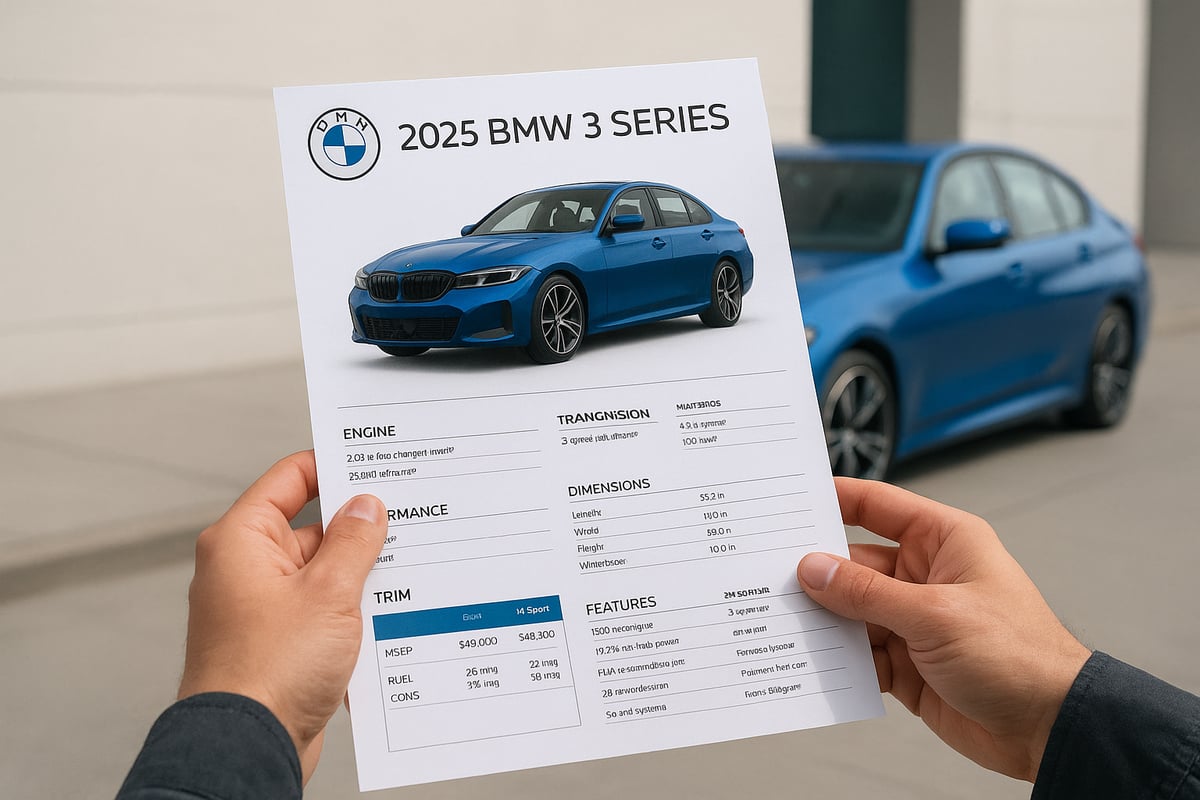
The BMW technical sheet is an official document that summarizes the most important characteristics of each model. Its main objective is to provide clear and precise information about the vehicle, from the engine type to safety systems. Unlike the user manual, which explains usage and maintenance, the technical sheet focuses on objective and comparable data.
For example, a BMW 3 Series 2025 technical sheet includes data such as power, dimensions, consumption, emissions, and equipment. If you are curious to see a real example, you can check the Updated BMW Technical Sheets, where you will find detailed and updated information for each model.
Elements That Make Up a BMW Technical Sheet
The BMW technical sheet consists of several key sections designed to cover all relevant areas of the car:
- Basic data: model, version, year.
- Key specifications: engine, power, displacement, dimensions, weight.
- Standard equipment: included elements as standard.
- Optional equipment: available packages and extras.
- Safety and technology: assistance systems, airbags, connectivity.
These elements allow anyone, even without prior experience, to easily compare different BMW models and versions.
Importance for Buyers and Enthusiasts
Consulting the BMW technical sheet is essential both for those looking to buy and for brand lovers. 78% of buyers review this data before making a decision, as it facilitates comparison between versions, helps anticipate maintenance costs, and allows evaluating resale value.
Additionally, the technical sheet is useful to identify which model best suits your needs and lifestyle. It is also essential for negotiating confidently and avoiding surprises after purchase.
Evolution of the BMW Technical Sheet up to 2025
The BMW technical sheet has evolved over time, adapting to new technologies and market demands. In recent years, sections dedicated to hybrid and electric systems have been added, as well as details about driving assistants and advanced connectivity.
For example, the technical sheet of a 2025 BMW already includes data on electric range, charging times, and CO2 emissions, key aspects in today's mobility. These changes make the technical sheet more complete and relevant for the modern buyer.
How to Read and Interpret the BMW Technical Sheet 2025
Are you intimidated by the terms and data in the BMW technical sheet? Don't worry, together we will discover how to read and understand each section so you can analyze any BMW 2025 model with full confidence.
Here you will learn to interpret the most important data: from the engine to technology and BMW-specific codes. Let's go step by step so the BMW technical sheet becomes your best ally!
Engine Data and Performance
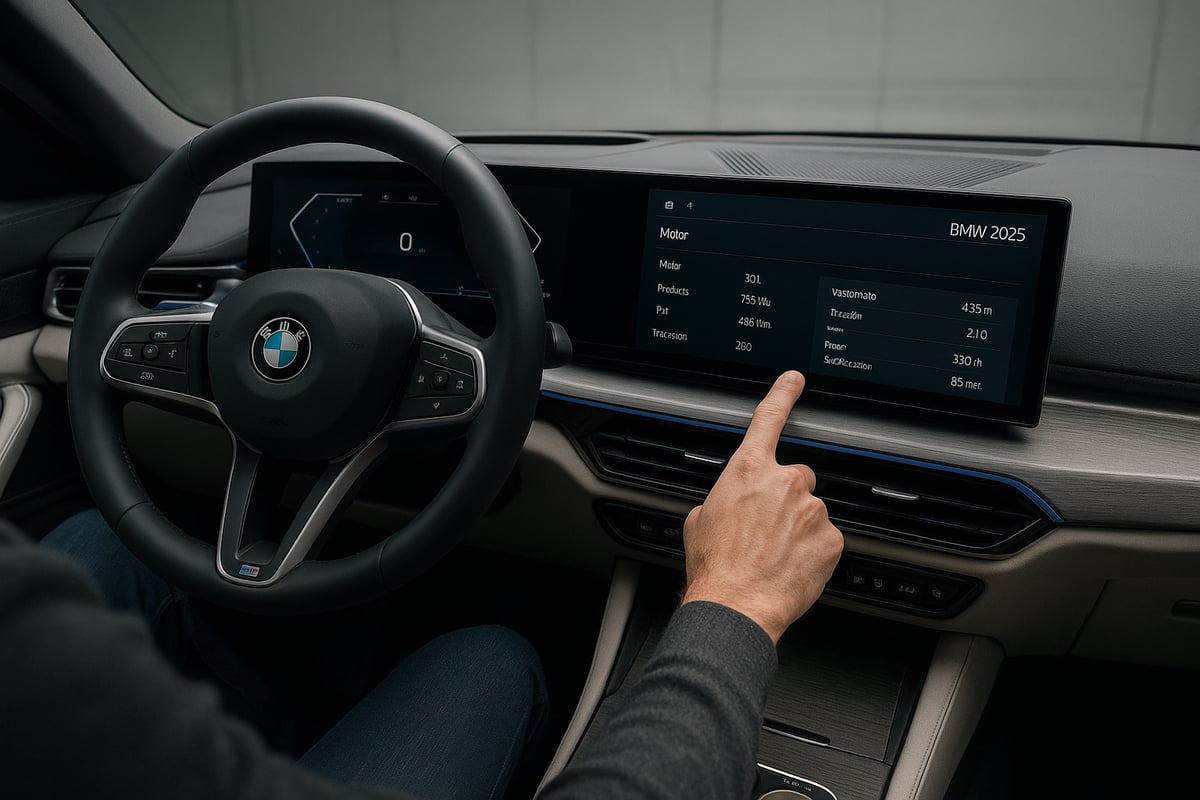
The heart of any BMW technical sheet lies in the engine and performance section. Here you will see specifications such as engine type (gasoline, diesel, hybrid, or electric), power in horsepower (HP) or kilowatts (kW), and torque in Newton meters (Nm).
For example, in 2025 BMW offers combustion engines, plug-in hybrids, and pure electric motors. Power defines acceleration capacity and response, while torque determines the force available at low revolutions, ideal for overtaking or climbing.
The BMW technical sheet also includes key data on combined consumption (liters/100 km) and CO2 emissions. These values help you compare efficiency and ecological commitment between models. If you want to analyze a hybrid in depth, you can see the BMW 330e M Sport 2025 Technical Sheet to observe how thermal and electric engines combine.
Don't forget to check the electric range and charging times. This way, you can anticipate your daily driving experience according to your lifestyle.
Dimensions and Capacities
The BMW technical sheet details exterior dimensions such as length, width, height, and wheelbase (distance between axles). These data directly influence interior space, comfort, and maneuverability.
For example, a BMW 3 Series 2025 may measure around 4.7 meters long, offering good space for passengers and trunk. Trunk capacity, expressed in liters, is crucial if you travel with family or regularly need to transport luggage.
The number of seats and curb weight are also specified. Weight affects consumption and dynamic behavior. Maximum load indicates how much you can safely carry.
Here is a basic comparative table of dimensions:
| Model | Length (mm) | Trunk (L) | Seats |
|---|---|---|---|
| 3 Series 2025 | 4700 | 480 | 5 |
| X1 2025 | 4500 | 505 | 5 |
These data help you visualize space and compare between BMW range models.
Equipment and Technology
In the BMW technical sheet, equipment marks the difference between versions. You can find details about active safety systems (automatic braking, lane control), passive safety (airbags, reinforced structure), and driving assistants (adaptive cruise control, parking sensors).
Connectivity is another strong point: check if it includes a touchscreen, Apple CarPlay, Android Auto, or advanced navigation. Standard equipment comes included at no extra cost, while optional packages allow you to customize your BMW with additional technology.
Make a list of your priorities before reviewing the BMW technical sheet: do you prefer more safety, better sound, or maximum connectivity? This way, you can quickly identify which version suits you best.
Interpretation of BMW-Specific Codes and Terminology
BMW uses its own codes and terms in the technical sheet that may seem confusing at first. For example:
- xDrive: intelligent all-wheel drive, ideal for greater safety in all weather conditions.
- M Sport: sporty design and performance package with exclusive details.
- EfficientDynamics: a set of technologies to optimize efficiency and reduce consumption.
To identify the exact version, look for the model code, which usually indicates engine type, body style, and equipment level. Learning to decipher these codes will allow you to compare models precisely and avoid confusion when choosing your next BMW.
Remember, the BMW technical sheet is your map to make informed decisions and find the perfect model for your needs.
Step-by-Step Guide: How to Use the BMW Technical Sheet to Choose Your Next Car
Choosing your next BMW may seem overwhelming, but with a BMW technical sheet in hand, everything becomes simpler and more exciting. We accompany you step by step so you can make the most of every detail and make the best decision. Remember, a good choice starts by understanding what you really need and how to interpret it in the BMW technical sheet.
Step 1: Define Your Needs and Budget
Before diving into the BMW technical sheet, it is important to be clear about what you will use your car for. Do you want it for the city, long trips, family, or are you looking for something sporty? Also think about your budget and how much you are willing to invest in fuel and maintenance.
Make a small list of priorities:
- Main type of use (urban, highway, mixed)
- Number of seats and trunk space needed
- Acceptable consumption and emissions
- Total and monthly budget
This will help you filter among the different options you will see in the BMW technical sheet.
Step 2: Select the Segment and Engine Type
BMW offers a wide range: sedan, SUV, coupe, and now also electric. Each has advantages depending on use:
- Sedan: More comfortable for highway and long trips
- SUV: Extra space and height for families or rough terrain
- Coupe: Sporty design and driving sensations
- Electric or hybrid: Savings on consumption and ecological awareness
In the BMW technical sheet, check the engine type (gasoline, diesel, hybrid, electric) and think about which suits your daily life best.
Step 3: Compare Dimensions and Capacities
Dimensions greatly influence comfort and practicality. Look in the BMW technical sheet at length, width, height, and wheelbase. This determines interior space and ease of maneuvering or parking.
For example, if you hesitate between a BMW X1 and a 3 Series Touring, compare:
| Model | Length | Trunk | Seats |
|---|---|---|---|
| BMW X1 | 4,500 mm | 540 L | 5 |
| 3 Series Touring | 4,700 mm | 500 L | 5 |
Do you travel a lot with luggage or family? Prioritize trunk and seats in the BMW technical sheet.
Step 4: Evaluate Equipment and Technology
Equipment can make a difference in safety and comfort. Look in the BMW technical sheet at which active and passive safety systems it includes, as well as driving assistants and connectivity.
- Does it include adaptive cruise control?
- Does it have parking assistance?
- What multimedia system does it offer?
Compare basic and advanced packages to see what fits your needs.
Step 5: Analyze Consumption and Maintenance Costs
Don't just focus on power. In the BMW technical sheet, check combined consumption and emissions, especially if you use the car daily. Maintenance costs vary depending on the model and engine.
A real example can be seen in the BMW i5 M60 2025 Technical Sheet, where consumption, range, and power are detailed, helping to compare with other models if you are looking for a high-performance electric vehicle.
Step 6: Consult Opinions and Reviews
The figures in the BMW technical sheet are essential, but so is knowing how the car performs in real life. Look for expert and user opinions on forums or specialized portals. Ask yourself:
- Is it comfortable on long trips?
- Does real consumption match the official figures?
- Is the technology easy to use?
Reliable sources will help you see beyond the numbers.
Step 7: Take a Test Drive
Once the BMW technical sheet has helped you narrow down options, request a test drive. Take the opportunity to check if space, visibility, and comfort meet your expectations.
During the test:
- Adjust seat and steering wheel
- Test the multimedia system
- Evaluate engine response and suspension
This way, you can confirm that the BMW technical sheet truly reflects what you are looking for in your next car.
Comparison: BMW Technical Sheet 2025 vs. the Competition
Wondering how the BMW 2025 technical sheet compares with other giants in the premium segment? It's normal, as choosing between BMW, Audi, Mercedes-Benz, Lexus, or Volvo can seem challenging. To help you, we will review the key differences and show you how to interpret this information when comparing your next purchase.
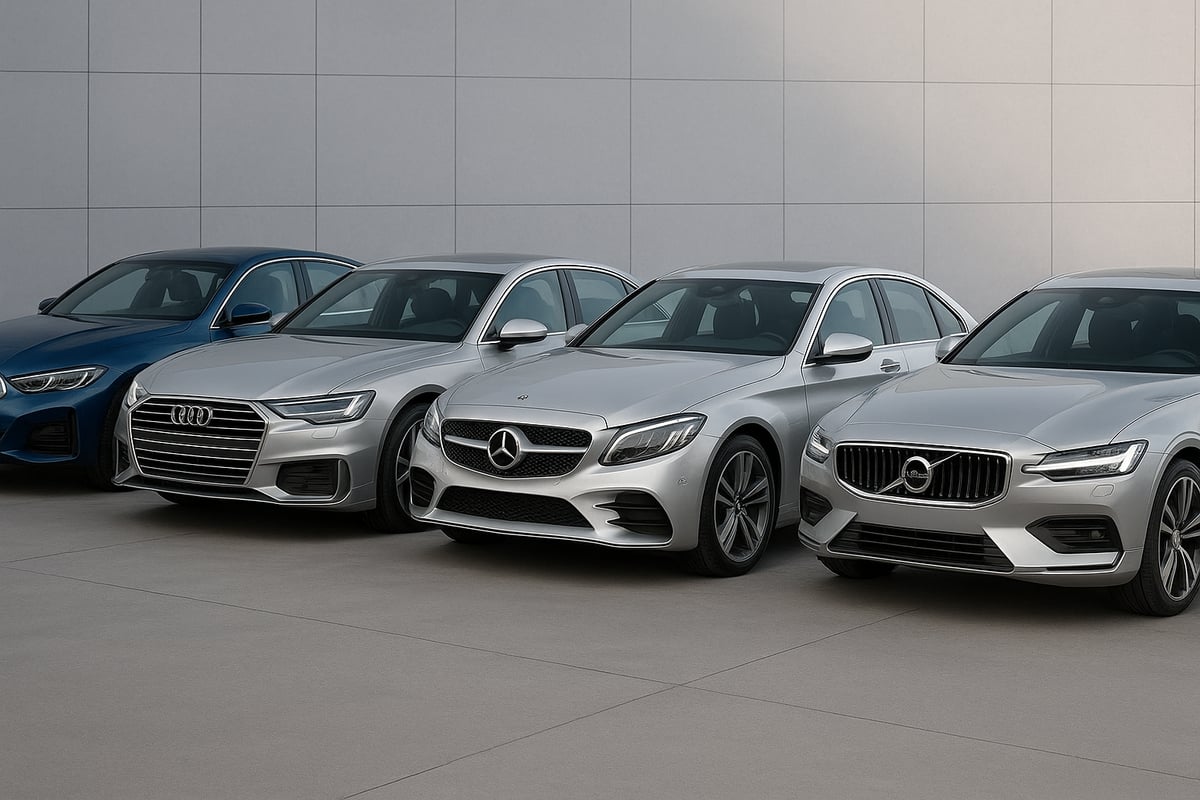
Selection of Direct Rivals
In the premium segment, the BMW technical sheet is often compared with models from Audi, Mercedes-Benz, Lexus, and Volvo. For example, the BMW 3 Series 2025 competes directly with the Audi A4 2025, Mercedes-Benz C-Class, Lexus IS, and Volvo S60.
If you want to delve into the comparison between BMW and Audi, you can check the Premium Brand Comparison: Audi vs BMW, where specifications, technology, and value of both manufacturers are analyzed.
Each rival model presents particular strengths. The Audi A4 stands out in interior technology, while Mercedes-Benz excels in comfort. BMW, for its part, is known for its dynamism and driving precision.
Key Differences in Specifications
When analyzing the BMW technical sheet against its competitors, it is essential to focus on power, consumption, emissions, and technology. For example, the BMW 3 Series 2025 usually offers more efficient engines in the hybrid range, supported by recent data positioning BMW as a leader in hybrid efficiency in 2024.
Below is a simplified comparison table:
| Model | Power (HP) | Consumption (l/100km) | CO2 Emissions (g/km) | Highlighted Technology |
|---|---|---|---|---|
| BMW 3 Series 2025 | 190-374 | 4.5-7.5 | 110-170 | iDrive, xDrive |
| Audi A4 2025 | 150-341 | 4.8-7.8 | 112-175 | Virtual Cockpit |
| Mercedes-Benz C-Class | 170-408 | 4.7-8.0 | 115-180 | MBUX |
| Lexus IS | 181-223 | 5.8-7.1 | 125-162 | Lexus Safety System |
To expand the comparison, also check the Detailed Mercedes-Benz Technical Sheets, ideal for analyzing versions and engines of the competition.
Equipment and Price
The BMW technical sheet stands out for including competitive standard equipment: driving assistants, advanced connectivity, and safety systems. However, some premium features require optional packages, something that also happens with other brands.
Regarding price, BMW usually positions slightly above Audi and Lexus but justifies this cost with greater dynamism and technology. The quality-price ratio is one of the most valued arguments by users.
Resale Value and Reliability
A key aspect of the BMW technical sheet is its impact on resale value. BMW models maintain a high residual value after 3 and 5 years, very close to Mercedes-Benz and surpassing Audi and Lexus in many markets.
Satisfaction surveys show that BMW owners value mechanical reliability and reasonable maintenance costs, although some premium models from the competition also stand out in this aspect.
Advantages and Disadvantages Compared to Other Brands
Comparing the BMW technical sheet with those of its rivals reveals advantages such as dynamism, hybrid efficiency, and intuitive technology. Among the disadvantages, we find slightly higher entry prices and costly optional equipment.
The ideal choice will depend on your priorities: if you seek sportiness and advanced connectivity, BMW is an excellent option. If you prioritize absolute comfort or assistance technology, it is advisable to also analyze the competition's alternatives.
Expert Tips to Make the Most of the BMW Technical Sheet
Do you want to become a true expert in interpreting the BMW technical sheet? Here we share the best tips and tricks so you can get the most out of every available detail. This way, you can make informed decisions, personalize your experience, and anticipate everything your BMW can offer you.
How to Identify Hidden Versions and Equipment
One of the best-kept secrets of the BMW technical sheet is the coding of versions and equipment. Each model has a specific code that reveals details such as engine, drivetrain, or M Sport package. For example, if we analyze the BMW X4 xDrive 30i M-Sport 2025 Technical Sheet, we can decipher the presence of the xDrive system, the 30i engine, and the M Sport finish.
Tips to identify versions:
- Look for the model code in the BMW technical sheet.
- Compare standard and optional equipment.
- Consult references on specialized websites.
Knowing how to read these codes will help you find limited editions or special equipment that can make a difference.
Recommended Personalization and Configurations
The BMW technical sheet not only informs about what a model includes but also about available customization options. From exclusive colors to technology packages, each configuration can change the driving experience and resale value.
| Option | Main Advantage | Impact on Resale |
|---|---|---|
| M Sport Package | Sportiness and unique design | High |
| Panoramic Roof | More interior brightness | Medium |
| Harman Kardon System | Premium sound | High |
Choosing these options well, based on the BMW technical sheet, ensures your BMW adapts to your tastes and needs and maintains its appeal in the second-hand market.
Review of Real Consumption and Emissions
Although the BMW technical sheet offers official consumption and emission data, reality may vary depending on use. It is key to compare the homologated combined consumption with experiences from other users and your own records.
Practical tips:
- Note your real consumption after each refuel.
- Use apps to track it.
- Consult forums and communities to know real figures for your BMW model.
Remember that efficient driving and proper maintenance help you get closer to the BMW technical sheet values.
Interpretation of Safety and Technology Data
Nowadays, safety and technology are protagonists in any BMW technical sheet. Systems like autonomous braking, lane change assistant, and advanced connectivity not only add value but also peace of mind.
How to evaluate these data?
- Read active and passive safety specifications.
- Verify if your model includes advanced driving assistants.
- Check recent BMW safety statistics for comparison.
Understanding the BMW technical sheet in this aspect is crucial to prioritize your well-being and that of your passengers.
Usefulness of the Technical Sheet in After-Sales and Maintenance
Keeping and understanding your BMW technical sheet is a powerful tool when requesting spare parts, planning maintenance, or seeking specialized services. Official and alternative workshops usually request exact data from your sheet to guarantee compatible parts.
Common uses:
- Identify exact part references.
- Plan periodic inspections.
- Facilitate warranty and insurance management.
Keeping your BMW technical sheet updated will save you time and trouble in the future.
Additional Resources to Deepen Your Knowledge
If you want to become a true expert in BMW technical sheets, we encourage you to explore additional resources. There are forums, blogs, and YouTube channels focused on BMW where you can share experiences and solve doubts.
Recommended sources:
- BMW communities on social media.
- Comparison blogs between BMW and rivals like Lexus (also check Lexus Technical Sheets for Comparison).
- Official and expert channels on YouTube.
Exploring these resources will allow you to master the BMW technical sheet and always stay one step ahead.
Now that you know how to read and make the most of the BMW 2025 technical sheet, why not take the next step and put what you've learned into practice? At TuFichaTecnica, you can easily compare models, versions, and equipment to find the perfect BMW for you. Whether you are looking for your first car or just want to better understand the available options, here you have all the clear information at your fingertips. Let's discover together which BMW best suits your style and needs.
Check your favorite cars