

Did you know that the car technical data sheet is the secret map to discover everything about your vehicle in 2025? If you have ever thought about buying, selling, or simply understanding your car better, this document is your greatest ally. Today more than ever, the car technical data sheet helps you make smart, safe, and responsible decisions.
In this guide, we will learn together how to interpret every detail, discover the key changes for 2025, and apply expert advice. Ready to master the car technical data sheet and become an informed user? Keep reading and take the first step towards automotive knowledge!
What is a car technical data sheet and why is it essential in 2025?
The car technical data sheet is much more than a simple paper or digital file. It is the official document that collects all the technical and legal characteristics of your vehicle, such as the chassis number, engine type, emissions, and dimensions. This information is fundamental to thoroughly know a car and to comply with current regulations, especially in 2025, where requirements have evolved.
The main function of the car technical data sheet is to guarantee that the vehicle complies with safety, emissions, and homologation standards both nationally and across Europe. This document is essential for registration, the Technical Vehicle Inspection (ITV), and any administrative or insurance procedures. Additionally, it is key for buying and selling, as it ensures transparency and the truthfulness of the car's data.
In 2025, the car technical data sheet incorporates important changes due to the update of European and Spanish regulations. It now includes new mandatory fields such as emissions data under the WLTP protocol, advanced driver assistance systems (ADAS), and cybersecurity parameters. This responds to the need for cleaner, safer, and more connected vehicles. For more details and access to updated technical data sheets, you can consult Updated Car Technical Data Sheets, a reliable source to compare models and specifications.
Let's see a practical example: the car technical data sheet of a popular model like the Citroën C3 shows data such as power, emissions, dimensions, and safety equipment. Unlike the circulation permit, which only identifies the owner and the vehicle, the car technical data sheet details essential technical aspects. It should also not be confused with the user manual, which focuses on use and maintenance.
According to recent studies, more than 80% of buyers review the car technical data sheet before deciding on a model. Manufacturers, dealerships, and users agree that this document is essential to avoid surprises and make informed decisions. Moreover, it facilitates objective comparison between vehicles, which is especially useful in an increasingly technological and regulated market.
Not consulting the car technical data sheet can lead to serious problems. It is common to find buyers who discover incompatibilities with environmental regulations, circulation restrictions, or unexpected costs for not having reviewed this document. There have also been cases of fraud due to manipulation of technical data, which underscores the importance of analyzing the sheet before any transaction.
In conclusion, the car technical data sheet is the technical and legal passport of your vehicle in 2025. Consulting and correctly interpreting it are key to a responsible buying, selling, and usage experience, adapted to the current demands of the automotive sector.
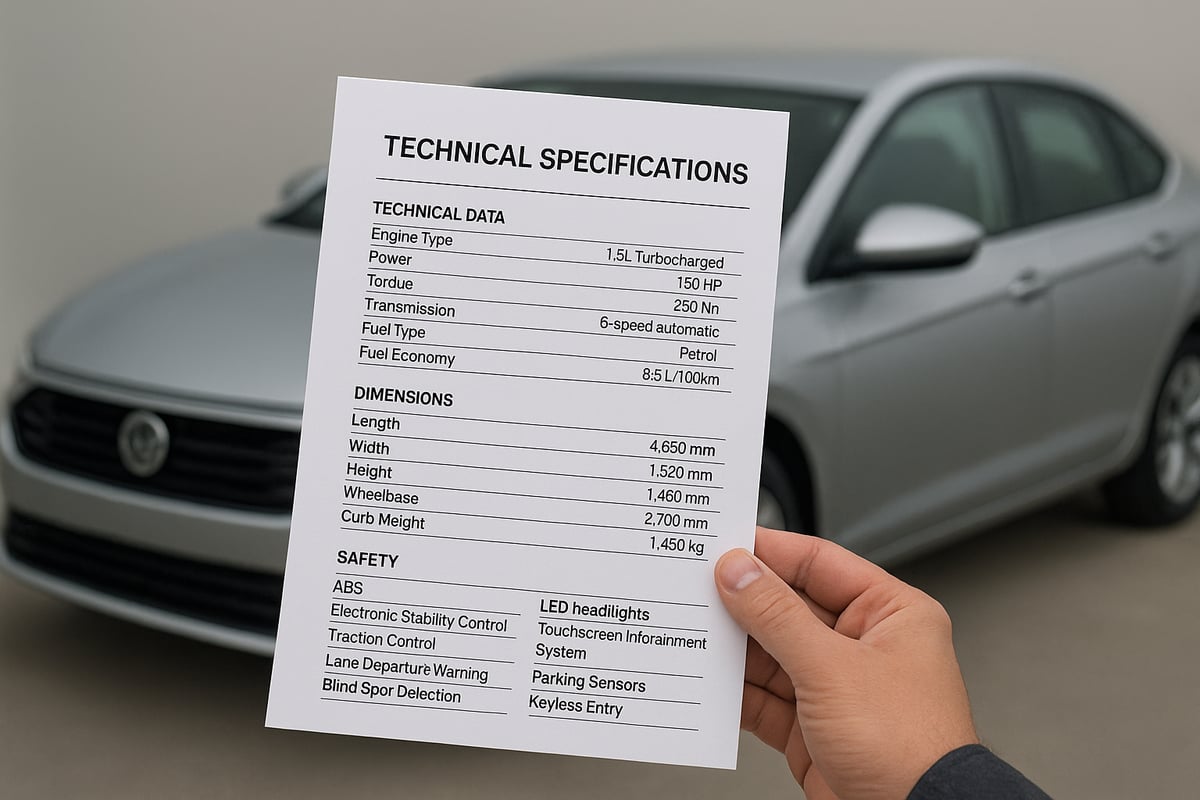
Key elements of a car technical data sheet: Complete explanation
Understanding the key elements of a car technical data sheet is fundamental to making informed decisions, whether you buy, sell, or simply want to know your vehicle thoroughly. Each section offers valuable information to guarantee safety, efficiency, and legal compliance.
Vehicle identification data
The car technical data sheet starts with identification data, essential to differentiate each vehicle. Here you will find the chassis number, brand, model, and version, as well as the year of manufacture and homologation.
For example, the chassis number is unique and allows tracing the car's history and legality. The year of manufacture and version help distinguish between apparently identical models but with different equipment or regulations.
When reviewing the car technical data sheet, make sure these data exactly match the physical vehicle, avoiding errors in procedures and possible fraud.
Engine and technical performance
The engine section is one of the most consulted parts of the car technical data sheet. It specifies the engine type (gasoline, diesel, hybrid, or electric), power in kW or HP, torque, displacement, and emissions.
In 2025, new emission standards are stricter, and electric engines gain prominence. For example, an electric motor can offer instant maximum torque, while a gasoline one stands out for its versatility.
This section of the car technical data sheet allows you to quickly compare performance, efficiency, and environmental compliance between different models.
Dimensions, weight, and capacities
Another key element of the car technical data sheet is dimensions: length, width, height, and wheelbase. It also indicates trunk capacity, curb weight, and maximum authorized weight.
To visualize it better, let's compare an SUV and a compact car:
| Model | Length (mm) | Trunk (L) | Curb Weight (kg) |
|---|---|---|---|
| SUV | 4,600 | 550 | 1,700 |
| Compact | 4,100 | 380 | 1,300 |
These data from the car technical data sheet are essential to know if the vehicle suits your daily needs for space and load.
Consumption and energy efficiency
The certified consumption, according to the WLTP cycle, is one of the star data of the car technical data sheet. In 2025, this value is key to calculating taxes and accessing low-emission zones.
Additionally, the car technical data sheet includes the environmental label, which can influence insurance costs and circulation. Choosing an efficient model translates into savings and greater freedom of movement.
Recent statistics show that efficient models can reduce annual fuel expenses by up to 30%, which highlights the importance of reviewing this section of the car technical data sheet.
Safety and technological equipment
The car technical data sheet also details safety systems and technological equipment. From 2025, systems such as autonomous emergency braking and lane-keeping assist are mandatory.
It also specifies driving assistants, connectivity, and technologies like sensors and cameras. A clear example is the inclusion of advanced safety packages as standard in the car technical data sheet of recent models.
These data are fundamental to choose a safe car adapted to current demands.
Available versions and trims
This section of the car technical data sheet shows the differences between versions and trims. The same model can offer variants with basic equipment or premium packages.
Identifying the actual equipment is easy by reviewing the car technical data sheet, where elements such as upholstery, wheels, multimedia systems, and driving assistants are indicated.
Knowing these differences is key to correctly valuing the vehicle and comparing options before deciding on a purchase.
TuFichaTecnica: The leading platform for updated technical data sheets
To quickly and reliably consult and compare technical data sheets, platforms like TuFichaTecnica are essential. Here you can access detailed specifications, compare models and versions, and find comprehensive analyses.

If you need to search for the car technical data sheet of a specific model, the Car List by Brand facilitates consultation according to the brand and model you are interested in.
Both users and professionals take advantage of these tools to make informed and safe decisions, optimizing the vehicle buying or selling process.
Main innovations in car technical data sheets for 2025
Have you wondered how the car technical data sheet has changed in 2025? The innovations are key for those who want to buy, sell, or simply understand their vehicle better. Here we tell you the most important changes you should know to stay up to date and make informed decisions.
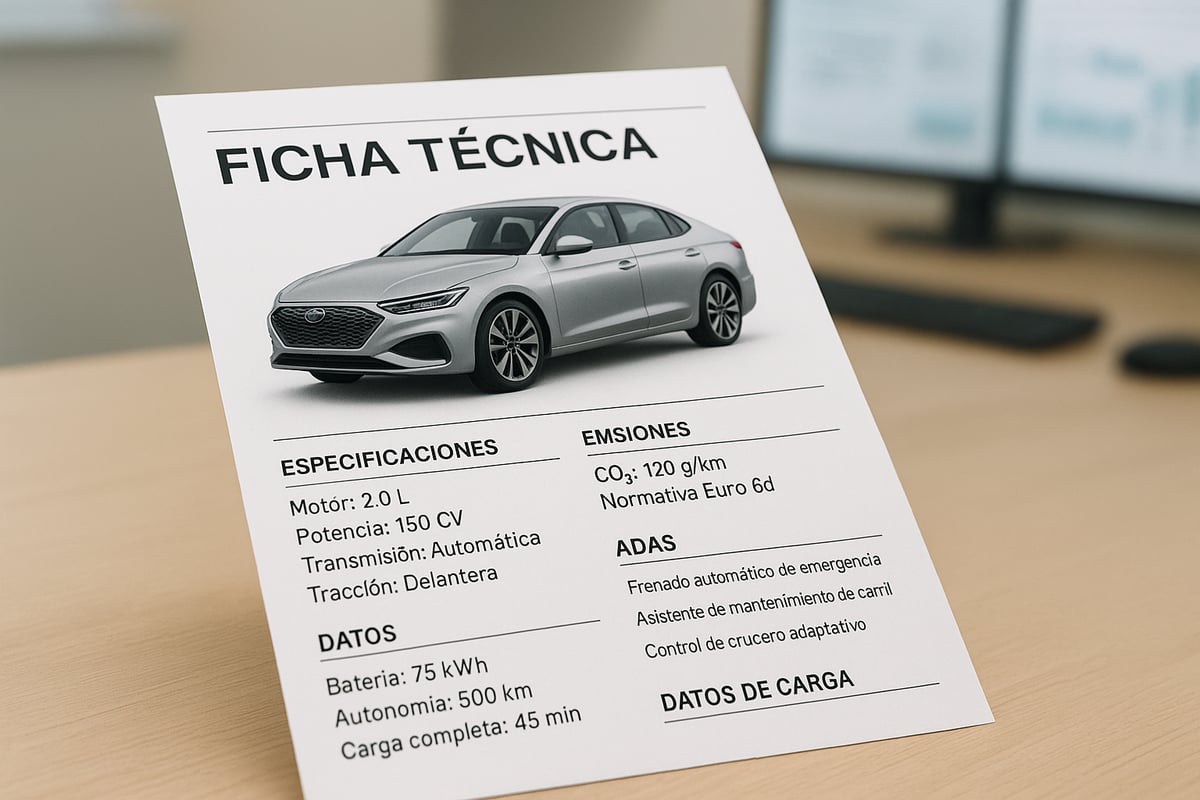
Regulatory changes and legal requirements
The car technical data sheet in 2025 is marked by new European and Spanish regulations. From this year, it is required to include more detailed information about emissions, advanced driver assistance systems (ADAS), and cybersecurity parameters.
Among the most relevant changes are the new mandatory fields to accurately reflect the CO₂ emission level, in line with the recent flexibility of CO₂ emission standards in the European Union. Thus, the car technical data sheet now specifies if the vehicle complies with Euro 7 and details the installed safety devices.
These modifications seek to improve transparency, facilitate comparison between models, and ensure that all cars comply with the most current legal standards. If you do not review these sections, you could face problems in the ITV or insurance processing.
Inclusion of data for electrified vehicles
The rise of electric and plug-in hybrid cars has transformed the car technical data sheet. From 2025, data such as certified range, charging times and maximum power, and connector type are incorporated.
Additionally, specific labels are included to distinguish between mild hybrids, plug-in hybrids, and pure electric vehicles. This facilitates identification of tax advantages and circulation restrictions.
Statistics show that more than 30% of the new vehicle fleet in Spain is electrified, making these data essential to choose the best model according to your needs and usage habits.
Information on advanced assistance systems (ADAS)
In 2025, the car technical data sheet must detail the mandatory ADAS systems, such as autonomous emergency braking, lane-keeping assist, and adaptive cruise control.
These systems not only increase safety but also influence the car's value and insurance cost. In the car technical data sheet, you will find a specific section listing these assistants and their level of intervention.
Reviewing this information is fundamental to compare models and ensure your car meets the minimum safety requirements established by European regulations.
Impact of digitalization and online access
Another major innovation of the car technical data sheet in 2025 is its digitalization. Now you can consult the car technical data sheet from official mobile applications and DGT portals, which speeds up procedures and facilitates access to information.
For workshops and professionals, digitalization allows verifying data in real time and avoiding errors in repairs or maintenance. Additionally, users can easily share the car technical data sheet when selling or transferring a vehicle.
This digital transformation ensures that information is always updated and available, improving the experience and trust for both individuals and companies.
New consumption and emission parameters (WLTP and Euro 7)
This year, the car technical data sheet incorporates consumption and emission values under the WLTP cycle, which offers more realistic figures than the old NEDC. Also, Euro 7 homologation requires even more detailed pollutant emissions.
In the 2025 car technical data sheet, you will see a comparative table with urban, extra-urban, and combined consumption values, as well as particle and nitrogen oxide emissions. This helps calculate taxes and restrictions for access to low-emission zones.
Comparing WLTP and Euro 7 data between models is essential to make responsible decisions and anticipate future regulatory changes.
How to interpret and use your car's technical data sheet step by step
Ready to master the car technical data sheet and get the most out of it in 2025? We guide you step by step, so you don't miss any important detail and can always make the best decisions as a driver, buyer, or owner. Let's go!
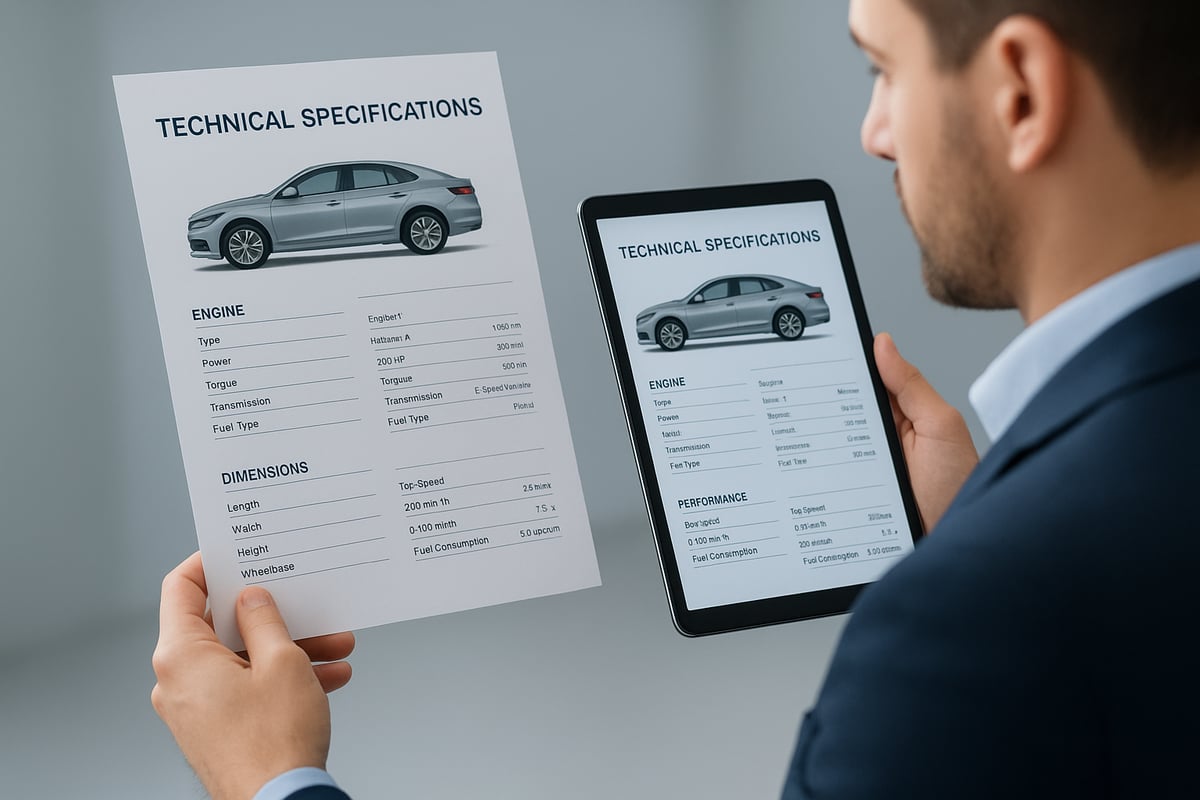
Step 1: Locate and access the technical data sheet
The first step is to know where to find the car technical data sheet. Traditionally, this physical document is delivered with the vehicle, but in 2025 you can also access the digital sheet from official DGT portals or manufacturer apps.
In many cases, private platforms allow you to consult the car technical data sheet by entering the license plate or chassis number. This is especially useful if you have lost the physical document or seek information before buying.
Always verify that the car technical data sheet corresponds exactly to the model you have in front of you. This way you will avoid errors in procedures or unpleasant surprises.
Step 2: Analyze identification and homologation data
Once you have the car technical data sheet in hand, review the identification data: chassis number, brand, model, and version. These data guarantee that the document belongs to your vehicle.
Check the date of first registration and homologation. They are essential for legal procedures, such as ITV or insurance contracts.
If you detect discrepancies between the car technical data sheet and the vehicle, consult a professional. This can save you legal problems or even fraud.
Step 3: Review engine, emissions, and consumption
In this section, the car technical data sheet offers you key information about the engine type, power, emissions, and certified consumption under the WLTP cycle. These data are fundamental to calculate taxes, circulation restrictions, and daily usage costs.
If you are looking for zero-emission or electric models, you can consult Electric Car Technical Data Sheets to compare range, power, and efficiency against other engine types.
Remember that, since 2025, the car technical data sheet includes even more detailed information about emissions and consumption, helping you choose the most efficient vehicle adapted to your needs.
Step 4: Check dimensions, weights, and capacities
Review the exterior dimensions, wheelbase, and trunk volume in the car technical data sheet. Also important are curb weight and maximum authorized weight.
These data will help you know if the car fits in your garage, if it is suitable for family use, or if you can transport the load you need.
Here is a comparative example between two types of vehicles:
| Car type | Length (mm) | Trunk (L) | Curb Weight (kg) |
|---|---|---|---|
| SUV | 4,700 | 600 | 1,700 |
| Compact | 4,200 | 380 | 1,300 |
Always consult the car technical data sheet before deciding.
Step 5: Evaluate safety and technology equipment
In the 2025 car technical data sheet, look for safety systems such as autonomous braking, lane control, and advanced driving assistants. These elements not only increase safety but can also influence insurance price and vehicle valuation.
Verify that the technological equipment reflected in the car technical data sheet corresponds to what the car really offers. This way you will have maximum protection and comfort.
Comparing standard equipment between models is key to making the best decision.
Step 6: Identify versions and trim differences
Many models have several versions and trims, each with different equipment and prices. The car technical data sheet allows you to distinguish between them easily, identifying the packages included in each variant.
To see real examples of how data vary between versions and trims, you can visit Citroën Models and Versions and compare detailed technical specifications.
This ensures you know exactly what you are buying and avoid confusion with advertising.
Step 7: Use the technical data sheet for procedures and comparisons
The car technical data sheet is essential to pass the ITV, carry out transfers, calculate insurance, or compare models before buying. Always carry an updated copy and consult the data before each procedure.
When comparing several vehicles, use the car technical data sheet to objectively analyze performance, consumption, and equipment. This way, you will make an informed and safe decision.
Practical uses and expert tips to get the most out of the technical data sheet
The car technical data sheet is an essential tool for anyone who wants to make smart decisions when buying, selling, or using a vehicle in 2025. Would you like to know how to make the most of it? Here we show you how to turn it into your best ally.
Buying and selling used vehicles
Before closing any deal, consulting the car technical data sheet is essential. This document allows you to verify if the vehicle data matches what is advertised and detect possible manipulations. For example, checking the chassis number and original specifications is key to avoiding fraud.
A useful trick is to compare the car technical data sheet data with those of the circulation permit and maintenance history. If there are discrepancies, it is a warning sign. Also, in private sales, the car technical data sheet facilitates negotiation by providing clear arguments about the real condition of the car.
Fraud and manipulation detection
The most common fraud in the used market is odometer tampering or hiding structural damage. By reviewing the car technical data sheet, you can identify if there have been changes in homologation data, unauthorized modifications, or inconsistencies between versions.
Experts recommend paying attention to technical inspection dates and emission data, which must match the installed engine. If you have doubts, consult official platforms or specialized portals to validate the authenticity of the car technical data sheet.
Selecting the most efficient and safe car
Looking to save on fuel or need a vehicle adapted to new regulations? Analyze the consumption and emissions section in the car technical data sheet. Nowadays, environmental labeling has a direct impact on taxes and circulation restrictions. You can learn about the latest changes in DGT environmental label review and how they affect each model.
Also, if you are interested in plug-in hybrids or electric vehicles, review the new specifications and homologations. To stay updated with innovations, consult the article about new homologation rules for plug-in hybrids.
Comparative table of key data in the car technical data sheet:
| Element | Use | Review Tips |
|---|---|---|
| CO2 Emissions | Taxes and restrictions | Compare with environmental labels |
| Safety Systems | Protection and comfort | Look for ADAS and standard equipment |
| Weight and dimensions | Family use, load, and compatibility | Adapt to your real needs |
Tips for interpreting complex data
Not all data in the car technical data sheet are easy to understand. If you encounter technical figures about power, torque, or capacities, consult the user manual or ask a professional for advice. This way you will avoid common mistakes like overestimating power or ignoring the importance of maximum authorized weight.
Remember that the car technical data sheet is also key to processing insurance, passing ITV, and making transfers. Data must match exactly to avoid legal or administrative problems.
Practical cases and the digital future
Imagine you choose between two similar models. One has lower emissions and better equipment according to the car technical data sheet. That difference can mean savings on taxes and access to more low-emission zones. According to studies from leading portals, more than 80% of buyers review the car technical data sheet before deciding.
Experts foresee that in the coming years digitalization will allow access to the car technical data sheet from apps, making comparison and procedure management even easier. Stay tuned to these innovations to get the most out of your vehicle.
Now that you know how to read, interpret, and make the most of any car's technical data sheet in 2025, why not take the next step? At TuFichaTecnica you have all the information you need to compare models, discover new versions, and make safer and smarter decisions. We love to accompany you in this process, so if you are curious about a specific model or want to make sure you choose the perfect car for you, we are here to help!
Check your favorite cars