
Are you thinking about renewing your car and want to make sure you make the best decision? Knowing the Peugeot 208 technical sheet is key before buying or comparing models, especially with the new features that the 2026 Peugeot 208 version brings.
In this complete guide, we will analyze in detail the latest 208 specifications: dimensions, engines, equipment, technology, safety, and comparisons with its rivals. Our goal is to provide you with all the necessary information to choose the Peugeot 208 that best suits you. Join us and discover everything you need to know to make the right choice for your next purchase!
New Features and Evolution of the Peugeot 208 2026
Ready to discover everything new in the Peugeot 208 2026? This year, the iconic B-segment model is renewed with details that make a difference. The 208 technical sheet is updated to offer us a fresh, modern, and competitive vision in all key aspects of the vehicle. Whether you want to compare, choose, or simply know the 208 thoroughly, here we show you the most outstanding new features.
Renewed Exterior Design and Updated Dimensions
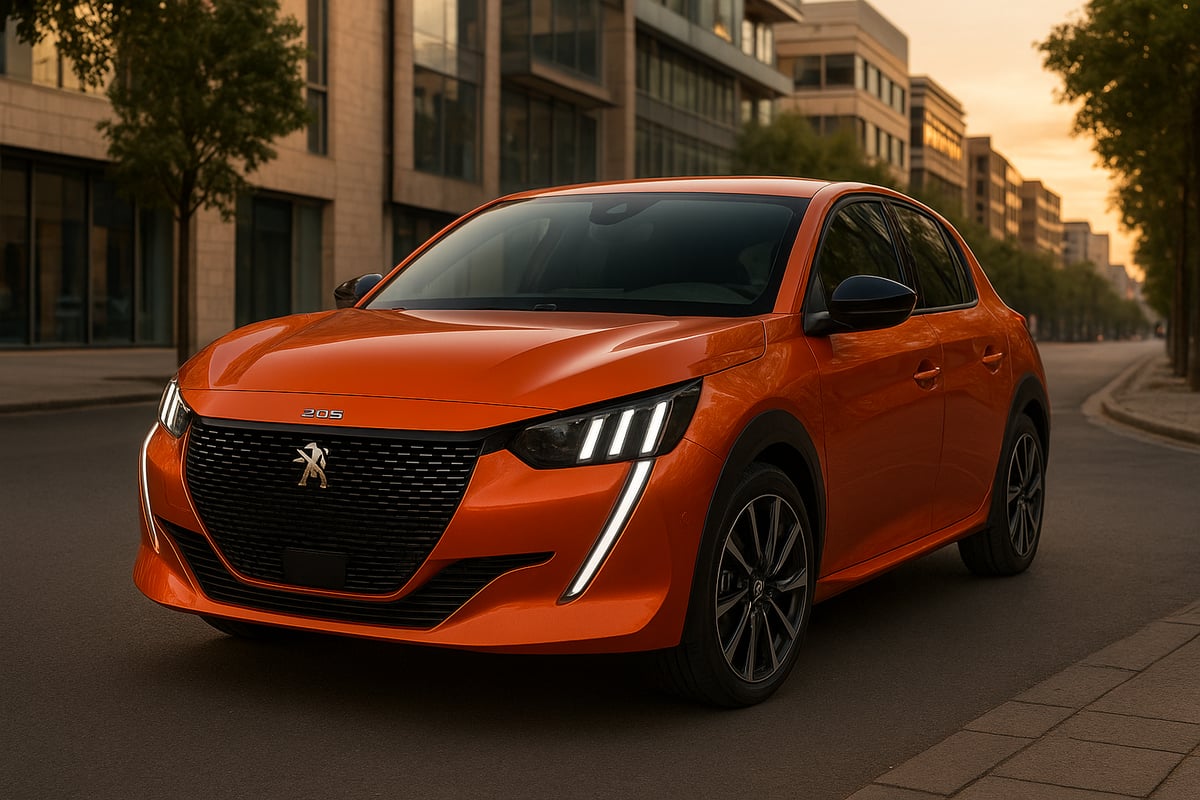
The Peugeot 208 2026 boasts a completely renewed exterior design. Its new LED light signature shaped like claws, more streamlined headlights, and body lines convey dynamism and sophistication. These changes not only bring modernity but also improve visibility and road presence.
In the 208 technical sheet, the dimensions remain compact but optimized: length of 4.06 m, width of 1.75 m, and height of 1.46 m, with a wheelbase of 2.54 m. Its turning diameter of 10.4 m facilitates city maneuvers, surpassing the agility of some direct rivals.
| Model | Length | Width | Height | Trunk Capacity |
|---|---|---|---|---|
| Peugeot 208 2026 | 4.06 m | 1.75 m | 1.46 m | 285-352 L |
| Renault Clio | 4.05 m | 1.79 m | 1.44 m | 340 L |
| Ford Fiesta | 4.04 m | 1.74 m | 1.49 m | 292 L |
| VW Polo | 4.07 m | 1.75 m | 1.44 m | 351 L |
The 208 continues to be one of the best-selling in its segment, with figures positioning it as a favorite among those who value design and practicality. The 208 technical sheet reflects this evolution, ensuring every detail counts for those seeking efficiency and style.
Changes in Trim Levels and Versions
This year, the Peugeot 208 range takes a step forward by incorporating new trims such as Style, Allure, and GT. Additionally, the offer expands with electric versions and the arrival of mild hybrids, showing that the 208 technical sheet adapts to all current mobility needs.
Compared to last year, there are notable differences in equipment and technology. For example, the entry-level Style trim already includes a touchscreen, air conditioning, and parking sensors. At the other end, the GT includes full LED headlights, exclusive wheels, premium upholstery, and sporty details.
The 2026 208 technical sheet also highlights its variety of powertrains, from gasoline to hybrids and electric, allowing you to choose the most suitable version according to intended use. For more information on versions and technical details, you can consult the Peugeot 208 Technical Specifications, where you will find comparisons and updated sheets of all models and trims.
This variety in the offer makes the 208 a versatile model, prepared both for those seeking urban efficiency and those who want more equipment and technology.
Update of Materials and Available Colors
The interior of the Peugeot 208 2026 also receives improvements, with higher quality materials and new customization options. The 208 technical sheet incorporates details in upholstery and panels that elevate the feeling of comfort and modernity inside.
The exterior color palette expands, including shades such as Vertigo Blue, Elixir Red, Selenium Gray, and Pearly White. These colors can be combined with different types of upholstery, from durable textiles to eco-leather in higher trims.
- Highlighted paint options:
- Vertigo Blue
- Artense Gray
- Elixir Red
- Pearly White
- Pearl Black
Inside, you can choose two-tone combinations, contrast stitching, and metallic finishes, allowing you to personalize each 208 to the driver's taste. Thus, the 208 technical sheet not only reflects data but also the possibility of creating a unique car, designed for those who value individuality and design.
Technical Sheet: Dimensions, Capacities, and Habitability
Do you want to know if the Peugeot 208 2026 is the perfect car for your daily life? Analyzing the 208 technical sheet is key to discovering if it adapts to your space, comfort, and versatility needs. Let's break down all its details so you can compare and decide confidently.
Exterior and Interior Dimensions
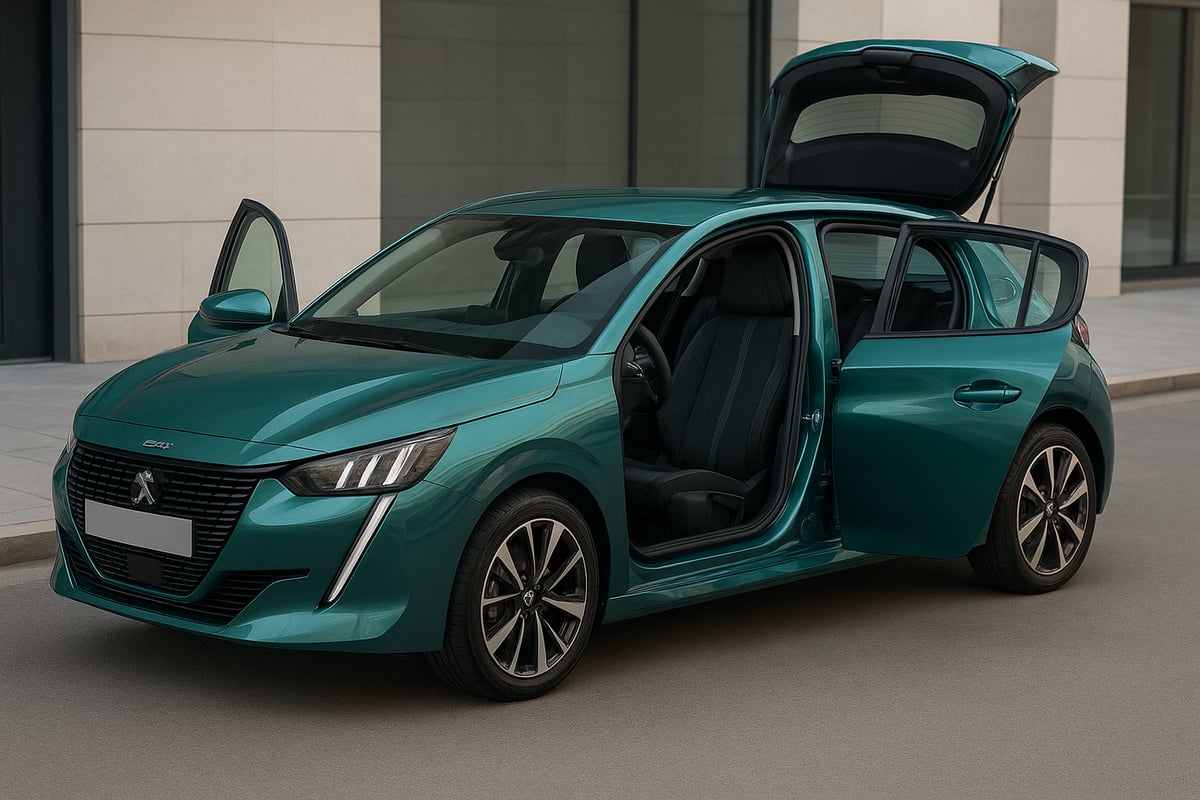
The dimensions of the Peugeot 208 2026 are one of its great attractions, as it maintains a perfect balance between compact size and habitability. According to the Official Peugeot 208 2026 Technical Sheet, the total length is 4.06 meters, width 1.75 meters, and height 1.46 meters. The wheelbase is 2.54 meters, which translates into good stability and interior space.
| Dimension | Measurement |
|---|---|
| Length | 4.06 m |
| Width | 1.75 m |
| Height | 1.46 m |
| Wheelbase | 2.54 m |
The 208 technical sheet also highlights its maneuverability, with a turning diameter of only 10.4 meters. This facilitates parking and urban movements. The trunk offers between 285 and 352 liters of capacity with seats in normal position, reaching up to 1,163 liters if folded. Compared to rivals like Renault Clio or Volkswagen Polo, the 208 positions itself in the middle but stands out for its load versatility. Thus, the 208 technical sheet shows it is a model designed to make the most of every centimeter.
Habitability and Interior Comfort
The Peugeot 208 2026 is approved for five adults, so habitability is a strong point. In the front seats, legroom and headroom are generous, allowing comfortable trips even for tall people. In the rear, two adults travel well, although the middle seat is tighter, as in most models in the segment.
Access is easy thanks to the contained height and wide door openings. The ergonomics of the driving position make it easy to find the ideal posture, and controls are within reach. Comparing the 208 technical sheet with the electric e-208 version, the latter's trunk capacity ranges between 309 and 311 liters, a minimal difference that does not penalize load capacity. In summary, the 208's habitability is competitive, with an interior designed for daily comfort and family practicality.
Fuel Tank Capacity and Range
Regarding fuel tank capacity, the 208 technical sheet indicates that gasoline and diesel versions have tanks between 41 and 44 liters, allowing ranges over 800 km with efficient driving. For those opting for electric or hybrid mobility, the e-208 offers a 50 to 51 kWh battery, which translates into a range of up to 363 km according to the WLTP cycle.
The plug-in hybrid version also allows emission-free urban trips, and the combined range is sufficient for long journeys if you plan charging well. A practical example: in urban use, you can go a week without refueling or recharging, and for weekend getaways, the trunk and range let you travel worry-free. Thus, the 208 technical sheet covers all mobility needs, from city to highway.
Engines, Transmissions, and Consumption of the Peugeot 208 2026
The Peugeot 208 2026 stands out for offering a modern, efficient range of powertrains adapted to different lifestyles. If you are looking for precise details for your 208 technical sheet, here we analyze engines, transmissions, and consumption of all versions. Want to know how it performs against rivals or which is the best option for your daily life? Join us on this exhaustive tour of its technology and performance.
Range of Powertrains: Gasoline, Hybrid, and Electric
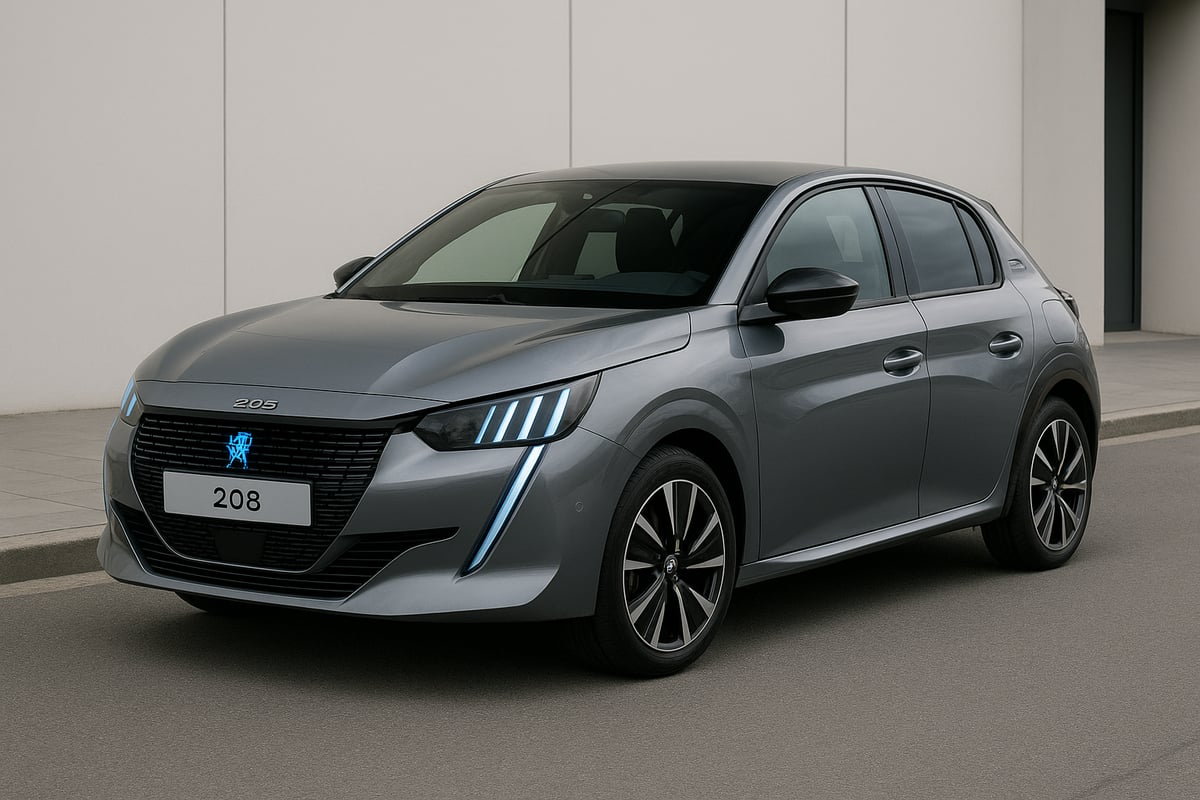
The Peugeot 208 2026 offers a range of engines designed to meet each driver's needs. In gasoline, it incorporates the reliable 1.2 PureTech in 75, 100, and 130 HP versions, all turbocharged and three-cylinder, guaranteeing dynamism and low consumption. These powertrains are ideal for those seeking a 208 technical sheet oriented to urban use but with enough response for the highway.
The big novelty is the arrival of the 48V mild hybrid system (MHEV), which pairs the PureTech engine of 100 or 136 HP with a small electric motor managed by the BISG system. This option reduces emissions and improves efficiency in urban traffic, providing smoothness in starts and maneuvers.
For those committed to full electrification, the Peugeot e-208 remains strong with its 136 HP electric motor and 50-51 kWh battery. This version guarantees zero emissions, a ZERO label, and a quiet driving experience, perfect for city and short trips. Thus, the 208 technical sheet covers from traditional drivers to those most committed to sustainable mobility.
Performance and Efficiency
The Peugeot 208 2026's performance is outstanding for the B-segment. For example, the e-208 accelerates from 0 to 100 km/h in just 9.0 seconds, with a top speed of 150 km/h. Gasoline versions, depending on power, offer agile acceleration and adjusted consumption, with official mixed figures (WLTP) between 4.8 and 5.7 l/100 km.
In hybrid variants, the 208 technical sheet highlights consumption around 4.1-4.5 l/100 km and very low emissions, earning the ECO label. Additionally, all engines include a Start/Stop system to reduce consumption in the city and take advantage of energy recovery during braking.
Efficiency is one of this model's keys. If you seek a balance between performance and savings, the mild hybrid version may be the most interesting option. The 208 technical sheet demonstrates here its ability to combine dynamism and environmental responsibility on every trip.
Available Transmissions
The Peugeot 208 2026 allows choosing among several transmissions, adapting to different driving preferences. Gasoline versions offer a six-speed manual gearbox for those who value direct control, while the 100 and 130 HP variants can be paired with an eight-speed automatic transmission, ideal for those seeking comfort in daily traffic.
In hybrid and electric versions, the 208 technical sheet includes a state-of-the-art automatic transmission. This facilitates smooth, jerk-free driving, especially in urban environments where speed changes are frequent. The automatic gearbox also includes adaptive driving modes, optimizing response according to the type of journey.
Moreover, the automatic transmission in the e-208 and MHEV versions contributes to a premium experience, minimizing effort and improving comfort. This aspect, along with Peugeot's system reliability, makes the 208 technical sheet a reference in its segment regarding versatility and ease of use.
Range and Charging Times in the e-208
The Peugeot e-208 2026 positions itself as an excellent option for those seeking electric mobility without sacrificing range. The 208 technical sheet indicates up to 363 km WLTP, allowing urban trips and short journeys without worries. In real use, this range varies depending on driving style and climate but remains competitive against electric rivals.
Regarding charging times, the e-208 offers several alternatives. Using a domestic outlet (mode 2), a full charge can take about 18.75 hours. With a 7.4 kW wallbox (mode 3), time reduces to 4.5 hours. The fastest option is DC fast charging (mode 4), which allows going from 20% to 80% in just 25 minutes using a CCS Combo connector.
This flexibility lets you adapt charging to your daily routine, whether at home, work, or public points. The 208 technical sheet thus shows its ability to adapt to users who prioritize sustainability, range, and practicality in their daily life.
Comparative Data with the Competition
Analyzing the 208 technical sheet against its main rivals, such as Renault Clio E-Tech, Volkswagen Polo, and Ford Fiesta, reveals interesting differences in consumption, power, and efficiency. For example, the e-208 offers better electric range than many equivalent models, while hybrid versions achieve lower city consumption.
The following table shows a simplified comparison:
| Model | Power (HP) | Mixed Consumption (l/100 km) | Electric Range (km) |
|---|---|---|---|
| Peugeot 208 | 75-136 | 4.1-5.7 | 363 (e-208) |
| Renault Clio | 90-145 | 4.2-5.6 | 285 (E-Tech) |
| VW Polo | 80-110 | 4.4-5.8 | N/A |
| Ford Fiesta | 75-125 | 4.5-5.9 | N/A |
Want a more detailed comparison between the Peugeot 208 and Renault Clio? We recommend checking this detailed analysis of technical specifications and key differences to know both models thoroughly.
The 208 technical sheet proves to be at the forefront in efficiency and technology, allowing savings in fuel or energy every year compared to many direct competitors. This translates into economic and environmental advantages for the end user.
Equipment, Technology, and Connectivity
Knowing the equipment, technology, and connectivity is key when analyzing the 208 technical sheet, as these aspects define the daily onboard experience. The Peugeot 208 2026 surprises with its range of options, adapting both to those seeking practical solutions and those who value innovation. Here we show you how each trim and version incorporates details designed to make your life more comfortable and connected.
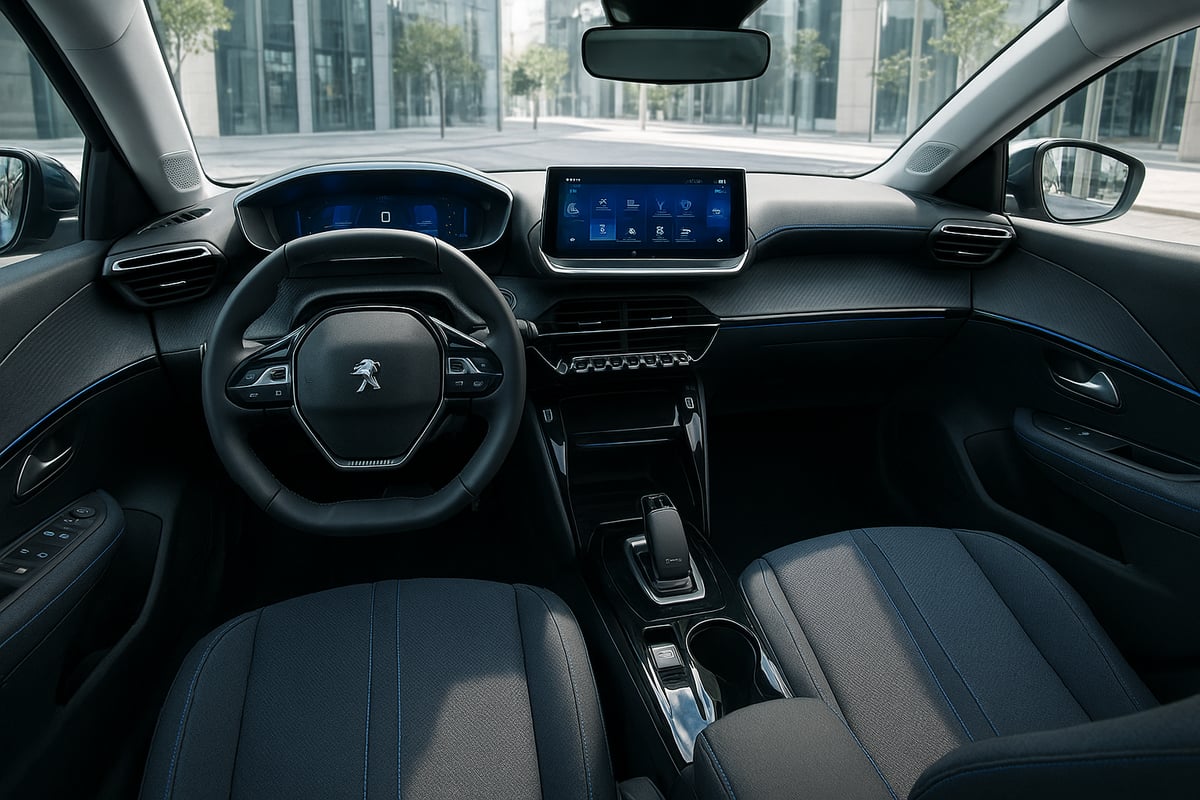
Standard and Optional Equipment by Trim
The Peugeot 208 2026 offers several equipment levels that mark notable differences in its 208 technical sheet. The Style trim includes from the start a touchscreen, climate control, four USB ports, and parking sensors, ideal for those seeking functionality without giving up essentials.
The Allure trim adds full LED headlights, keyless entry, and alloy wheels, while the luxurious GT adds premium upholstery and sporty details. Electric and thermal versions maintain similar equipment, although the e-208 may include exclusive elements such as preconditioning system and onboard charger. If you want to easily compare prices and versions, you can consult the Peugeot 208 Prices and Versions page, where you will find updated information and all possible combinations.
This range of options allows the 208 technical sheet to adapt to different styles and needs, making it easy for each user to configure their vehicle to measure.
Onboard Technology and Multimedia Systems
Technology is one of the pillars of the 208 technical sheet. The 2026 model integrates wireless Apple CarPlay and Android Auto, allowing you to connect your phone without cables and access apps, maps, and music from the touchscreen up to 10 inches.
The digital instrument panel offers customizable information, while the interface can adapt to driver preferences. Multimedia systems stand out for their fluidity and ease of use, providing a connected experience both in the city and on the road.
Additionally, the 208 technical sheet contemplates remote connectivity, offering real-time updates and the possibility to control car functions from a mobile app, adding a daily convenience plus.
Driving Assistants and Safety Aids
The 208 technical sheet incorporates state-of-the-art assistants to make every trip safer. Among them are cruise control, speed limiter, and traffic sign recognition, useful to maintain concentration and avoid surprises.
The parking system with rear camera and front and rear sensors facilitates maneuvers in tight spaces, while fatigue alert and automatic emergency braking provide extra peace of mind, especially in urban trips.
These assistants make the Peugeot 208 one of the active safety benchmarks in its segment, reinforcing its position in the 208 technical sheet as an advanced and safe model.
Interior Comfort and Details
Interior comfort is a key element of the 208 technical sheet. Heated seats and dual-zone climate control guarantee a pleasant temperature in any season, while the wireless smartphone charger eliminates worries about cables and battery.
The ergonomics of the driving position, material quality, and multiple customization options allow each user to enjoy a cozy and modern environment. On long trips, these details make a difference, making the 208 an ideal companion both daily and for weekend getaways.
Safety, Warranties, and Test Results
Safety is an essential pillar when analyzing the Peugeot 208 2026 technical sheet. In this section, we explore in depth protection systems, independent test results, warranties offered, and additional equipment that reinforce confidence behind the wheel. Discover why this model positions itself as a safe benchmark in the B-segment.
Active and Passive Safety Systems
The Peugeot 208 2026 incorporates a robust combination of active and passive safety systems, as highlighted in its 208 technical sheet. Main elements include:
- Six airbags distributed throughout the cabin
- Trailer stability control (ESP) and advanced traction systems
- Isofix anchors in rear seats for child seats
- Lane departure warning and automatic emergency braking
- Automatic activation of hazard lights after a collision
These systems work together to minimize risks both in urban and highway trips. For example, automatic braking detects pedestrians or vehicles and can avoid accidents in everyday situations. The 208 technical sheet also emphasizes ergonomics in the placement of safety controls, facilitating their daily use.
Euro NCAP Results and Occupant Protection
The Peugeot 208 2026 has been evaluated by Euro NCAP, obtaining a solid overall score of 4 stars. The 208 technical sheet reflects these results, offering peace of mind to drivers and families.
| Category | Score |
|---|---|
| Adult Protection | 91% |
| Child Protection | 86% |
| Pedestrian Protection | 56% |
| Safety Assistants | 71% |
In frontal and side impact tests, the 208 demonstrated a resistant structure and proper energy management. The child restraint system and side airbags offered outstanding occupant protection. These data position the 208 technical sheet as a reference to compare safety against other models in its class.
Vehicle and Battery Warranties
Peace of mind after purchase is reinforced with competitive warranties in the 208 technical sheet. The Peugeot 208 2026 offers:
- General vehicle warranty: 36 months or 9,999,999 km
- Electrical system warranty (in e-208): 96 months or 160,000 km
- Paint and anti-corrosion warranty: up to 144 months
For example, if an electrical fault arises in the first years, battery coverage provides support at no additional cost. Also, you can consult specific details of the hybrid version and its warranties at Peugeot 208 Allure Hybrid 136 e-DCS6, expanding technical and coverage information directly from the 208 technical sheet.
Additional Safety Equipment
Extra safety equipment adds points to the 208 technical sheet. Highlighted elements include:
- Audible pedestrian alert system in the e-208 version
- Driver fatigue monitoring and trailer preparation
- Three-point seat belts in all seats
- Hill start assist and tire pressure sensors
These details make a difference, especially on long trips or unexpected situations. Choosing the Peugeot 208 2026, according to its 208 technical sheet, means opting for a model that cares for every aspect of your protection and that of your passengers.
Comparison and Analysis Against B-Segment Rivals
Would you like to know how the Peugeot 208 2026 positions itself against its main rivals? In this section, we will break down simply and clearly how the 208 technical sheet compares with other popular B-segment models. If you want to make an informed decision and find the model that best suits your needs, stay with us.
Main Competitors of the Peugeot 208 2026
The B-segment is full of attractive options. The 208's direct rivals are the Renault Clio, Ford Fiesta, Volkswagen Polo, and Opel Corsa. Each has its own character and strengths. The Clio stands out for interior space and efficiency. The Polo bets on perceived quality and technology. The Fiesta is known for its dynamism and the Corsa for its electric range. Comparing the 208 technical sheet with these models, you will see notable differences in design, technology, and powertrains.
Advantages and Disadvantages of the 208 Compared to Competition
The Peugeot 208 2026 shines for its modern design and wide range of powertrains, including gasoline, hybrid, and electric options. Compared to the competition, the 208 technical sheet stands out in connectivity and driving assistants, although the trunk could be more generous. In higher trims, the price may be higher than some rivals, but it compensates with equipment and quality finishes. Looking for advanced technology and a premium driving experience? The 208 could be your best option.
Comparison of Dimensions, Engines, and Consumption
To better understand the differences, see the following comparison table:
| Model | Length (mm) | Trunk (L) | Available Engines | Mixed Consumption (l/100km) |
|---|---|---|---|---|
| Peugeot 208 | 4060 | 285-352 | Gasoline, hybrid, e-208 | 4.4 - 5.6 / 15.2 (electric) |
| Renault Clio | 4050 | 340 | Gasoline, hybrid | 4.2 - 5.4 |
| VW Polo | 4074 | 351 | Gasoline | 4.6 - 5.5 |
| Ford Fiesta | 4040 | 292 | Gasoline | 4.5 - 5.7 |
Want to compare more technical details? You can access complete and updated comparisons at Car Technical Sheet Comparisons, where you can analyze each 208 technical sheet alongside its rivals.
Technological and Safety Equipment in Comparison
In technology, the 208 technical sheet stands out with a digital screen up to 10 inches, wireless connectivity, and advanced driver assistance systems. The Clio and Polo offer similar equipment, although the 208 usually includes more standard elements in mid trims. In safety, all have automatic braking and lane control, but the 208 adds details like fatigue alert and front sensors, making it very competitive.
Quality-Price Ratio and Expert Ratings
The quality-price ratio is a key point when analyzing the 208 technical sheet. Its price starts at €19,059, and the electric version can exceed €41,000. Experts value its design, technology, and powertrain options, giving it an average score of 4.4 out of 5. If you seek a long-term investment, the 208 offers extensive warranties and a good reputation. Prefer to pay upfront or finance? The range of options makes it easy to find the perfect balance for your budget.
Versions, Prices, and Buying Tips
Choosing the right version of the Peugeot 208 2026 may seem challenging, but with the 208 technical sheet as a guide, the decision becomes simpler and safer. With options that adapt to every user type, from those seeking efficiency to those prioritizing technology, we will break down everything you need to know to make the right purchase.
Trims and Versions Available in 2026
The Peugeot 208 2026 is presented in three main trims: Style, Allure, and GT, plus electric and hybrid versions. Each configuration offers a different combination of equipment, style, and technology, adapting to different needs.
For example, the Style trim has essentials: touchscreen, air conditioning, and parking sensors. The Allure adds alloy wheels, keyless entry, and chrome details. The GT stands out for premium upholstery, full LED headlights, and sporty details.
The 208 technical sheet lets you easily compare these trims and find the one that best fits your lifestyle.
Official Prices and Launch Offers
Peugeot 208 2026 prices vary by version and powertrain. The range starts from €19,059 for the Style gasoline trim, reaching up to €41,550 in the e-208 GT. During promotional campaigns, savings of up to €2,000 off MSRP are common.
Here is a summary table:
| Version | Starting Price (€) |
|---|---|
| Style | 19,059 |
| Allure | 23,700 |
| GT | 29,220 |
| e-208 GT | 41,550 |
Consulting the updated 208 technical sheet will help you identify the best current offers and promotions.
Tips to Choose the Ideal Version
Not sure which to choose? If your priority is urban use, the Style gasoline or hybrid trim may be enough. For those seeking more technology and comfort, Allure and GT offer advanced assistants and high-quality materials.
Do you travel a lot or seek ecological efficiency? The e-208 is ideal, and you can compare its 208 technical sheet with other electric models in the segment at Electric Model Technical Sheets.
Remember each version is designed for a different profile, so assess your needs before deciding.
Financing, Renting, and Subscription Options
Peugeot offers flexible alternatives to facilitate the purchase of the 208 2026. You can opt for traditional financing, with installments from €180/month, or choose renting, ideal for those seeking a fixed fee and no additional expenses.
The 208 technical sheet is key if you want to compare options before committing. Also, monthly subscription is a growing trend, perfect for those who want to change cars frequently without long-term commitments.
Availability and Delivery Times
Availability of the Peugeot 208 2026 depends on the chosen version and trim. Recent launches have seen delivery times between 2 and 4 months for conventional versions, and up to 6 months for the e-208 GT.
Consulting the 208 technical sheet and talking to the dealer will help you better estimate times and plan your purchase without surprises.
Accessories and Customization
Customizing your Peugeot 208 is easy and fun. You can choose among technology, comfort, or sporty detail packs, plus a wide range of colors and upholstery. Want inspiration? In the video Peugeot 208 2026: Design, Space, and Technology you can see how different configurations and accessories look in real life.
Check the 208 technical sheet to verify accessory compatibility and create a unique model tailored to your tastes and needs.
Now that you know in depth all the new features, versions, and technical details of the Peugeot 208 2026, surely you have in mind some model or trim you would like to analyze even more. Remember that making an informed decision is key to enjoying the car that really suits you and your lifestyle. If you still have doubts or want to compare the 208 with other models, you are not alone — at TuFichaTecnica you have all the necessary information to review specifications, prices, and much more of your favorite cars, all in one place.