
Discover why 2025 marks the beginning of a new era for electric cars in Spain and worldwide. The mobility revolution is already here, and we don't want you to be left behind.
In this complete guide, you will find everything you need to understand the changes, compare models, and make informed decisions. We want to help whether you are a buyer, curious, or a professional interested in the progress of electric cars.
Throughout the article, we will see the current market status, technological innovations, advantages, challenges, the most outstanding models, incentives, and practical advice. Get ready to make the leap to electric mobility with clear and expert information that will accompany you every step of the way.
The Current State of Electric Cars in 2025
2025 marks a before and after for electric cars in Spain and Europe. For the first time, the market share exceeds 10% in our country, with a sustained growth trend. According to the Electric Car Sales Statistics in Spain 2025, registrations have grown by 40% compared to the previous year, reflecting the increasing interest of individuals, families, and companies.
The most present brands in the Spanish market include Tesla, BYD, MG, Volkswagen, Mercedes, BMW, Renault, and Citroën. These manufacturers offer a wide range of models covering from urban cars to premium SUVs, adapting to different buyer profiles. The typical user in 2025 is urban, seeks efficiency, and values technology, although more families and companies are opting for electric car fleets.
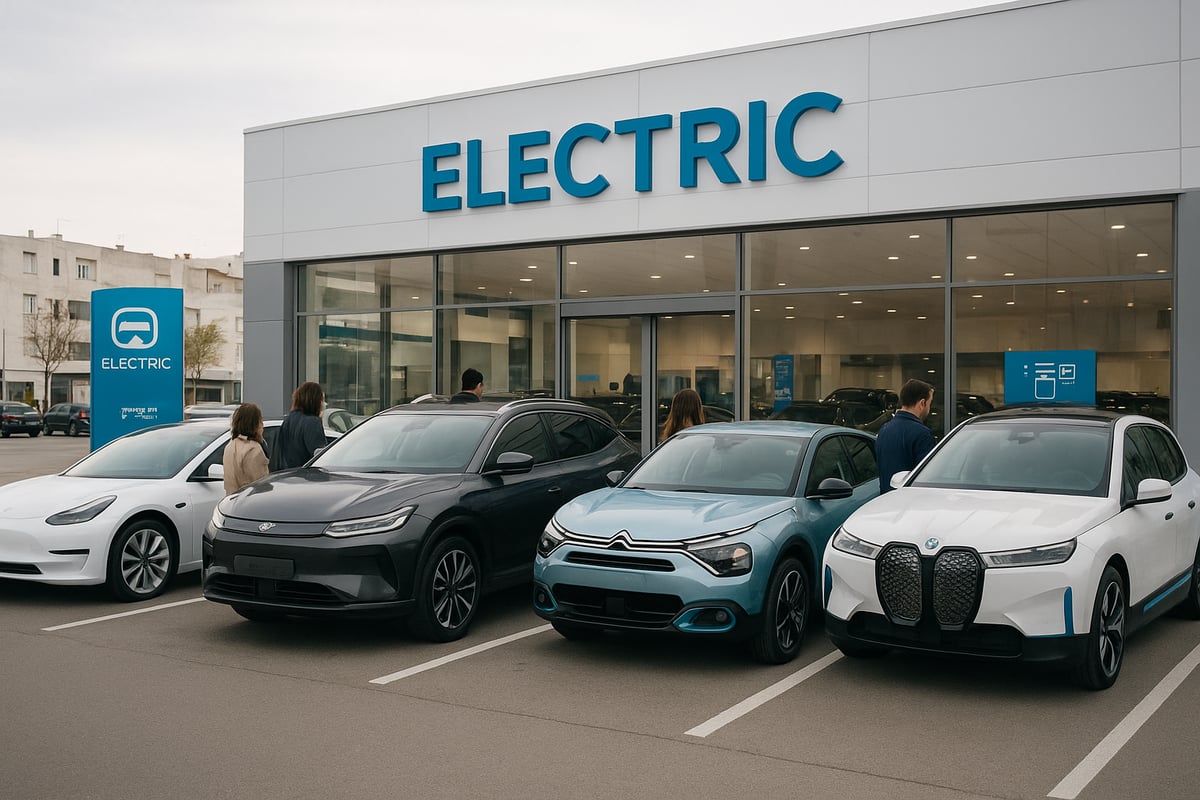
Charging infrastructure has experienced a remarkable leap. In 2025, Spain has more than 25,000 public charging points, including superchargers and ultra-fast stations on main corridors. This facilitates long trips and eliminates part of the range anxiety of electric cars. Real autonomy averages range between 300 and 500 km, although some models reach higher figures under optimal conditions.
The following table summarizes the growth of electric cars in Spain:
| Year | Sales (units) | Market Share (%) |
|---|---|---|
| 2023 | 50,000 | 5 |
| 2024 | 72,000 | 8 |
| 2025 | 110,000 | 12 |
Regulatory changes have been key to driving this progress. The implementation of Low Emission Zones in large cities and restrictions on combustion vehicles have motivated many to make the switch to electric cars. Additionally, new tax incentives and direct subsidies make the transition more accessible for all profiles.
The impact of Chinese electric car manufacturers is increasingly visible. Brands like BYD and MG offer competitive models in price, range, and equipment, pressuring traditional manufacturers to innovate. The entry of new players has energized the market, increasing supply and improving value for money.
Despite these advances, some challenges remain. Purchase prices are still higher than those of combustion vehicles, although the difference is reduced with incentives. The availability of models is broad, but some segments, such as affordable family cars, still have room for improvement. Perceptions about range and charging remain a barrier for some of the public, although less and less.
In summary, the current state of electric cars in 2025 is one of consolidation and expansion. The market is growing strongly, technology is advancing, and infrastructures are improving, bringing us closer to more sustainable and accessible mobility for all.
Technological Innovations and Trends in 2025
The year 2025 marks a turning point for electric cars, where technology advances by leaps and bounds and redefines what we expect from our vehicles. Innovations not only improve the driving experience but also make electric mobility more accessible, efficient, and sustainable for everyone.
Next-Generation Batteries and Ultra-Fast Charging
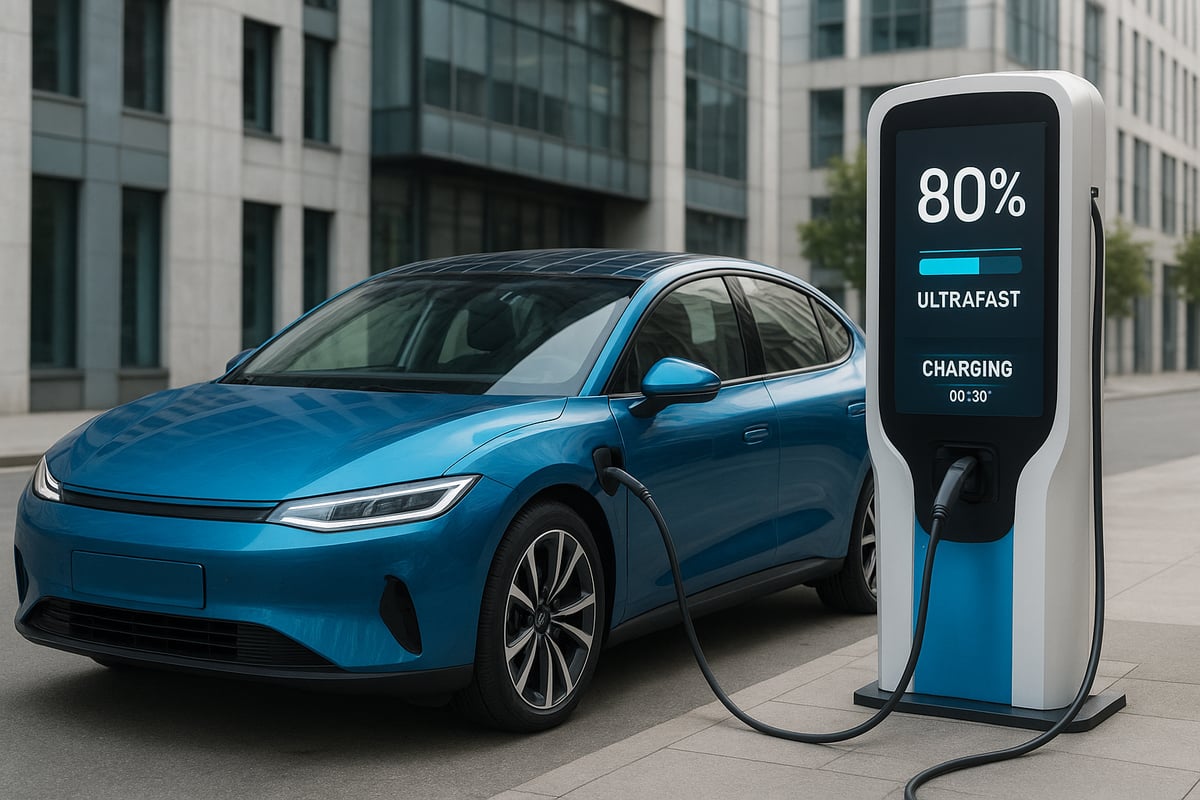
The heart of the electric car in 2025 is next-generation batteries. Manufacturers are betting on solid-state batteries, which offer higher energy density, longer life cycles, and improved safety. This type of battery allows longer ranges with less weight and much shorter charging times.
Ultra-fast charging is established as a standard, with stations up to 400 kW capable of charging from 10% to 80% in less than 15 minutes. This transforms the user experience, making long trips more comfortable and removing one of the main adoption barriers. If you want to delve deeper into these advances, you can consult New Technologies in Electric Car Batteries 2025, where the most notable developments in the sector are analyzed.
Additionally, bidirectionality (V2G) allows the electric car not only to consume energy but also to return it to the grid during peak demand, integrating with renewable energy systems.
Connectivity, Software, and Autonomous Driving
Connectivity is another major protagonist. 2025 models incorporate OTA (over-the-air) software updates, meaning the electric car can receive improvements and new features without visiting the workshop. Integration with intelligent assistants and advanced infotainment systems turns every trip into a personalized and comfortable experience.
Driver assistance systems reach levels 2 and 3, allowing the electric car to manage acceleration, braking, and steering in certain situations. This provides greater safety and reduces fatigue on long trips. Some brands, like BMW and Mercedes, already offer these technologies in their new models.
Efficiency, Sustainability, and Highlighted Cases
Efficiency advances are notable: average consumption drops to 12-16 kWh/100 km in outstanding models, representing a much more rational use of energy. The use of sustainable materials and battery recycling gains prominence, reducing the environmental impact of the electric car from manufacturing to end of life.
Some leading examples in 2025 include the BMW iX3 with the new Neue Klasse platform, the Tesla Model 3 Highland with improvements in efficiency and range, and the Mercedes Electric CLA which incorporates 800V charging. Additionally, models with integrated solar panels begin to offer extra kilometers of range powered solely by solar energy.
In short, electric car technology in 2025 brings us closer to a future where mobility is smarter, greener, and adapted to the real needs of users. The pace of innovation is unstoppable and promises to continue surprising in the coming years.
Best Electric Cars by Segment in 2025
Choosing the best electric car in 2025 is easier if we classify models by segment. This way, each type of user finds the option that best suits their daily life and budget. Join us to discover which models stand out in urban and city cars, compacts and sedans, and the most advanced SUVs and family cars, with clear data and practical advice.
Urban and City Cars
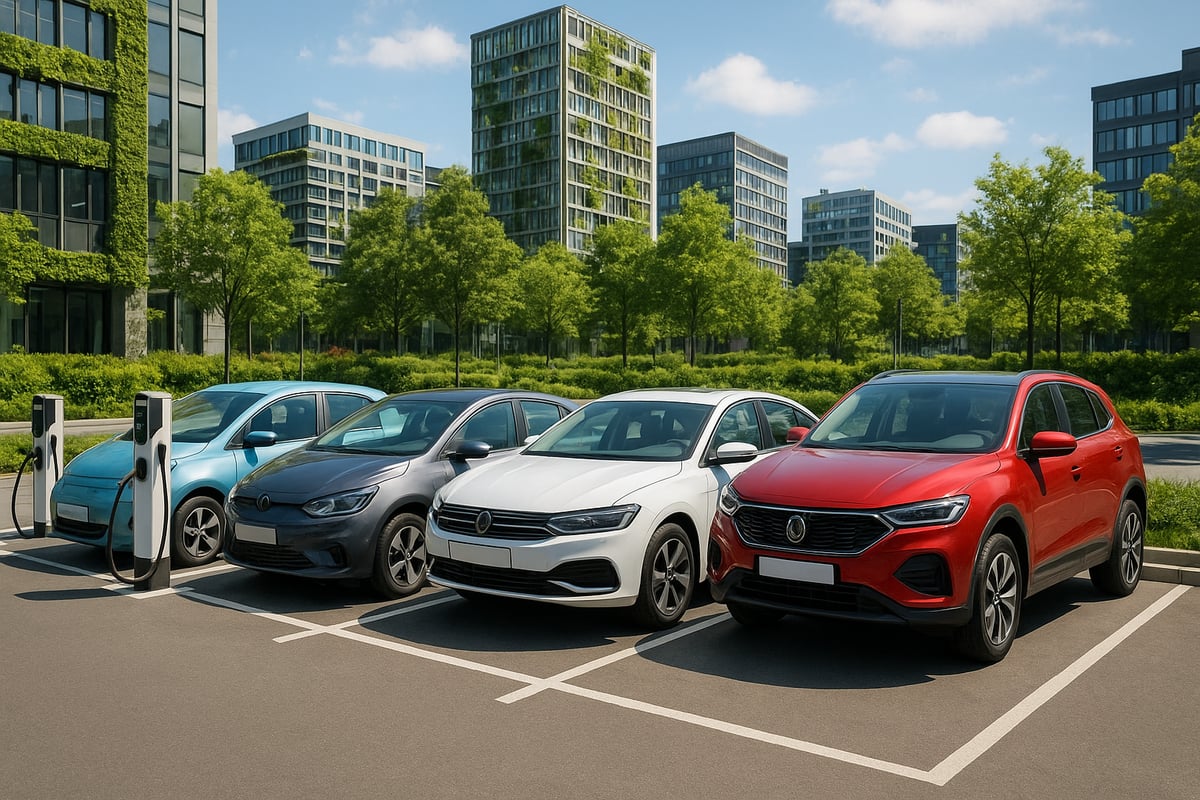
In the urban segment, the electric car is the king of daily mobility. Models like the Dacia Spring, BYD Dolphin, Peugeot e-208, and Citroën ë-C3 lead for their compact size and low operating cost. They are ideal for agile city movement, easy parking, and saving on maintenance.
The real range of these urban cars ranges between 200 and 350 km, enough for short trips and usual commutes. They stand out for their efficiency and reduced average consumption, around 13-15 kWh/100 km. The Citroën ë-C3, for example, starts from only €12,490 with incentives, becoming one of the most accessible options for those seeking their first electric car.
Quick comparison of urban models 2025:
| Model | Real Range | Starting Price | Average Consumption |
|---|---|---|---|
| Dacia Spring | 225 km | €13,000 | 14.5 kWh/100 km |
| BYD Dolphin | 310 km | €16,800 | 13.6 kWh/100 km |
| Peugeot e-208 | 340 km | €18,500 | 14.0 kWh/100 km |
| Citroën ë-C3 | 230 km | €12,490 | 13.8 kWh/100 km |
These models are perfect as a second family electric car, for young drivers, or for shared mobility. Their technological equipment has improved, incorporating digital screens, connectivity, and safety assistants. Additionally, urban cars already represent 35% of electric car sales in Spain, showing the growing demand for practical and affordable city solutions.
Compacts and Sedans
If you are looking for a versatile electric car for city and highway, compacts and sedans are the ideal option. Standout models include Tesla Model 3, MG 4, Cupra Born, Volkswagen ID.3, and Renault Megane E-Tech. They offer more space, better range, and advanced technology for those combining urban and interurban trips.
Real range in this segment reaches between 350 and 500 km, allowing long trips with fewer stops. The Tesla Model 3, for example, offers efficient consumption from 12.6 to 16.5 kWh/100 km and up to 750 km WLTP range. The MG 4 positions itself as a very competitive alternative in quality-price ratio, from €17,378 with the MOVES III Plan.
Key advantages of compacts and sedans:
- Better balance between size, range, and performance.
- Driver assistance technology, advanced connectivity, and fast charging.
- Different versions and trims to suit every need.
These electric car models are perfect for families, professionals, and users looking for an all-in-one vehicle. Efficiency continues to improve, and the offer expands every year.
Want to compare specifications, consumption, and prices of all these electric car models in 2025? You can easily do so at Compare Electric Cars 2025, accessing expert analyses and detailed comparisons to make the best decision.
SUVs and Family Cars
The SUV and family car segment is the fastest growing in the electric car world. Here we find vehicles like BMW iX3, Tesla Model Y, Mercedes EQB, Hyundai Kona EV, and Kia EV6, designed for those who need space, power, and comfort on every trip.
The WLTP range can reach up to 800 km in models like the BMW iX3, although real use ranges between 400 and 600 km. These SUVs offer large trunks, generous seating, and a high driving position, ideal for large families, companies, or frequent travelers.
Comparison table of notable electric SUVs:
| Model | Real Range | Charging Capacity | Starting Price |
|---|---|---|---|
| BMW iX3 | 500 km | 400 kW | €65,000 |
| Tesla Model Y | 480 km | 250 kW | €35,000 |
| Mercedes EQB | 410 km | 100 kW | €55,000 |
| Kia EV6 | 450 km | 240 kW | €44,000 |
In terms of safety, these SUVs integrate level 2 and 3 driving assistants with premium equipment. Ultra-fast charging is a reality, shortening waiting times and allowing charging from 10% to 80% in less than 20 minutes at the most powerful points.
This type of electric car is the preferred choice for large families, rental companies, and those who prioritize versatility. The SUV segment already leads growth in electric car registrations, demonstrating that electric mobility adapts to all needs.
Incentives, Subsidies, and Ownership Costs in 2025
The year 2025 marks a before and after in access to incentives and tax advantages for those who want to make the switch to electric cars. Thanks to the boost from state and regional programs, acquiring an electric car is now a more accessible and attractive decision for families, companies, and urban drivers.

Key Incentives and Subsidies for Electric Cars
The MOVES III Plan remains in effect in 2025, offering up to €7,000 in direct aid for the purchase of a new electric car. MOVES IV is expected to arrive, which could increase amounts and streamline procedures. Additionally, buyers enjoy exemption from registration tax, bonuses on IVTM, and advantages such as free access to Low Emission Zones.
Wondering how to access these incentives? Many brands offer detailed information and advice on procedures, as you can see at Renault Electric Car Incentives. Thus, choosing and processing the incentive for your next electric car is now much easier.
Ownership Costs: How Much Do You Really Save?
Savings are one of the great attractions of electric cars. Compared to a gasoline vehicle, cost per kilometer is reduced by up to 70%, and maintenance is on average 30% lower. Additionally, home charging continues to reduce each trip cost, especially if night tariffs or solar energy are used.
| Concept | Electric Car | Gasoline Car |
|---|---|---|
| Annual Fuel Savings | €1,200 | - |
| Maintenance | €400/year | €600/year |
| Taxes | €0–25/year | €150–250/year |
For example, the total cost of ownership over five years for an electric car can be up to €7,000 less compared to a similar combustion model, considering incentives, fuel savings, and lower maintenance.
Leasing, Charging, and Access to Subsidies
Leasing and renting are increasingly popular formulas in the electric car world. They allow competitive monthly fees, include insurance and maintenance, and facilitate periodic vehicle renewal. Additionally, there are subsidies to install home and community charging points, which improve the user experience and increase property value.
60% of those acquiring an electric car in 2025 benefit from some incentive, whether direct aid, tax bonus, or charging subsidy. Thus, electric mobility is not only sustainable but also wallet-friendly.
Tips for Choosing and Buying an Electric Car in 2025
Choosing the perfect electric car in 2025 may seem challenging, but with some key steps, the process becomes much simpler and more satisfying. We accompany you in every decision so your leap to electric mobility is a complete success.
Evaluate Your Real Needs
Before comparing models, think carefully about how you will use your electric car. Do you mainly travel urban routes or need range for long trips? Evaluate the space needed for passengers and luggage, as well as your available budget.
Ask yourself these questions:
- How many kilometers do you drive daily?
- Do you have a charging point at home or need access to public chargers?
- Do you prefer a compact, SUV, or family model?
Defining these aspects will help focus your search and avoid impulsive purchases.
Compare Models and Versions
Use online tools to compare models by range, equipment, and price. For example, if you are looking for an efficient city car, you can check Citroën Electric Models 2025 to see details of the Citroën ë-C3 and rivals. Examine differences in versions and available technological extras.
A comparison table can help you quickly visualize options:
| Model | Real Range | Starting Price | Highlighted Equipment |
|---|---|---|---|
| Citroën ë-C3 | 220 km | €12,490 | 10" screen, connectivity |
| Peugeot e-208 | 300 km | €18,000 | Driving assistants |
| BYD Dolphin | 340 km | €17,000 | Fast charging, infotainment |
Always check consumption and real range, as these data vary depending on use.
Test Before Deciding
Request a test drive to check the electric car's behavior in your daily life. Many brands offer flexible renting, so you can experience it before committing. Take advantage to test charging, motor response, and maneuverability.
Analyze Charging Infrastructure
Before buying, review the availability of charging points on your usual routes. Check maps and apps to see if there are fast chargers near home, work, or frequent places. If possible, install a home charging point for more comfort and savings.
Consider Residual Value and Second-Hand Market
Electric cars have greatly improved their resale value in recent years. Popular models maintain their price better, especially those with good range and updatable technology. Research market trends to know which models retain value long-term.
Review Warranties and Embedded Technology
Battery warranty is key: many manufacturers offer up to 8 years or 160,000 km. Roadside assistance and software updates are also important. Brands like BMW stand out for connectivity and warranties; see examples at BMW Electric Cars and Innovations.
Ensure the chosen model allows OTA updates and that embedded technology fits your needs.
Inform Yourself About Incentives and Subsidies
Take advantage of aid plans like MOVES, which can significantly reduce the final price. Check requirements and deadlines to not miss any opportunity. Many dealerships help with processing, but it is always advisable to inform yourself independently.
With these tips, choosing and buying your electric car in 2025 will be a much simpler, efficient, and tailored experience. Take the step with confidence and enjoy the mobility of the future!
Frequently Asked Questions About Electric Cars in 2025
Do you have doubts about electric cars in 2025? Here we answer the most common questions so you can make informed and safe decisions. Learn the details that matter most to users and future buyers.
How Much Real Range Do Current Electric Cars Have?
The real range of an electric car in 2025 depends on several factors such as climate, speed, and driving style. Although many models announce homologated figures over 700 km (for example, BMW iX3 up to 805 km WLTP), in practice most offer between 400 and 500 km real range in mixed use.
Factors affecting range:
- Outside temperature
- Use of air conditioning
- Type of route (urban or highway)
To maximize your electric car's range, plan routes, use efficient driving modes, and take advantage of digital tools that calculate consumption according to your route. Additionally, 80% of users charge at home or work, which helps maintain sufficient charge daily.
How Has Charging Infrastructure Improved?
In 2025, electric car charging infrastructure in Spain has made a remarkable leap, with more than 25,000 public points available. Ultra-fast networks, such as Tesla Supercharger or Ionity, allow charging from 10% to 80% in less than 15 minutes, facilitating long trips.
Useful tools:
- Apps and maps to locate chargers in real time
- Digital payment options and charging point reservations
Home charging is increasingly accessible, with different charger types and subsidies for installation. However, during holidays or rural areas, saturation can still occur, so planning your electric car charging in advance is advisable.
What Maintenance Does an Electric Car Require?
Electric car maintenance is simpler and cheaper than that of a traditional vehicle. Having fewer moving parts reduces breakdowns and periodic inspections, representing a 30% cost saving.
Key maintenance points:
- Battery and electrical system check
- Regenerative brakes that last longer
- Software updates
Batteries usually come with warranties up to 8 years or 160,000 km. Also, 90% of electric car users report fewer workshop visits, translating into greater comfort and peace of mind daily.
How Much Does It Really Cost to Own an Electric Car?
The total cost of owning an electric car includes purchase, maintenance, insurance, and electricity consumption. Thanks to available incentives and discounts, the purchase price is significantly reduced. For example, with the MOVES III Plan you can save up to €7,000.
Cost comparison:
| Concept | Electric Car | Gasoline Car |
|---|---|---|
| Annual Consumption | €400 | €1,500 |
| Maintenance | €200 | €300 |
| Insurance | Similar | Similar |
On average, annual fuel savings can be €1,000 to €1,500. And the residual value of electric cars is increasingly higher thanks to growing demand in the second-hand market.
What Is the Future of Electric Cars After 2025?
The future of electric cars is very promising. It is expected that electric vehicles will exceed 20% market share by 2027, driven by new regulations, technological improvements, and the entry of new players such as Chinese manufacturers. This phenomenon is analyzed in depth in the article about the impact of Chinese electric cars on the Spanish market.
Additionally, according to the electric car sales forecasts in Spain for 2025 and 2026, the trend will continue upward thanks to greater supply and more competitive prices. We will also see advances in battery recycling and more integration with renewable energies at home.
What Are the Differences Between an Electric Car and a Plug-in Hybrid?
An electric car (BEV) runs only on battery, while a plug-in hybrid (PHEV) combines electric and combustion engines. The electric car offers pure ranges over 300 km, while the PHEV usually has between 40 and 100 km in electric mode.
Main differences:
- Environmental label: ZERO for electric cars, ECO for PHEVs
- Usage costs and incentives: greater incentives for electric cars
- Recommended uses: electric cars are ideal for daily use and long trips, PHEVs for those who cannot always charge
Clear examples are the Tesla Model 3 (electric) versus the Peugeot 3008 Hybrid (PHEV), each adapted to different driver profiles.
Now that you know the trends, advantages, and challenges of electric cars in 2025, why not take the next step and explore the models that interest you most? At TuFichaTecnica you can easily compare specifications, prices, and versions of all your favorite electric cars, all in one place. This way, together we can make informed decisions and find the model that best fits you and your lifestyle. Don't stay with doubts! If you're curious, Check your favorite cars and start discovering everything electric mobility can offer you.