

Have you wondered how much you could save in 2026 by choosing your next car wisely? With fuel prices rising and new environmental regulations, efficiency is more important than ever. That's why we've prepared a guide featuring the 10 most outstanding low consumption cars of the year, so you can make the best decision. Here you'll find gasoline, diesel, hybrid, and electric options, with real data, advantages, and clear recommendations. Compare, choose, and secure your savings with the model that best suits you!
Why Choose a Low Consumption Car in 2026?
Have you wondered why more and more people are looking for low consumption cars? In 2026, fuel efficiency is not just a trend, it’s a real necessity. Market changes, family budgets, and caring for the planet make choosing the right car more important than ever.
Automotive Market Trends Toward Efficiency
The low consumption car market is undergoing a true revolution. We are increasingly aware of the environmental impact of our travel, and cities are imposing restrictions on the most polluting vehicles. Therefore, brands are expanding their range of efficient models across all segments.
Technology is advancing rapidly: smaller and more efficient engines, more accessible hybrids and electrics, and new environmental labels rewarding low consumption cars. Additionally, tax incentives and mobility advantages make efficiency even more attractive. Did you know that sales of efficient vehicles grew by 20% in 2025 according to ANFAC? Everything points to this trend continuing upward.
Economic Impact of Consumption on the Family Budget
Fuel expenses can represent a significant part of the family budget. Comparing a traditional car with an efficient one shows big differences: an efficient model can save up to €700 per year just on fuel. If gasoline or electricity prices rise, that saving will be even greater.
Many drivers have already noticed how low consumption cars have reduced their monthly expenses. This saving allows more resources to be allocated to other aspects of life, such as leisure or education. Thus, efficiency becomes a smart and practical investment.
Environmental and Social Benefits
Choosing low consumption cars benefits not only your wallet but also the planet and society. These vehicles emit less CO2 and NOx, helping improve the air quality we all breathe. For example, some models can reduce emissions by more than 30% compared to conventional cars.
Moreover, low consumption cars often have access to low emission zones and preferential parking in large cities. This facilitates daily mobility and contributes to better public health, making efficiency a responsible and supportive choice.
Key Factors to Consider When Choosing an Efficient Car
Before deciding on one of the many low consumption cars available, think about how you will use it: city driving, long trips, or mixed use? Evaluate maintenance costs, resale value, and availability of charging points if you are interested in electric or plug-in hybrids.
Real consumption differences can be notable between urban and highway driving. Therefore, it’s useful to compare technical sheets and user experiences. Tools like the Efficient Car Comparator help you analyze consumption, prices, and versions to make an informed and accurate decision.
Top 10 Low Consumption Cars to Save in 2026
Ready to discover the low consumption cars that will make a difference in 2026? In this ranking, we present the most efficient models, with key data and recommendations so you can find your perfect savings ally. If you want more references, you can check the 2025 most efficient cars ranking to compare trends and novelties.
Toyota Yaris Hybrid 2026
The 2026 Toyota Yaris Hybrid remains one of the preferred low consumption cars for those seeking efficiency and reliability. Its estimated price starts at €22,000, with versions for all tastes. The combined real consumption is only 3.8 l/100 km, ideal for saving month after month.
This model features a non-plug-in hybrid engine and an ECO label, granting access to restricted zones and tax advantages. It’s perfect for urban drivers or those alternating between city and highway. Its pros include driver assistance, reliability, and low maintenance costs.
As a con, the trunk is somewhat limited, though sufficient for daily use. If you’re looking for low consumption cars to move around the city and save, the Yaris Hybrid is a safe bet.
Summary:
| Feature | Toyota Yaris Hybrid 2026 |
|---|---|
| Consumption | 3.8 l/100 km |
| Label | ECO |
| Price | From €22,000 |
Hyundai Ioniq 2026
The 2026 Hyundai Ioniq is one of the most versatile low consumption cars. Available in hybrid and plug-in hybrid versions, its average consumption starts at 4.1 l/100 km, adapting to different lifestyles.
In terms of equipment, it stands out for advanced technology and safety systems, providing comfort and peace of mind on long trips. It’s ideal for those seeking efficiency without sacrificing space or comfort. Its pros include ECO or ZERO label depending on the version, and low real consumption.
On the downside, the design may seem somewhat conservative for those looking for something more striking. Still, the Ioniq ranks among the top low consumption cars on the market.
Pros:
- ECO/ZERO label
- Advanced technology
- Low real consumption
Cons:
- Discreet design
Renault Clio Blue dCi 2026
The 2026 Renault Clio Blue dCi is one of the most attractive low consumption diesel cars. With a competitive price in the utility segment, it features a 1.5 Blue dCi engine offering a real consumption of only 4.0 l/100 km.
Its interior space and modern equipment make it ideal for frequent travelers and small families. It stands out for its autonomy and affordable maintenance cost. Pros include low cost per kilometer and mechanical reliability.
The main con is uncertainty about future restrictions on diesel, although today it remains a very rational option for those seeking low consumption cars for long trips.
Summary:
| Feature | Renault Clio Blue dCi 2026 |
|---|---|
| Consumption | 4.0 l/100 km |
| Label | C |
| Price | From €19,000 |
Fiat 500e Electric
The Fiat 500e Electric is the star among urban low consumption cars. Its price starts at €24,000, with several battery options. Consumption is barely 13 kWh/100 km, equivalent to less than €2/100 km, helping you save every day.
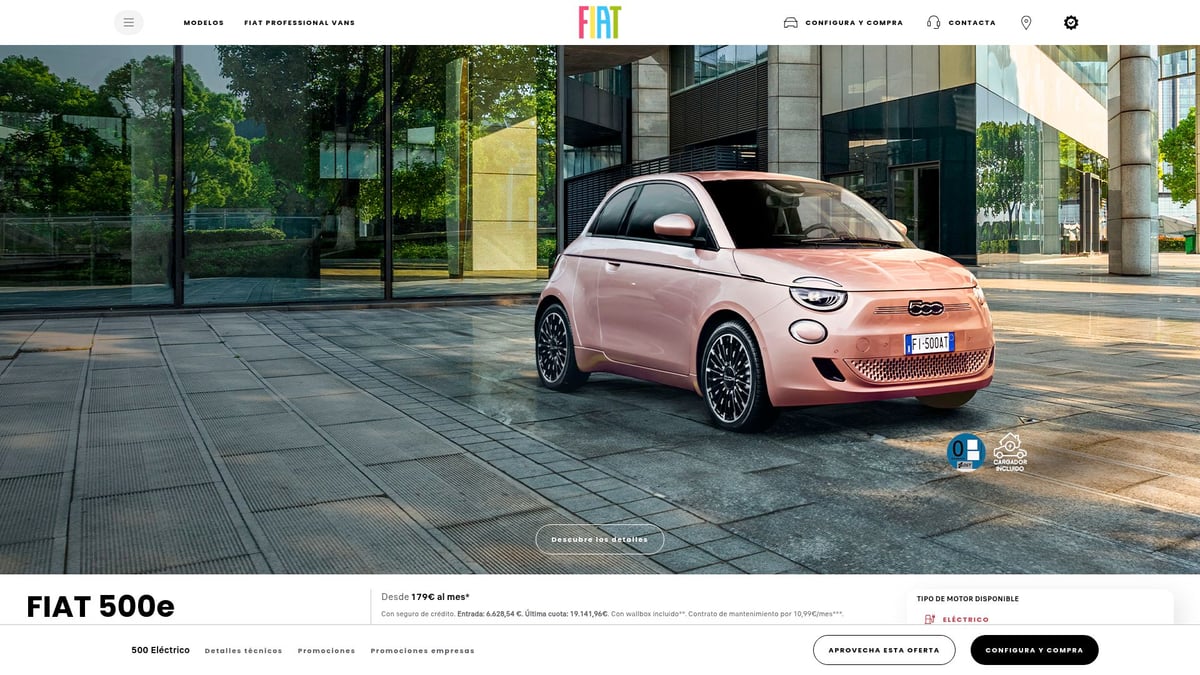
Thanks to the ZERO label, you’ll have free access to restricted zones and parking advantages. It’s perfect as a second car or for those who mainly move around the city. Its strong points include iconic design and agile driving.
Limited highway range is its main con, so it’s more recommended for short trips. If you need low consumption cars for the city, the 500e is an ideal option.
Pros:
- ZERO label
- Very low cost per km
- Attractive design
Cons:
- Highway range
Skoda Octavia 2.0 TDI 2026
The 2026 Skoda Octavia 2.0 TDI stands out among family low consumption cars. Its price is around €28,000, with an efficient diesel engine and real consumption of only 4.1 l/100 km. It’s a great option for those who travel a lot or have large families.

It offers generous interior space and a large trunk. Perfect for long trips, its range exceeds 1,000 km. Among the pros, its robustness and reliability are highly valued.
As a con, its size can make maneuvering in the city difficult. If you’re looking for low consumption cars for family and highway, the Octavia is a solid bet.
Summary:
| Feature | Skoda Octavia 2.0 TDI 2026 |
|---|---|
| Consumption | 4.1 l/100 km |
| Label | C |
| Price | From €28,000 |
Toyota Aygo X Cross
The Toyota Aygo X Cross is one of the most affordable low consumption cars. Its entry price is around €16,000, making it very attractive for young people and urban drivers.
Real consumption is 4.5 l/100 km, ideal for moving around the city without overspending. It’s compact, easy to park and maintain, and its casual design appeals to those looking for something different.
Pros include reliability and maneuverability. As a con, the engine may be underpowered on the highway. If you want low consumption cars for daily city use, the Aygo X Cross is perfect.
Pros:
- Affordable price
- Ease of use
- Low maintenance
Cons:
- Highway performance
Tesla Model 3 Standard Range
The Tesla Model 3 Standard Range is the benchmark among electric low consumption cars for long trips. Its price starts at €39,000, with over 400 km of range per charge and consumption of 14-16 kWh/100 km.
It features the widest supercharger network and cutting-edge technology, facilitating long trips and daily use. It’s ideal for those seeking a versatile, efficient electric car with a premium experience.
The initial cost is its main con, although usage expenses are very low. Among electric low consumption cars, the Model 3 stands out for its balance between range and technology.
Summary:
| Feature | Tesla Model 3 Standard Range |
|---|---|
| Consumption | 14-16 kWh/100 km |
| Label | ZERO |
| Price | From €39,000 |
BMW X3 xDrive30e Plug-in Hybrid
The BMW X3 xDrive30e Plug-in Hybrid is a premium SUV among low consumption cars. Its price is around €55,000, with up to 50 km of electric range and combined consumption of 2.5 l/100 km.
It has a ZERO label, tax and mobility advantages, and is ideal for families or professionals with a home charging point. It stands out for power, space, and advanced technology.
As a con, real consumption depends heavily on usage and charging frequency. If you’re looking for low consumption SUVs, the X3 plug-in hybrid is a premium option.
Pros:
- ZERO label
- Power and comfort
- Advanced technology
Cons:
- Variable real consumption
Fiat Tipo 1.6 Multijet
The Fiat Tipo 1.6 Multijet is a compact sedan among low consumption diesel cars. Its attractive price, from €20,000, makes it ideal for families and fleets seeking efficiency without high spending.

Consumption is only 4.2 l/100 km, and its interior space is ample and comfortable. Pros include value for money and low maintenance cost.
As a con, the basic equipment of initial versions may be insufficient for some users. In any case, it’s an excellent option for those wanting low consumption cars with space.
Summary:
| Feature | Fiat Tipo 1.6 Multijet |
|---|---|
| Consumption | 4.2 l/100 km |
| Label | C |
| Price | From €20,000 |
Mitsubishi Space Star
The Mitsubishi Space Star closes our ranking of low consumption cars in 2026. With an affordable price from €15,000, it’s ideal as a first car or for those needing a functional and economical vehicle.
It offers a real gasoline consumption of 4.0 l/100 km, and its maintenance is among the lowest on the market. It’s compact, easy to park, and very practical for daily city use.
Pros include reliability and low ownership cost. As a con, its performance may be limited for long trips. If you’re looking for low consumption cars for daily commuting, the Space Star is a great choice.
Pros:
- Low price
- Reduced maintenance
- Ease of use
Cons:
- Modest performance
Practical Tips to Maximize Savings with Your Efficient Car
Want your investment in low consumption cars to pay off fully? Beyond choosing the ideal model, your daily habits can make a difference in real savings. Here are simple and effective recommendations to reduce expenses and care for your efficient vehicle.
Efficient Driving Habits
Efficient driving is key to squeezing the potential of low consumption cars. Did you know you can save up to 55% on gasoline just by making small changes to your driving style? This is confirmed by this study on efficient driving and fuel savings.
- Maintain smooth and steady acceleration.
- Anticipate braking and use engine braking.
- Avoid sudden accelerations and abrupt speed changes.
These simple gestures make a difference every time you drive.
Maintenance and Regular Check-ups
Good maintenance helps keep low consumption cars efficient. Don’t neglect inspections or small details that can increase consumption.
- Check tire pressure frequently.
- Use oils and parts recommended by the manufacturer.
- Perform regular engine and filter checks.
A well-maintained car can consume up to 10% less each year.
Load and Weight Optimization
Extra load directly affects the performance of low consumption cars. Every 100 kg of additional weight can increase consumption by up to 5%.
- Remove unnecessary items from the trunk.
- Avoid roof racks if not in use.
- Carry only what is essential on each trip.
This way, your car will perform better and you’ll spend less on every journey.
Smart Use of Air Conditioning and Climate Control
Air conditioning can raise consumption, even in low consumption cars. Rational use is essential to maintain savings.
- Ventilate the car before turning on the air.
- Set the temperature between 22 and 24 ºC.
- Turn off the climate control when not needed.
Small details that add up to your wallet at the end of the month.
Taking Advantage of Aids and Subsidies
Making the most of available incentives is essential for those betting on low consumption cars. Inform yourself about state and local plans.
- Check the MOVES III Plan for hybrids and electrics.
- Look for discounts on taxes and registration.
- Take advantage of bonuses in low emission zones.
With these supports, savings will be even greater and your investment more profitable.
How to Compare Models and Choose the Ideal Low Consumption Car
Choosing among different low consumption cars may seem challenging, but it’s key to saving and caring for the planet. Where to start? The first step is to analyze your real needs: do you mainly use the car in the city, on the highway, travel with family, or need it for work? Defining your main use will help you discard options that, although efficient, don’t fit your daily life.
Next, compare the technical specifications of each model. Look at official and real consumption, electric and hybrid range, emissions, and safety equipment. A useful trick is to create a simple table where you place data of the low consumption cars that interest you most, to visualize them at a glance.
Use online tools and comparators to facilitate the process. Specialized platforms allow filtering by consumption, fuel type, price, or even brand. If you’re interested in premium models, you can check the BMW Low Consumption Cars section to see hybrid and efficient alternatives within the range.
Don’t forget to consider maintenance costs, ease of finding spare parts, and resale value. An efficient car not only saves on fuel but can also maintain its price better over time. Also, consider environmental regulations evolution, which could affect some diesel models in a few years.
To decide between hybrid, diesel, or electric, compare their real consumption and range according to your usage. A recent study shows that electric cars can surpass combustion efficiency after only two years of use, as you can read in this study on electric car efficiency.
Finally, always consult reliable sources and review independent analyses before making a decision. This way, you’ll be sure to choose the ideal low consumption car for you, optimizing your investment and enjoying more sustainable driving.
Now that we’ve seen together the best cars to truly save in 2026 and how to choose the one that best suits your needs, why not take the next step? At TuFichaTecnica you have all the clear and updated information to compare consumption, prices, and versions of each model we’ve discussed. So you can make a confident and doubt-free decision, knowing you have all the details at your fingertips. If you’re ready to discover which efficient car is perfect for you, just Check your favorite cars and start planning your next savings. We’re here to help you every step of the way!