
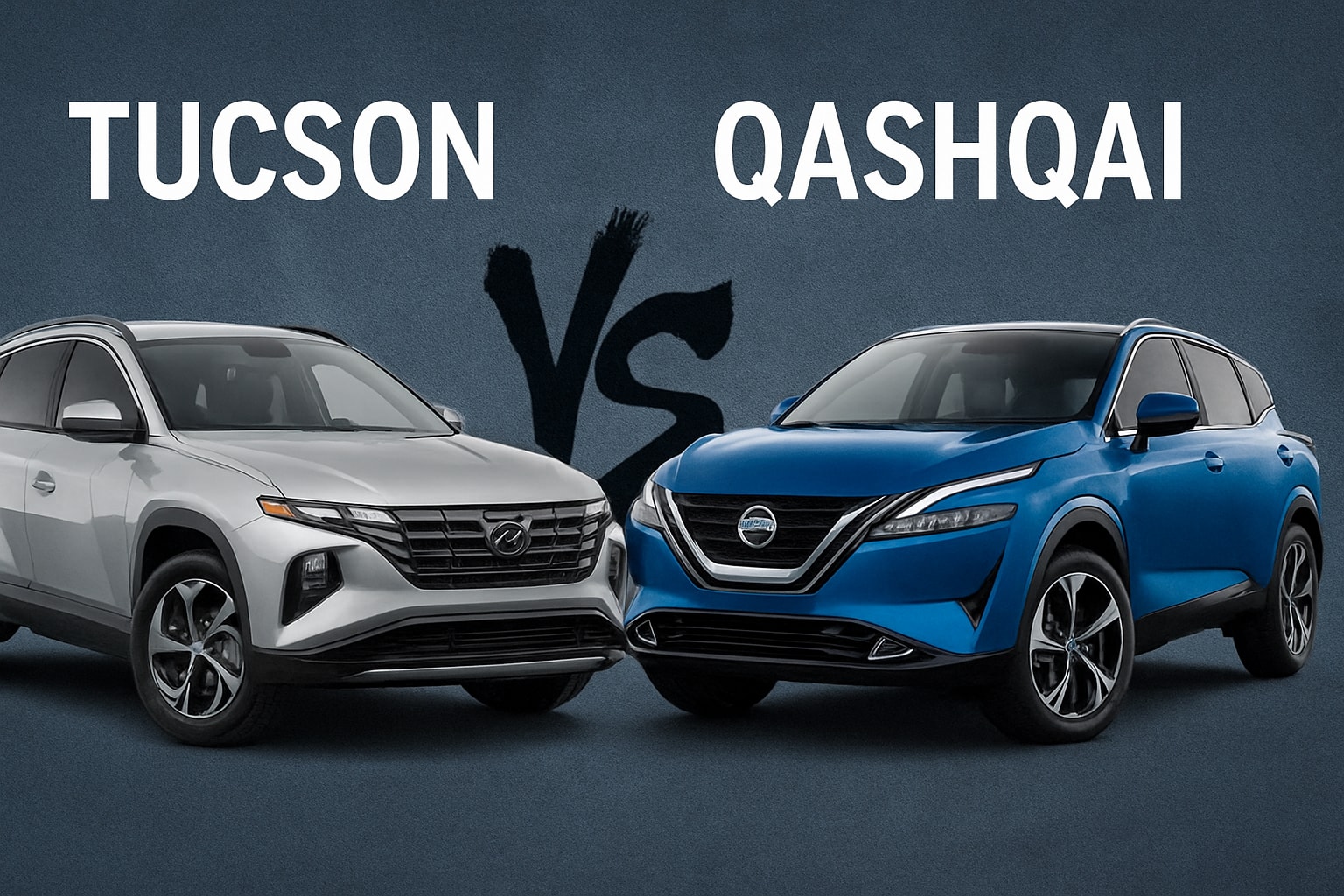
Are you looking for the best compact SUV this year? The Tucson vs Qashqai comparison arrives in 2026 with two models debuting new looks and technology. In this article, we will discover together which of these two leaders fits your lifestyle better.
We will help you compare exterior design, interior space, technology, engines, safety, prices, and driving experience. We want you to find the ideal SUV for you, so join us and prepare your questions, because here we analyze everything that matters before making a decision.
Exterior Design and Dimensions
When comparing the Tucson vs Qashqai in 2026, exterior design is one of the most influential factors in the purchase decision. Both compact SUVs have evolved to stand out on the road and attract attention, betting on modern lines and exclusive details. If you are looking for a model with presence and personality, this analysis will help you identify which one fits your style better.
Aesthetics and Design Philosophy
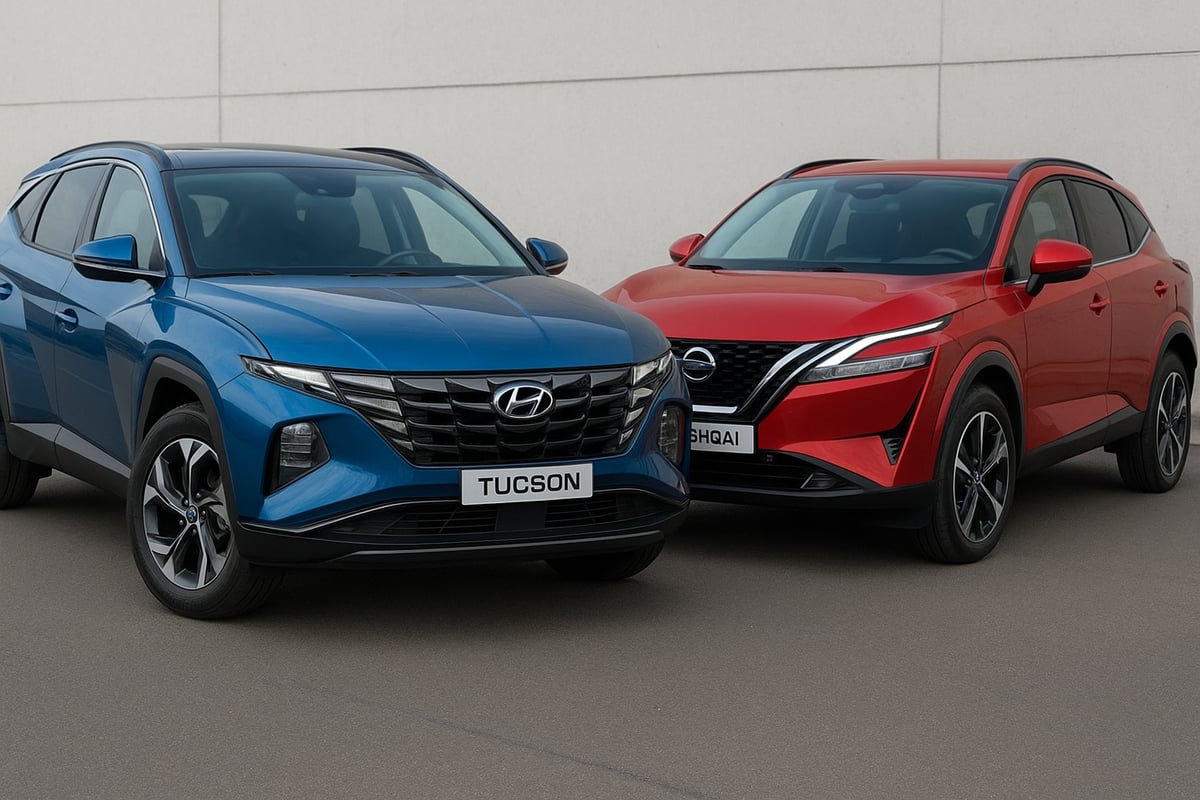
The Tucson vs Qashqai presents a well-defined battle of styles. The front of the Hyundai Tucson maintains its wide and avant-garde grille, along with headlights integrated into the body design, giving it a robust and futuristic image. Meanwhile, the Nissan Qashqai evolves toward a more sophisticated aesthetic, abandoning the classic 'V' grille to adopt cleaner and more elegant shapes.
Both have received a facelift in 2026. The Tucson reinforces its character with angular lines and chrome details, while the Qashqai bets on a refined silhouette and more expressive LED lighting. The road presence of both models is striking, although the Tucson conveys greater sportiness and the Qashqai a more premium air.
Measurements and Proportions
Dimensions play a key role in the Tucson vs Qashqai comparison. The Tucson measures 4.50 m long, 1.87 m wide, and 1.65 m high, while the Qashqai stays at 4.43 m long, 1.85 m wide, and 1.62 m high. The wheelbase battle is almost identical: 2.68 m for the Tucson and 2.67 m for the Qashqai.
Ground clearance and approach and departure angles favor the versatility of both. The turning diameter, very tight in both cases, facilitates maneuverability in the city. These proportions directly influence interior space and ease of daily use, something essential when choosing between Tucson vs Qashqai.
Exterior Details and Finishes
Regarding finishes, both the Tucson vs Qashqai offer interesting novelties in 2026:
- Alloy wheels with new exclusive designs.
- Latest generation LED headlights, with more elaborate graphics on the Qashqai.
- New rear lights on the Qashqai, reinforcing its identity.
- Customization options: vibrant colors, chrome or sporty packages.
- Elements like spoilers and glossy black details for a more dynamic touch.
These differences allow each model to have its own personality, which makes a difference in the SUV segment.
Aerodynamics and Functionality
Aerodynamic work is key in the Tucson vs Qashqai. Both incorporate spoilers, diffusers, and flow lines that reduce air resistance. The Tucson stands out for its integration of roof bars and an easy-access rear hatch, while the Qashqai adds practical details like opening sensors and hands-free trunk.
Although exact aerodynamic coefficients may vary by version, efficiency improves fuel consumption and stability at high speeds. These solutions show that functionality and design go hand in hand in the Tucson vs Qashqai, thinking about comfort and fuel savings.
Visual Comparative Summary
To help you visualize the Tucson vs Qashqai at a glance, here is a comparative table:
| Model | Length (mm) | Width (mm) | Height (mm) | Wheelbase (mm) | Trunk (L) |
|---|---|---|---|---|---|
| Hyundai Tucson | 4,500 | 1,870 | 1,650 | 2,680 | 616 |
| Nissan Qashqai | 4,430 | 1,850 | 1,620 | 2,670 | 504 |
Want to compare more exterior design details and finishes? You can use the SUV Car Comparator to see every difference in detail and choose the one that best suits your style.
Habitability, Interior, and Technology
Exploring the interior is key for those comparing Tucson vs Qashqai. Both SUVs have evolved, offering modern and functional environments that seek to conquer families and demanding drivers. Let's analyze point by point how they differ and what advantages each offers.
Interior Design and Perceived Quality
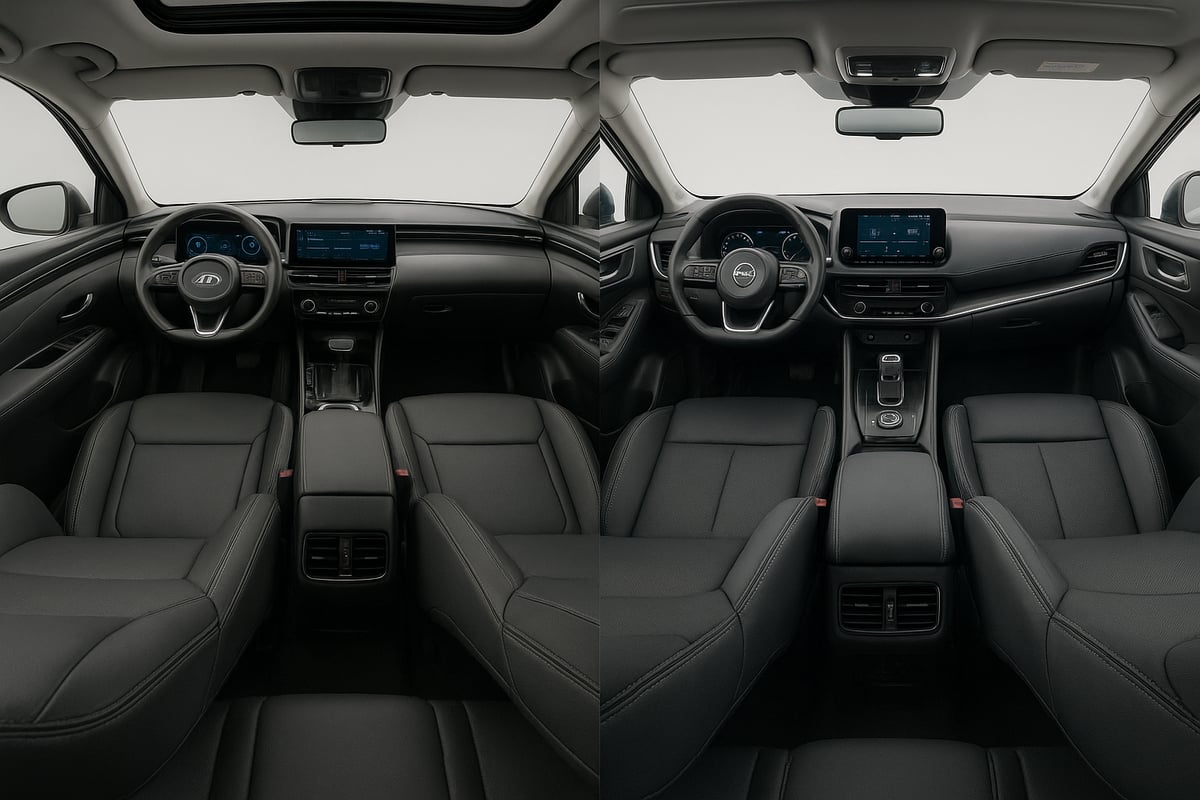
Interior design is one of the most notable aspects in the Tucson vs Qashqai comparison. The Qashqai opts for a more traditional layout, with a dashboard focused on ergonomics and well-selected materials. The Tucson, on the other hand, takes technological sophistication to another level, inspired by the IONIQ 5 and featuring a dual 12.3-inch panoramic screen running across the panel.
Both models offer synthetic leather upholstery and quality trims, although the Tucson adds futuristic design touches. The control layout is intuitive in both, but the Tucson stands out with its gear lever behind the steering wheel, while the Qashqai keeps a classic selector. All this provides a superior visual and tactile experience depending on preferences.
Interior Space and Comfort
When analyzing Tucson vs Qashqai in space, both are comfortable for five occupants. However, the Tucson has a slight advantage with a trunk of up to 616 liters, compared to the Qashqai's 504 liters. This translates into greater luggage capacity, important for family trips.
Both allow folding rear seats, facilitating loading large objects. The Tucson makes better use of its dimensions, offering more legroom and shoulder space in both rows. With seats folded, the maximum capacity also favors the Tucson, making it an ideal choice for those seeking versatility. If you want to explore all variants and configurations, you can check the Hyundai Tucson Comparison.
| Model | Trunk (liters) | Maximum Capacity (liters) | Rear Width (mm) |
|---|---|---|---|
| Hyundai Tucson | 616 | 1795 | 1400 |
| Nissan Qashqai | 504 | 1593 | 1380 |
Technological Equipment
The Tucson vs Qashqai technology battle is tight. Both include 12.3-inch digital instrumentation and advanced multimedia systems. The Qashqai bets on full Google integration, allowing access to Google Maps and Assistant directly from the screen.
The Tucson responds with a dual panoramic screen and an intuitive multimedia system, compatible with Apple CarPlay, Android Auto, and OTA updates. Voice control is efficient in both, but the Tucson's interface is more visually attractive for those seeking modernity. Ease of use and connectivity make both models stand out in their segment.
Climate Control and Ride Comfort
Comfort in Tucson vs Qashqai is felt in every detail of the trip. Both offer dual-zone climate control, rear air vents, and heated seats. The Tucson adds seat ventilation, a feature inherited from premium models that makes a difference in warm climates.
Soundproofing is well cared for in both, improving the experience on long journeys. Electric seat adjustments and ride quality guarantee comfort for all passengers. Whether in the city or on the highway, traveling in either SUV is a pleasant and quiet experience.
Practical Solutions for Daily Use
In daily life, Tucson vs Qashqai offer solutions that make life easier. Both have smart keys, keyless start, and electronic parking brakes. Storage spaces are well distributed, along with USB ports and 12V sockets to charge devices.
The Tucson stands out with advanced parking assistants and surround-view cameras, while the Qashqai offers practical aids for parking in tight spaces. These differences can be decisive for those seeking maximum comfort and safety in daily use.
Engine Range and Fuel Consumption
Wondering which is the best engine option between the Hyundai Tucson and the Nissan Qashqai? In this section, we will break down all alternatives, consumption, and mechanical innovations to make the Tucson vs Qashqai comparison as clear and useful as possible.
Gasoline, Diesel, and Hybrid Engine Offerings
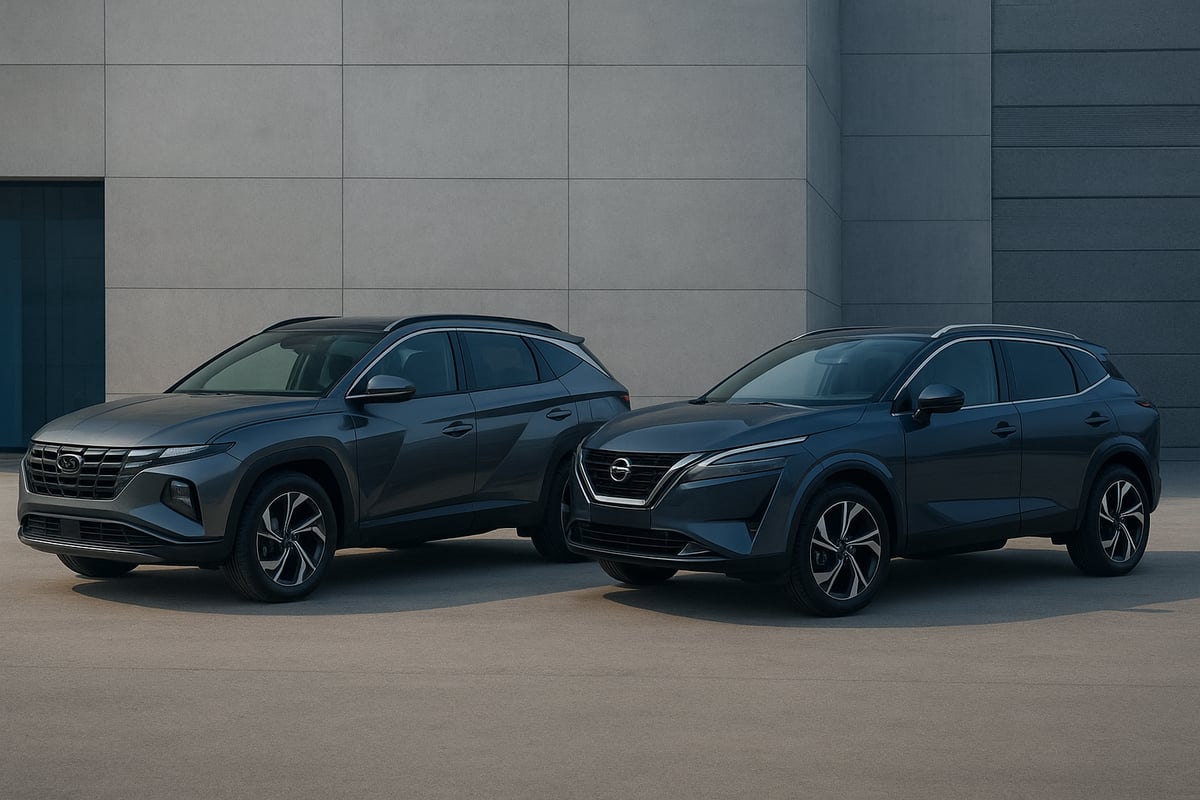
The engine range is one of the pillars of the Tucson vs Qashqai comparison. The Nissan Qashqai offers mild hybrid gasoline options 1.3 DIG-T with 140 and 158 hp, as well as the revolutionary 190 hp e-Power version, which allows enjoying electric driving without relying on plugs.
On the other hand, the Hyundai Tucson stands out for its variety: gasoline 1.6 T-GDI 150 hp mild hybrid, diesel of 116 hp and 136 hp (the latter also mild hybrid), conventional hybrid of 215 hp, and a PHEV of 252 hp. Additionally, you can choose between front-wheel or all-wheel drive in both brands, expanding the range of possibilities.
For those who want to compare in detail, the Technical Comparison between Hyundai Tucson and Nissan Qashqai is very useful to analyze figures, variants, and electrification systems. This way, you can see at a glance the real differences in the Tucson vs Qashqai range.
Official Consumption and Emissions
In the Tucson vs Qashqai battle, consumption and emissions are key factors. The Hyundai Tucson registers between 5.1 and 7.0 l/100 km depending on the version, while the Nissan Qashqai moves between 6.3 and 6.9 l/100 km in WLTP combined cycle.
CO2 emissions are also relevant: the Tucson ranges between 132 and 161 g/km, and the Qashqai between 141 and 155 g/km. Both models obtain ECO labels, although the Tucson adds versions with C label. In autonomy, the Qashqai HEV approaches 879 km per tank, and the Tucson PHEV allows 100% electric urban trips, essential for daily use.
| Model | Combined Consumption (l/100 km) | CO2 (g/km) | Label |
|---|---|---|---|
| Tucson | 5.1 - 7.0 | 132-161 | C/ECO |
| Qashqai | 6.3 - 6.9 | 141-155 | ECO |
Performance and Driving Experience
The performance section also differentiates the Tucson vs Qashqai proposal. The Hyundai Tucson accelerates from 0 to 100 km/h in 9.9 seconds, while the Qashqai does it in 10.2 seconds. Maximum speeds are similar, with 194 km/h for the Tucson and 196 km/h for the Qashqai.
Torque delivery and road response vary by version. The Tucson offers multi-link suspension options in higher trims, improving comfort and stability, while the Qashqai uses a torsion beam in entry-level versions. For those seeking adventures, the Tucson allows all-wheel drive, ideal for off-road escapes.
In summary, the driving experience in the Tucson vs Qashqai comparison will depend greatly on the chosen engine and the intended use of the SUV.
Maintenance and Mechanical Reliability
One of the most important factors in the Tucson vs Qashqai decision is maintenance. The Qashqai mild hybrid boasts long maintenance intervals and contained costs, according to many users' experience. Its reliability reputation is solid, with few incidents reported in forums and specialized reviews.
The Hyundai Tucson stands out by offering up to five years warranty with unlimited mileage, providing great peace of mind. Hybrid and PHEV versions may require specific battery or electronics maintenance, but overall both brands show good satisfaction and reliability indices.
In practice, both Tucson and Qashqai are designed to minimize expenses and workshop visits, something highly valued in daily life.
2026 Mechanical Alternatives and Innovations
Looking to the future, the Tucson vs Qashqai comparison becomes even more interesting with the innovations planned for 2026. The Nissan Qashqai drops the VC-T engine and bets on efficiency and electrification improvements, with cleaner and more technological versions on the horizon.
Meanwhile, the Hyundai Tucson will continue expanding its hybrid and PHEV range, with expected innovations in batteries and electric management to further reduce consumption and emissions. Both brands are committed to offering sustainable alternatives adapted to new regulations.
If you seek an SUV prepared for the future, the choice between Tucson vs Qashqai will depend on your preferences for electrification and the latest technologies.
Safety, Assistance Systems, and Euro NCAP Rating
Safety is a key pillar when comparing Tucson vs Qashqai. Both models boast outstanding equipment, with technologies aimed at protecting all occupants and providing confidence on every trip. Let's analyze how these SUVs face each fundamental aspect.
Active and Passive Safety Equipment
When analyzing Tucson vs Qashqai in essential protection, both stand out with seven airbags, including a front center airbag, for comprehensive coverage in case of an accident. Ventilated disc brakes along with ABS and traction control are present in both, offering an effective response to any unforeseen event.
We cannot forget Isofix anchors for child seats and anti-theft systems, which provide peace of mind in daily family use. A plus in both is the inclusion of the front center airbag, a technology only some rivals offer in this segment.
In summary, both Tucson and Qashqai show a very complete approach to passive and active safety, ensuring that whichever you choose, protection is guaranteed on every trip.
Driving Assistants and Advanced Aids
In the assistance field, Tucson vs Qashqai offer an advanced repertoire. The Qashqai incorporates adaptive cruise control (ACC), ideal for long trips and dense traffic, while both models feature lane keeping assist and autonomous emergency braking.
Systems like traffic sign recognition, speed limiter, and fatigue monitoring help prevent incidents and facilitate daily driving. An extra in Qashqai is the radar-based collision prevention system at intersections, adding a safety plus at crossings.
These aids turn both SUVs into technological allies, anticipating possible risks and reducing stress at the wheel, especially in urban environments and family trips.
Euro NCAP Results and Safety Rating
If we review Euro NCAP ratings, the Tucson vs Qashqai comparison is noteworthy. Both have achieved the coveted 5 stars, but the Qashqai slightly excels in adult (91%) and child (91%) protection, while Tucson obtains 86% and 87% respectively.
In safety aids, the Qashqai shines with 95%, reflecting its commitment to preventive technology. The most recent tests were performed on versions equipped with the latest assistance systems, guaranteeing maximum protection in current variants.
For those seeking more details about variants and evaluations, the Nissan Qashqai 2026 Range allows exploring all available safety options and versions.
Lighting Technology and Visibility
Both Tucson and Qashqai strongly emphasize visibility in the Tucson vs Qashqai comparison. Both include high-efficiency LED headlights, daytime running lights, and fog lights, improving perception in all conditions. The Qashqai stands out for its specific fog lights and full LED rear lights, increasing nighttime safety.
Darkness sensors and automatic lights facilitate driving, adapting to the environment in real time. Additionally, parking cameras and sensors in both SUVs contribute to safe maneuvering, reducing blind spots and risks in tight maneuvers.
In conclusion, lighting and visibility are strong points in both models, providing confidence both in the city and on the road.
Equipment, Versions, and Prices
Choosing between the Hyundai Tucson and the Nissan Qashqai may seem complicated, but analyzing their versions, equipment, and prices helps make an informed decision. In this section, we break down their main differences so the Tucson vs Qashqai comparison is clear and simple. This way, you will discover which one suits your needs and lifestyle better.
Trim Levels and Customization
Both SUVs offer a wide range of trims that adapt to different tastes and budgets. The Tucson stands out with versions like Klass, Maxx, Tecno, N Line, and Style, each with more technological and aesthetic equipment. The Qashqai, on the other hand, proposes Visia, Acenta, N-Connecta, Tekna, and Tekna+, combining elegance and functionality.
Customization is key in the Tucson vs Qashqai battle. We find upholstery options in leather, chrome details, wheels of different designs, and packages like the N Line in Tucson, which adds a sporty air. The Qashqai adds new colors and the Tekna+ trim with premium touches.
Both models offer interesting standard equipment from mid-level trims, such as dual-zone climate control and driver assistance systems. Thus, you can configure your SUV to measure, choosing among various trim and extras combinations.
Comfort and Entertainment Equipment
In the comfort and entertainment section, the Tucson vs Qashqai comparison shows that both are very well equipped. The Tucson surprises with a dual panoramic screen, dual-zone climate control, and keyless entry from mid-level trims. The audio system includes six speakers, digital radio, and a high-resolution touchscreen.
The Qashqai, meanwhile, integrates Google Maps and Assistant into its multimedia system, facilitating navigation and voice control. Both offer full connectivity with Apple CarPlay and Android Auto, as well as wireless updates and USB chargers for all seats.
The onboard experience is comfortable and advanced, with heated seats, multifunction steering wheel, and parking assistants. All this makes the Tucson vs Qashqai a tough decision for those who value technology and daily comfort.
Current Prices and Offers
When comparing Tucson vs Qashqai prices, there are important differences depending on engine and trim. The Nissan Qashqai starts at around €26,300 with discounts, while the Hyundai Tucson starts at €24,825 applying promotions.
Hybrid and PHEV versions usually have a higher cost but offer consumption advantages and ECO label benefits. For example, the 2026 hybrid Tucson, analyzed in 2026 Hyundai Tucson Hybrid Price Analysis, shows competitive prices against the competition. It is important to consider the cost of additional packages, which can raise the final bill.
In summary, the quality-price ratio varies depending on what you look for: the Tucson usually offers more technology as standard, while the Qashqai stands out for its balance and innovative engine options.
Quality-Price Ratio and Resale Value
When analyzing Tucson vs Qashqai resale value, both models maintain contained depreciation thanks to their popularity and reputation. The Tucson stands out for its technological equipment included from mid-level trims, increasing its appeal in the second-hand market.
The Qashqai, on the other hand, is known for its reliability and low maintenance cost, ensuring good valuation over time. The decision between both will depend on your priorities: if you care about standard technology, the Tucson is an excellent option. If you prefer efficiency and stable value, the Qashqai is a safe bet.
Ultimately, the Tucson vs Qashqai comparison shows that both SUVs are solid options, with clear advantages in equipment, customization, and prices for different user profiles.
Driving Experience and User Opinions
Have you wondered what it's like to live day to day with these SUVs? In this section, we invite you to get behind the wheel and discover what really differentiates the Hyundai Tucson and the Nissan Qashqai from the perspective of those who drive them. We will analyze their behavior, comfort, ratings, and practicality, so the Tucson vs Qashqai decision is easier and more relatable.
Driving Feel and Dynamics
The driving experience of the Tucson and Qashqai is different, although both stand out for their ease of handling and comfort. The Tucson shows remarkable composure on the highway, conveying security and firmness on long trips. Its multi-link suspension and precise steering invite relaxed travel, even at high speeds.
Meanwhile, the Qashqai stands out for its agility in the city. Its slightly more compact size and reduced turning radius facilitate maneuvers in tight spaces. The engine response is progressive and balanced, ideal for those seeking a versatile SUV. Ultimately, the choice between Tucson vs Qashqai depends on whether you prioritize road stability or urban ease.
Noise, Vibrations, and Acoustic Comfort
Regarding acoustic insulation, both models have evolved a lot. The 2026 Qashqai has reduced interior noise by 5.6 dB compared to the previous generation, noticeable especially on highways and at medium speeds. Insulation materials and door adjustments help create a relaxed environment.
The Tucson, meanwhile, also offers a quiet cabin thanks to thick glass and suspension improvements. Engine vibrations and road noise are minimal, even on uneven surfaces. If you seek a serene environment for your trips, both Tucson vs Qashqai deliver, although the Qashqai has a slight edge in the latest update.
Expert and User Opinions
Specialized journalists often praise the modern design, spaciousness, and technological equipment of the Tucson. They highlight its dual screen and interior space as strong points. On the other hand, the Qashqai receives very good reviews for its overall balance, ease of use, and finish quality.
Users value the reliability and low maintenance cost of the Qashqai, while the Tucson is recommended for its aesthetics and generous trunk. If you want to delve into technical details and real opinions, check the Nissan Qashqai 2024 Technical Sheet, where you will find useful information to compare Tucson vs Qashqai in real life.
Family and Daily Use Comparison
For families and daily use, both SUVs perform well. The Tucson offers a trunk of up to 616 liters, ideal for long trips and bulky luggage. The Qashqai, although with slightly less capacity, compensates with practical solutions and easy access for child seats.
In the city, the Qashqai is easier to park and maneuver in tight spaces, while the Tucson shines on long routes due to its greater comfort. To help you visualize, here is a comparative table:
| Aspect | Tucson | Qashqai |
|---|---|---|
| Trunk | 616 liters | 504 liters |
| Rear Space | Very spacious | Spacious |
| Urban Ease | Good | Excellent |
Thus, the Tucson vs Qashqai decision comes down to your needs: more space and technology, or greater urban practicality and overall balance.
Technical Comparator and Help Tools
Having trouble deciding between Tucson vs Qashqai? Choosing the ideal SUV can be a challenge, especially when both models offer so much. This is where online comparison tools become your best ally, helping you analyze every detail simply and visually.
How to Use Online Comparison Tools
Online comparison platforms allow you to see, at a glance, the differences and similarities between Tucson vs Qashqai. You can filter by engines, equipment, prices, and even exact dimensions, making it much easier to get your choice right.
The process is very simple:
- Select the models and versions that interest you.
- Compare technical sheets, equipment, and updated prices.
- Access real user opinions and ratings.
This way, you can see key points like trunk capacity, technology, consumption, and safety, avoiding surprises after purchase. These tools are ideal for those seeking to make an informed and quick decision.
TuFichaTecnica: Leading Vehicle Comparison Platform
Among the available options, TuFichaTecnica stands out as the most complete database to compare Tucson vs Qashqai and any other SUV on the market. Its interface is intuitive and allows consulting technical specifications, versions, prices, and consumption in real time.
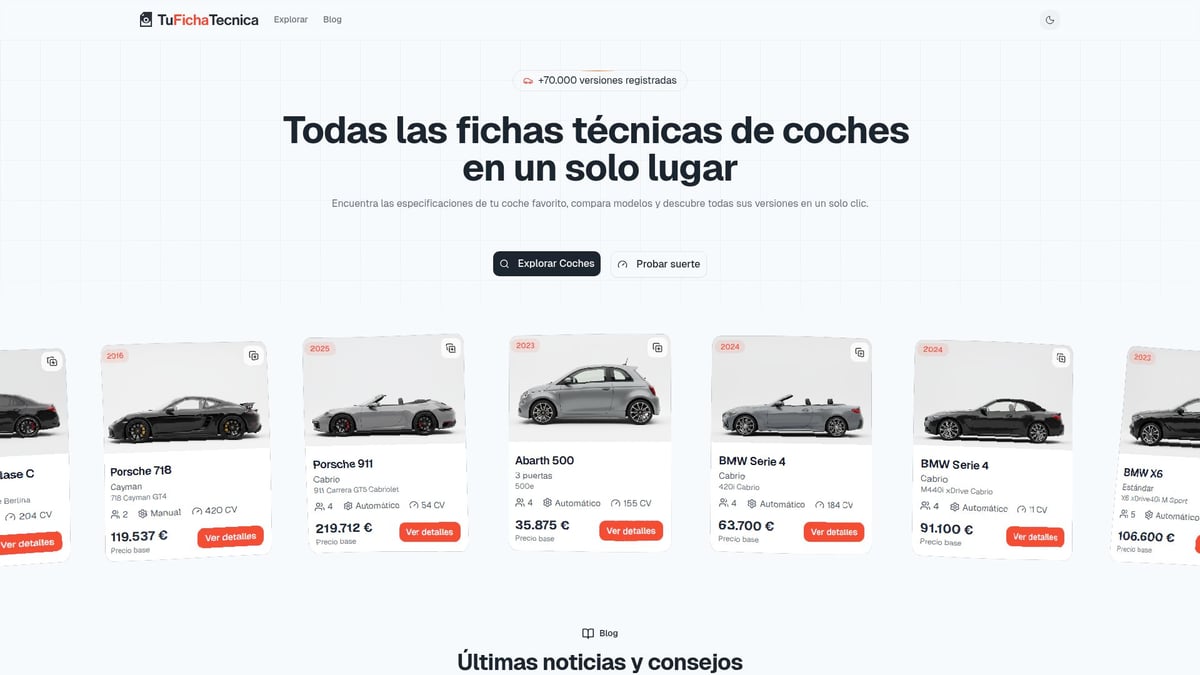
Additionally, you can:
- See detailed comparative tables between both models.
- Access technical analyses and expert reviews.
- Consult standard and optional equipment of each version.
TuFichaTecnica is constantly updated, so you will always have fresh information to make the best decision. It is free, easy to use, and perfect for those who don't want to miss any news or market promotions. This way, choosing between Tucson vs Qashqai will be much easier and safer.
After knowing in detail the differences and strengths between the Tucson and the Qashqai, you surely have a much clearer idea of what you are looking for in your next SUV. We also went through that process of comparing, reviewing equipment, and analyzing prices before deciding. If you would like to delve even deeper or are curious to see how other models compare, I invite you to continue exploring together. You can review your favorite cars and discover all their versions and specifications in one place, making the choice even easier and more personalized!