
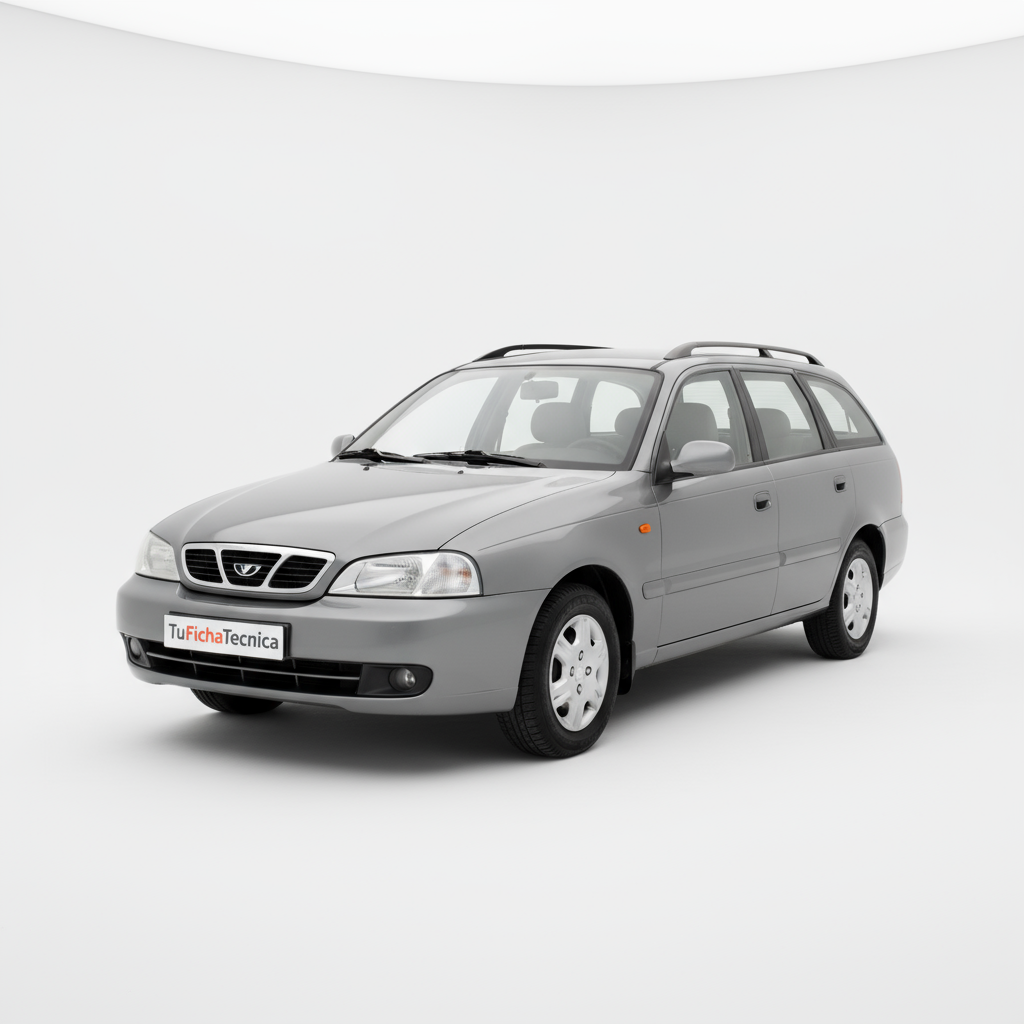
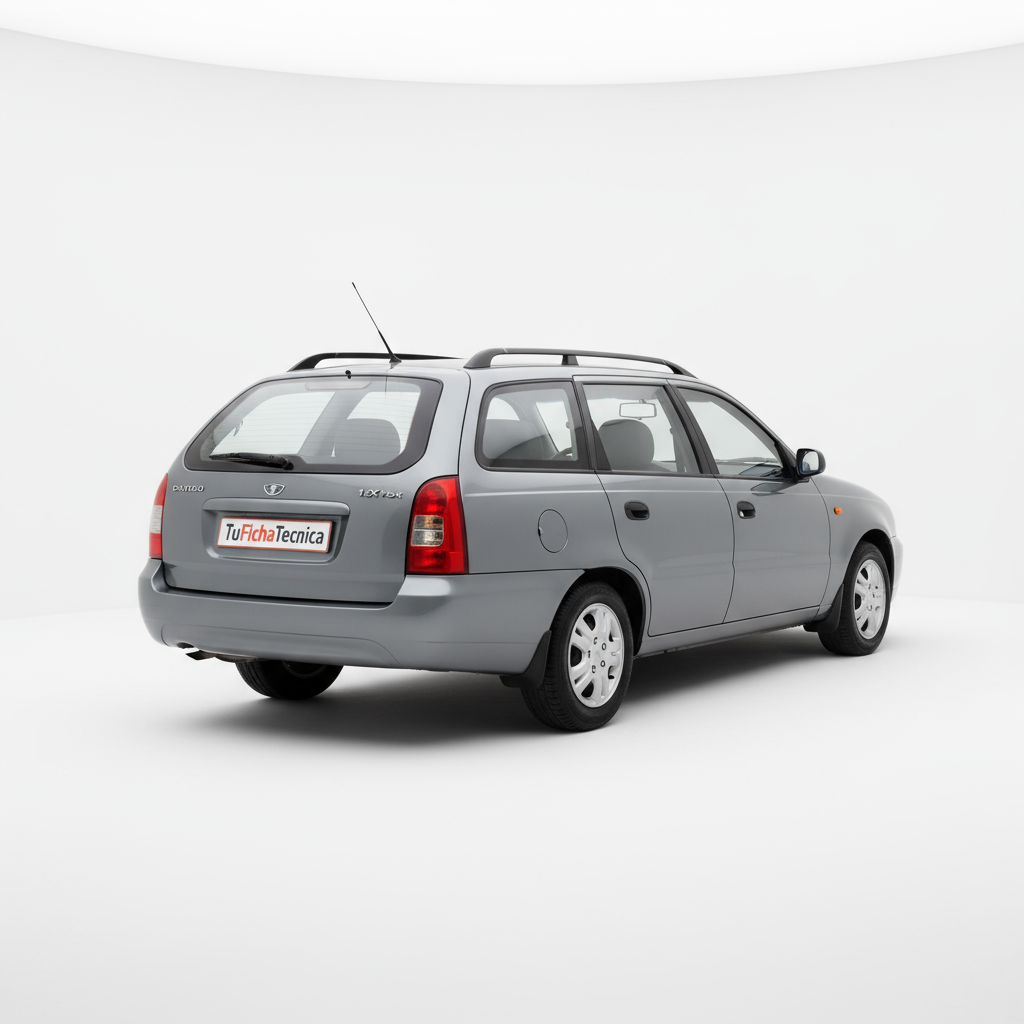
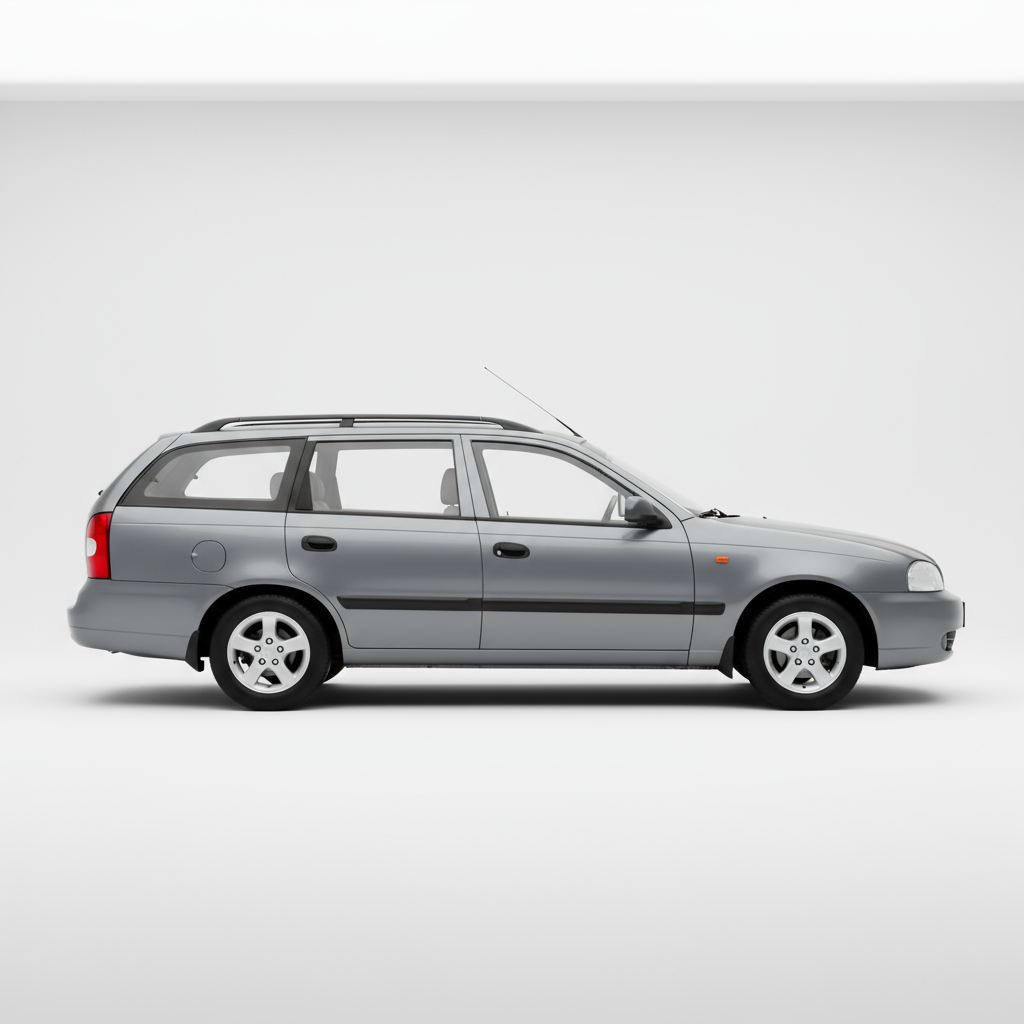

Especificaciones y análisis del Daewoo Nubira (Daewoo)
Power
133HP
Torque
184Nm
Consumption
8.7l/100
Emissions
-g/km
0-100 km/h
9s
Top Speed
185km/h
Weight
1322kg
Price
16,708€
Technical summary
Gasolina
Manual 5v
FWD
5 / 5 doors
550 L
62 L
98 kW
Current
Technical specifications
Engine
Capacities
Detailed analysis of the Daewoo Nubira SW 2001 2.0 16v CDX · 133 CV (2001-2002)
General description
The Daewoo Nubira SW from the early 2000s is the echo of a brand that sought its place in Europe with an honest and direct proposal. This station wagon did not aim to dazzle, but to convince with solid arguments: generous space for the family and a 133-horsepower heart that promised to move it with ease, all wrapped in a price that made it irresistible to many.
Driving experience
Behind the wheel, the 2.0-liter engine feels surprisingly energetic and full of life. Its thrust from low revs gives you unexpected agility, turning every journey into a pleasant and decisive experience. It's not the quietest or most refined car, but it conveys a sense of mechanical robustness, a direct connection to the asphalt through its manual gearbox, and a suspension that balances comfort and stability without artifice.
Design and aesthetics
Its design is a time capsule. The soft, rounded shapes speak of an era where functionality dictated aesthetics. The station wagon silhouette, at 4.55 meters long, is sculpted to maximize space, culminating in a 550-liter trunk that seems endless. It is an unpretentious, friendly, and familiar design that today evokes a deep nostalgia for simplicity.
Technology and features
The Nubira's technology is a reflection of its time: analog, tactile, and purely functional. You won't find touch screens or driving assistants here. Its technological heart lies in its indirect injection, 16-valve engine, and in elements like four-wheel disc brakes. It's a car that invites you to drive, to feel the mechanics at work, reminding us of an era when the driving experience was less digital and more human.
Competition
In its time, the Nubira SW faced European giants like the Ford Focus Wagon, the Opel Astra Caravan, or the Renault Mégane Break. Its great battle was not fought in the field of refinement or the latest technology, but in the price-to-equipment ratio. It offered more car for less money, a brave strategy that made it a smart alternative for pragmatic families.
Conclusion
The Daewoo Nubira SW is more than just a low-cost family car; it is the testament to an automotive philosophy focused on the essentials. An honest vehicle that more than fulfilled its promise of space, performance, and affordability. Today, remembering it evokes the image of a loyal and hardworking travel companion, a car that, without luxuries, won the hearts of those who valued substance over appearance.