
Especificaciones y análisis del Honda CR-Z
Power
124HP
Torque
78Nm
Consumption
5l/100
Emissions
117g/km
0-100 km/h
9.9s
Top Speed
200km/h
Weight
1222kg
Price
25,200€
Technical summary
Híbrido
Manual 6v
FWD
4 / 3 doors
225 L
40 L
10 kW
Current
Technical specifications
Engine
Capacities
Detailed analysis of the Honda CR-Z GT Plus · 124 CV (2010)
General description
The 2010 Honda CR-Z was not just another car; it was a statement of intent. In a world beginning to obsess over efficiency, Honda dared to remind us that hybrids could also have a soul, creating a sports coupe that evoked the nostalgia of the legendary CR-X but with an eye on the future. It was a brave car, a rare bird that fused ecology and passion.
Driving experience
Getting behind the wheel of the CR-Z is a unique experience. Don't be fooled by its power figures; the magic is in how it delivers them. The IMA hybrid system offers instant thrust that, combined with a precise, short-throw six-speed manual gearbox, connects you directly to the mechanics. Its agile chassis, direct steering, and low, sporty driving position invite you to devour curves, feeling the asphalt like in few cars of its time. It's a car that brings a smile to your face not because of its top speed, but because of the sheer fun of driving it.
Design and aesthetics
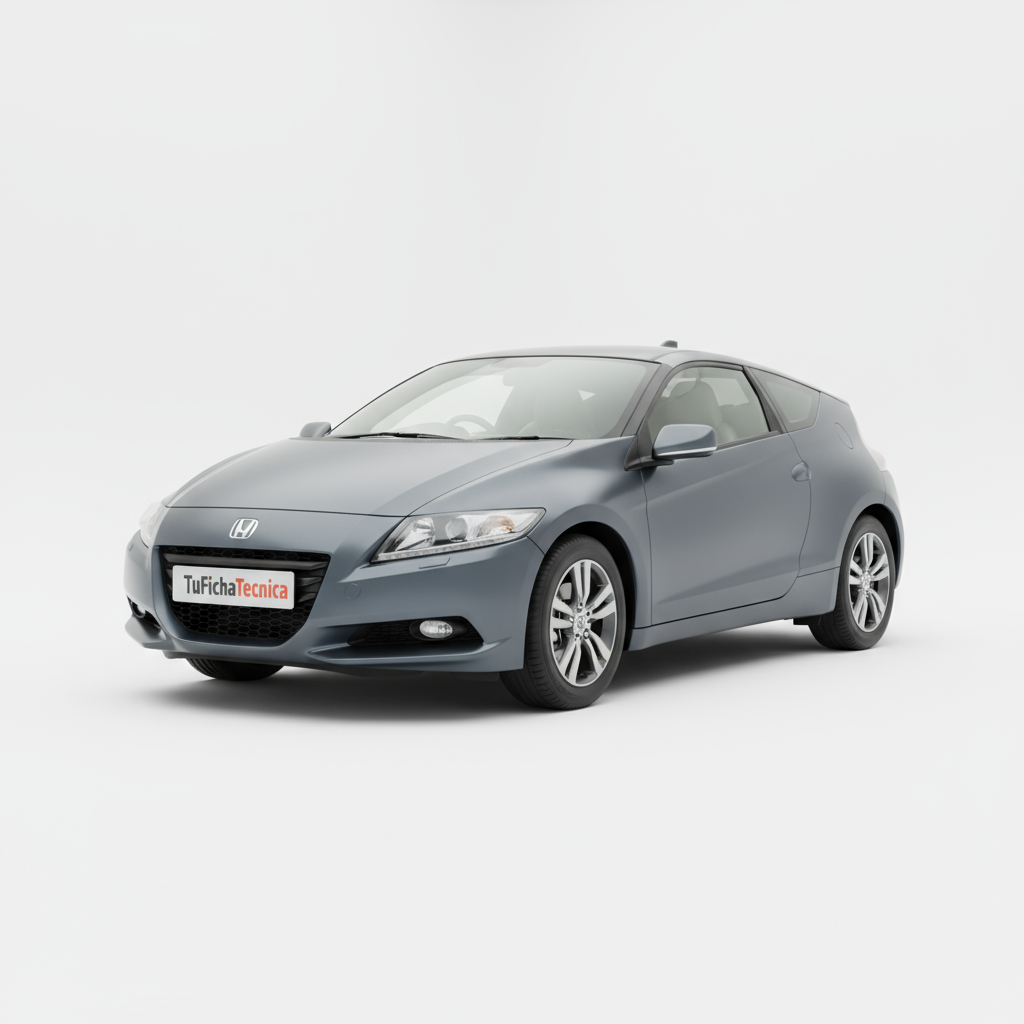
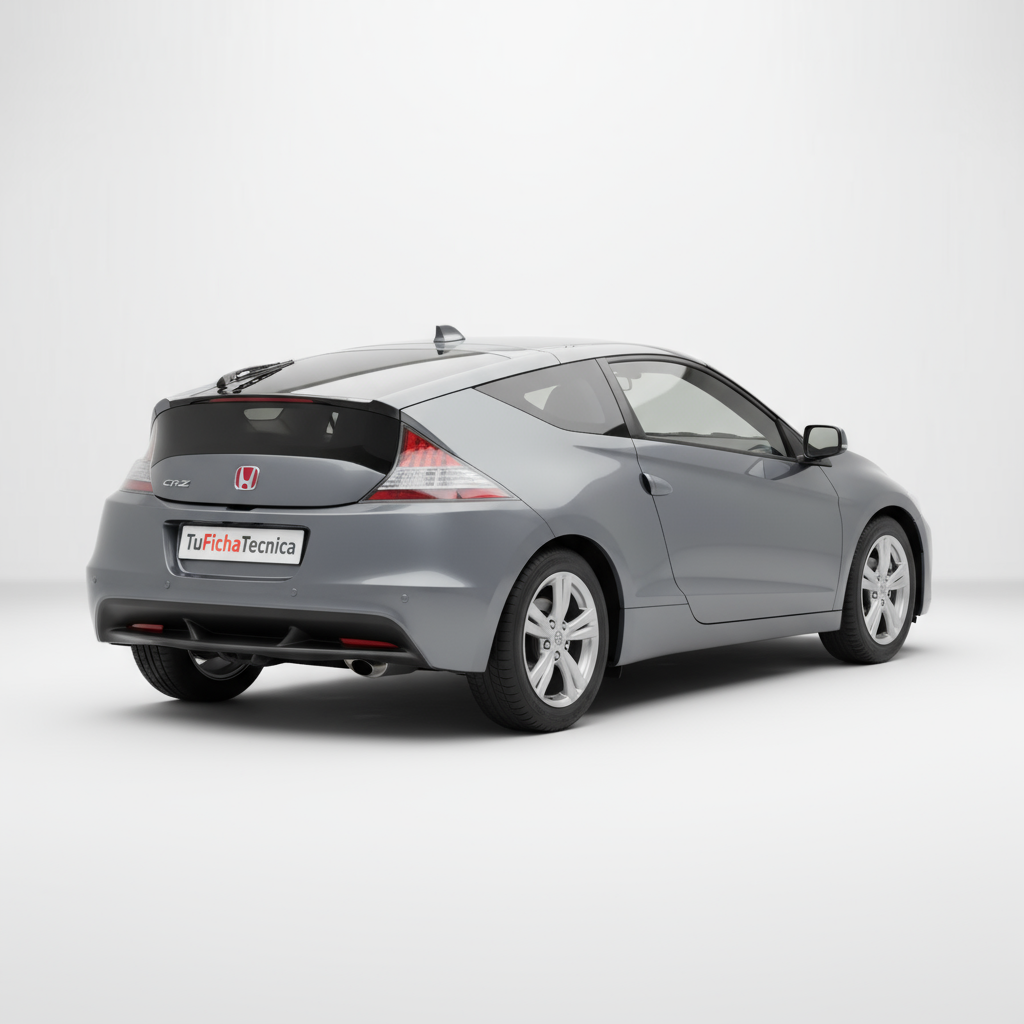
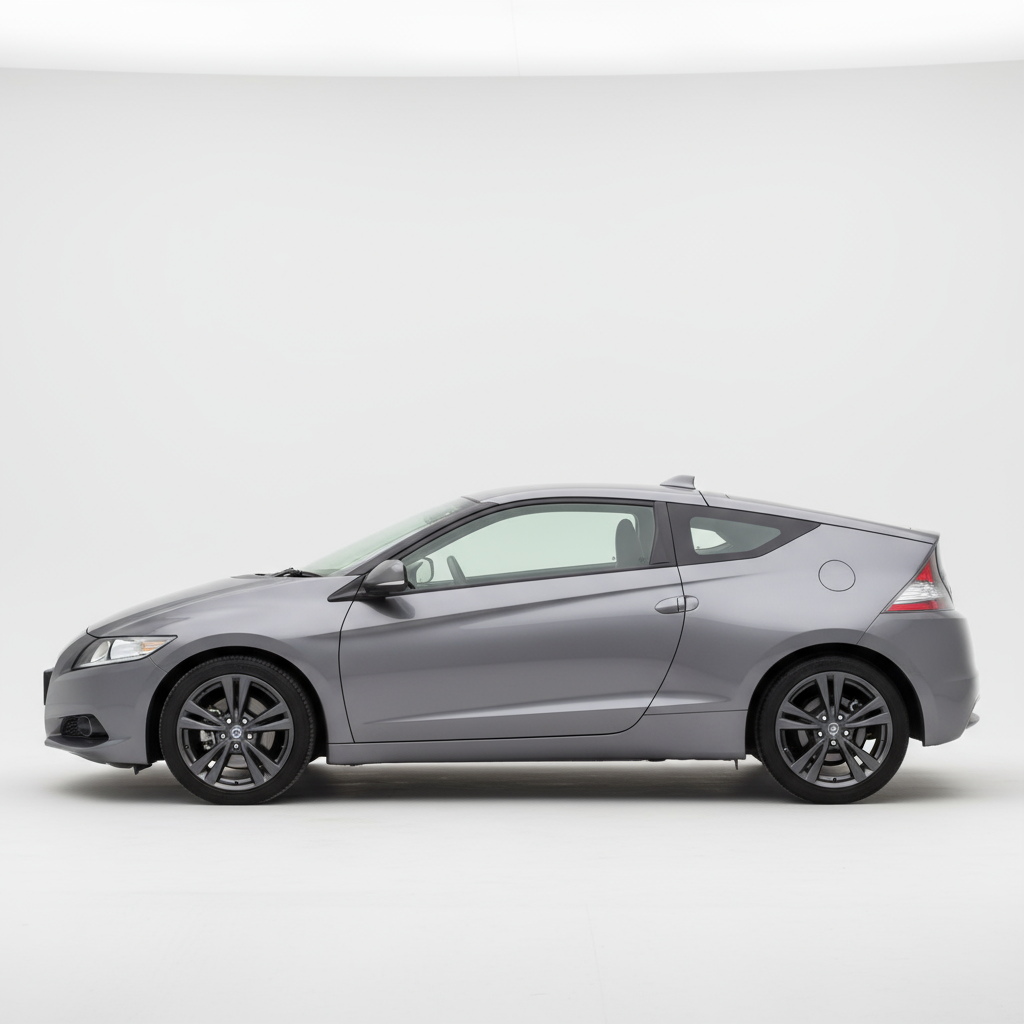
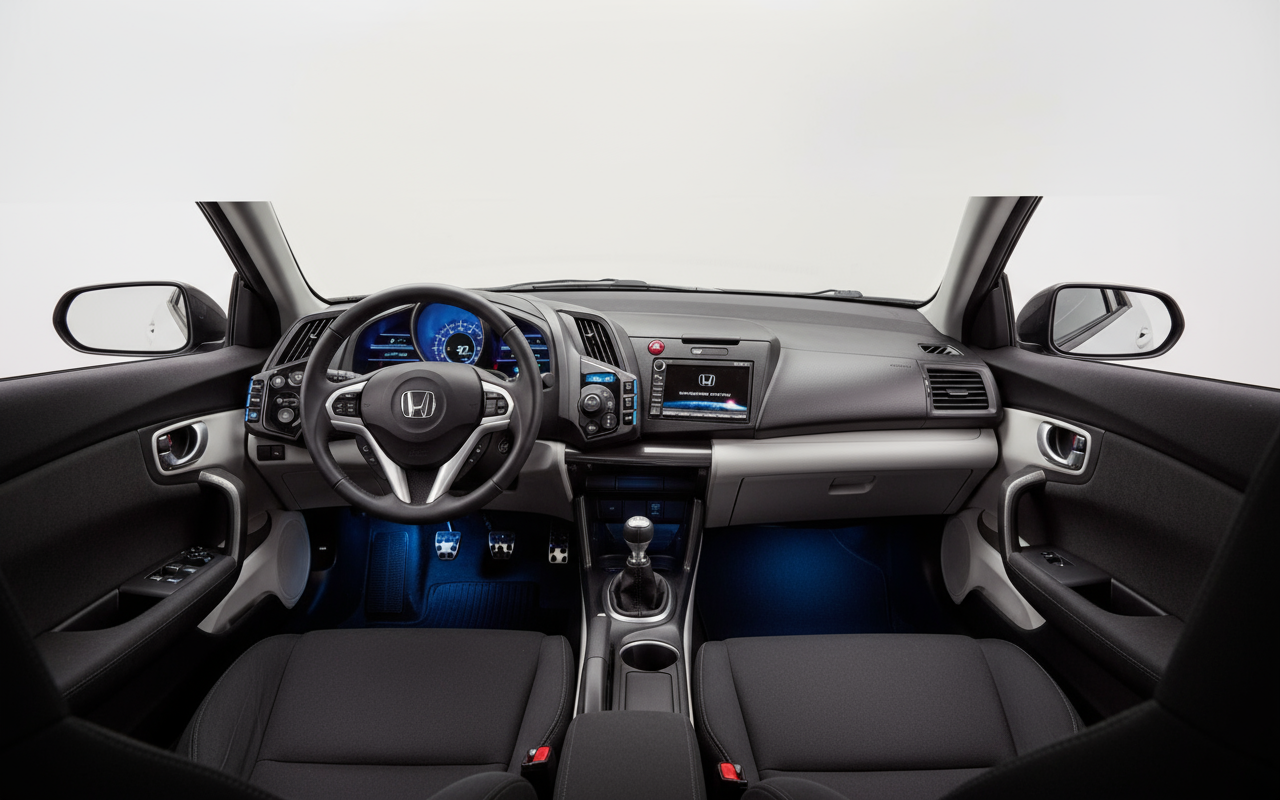
Its design is a futuristic work of art that still turns heads. The sharp wedge-shaped silhouette, the truncated rear with its iconic split rear window, and its compact proportions are a clear homage to its spiritual predecessor. Inside, the show continues with a dashboard that looks like it's from a spaceship, enveloping the driver with three-dimensional gauges that change color depending on the driving mode. It's not just a car; it's a rolling sculpture that screams individuality.
Technology and features
The technological heart of the CR-Z is its IMA (Integrated Motor Assist) hybrid system, an intelligent solution that didn't aim for purely electric driving but to assist the gasoline engine to improve response and reduce consumption. Its three driving modes (Econ, Normal, and Sport) palpably transform the car's character, from a quiet ecological ride to a spirited sports car. For 2010, its digital instrument cluster and overall concept were pure avant-garde, proving that hybrid technology could be exciting.
Competition
The CR-Z played in a league of its own, making it difficult to find direct rivals. It didn't have the power of a Volkswagen Scirocco or the purity of a Mazda MX-5. Perhaps the MINI Cooper came close with its focus on style and driving fun, or the Peugeot RCZ for its aesthetic boldness. However, none offered its unique combination of a sports coupe, manual transmission, and hybrid mechanics. The CR-Z didn't compete; it simply offered an alternative for those looking for something different.
Conclusion
The Honda CR-Z was a misunderstood car, a wonderful experiment ahead of its time. It tried to be the perfect car for both the conscious driver and the enthusiast, a balance the mass market failed to appreciate. Today, it is a cult car, a gem for connoisseurs who value its bold design, rewarding manual driving experience, and unique character. It is proof that efficiency does not have to be at odds with emotion.