
Especificaciones y análisis del KIA Rio
Power
75HP
Torque
170Nm
Consumption
3.8l/100
Emissions
99g/km
0-100 km/h
16.1s
Top Speed
160km/h
Weight
1191kg
Price
12,665€
Technical summary
Gasóleo
Manual 6v
FWD
5 / 5 doors
288 L
43 L
55 kW
Current
Technical specifications
Engine
Capacities
Detailed analysis of the KIA Rio 5p 1.1 CRDi WGT Concept · 75 CV (2011-2012)
General description
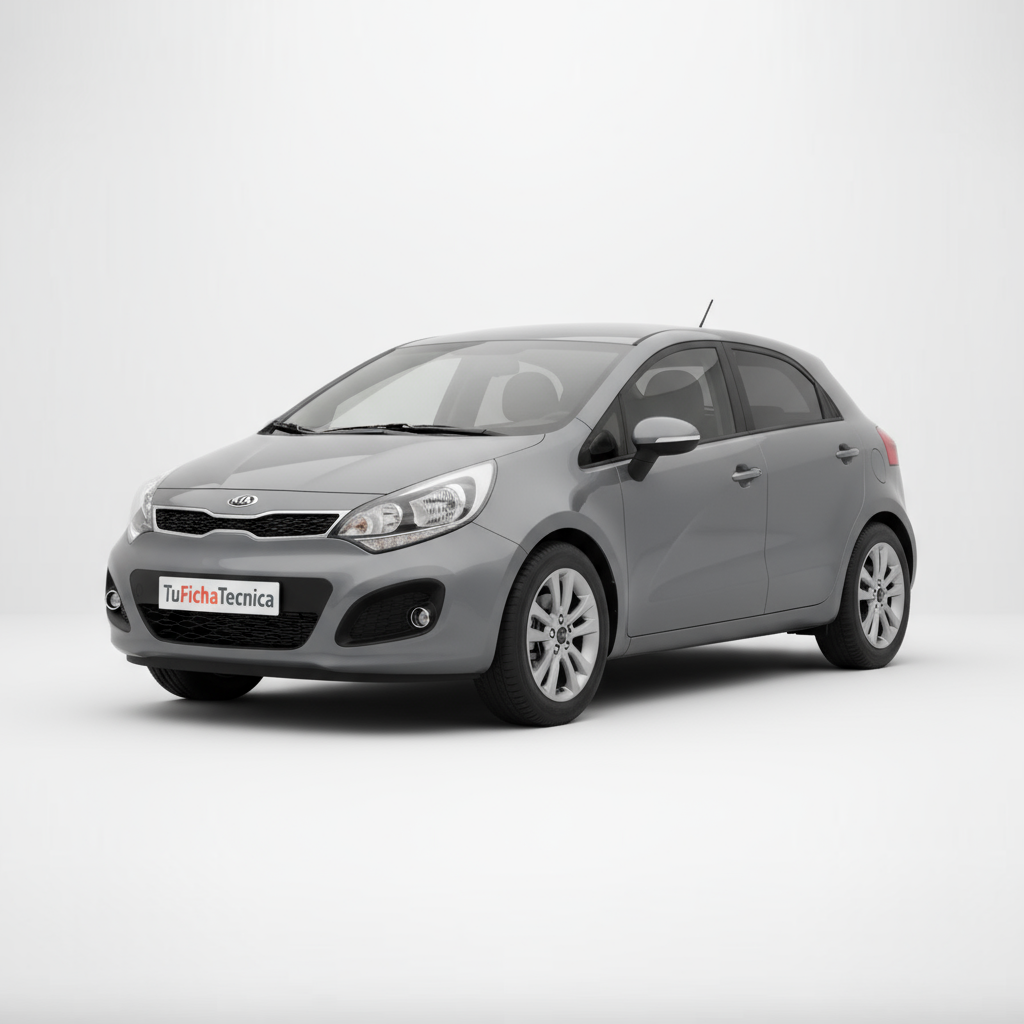
The 2012 KIA Rio was not just another car; it was a statement of intent. With this generation, the Korean brand threw down the gauntlet in the heart of the European market, presenting a subcompact that broke with the past and won you over first with its looks and then with your wallet. This Rio, with its small but brave 75-horsepower 1.1 CRDi diesel engine, represented a quantum leap in quality, design, and efficiency, proving that KIA had arrived to stay and compete head-to-head with the big players.
Driving experience
Getting behind the wheel of this Rio is an experience of honesty and efficiency. Its 75 horsepower won't pin you to the seat, but the character of its three-cylinder engine and the well-spaced ratios of its six-speed manual gearbox make it surprisingly lively in the city. It feels agile, light, and easy to drive. On the highway, its composure is adequate, although overtakes are modest. The real thrill comes from seeing its ridiculously low fuel consumption, a feeling of intelligence and savings that accompanies you every kilometer.
Design and aesthetics
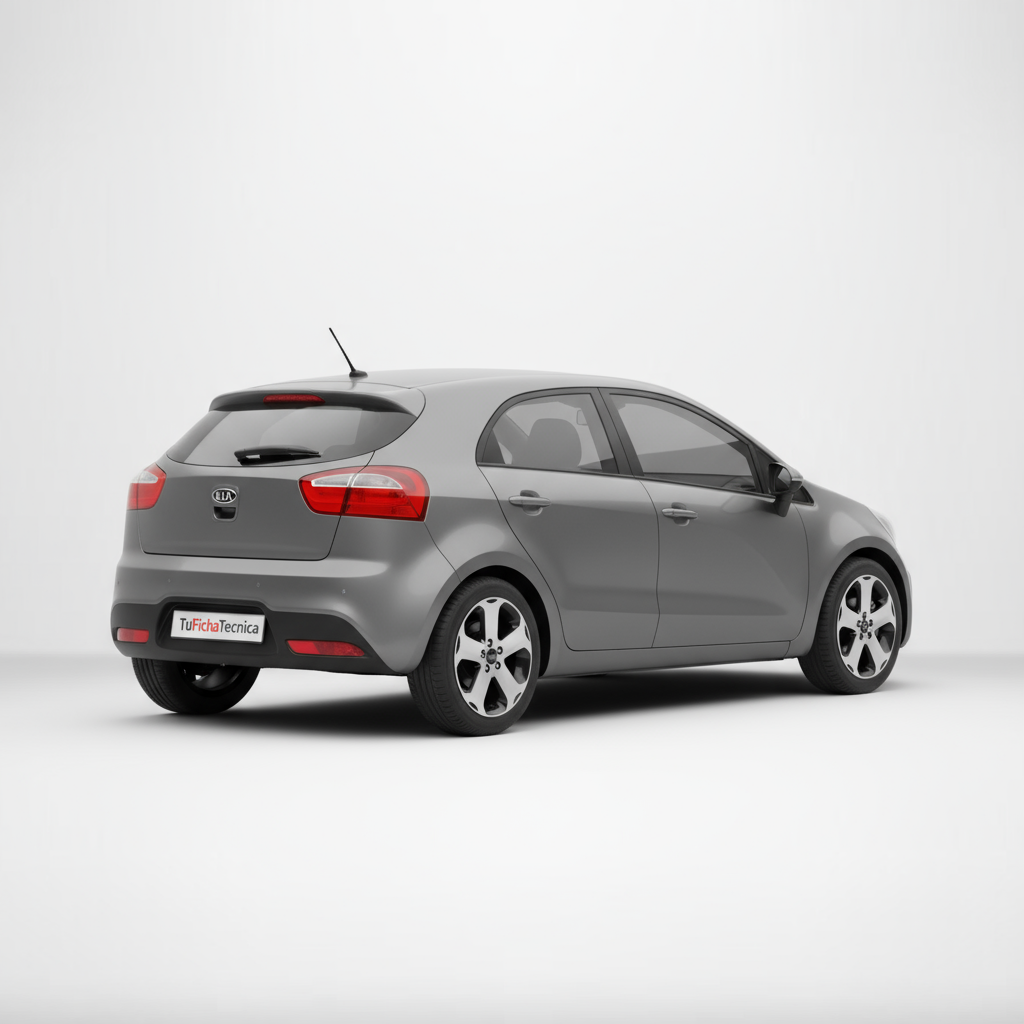
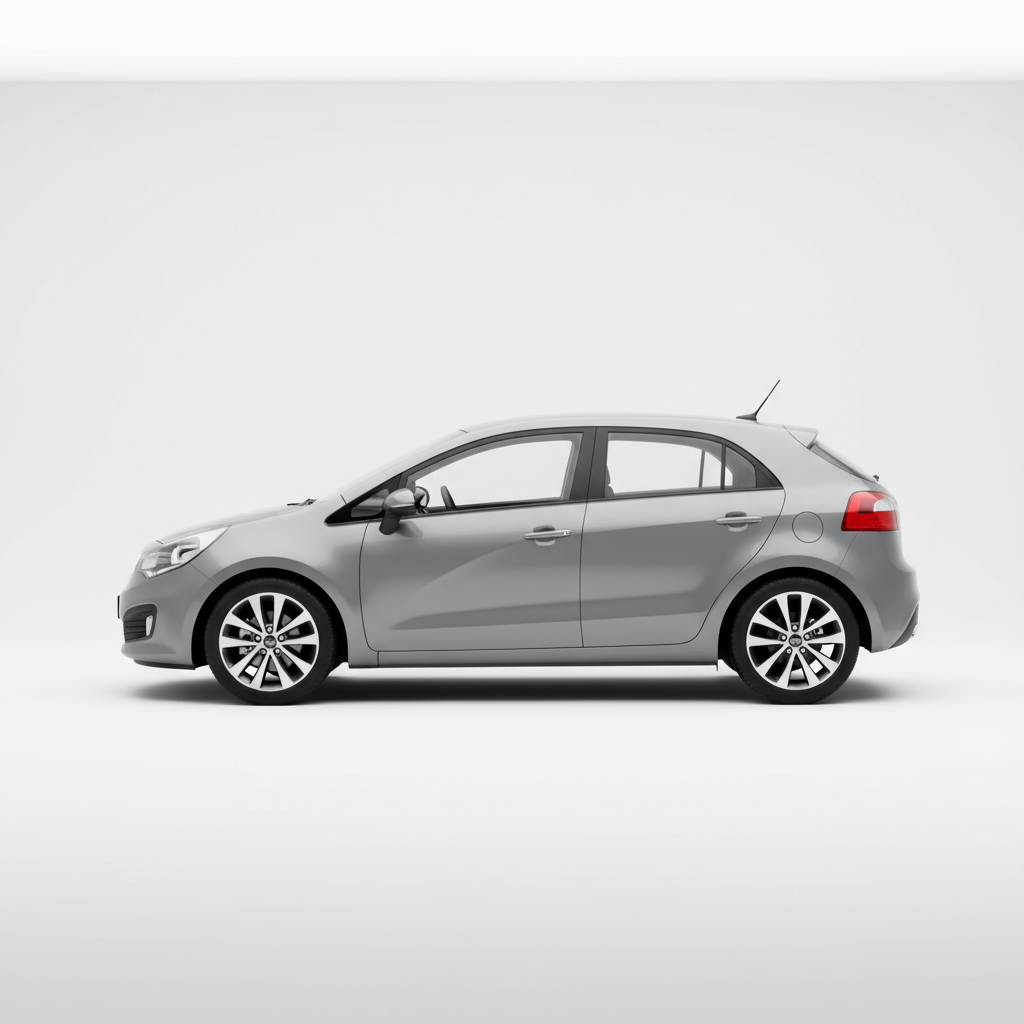
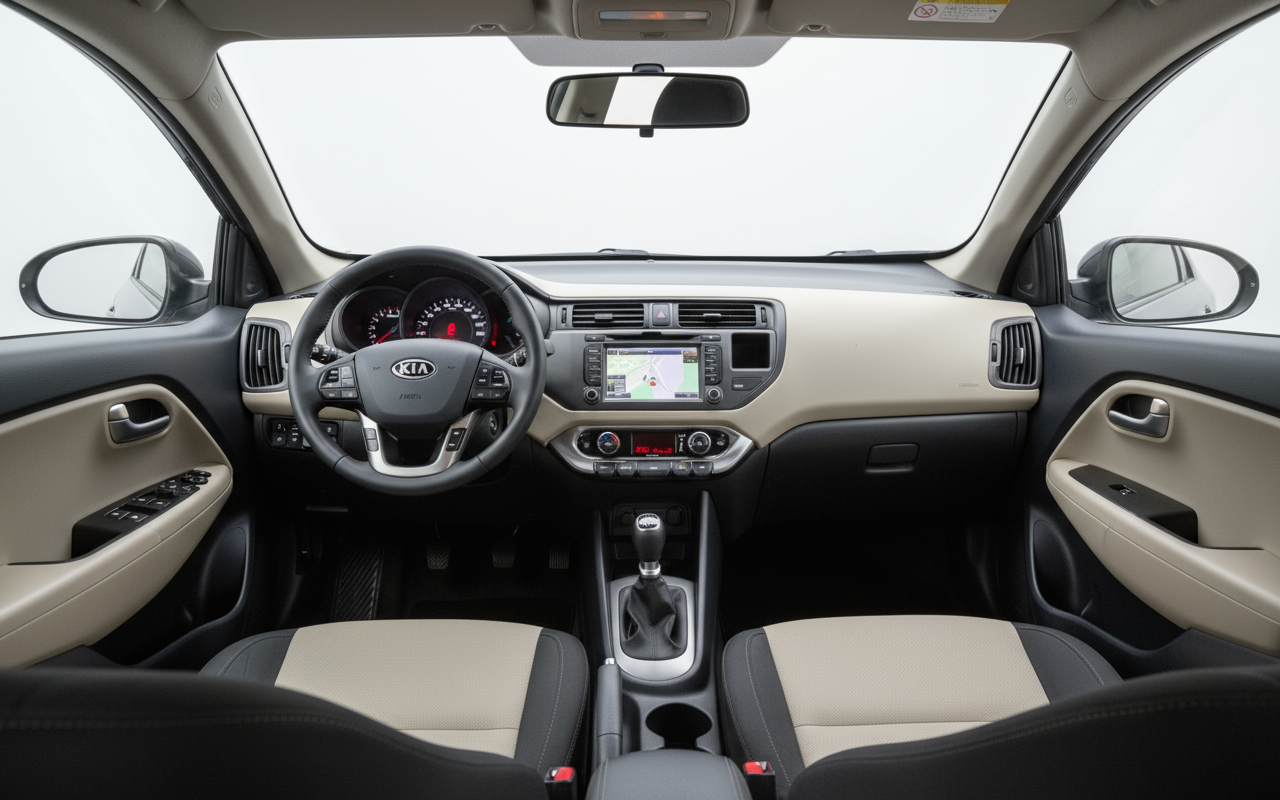
The design was its great calling card, a true revolution. Peter Schreyer dressed the Rio in a European suit, dynamic and full of character. The 'Tiger Nose' grille, sharp lines, and a well-proportioned silhouette gave it the appearance of a car from a higher segment. Inside, the leap was just as impressive. Although hard plastics were abundant, the assembly was solid, and the dashboard design was clean and ergonomic. It conveyed a sense of modernity and attention to detail that was love at first sight.
Technology and features
In its Concept trim, the technology focused on the essentials, but with a very intelligent approach. The real technological gem was hidden under the hood: a diesel engine of just 1.1 liters with common-rail direct injection and a variable geometry turbo. Achieving emissions of only 99 g/km of CO2 and an average consumption of 3.8 liters without resorting to a Start-Stop system was an engineering feat for the time. Beyond that, it met expectations in safety, but its main argument was mechanical efficiency.
Competition
In 2012, the Rio entered a territory dominated by titans like the Ford Fiesta, Volkswagen Polo, and Renault Clio. It faced them without complexes, offering a bolder design than many, a generous interior space, and, above all, an unbeatable price-equipment ratio, crowned by KIA's legendary 7-year warranty. It wasn't just a cheap alternative; it was a smart and attractive option that made many buyers of traditional brands hesitate.
Conclusion
This KIA Rio is one of those cars that mark a before and after. It represents the maturity of a brand that learned to perfectly combine reason and emotion. It is a vehicle that wins you over with its aesthetics, convinces you with its incredibly low running costs, and earns your loyalty with its reliability. More than just a means of transport, it was proof that you could have an attractive, modern, and economical car without making painful compromises. A brilliant choice that, even today, makes a lot of sense.