
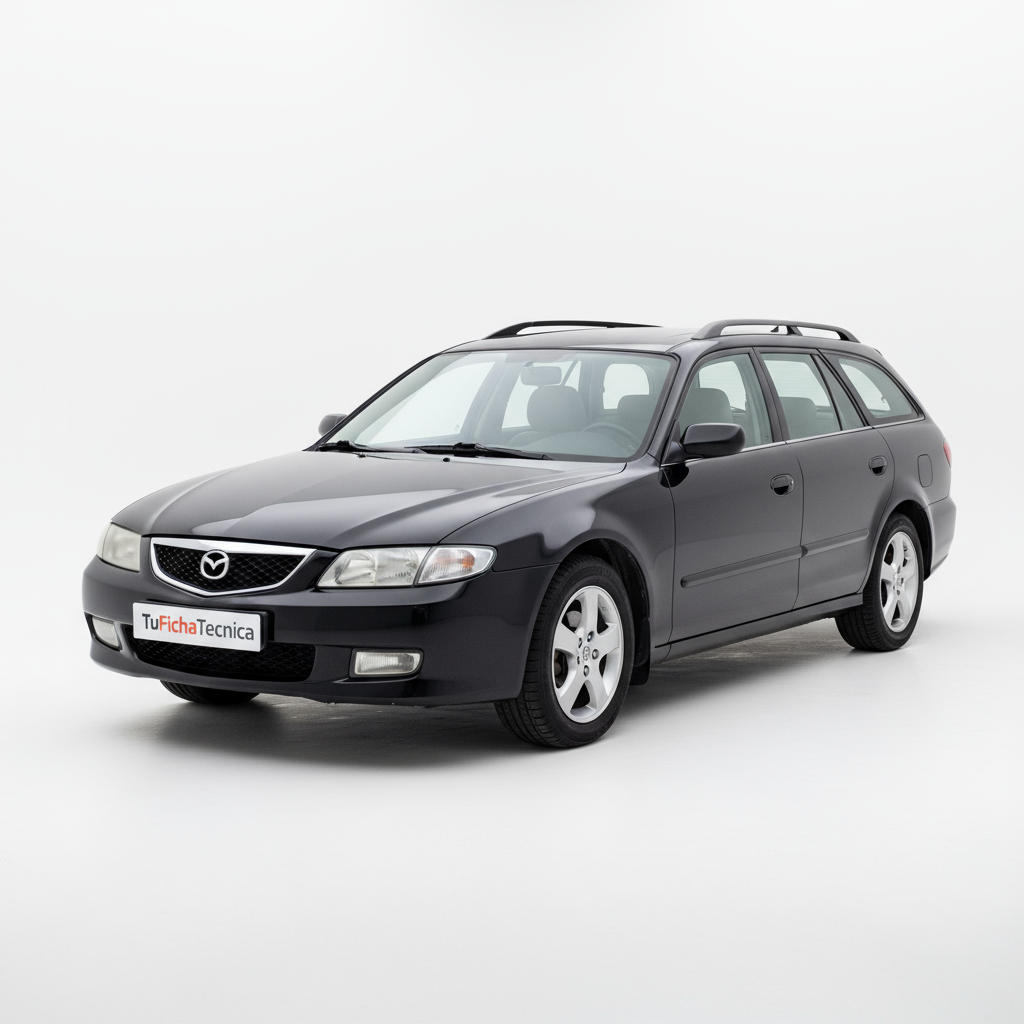

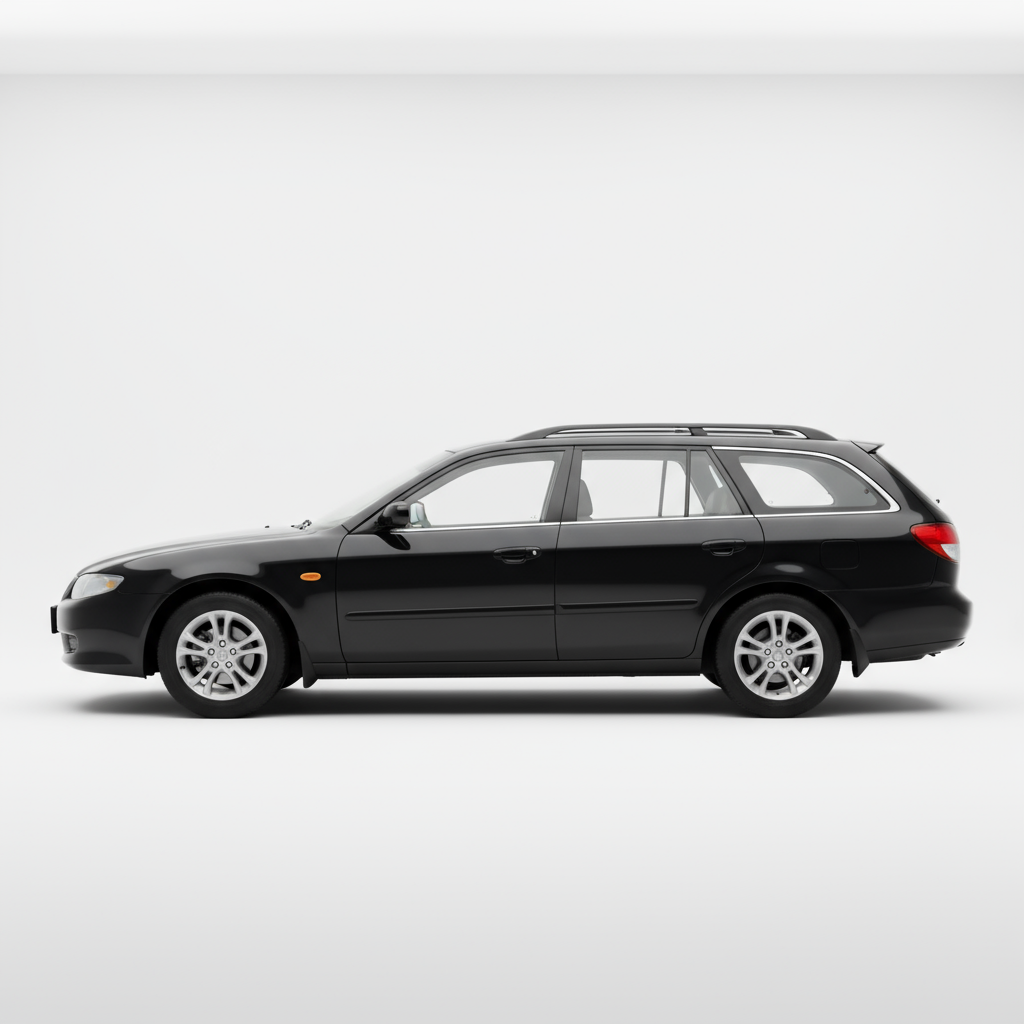

Especificaciones y análisis del Mazda 626
Power
136HP
Torque
178Nm
Consumption
8.3l/100
Emissions
-g/km
0-100 km/h
10.5s
Top Speed
202km/h
Weight
1355kg
Price
22,200€
Technical summary
Gasolina
Manual 5v
FWD
5 / 5 doors
537 L
64 L
100 kW
Current
Technical specifications
Engine
Capacities
Detailed analysis of the Mazda 626 Touring 2.0 16V Wagon · 136 CV (2001-2002)
General description
The 1998 Mazda 626 Touring 2.0 16V Wagon is a vehicle that, despite its age, still evokes a sense of reliability and practicality. This model, with its station wagon body, was presented as a sensible option for those seeking space and balanced performance without great sporting pretensions. Its 136 hp gasoline engine, combined with a 5-speed manual transmission, promised smooth and efficient driving for daily use and family trips.
Driving experience
Behind the wheel of the Mazda 626, the predominant feeling is one of comfort and stability. It is not a car designed for strong emotions, but to offer a quiet and predictable ride. The McPherson type front suspension absorbs road irregularities well, providing a pleasant ride. The rack-and-pinion steering offers adequate response, though without the agility of more modern models. The 136 hp engine, with its 178 Nm of torque, allows for 0 to 100 km/h acceleration in 10.5 seconds and a top speed of 202 km/h, respectable figures for its time and segment, ensuring safe overtakes and good cruising capability. The combined consumption of 8.3 l/100km is reasonable for a 2.0-liter gasoline engine of that generation.
Design and aesthetics
The design of the 1998 Mazda 626 Wagon is functional and timeless. Its lines are clean and discreet, without fanfare, giving it a sober elegance. The station wagon body, with its 4660 mm length, 1710 mm width, and 1515 mm height, maximizes interior space and cargo capacity, with a 537-liter trunk that makes it an ideal companion for families or those who need to transport bulky items. The 15-inch wheels with 195/60 R15 tires contribute to a balanced aesthetic and good road grip. It is a design that prioritizes utility and durability over fleeting fashions.
Technology and features
In terms of technology, the 1998 Mazda 626 is situated in its temporal context. It incorporates a 1991 cc gasoline engine with indirect injection and 16 valves, a robust and proven configuration. The 5-speed manual transmission is precise and reliable. In terms of safety, it features ventilated disc brakes at the front and discs at the rear, offering adequate braking capability. Although it lacks modern driving aids, its technology focuses on durability and mechanical efficiency, key elements for long-term reliability. Power steering, although not speed-sensitive, facilitates maneuvers.
Competition
At the time, the Mazda 626 Wagon competed in a highly contested segment with models such as the Volkswagen Passat Variant, the Ford Mondeo Wagon, the Opel Vectra Caravan, or the Toyota Avensis Wagon. Compared to them, the Mazda 626 stood out for its reputation for mechanical reliability, its good balance between comfort and performance, and its generous interior space. Although it perhaps did not offer the same level of luxury or the same brand image as some of its European rivals, its value proposition was based on solidity and practicality, often at a more competitive price.
Conclusion
The 1998 Mazda 626 Touring 2.0 16V Wagon is a car that represents the essence of late 90s Japanese engineering: reliability, practicality, and honest performance. It is a vehicle that, despite its age, remains an interesting option for those looking for a spacious and robust family car, capable of tackling daily life with solvency and without major complications. Its timeless design and proven mechanics make it a modern classic that still has much to offer.