
Especificaciones y análisis del Mercedes-Benz Clase R
Power
231HP
Torque
300Nm
Consumption
11.1l/100
Emissions
260g/km
0-100 km/h
9.6s
Top Speed
222km/h
Weight
2130kg
Price
55,350€
Technical summary
Gasolina
Automático 7v
RWD
5 / 5 doors
531 L
80 L
170 kW
Current
Technical specifications
Engine
Capacities
Detailed analysis of the Mercedes-Benz R 300 Corto · 231 CV (2009-2010)
General description
The 2006 Mercedes-Benz R 300 Short is a bold and distinctive proposition from the German brand, a vehicle that defies traditional classifications. With its 4922 mm long body, it positions itself as a luxury minivan with SUV aspirations, offering generous interior space and an imposing presence on the road. This model, with its 231 hp gasoline engine and rear-wheel drive, promised a refined and comfortable driving experience, ideal for those looking for more than just simple transportation.
Driving experience
Behind the wheel of the R 300 Short, the predominant sensation is one of composure and smoothness. The 231 hp engine, while not turning this giant into a sports car, offers an adequate response to move its 2130 kg with dignity. Acceleration from 0 to 100 km/h in 9.6 seconds is respectable, and a top speed of 222 km/h ensures long journeys without incident. The suspension, with a deformable parallelogram on both axles and stabilizers, masterfully filters out road irregularities, providing exceptional ride comfort. The speed-sensitive electric power steering contributes to relaxed and precise driving, although its size can make city maneuvers a challenge. The combined consumption of 11.1 l/100km is a reminder of its nature and weight.
Design and aesthetics
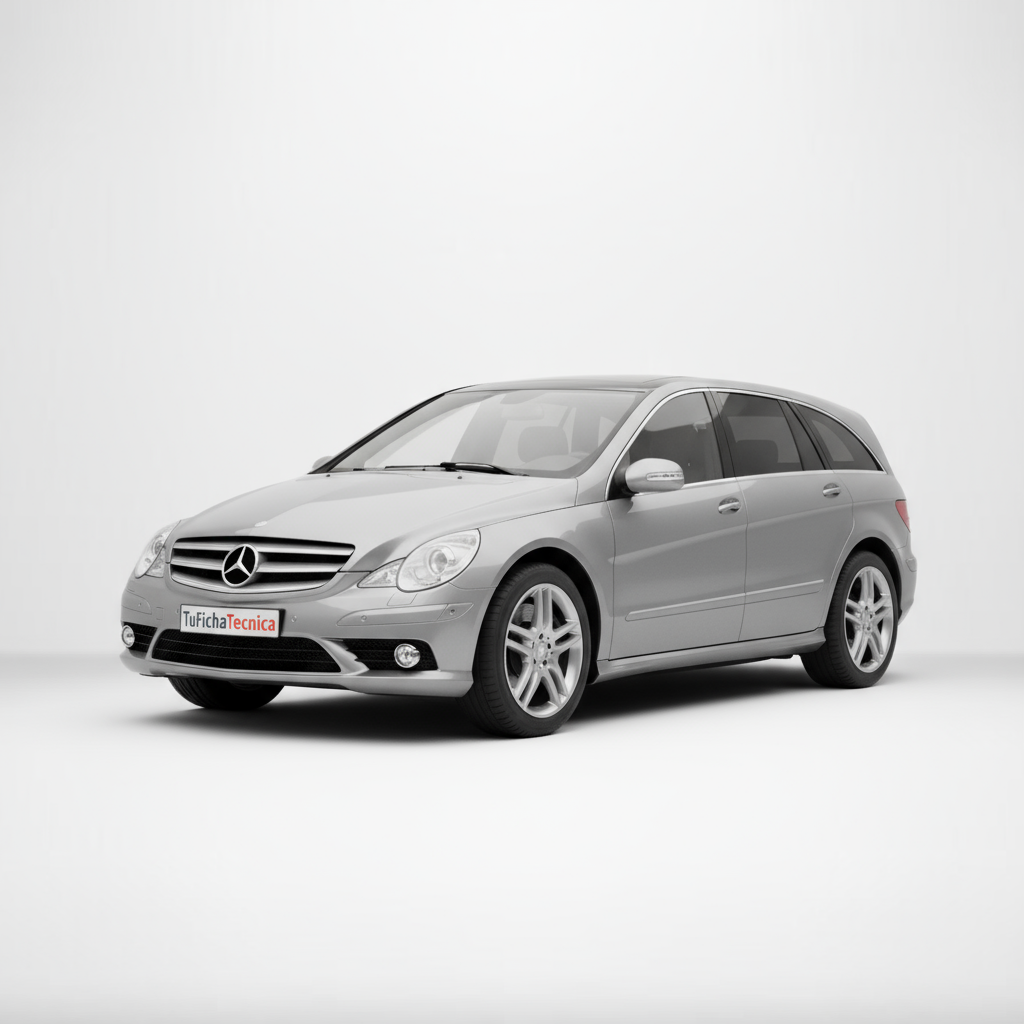
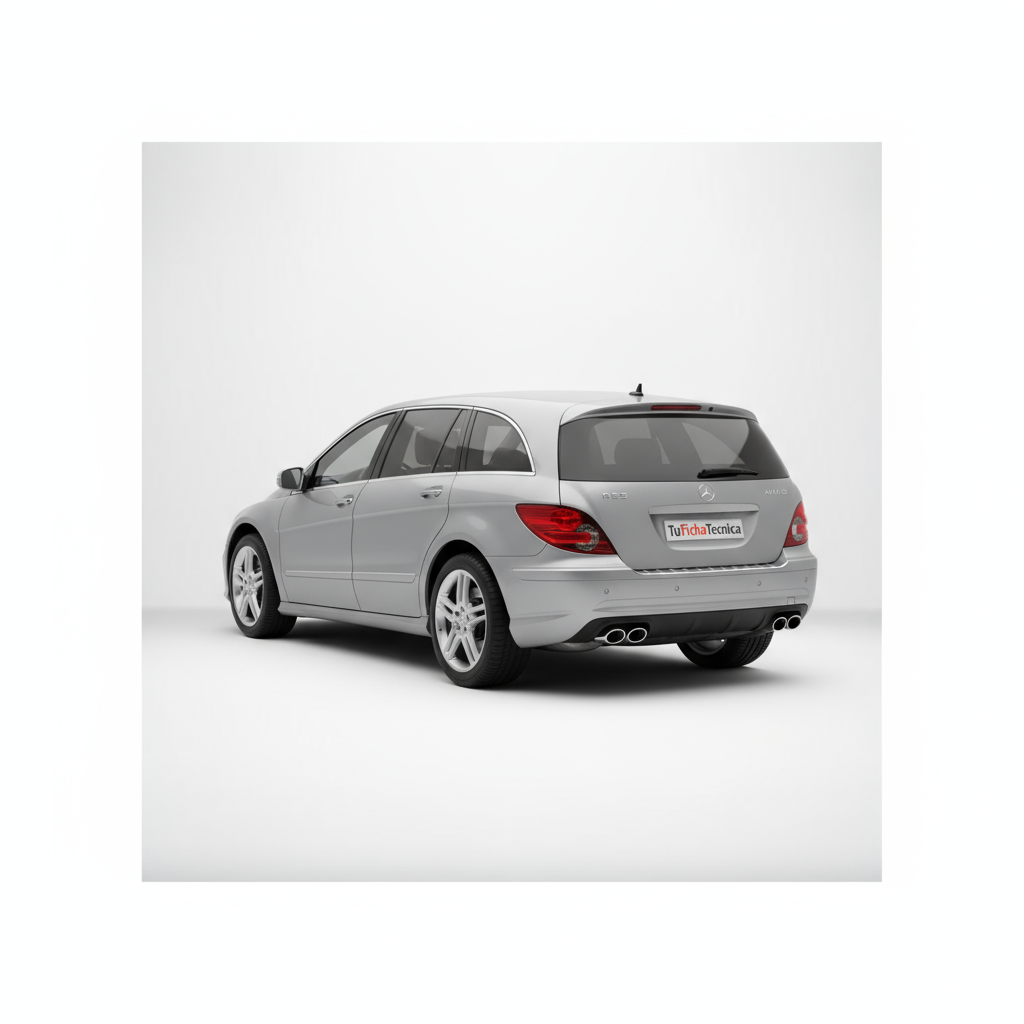
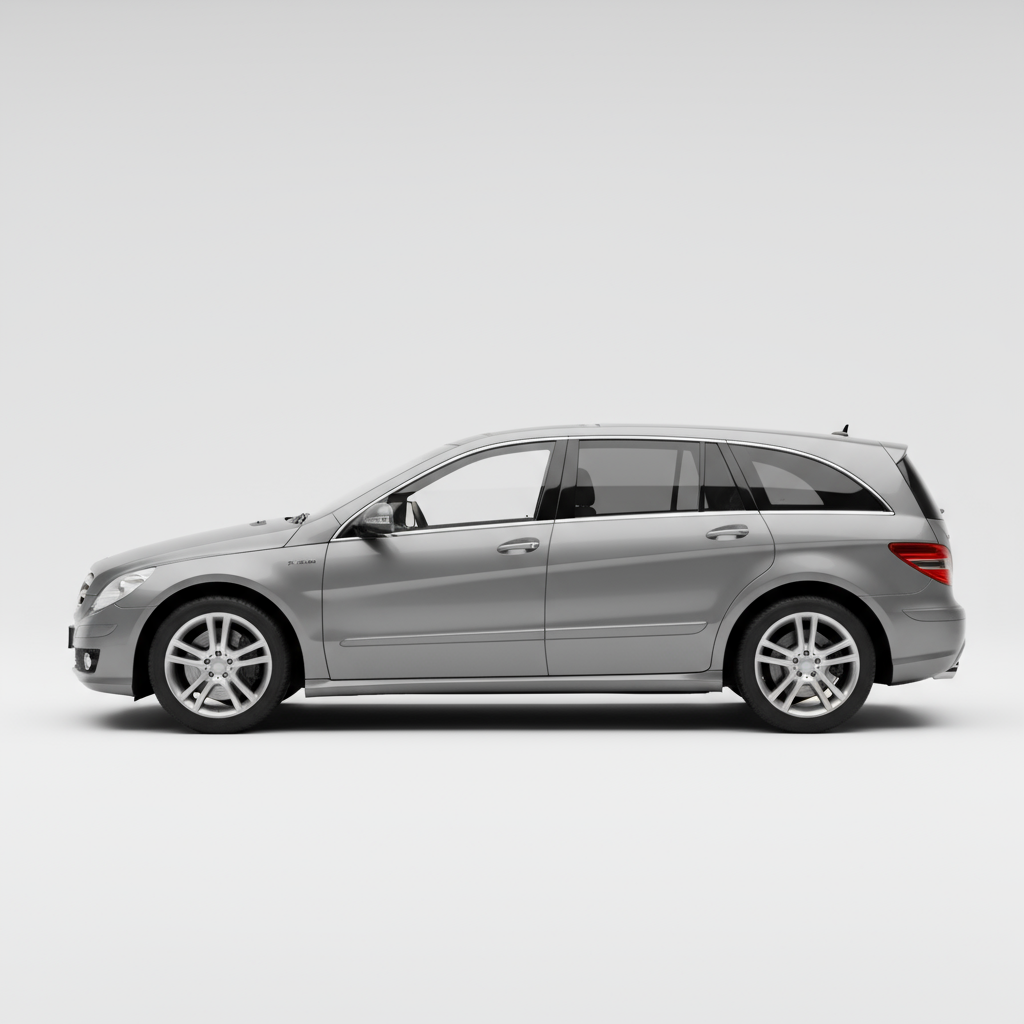
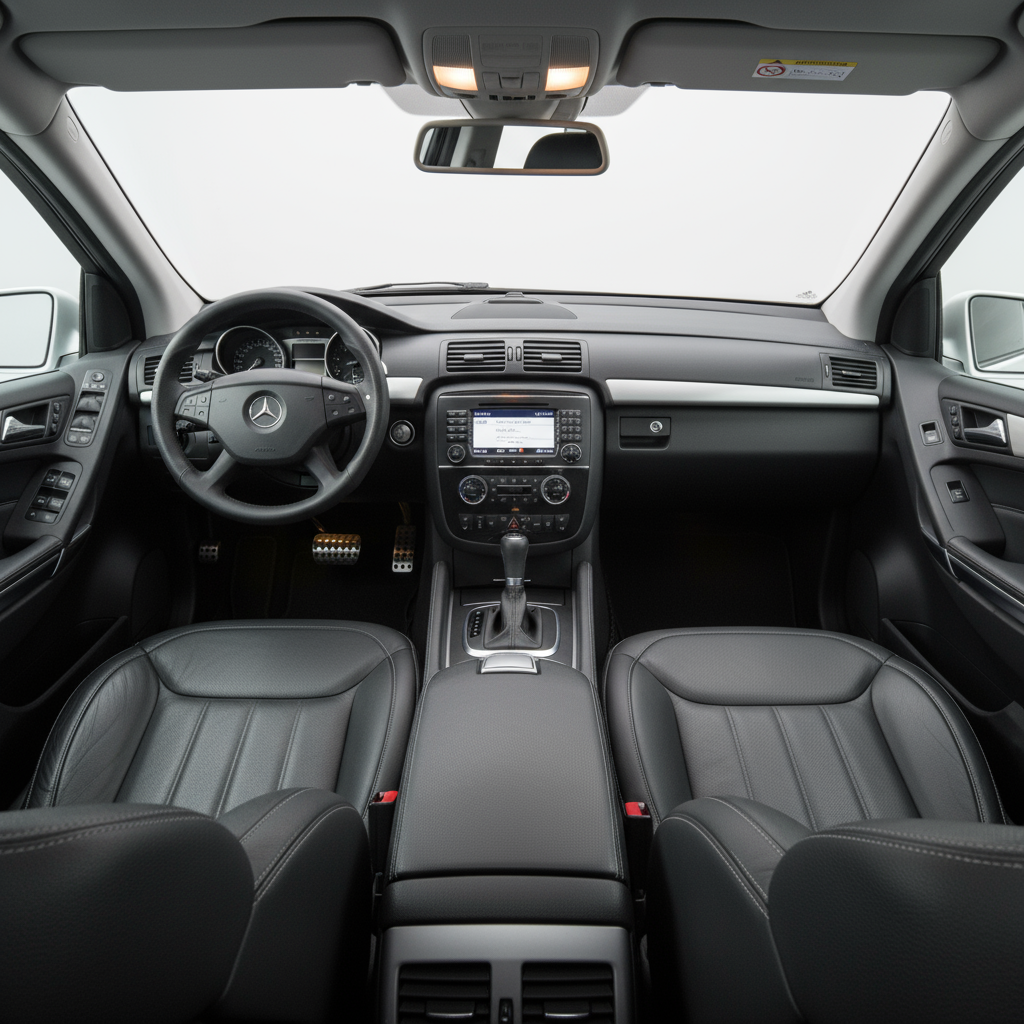
The design of the Mercedes-Benz R 300 Short is undoubtedly one of its most controversial and distinctive points. With its fluid lines and elongated silhouette, it deviates from the aesthetic canons of conventional SUVs or minivans. The front exhibits the characteristic Mercedes-Benz grille, flanked by headlights that extend to the sides, giving it an elegant yet robust look. The side view reveals a large glass surface and a roofline that gently slopes towards the rear. The interior, with capacity for 5 occupants and a 531-liter trunk, stands out for its spaciousness and the quality of the materials, creating an atmosphere of luxury and comfort. Despite its size, the design seeks harmony and functionality, although its aesthetics polarized opinions at the time.
Technology and features
In terms of technology, the 2006 R 300 Short incorporated advanced solutions for its time. The 2996 cc gasoline engine, with 6 cylinders and 231 hp, was managed by a 7-speed automatic transmission, which ensured smooth and efficient shifts. Indirect injection with variable intake optimized power delivery and consumption. The speed-sensitive electric power steering improved maneuverability and road stability. Although it did not have the latest innovations in connectivity or driving assistance systems that we see today, it offered comfort and safety equipment typical of a high-end Mercedes-Benz, including ventilated front disc brakes and rear discs for effective braking.
Competition
The Mercedes-Benz R 300 Short faced a particular market niche, competing with vehicles that offered space and luxury, but with different approaches. It could be considered a rival to high-end minivans such as the Chrysler Grand Voyager or the Lancia Phedra, although the R-Class offered a superior level of sophistication and brand image. It also crossed paths with large SUVs such as the Audi Q7 or the BMW X5, although its body concept was closer to that of a minivan. Its unique proposal made it an atypical competitor, seeking to attract customers who valued space, comfort, and the prestige of Mercedes-Benz above traditional classifications.
Conclusion
The 2006 Mercedes-Benz R 300 Short is a vehicle that, despite its particular market positioning, offered an undeniable luxury and comfort experience. Its distinctive design, spacious interior, and refined mechanics made it an interesting option for families or those who needed a large space without giving up the prestige of the star. Although its consumption and size could be a handicap in certain environments, its ability to devour kilometers with exceptional smoothness and its technological equipment made it a formidable travel companion. It is a car that, over time, has gained a certain status as a misunderstood classic, valued by those who appreciate its uniqueness and its focus on comfort and space.