
Especificaciones y análisis del Mercedes-Benz Clase R
Power
231HP
Torque
300Nm
Consumption
10.5l/100
Emissions
246g/km
0-100 km/h
9.6s
Top Speed
222km/h
Weight
2130kg
Price
57,364€
Technical summary
Gasolina
Automático 7v
RWD
5 / 5 doors
550 L
80 L
170 kW
Current
Technical specifications
Engine
Capacities
Detailed analysis of the Mercedes-Benz R 300 · 231 CV (2011)
General description
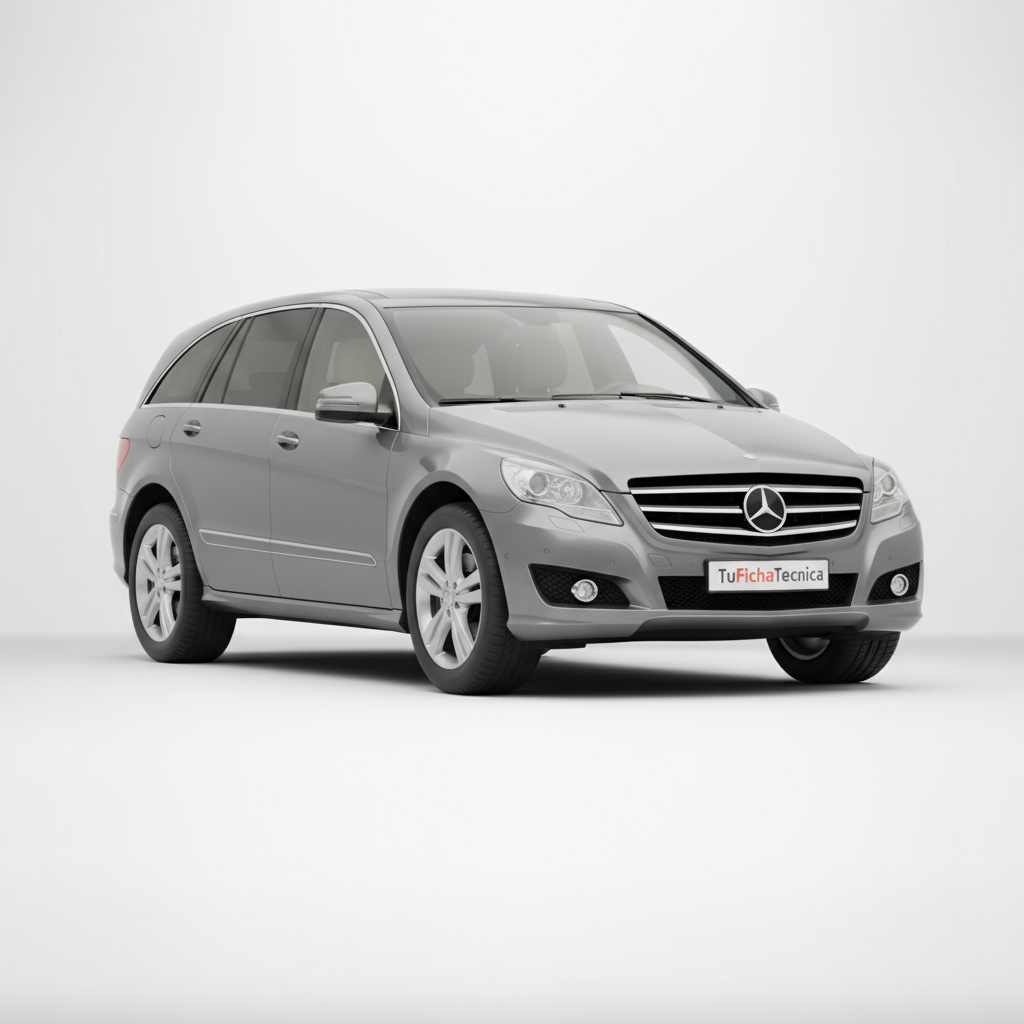
The 2010 Mercedes-Benz R-Class 300, in its short version, presents itself as a bold and distinctive proposition within the luxury family vehicle segment. Priced at €57,364, this model sought to combine the versatility of a minivan with the elegance and comfort inherent to the star brand. Its 3.0-liter, 231 hp gasoline engine, coupled with a 7-speed automatic transmission, promised smooth and refined performance, ideal for long journeys and daily family use.
Driving experience
Behind the wheel of the R-Class 300, the predominant sensation is one of composure and comfort. The deformable parallelogram suspension on both axles, along with speed-sensitive electric power steering, effectively filters out road irregularities, offering a serene and relaxed ride. The 231 hp engine, while not an abundance of power for its 2130 kg, delivers its force linearly and progressively, allowing for 0 to 100 km/h acceleration in 9.6 seconds. The 7-speed automatic transmission contributes to overall smoothness, making imperceptible shifts. However, its combined consumption of 10.5 l/100km and CO2 emissions of 246 g/km reflect a considerable appetite for fuel, something to consider in the user experience.
Design and aesthetics
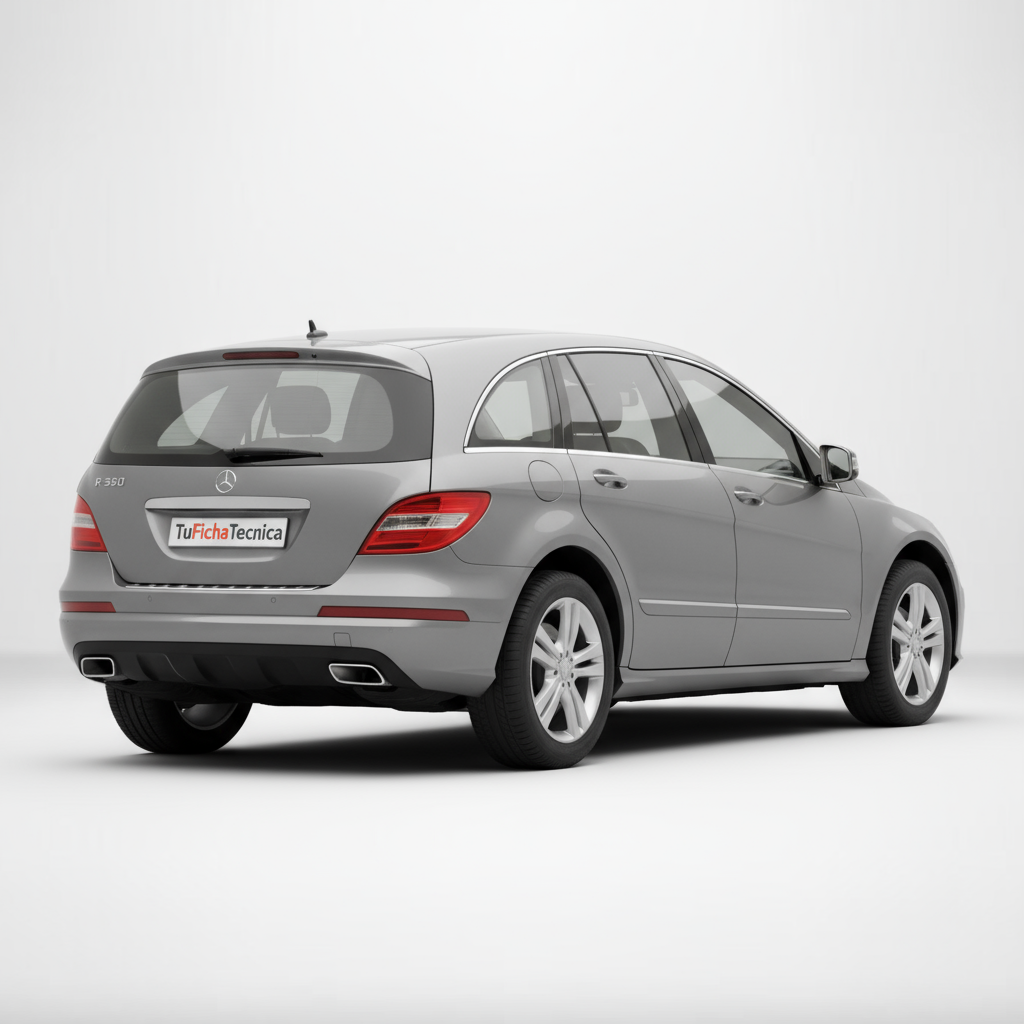
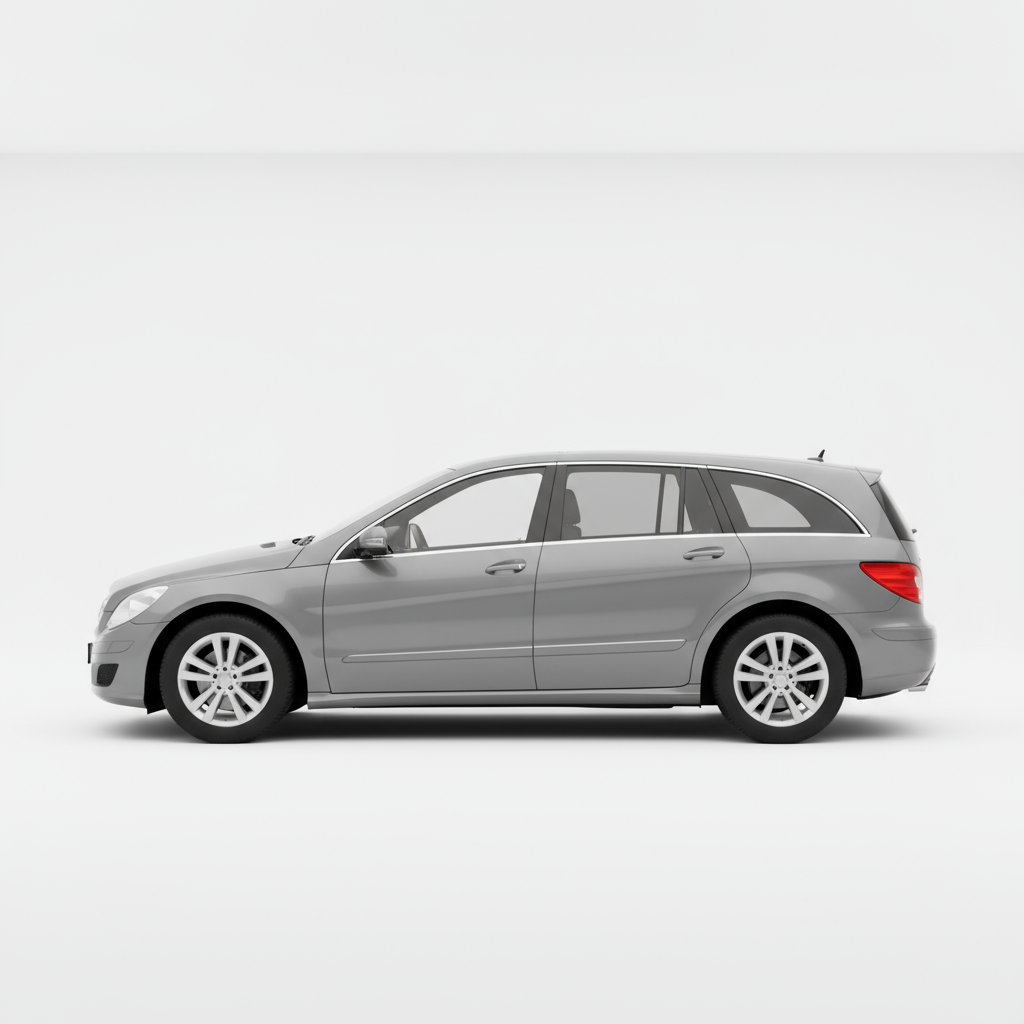
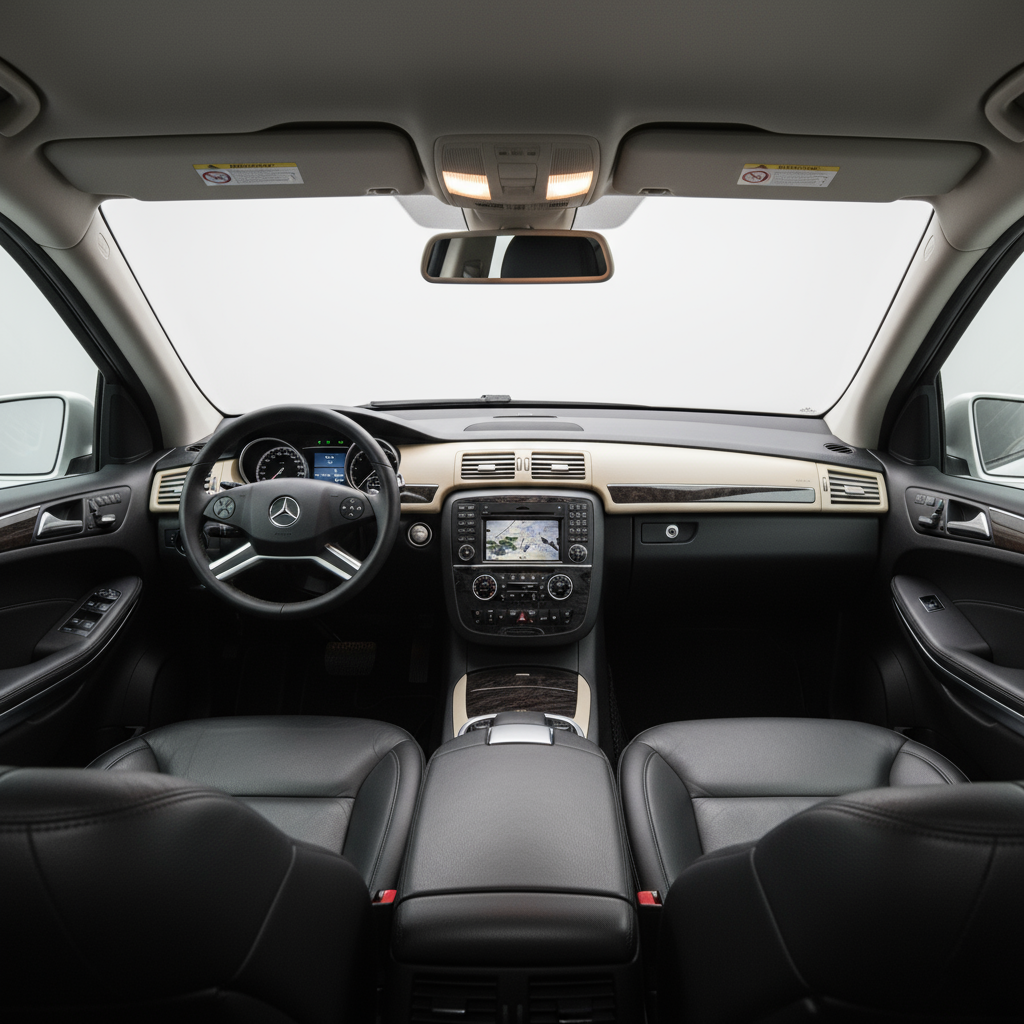
The design of the 2010 Mercedes-Benz R-Class 300 is, without a doubt, one of its most characteristic and divisive points. With a length of 4922 mm and a width of 1922 mm, its silhouette is imposing and unconventional, halfway between a minivan and an SUV. The short version, with 5 doors and 5 seats, offers generous habitability and a 550-liter trunk, ideal for families. The interior, true to Mercedes-Benz style, exudes quality and sobriety, with noble materials and ergonomic design. Although its exterior aesthetics may not be to everyone's liking, its functionality and the feeling of interior space are undeniable.
Technology and features
In terms of technology, the R-Class 300 incorporates Mercedes-Benz's own solutions for the time. Its V6 gasoline engine, with indirect injection and variable intake, seeks to optimize power delivery and efficiency within its possibilities. The 7-speed automatic transmission is a key element for driving comfort. In terms of safety and comfort, it features ventilated front disc brakes and rear discs, as well as rack-and-pinion steering with electric assistance. Although it does not incorporate the latest innovations in connectivity or driving assistance that we see today, its equipment is solid and functional for its segment and year.
Competition
In the 2010 market, the Mercedes-Benz R-Class 300 faced complex rivals due to its hybrid positioning. It could be considered an alternative to luxury minivans like the Chrysler Grand Voyager or the Lancia Voyager, albeit with a more premium and dynamic approach. It also indirectly competed with large SUVs like the Audi Q7 or the BMW X5, although the R-Class prioritized interior space and ride comfort over off-road capabilities. Its unique proposition made it stand out, but also made it difficult to fit into traditional categories.
Conclusion
The 2010 Mercedes-Benz R-Class 300 is a vehicle that, despite its particular design, offers a comfortable driving experience and exceptional interior space. It is an interesting option for families looking for a premium, versatile car with the intrinsic quality of Mercedes-Benz. Its gasoline engine, although smooth, implies high consumption, which could be a factor to consider. In short, a car that, although not a bestseller, left its mark for its originality and its focus on comfort and luxury habitability.