
Especificaciones y análisis del Mitsubishi L200
Power
99HP
Torque
240Nm
Consumption
-l/100
Emissions
-g/km
0-100 km/h
-s
Top Speed
142km/h
Weight
1750kg
Price
22,063€
Technical summary
Gasóleo
Manual 5v
AWD
5 / - doors
- L
75 L
73 kW
Current
Technical specifications
Engine
Capacities
Detailed analysis of the Mitsubishi L200 DC 4x4 GLS Jara · 99 CV (2000-2001)
General description
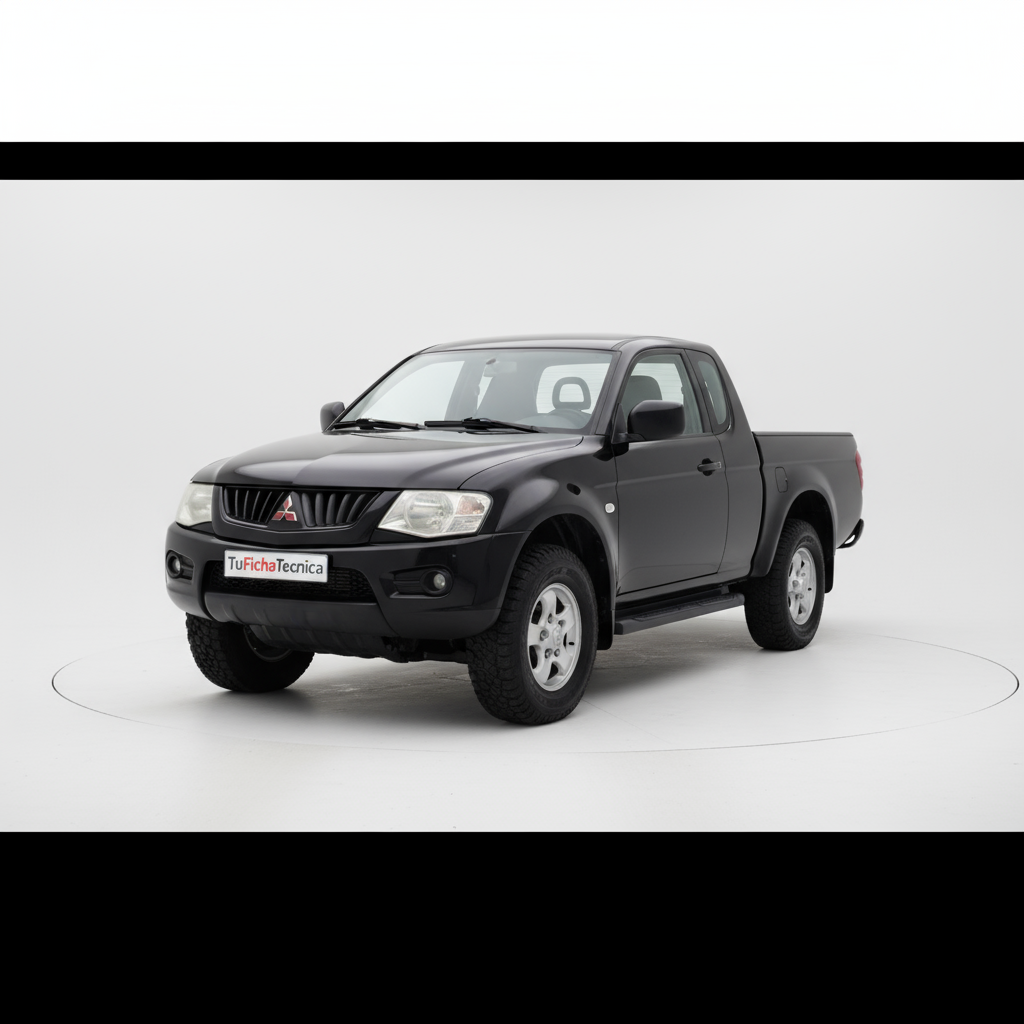
The 1996 Mitsubishi L200 Double Cab, in its 2.5 Diesel version with 99 HP, is a vehicle that evokes the robustness and adventure of an era where functionality was paramount. Priced at 22,063 euros at the time, this pick-up was presented as a reliable work tool and a companion for leisure, capable of facing the most demanding challenges. Its diesel engine, with 2477 cc and 99 horsepower at 4000 rpm, along with a torque of 240 Nm at 2000 rpm, promised solid performance for any task. AWD traction and a 5-speed manual gearbox ensured optimal control on various surfaces, while its top speed of 142 km/h, although modest, was sufficient for its purpose. With generous dimensions of 4935 mm long, 1775 mm wide, and 1800 mm high, and a wheelbase of 2960 mm, it offered interior space for five occupants and considerable cargo capacity. Its chassis, with a deformable parallelogram front suspension and a rigid axle rear suspension, along with ventilated disc brakes at the front and drum brakes at the rear, reflected a construction designed for durability and resistance.
Driving experience
Driving the 1996 Mitsubishi L200 is an experience that connects you with the essence of pure driving. The steering, although lacking modern assistance, transmits every detail of the terrain, offering a sense of direct control and robustness. The diesel engine, with its characteristic sound, pushes with determination from low revolutions, making each acceleration a reminder of its brute force. The suspension, designed to support heavy loads and difficult terrain, may feel firm on asphalt, but it is precisely this firmness that inspires confidence when leaving the road. On winding roads, its size and weight are noticeable, but the all-wheel drive provides unwavering safety. It is a vehicle that invites you to adventure, to explore, to feel the road and the field under your wheels, without filters or artifices. The overall feeling is of an honest, unpretentious vehicle that fulfills its purpose with admirable reliability and unquestionable work capacity.
Design and aesthetics
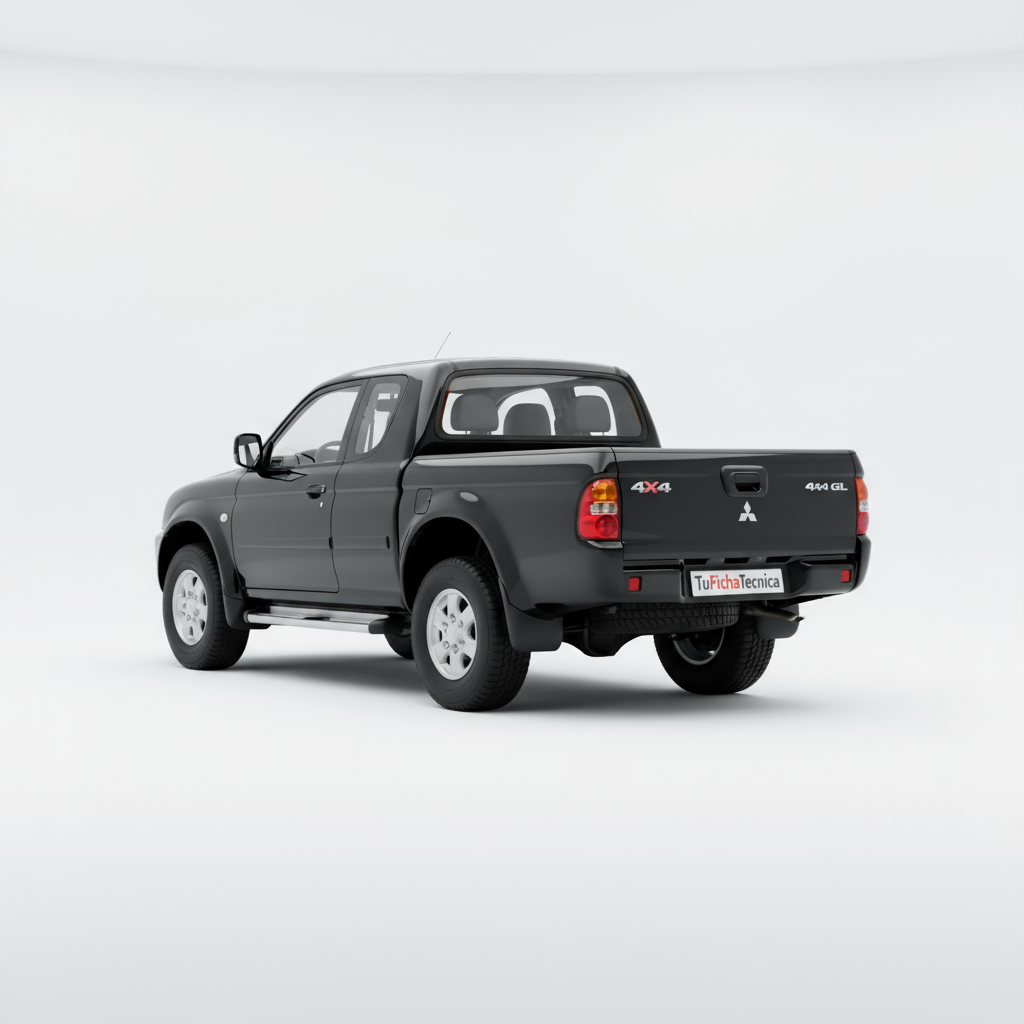
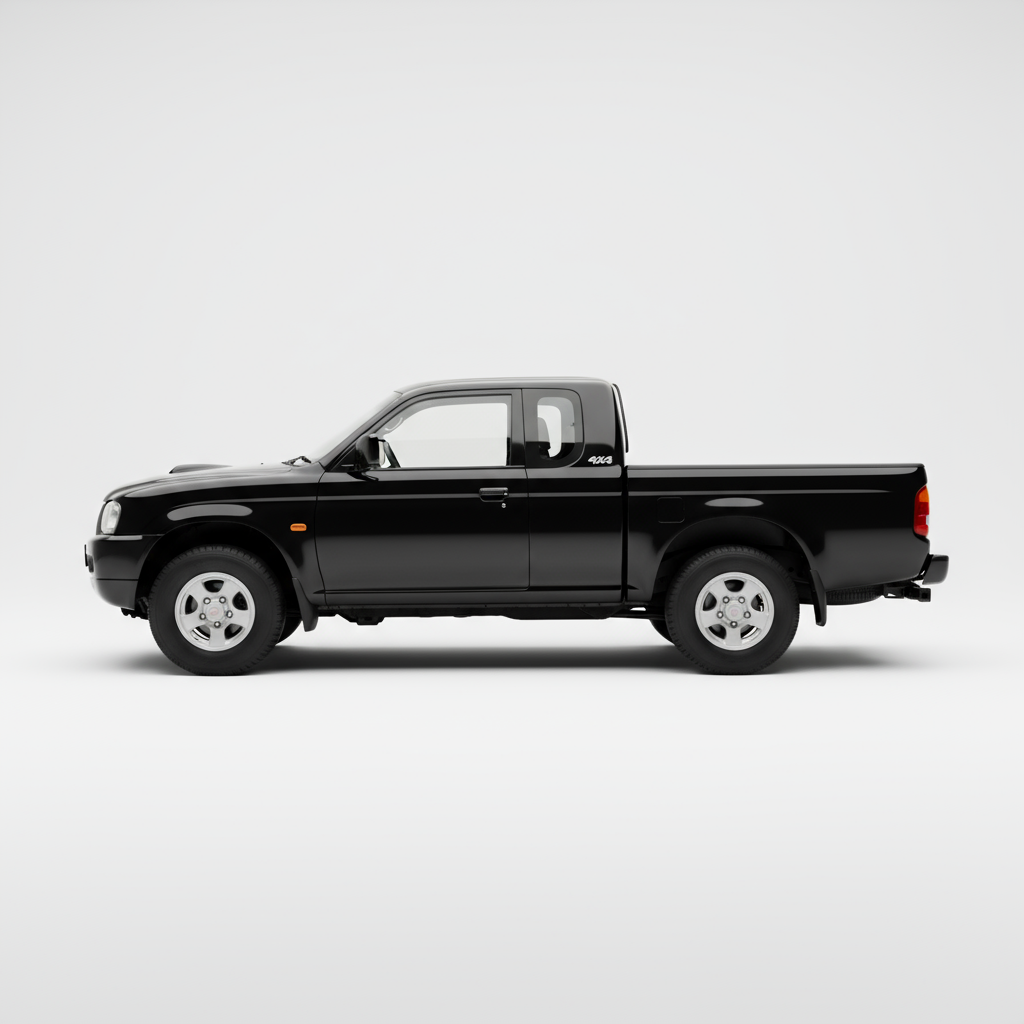
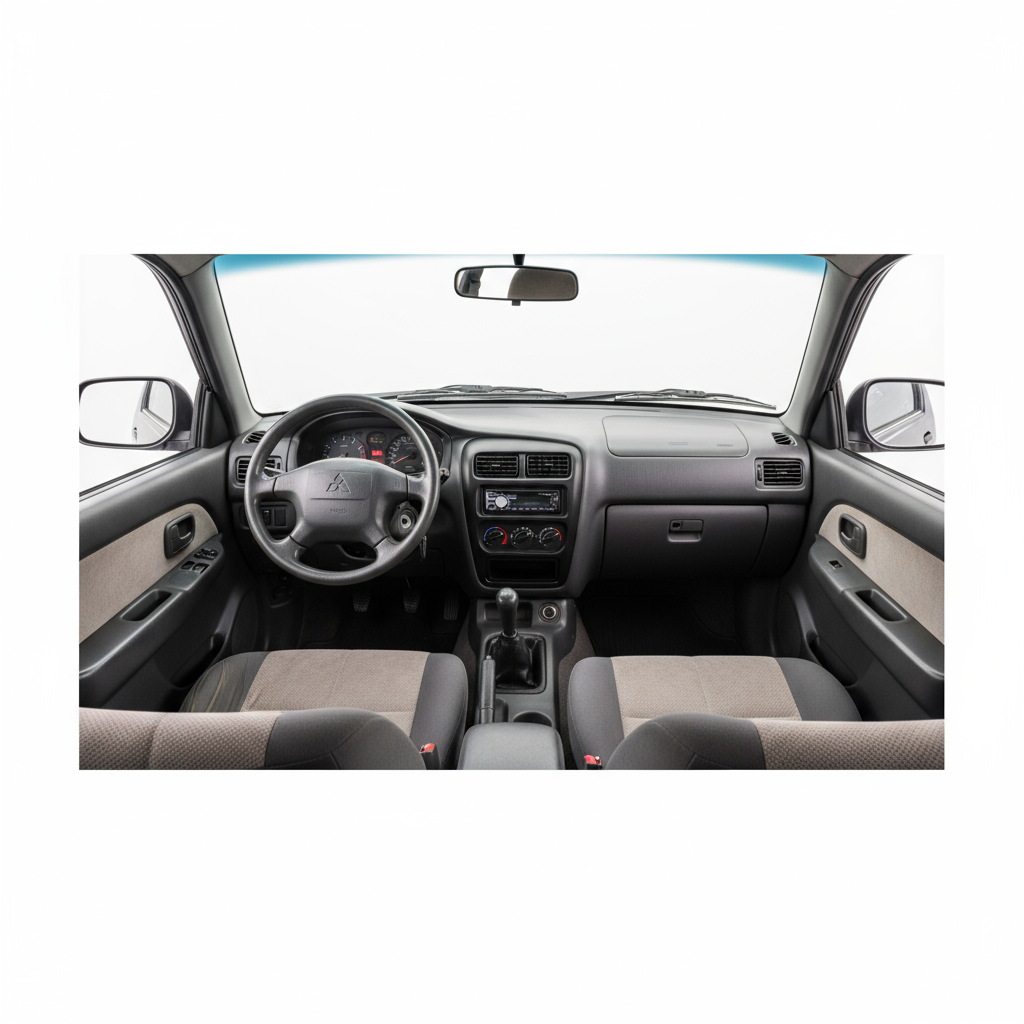
The design of the 1996 Mitsubishi L200 Double Cab is a reflection of its purpose: robustness and functionality. Its lines are muscular and without unnecessary adornments, conveying an image of durability and resistance. The double cab, with space for five occupants, integrates harmoniously with the cargo bed, creating a balanced and powerful silhouette. The wide wheel arches and high-profile tires, with dimensions 31/10.5 R15, not only enhance its off-road appearance but are also fundamental for its performance off-asphalt. The imposing and functional front grille, along with the simple but effective headlights, give it an unmistakable personality. Inside, simplicity is key, with durable materials and an ergonomic design intended for ease of use and resistance to the passage of time and harsh treatment. Every element is designed to be practical and withstand the demands of work and adventure, without sacrificing essential comfort for its occupants.
Technology and features
The technology of the 1996 Mitsubishi L200, although not comparable to current standards, was advanced for its time and focused on durability and off-road capability. Its 2.5-liter diesel engine incorporated indirect injection, turbo, and intercooler, a combination that optimized power delivery and performance. All-wheel drive (AWD) was a fundamental pillar of its technology, allowing the driver to select between different traction modes to adapt to terrain conditions, from the road to the most demanding paths. The robust and precise 5-speed manual transmission offered total control over engine power. In terms of construction, the iron block and aluminum cylinder head of the engine, along with a deformable parallelogram front suspension and a rigid axle rear suspension, were proven technical solutions that guaranteed the resistance and reliability of the assembly. Although it lacked modern electronic aids, its mechanical technology was designed to offer exceptional performance in the most adverse conditions, prioritizing reliability and work capacity over sophistication.
Competition
In its time, the 1996 Mitsubishi L200 Double Cab faced solid competition in the pick-up segment, vehicles that combined cargo capacity with the versatility of an off-road vehicle. Its main rivals included models such as the Toyota Hilux, known for its legendary reliability and robustness; the Nissan Navara (or D22 in some markets), which offered a similar combination of work and leisure; and the Ford Ranger, which also competed in the segment with its own virtues. Other contenders might have been the Isuzu D-Max (or its predecessors), which also stood out for its durability. Each of these vehicles offered similar characteristics in terms of diesel engine, 4x4 traction, and cargo capacity, but the L200 was distinguished by its balance between performance, design, and a reputation for reliability that made it very attractive to those looking for a work and adventure companion.
Conclusion
The 1996 Mitsubishi L200 Double Cab is much more than a simple vehicle; it is a testament to an era where engineering focused on durability, functionality, and the ability to overcome any obstacle. With its 99 HP diesel engine, all-wheel drive, and robust construction, this pick-up stands as a tireless companion for work and an open door to adventure. Its timeless design and practical interior reflect a design philosophy where form follows function, without compromise. Although years have passed and technology has advanced, this generation's L200 remains a benchmark for reliability and resistance, a vehicle that, with proper maintenance, can continue to offer exceptional service. It is an ideal choice for those who value authenticity, off-road capability, and the promise of a vehicle that will not let you down, no matter the challenge. It is a modern classic that continues to inspire respect and admiration.