
Especificaciones y análisis del Mitsubishi Outlander
Power
203HP
Torque
195Nm
Consumption
1.9l/100
Emissions
44g/km
0-100 km/h
11s
Top Speed
170km/h
Weight
1885kg
Price
34,500€
Technical summary
Híbrido Enchufable
Automático 1v
AWD
5 / 5 doors
498 L
45 L
149 kW
Current
Technical specifications
Engine
Capacities
Detailed analysis of the Mitsubishi Outlander PHEV Motion · 203 CV (2014)
General description
The 2013 Mitsubishi Outlander PHEV Motion is a pioneer in the plug-in hybrid SUV segment, offering a very interesting value proposition for those seeking efficiency and versatility. Priced at 34,500 euros, this model positions itself as an attractive option, especially considering its '0 emissions' label from the DGT, which grants it significant advantages in urban and fiscal environments. Its robust design and its ability to drive in fully electric mode make it an ideal vehicle for daily use and family getaways.
Driving experience
Behind the wheel of the Outlander PHEV, the predominant sensation is one of smoothness and silence, especially when driving in electric mode. The transition between the electric and gasoline engines is almost imperceptible, contributing to a relaxed and comfortable driving experience. Despite its size, it handles easily, and its all-wheel-drive system provides a good dose of safety and confidence in various conditions. The 0 to 100 km/h acceleration in 11 seconds is adequate for a family SUV, and its top speed of 170 km/h allows for problem-free road trips. The electric power steering offers precise response, and the ventilated front and solid rear disc brakes ensure effective braking.
Design and aesthetics
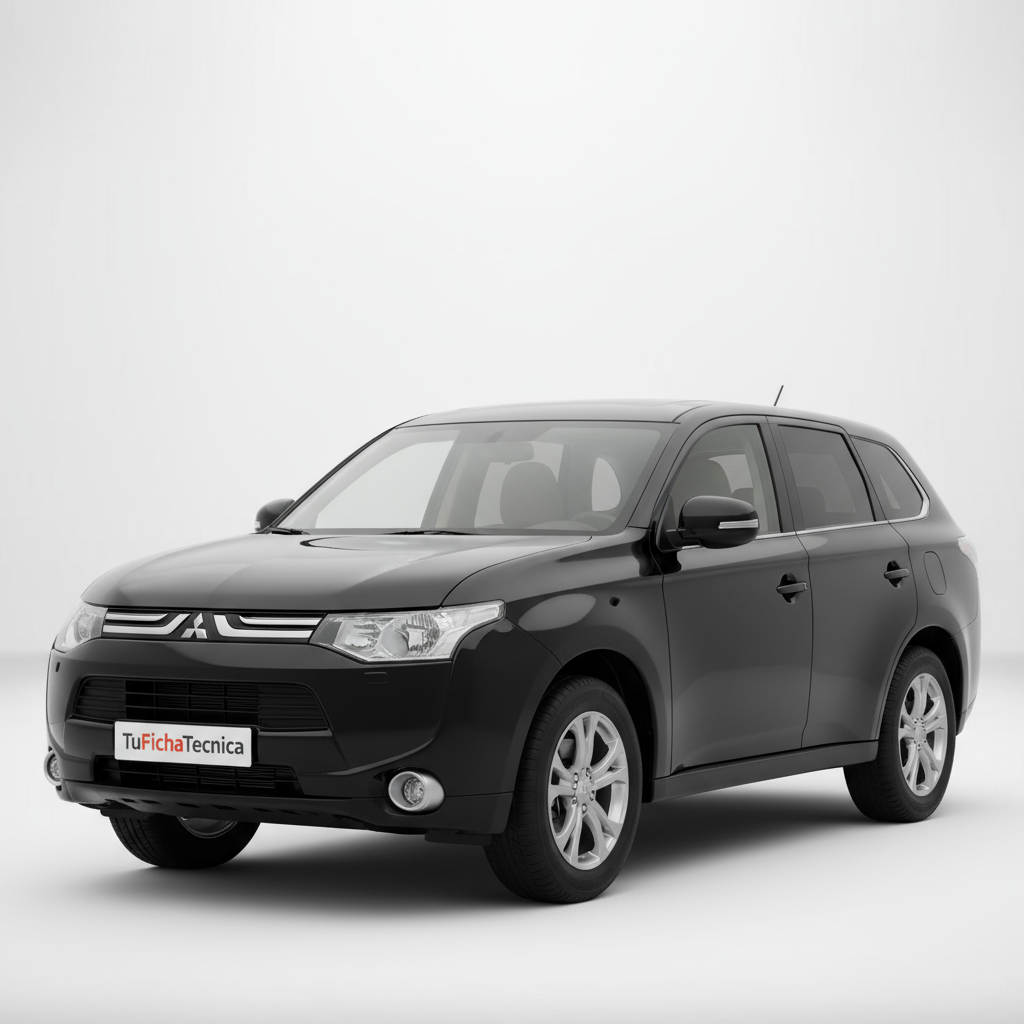
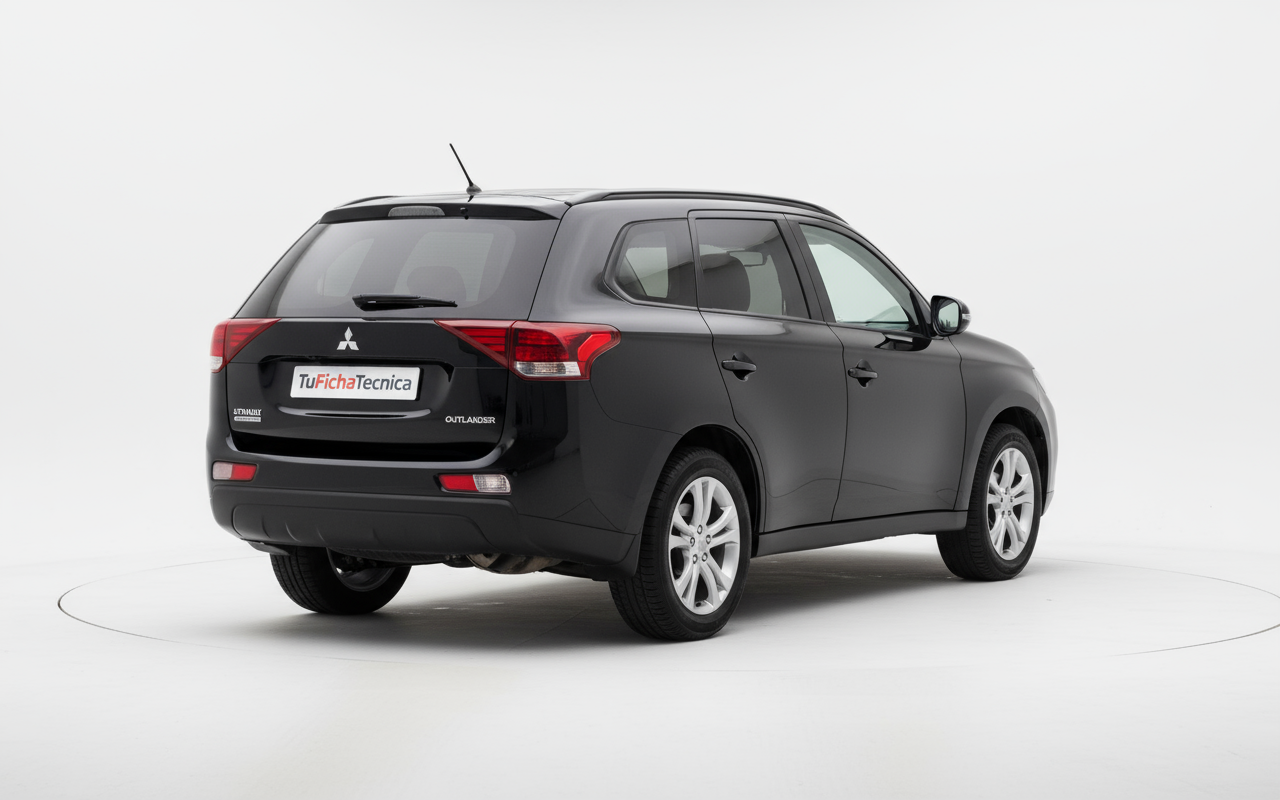
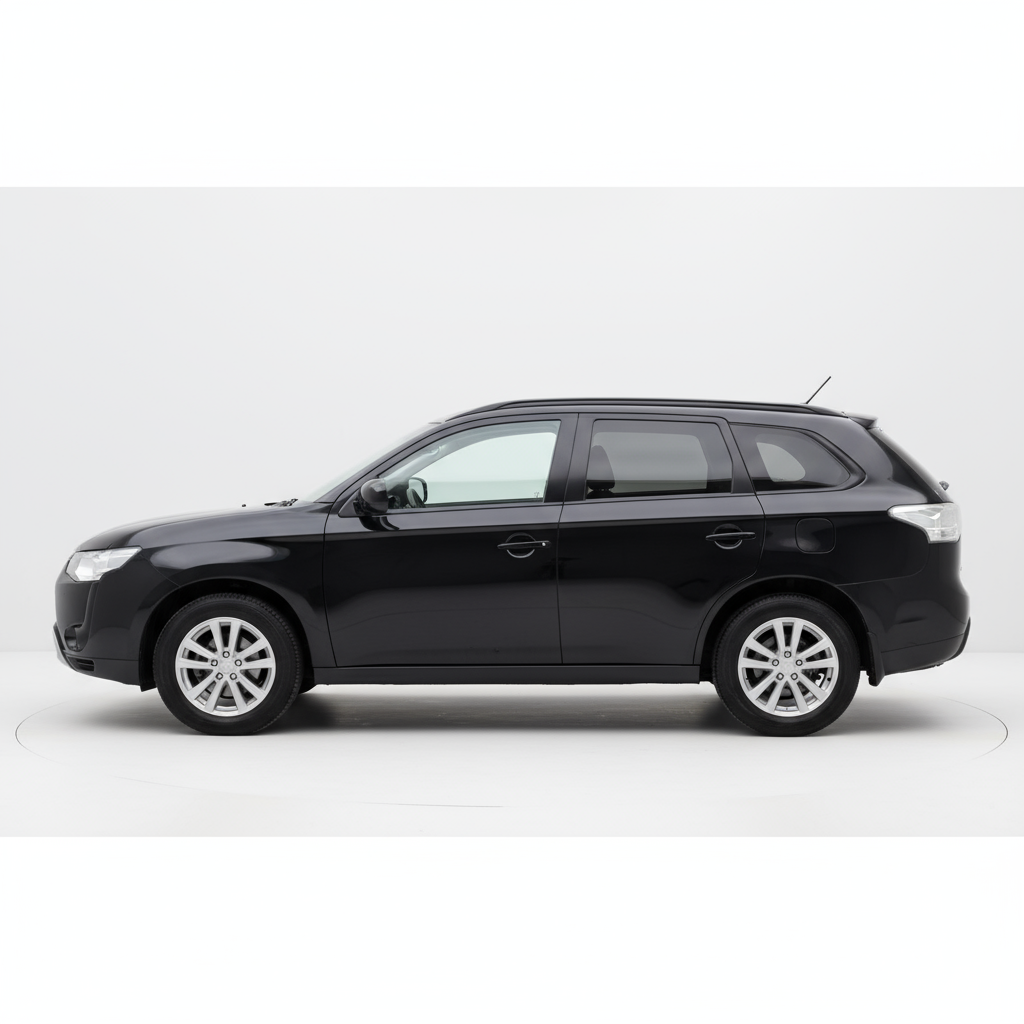
The design of the 2013 Mitsubishi Outlander PHEV is functional and robust, with lines that convey solidity and an imposing presence on the road. Its dimensions, with a length of 4655 mm, a width of 1800 mm, and a height of 1680 mm, provide good interior habitability and a generous 498-liter trunk, ideal for a family's needs. The 18-inch wheels with 225/55 R18 tires complement its SUV aesthetic, while the exterior details reflect its practical and adventurous character. Although not the most avant-garde design, its timeless aesthetic allows it to age gracefully.
Technology and features
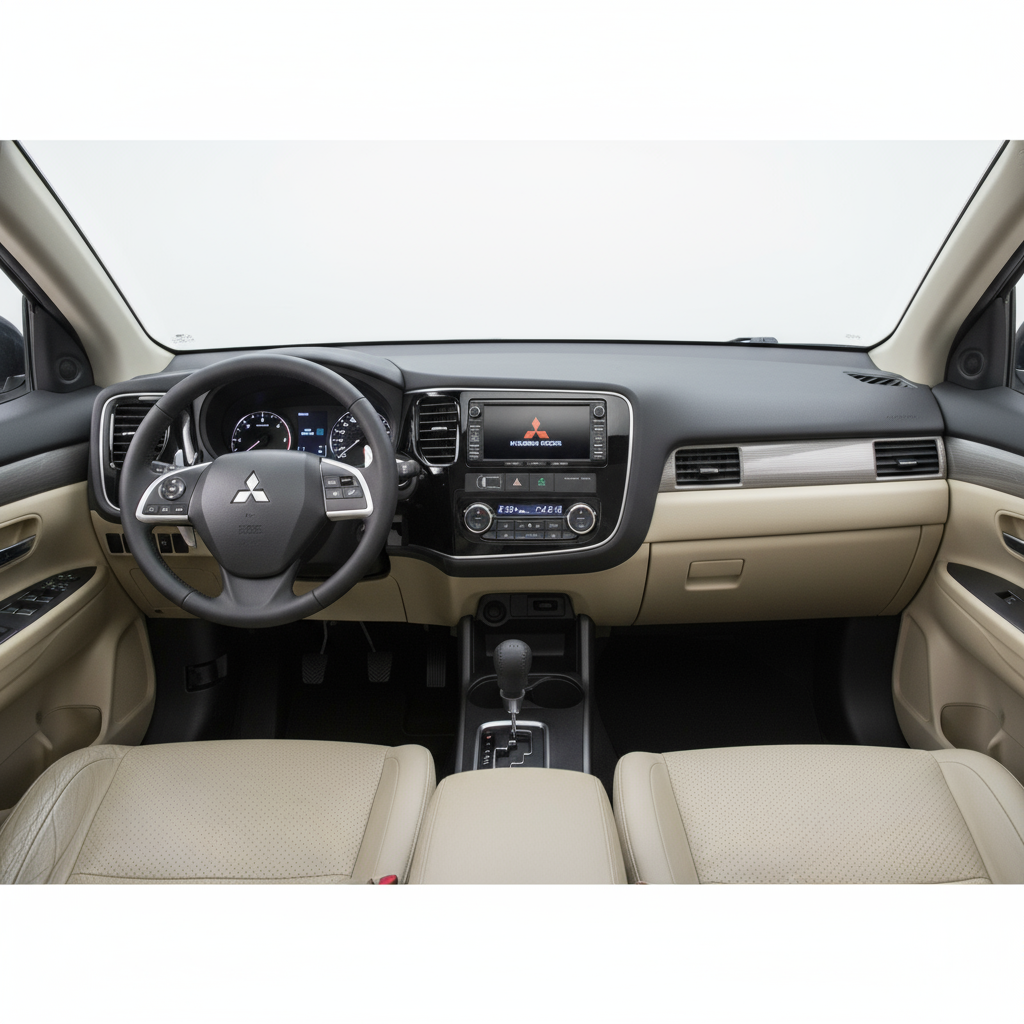
Technology is at the heart of the Outlander PHEV. Its plug-in hybrid system combines a 1998 cc gasoline engine with 82 hp with electric motors, offering a combined power of 203 hp. The 12 kWh capacity battery (8.4 kWh usable) allows it to travel up to 52 km in electric mode according to the NEDC cycle, which is sufficient for most daily commutes. A full charge with alternating current takes approximately 5 hours. Additionally, it features all-wheel drive (AWD) and a single-ratio automatic transmission, which simplifies driving. The front MacPherson strut and rear multi-link suspension, along with stabilizer bars, ensure a good balance between comfort and stability.
Competition
At the time of its launch, the Mitsubishi Outlander PHEV faced an emerging market of hybrid and electric SUVs. Its main rivals could include models such as the Toyota RAV4 Hybrid (though not plug-in at the time), the Volvo XC60 Plug-in Hybrid (from a higher price segment), or even some similarly sized diesel SUVs that offered comparable efficiency on the road, but without the advantages of the '0 emissions' label. Its proposition of a plug-in SUV with all-wheel drive and a competitive price clearly differentiated it from the competition.
Conclusion
The 2013 Mitsubishi Outlander PHEV Motion is a vehicle that marked a before and after in the electrified SUV segment. Its combination of efficiency, versatility, and off-road capability makes it a very interesting option for those looking for a family car with an ecological conscience. Its '0 emissions' label is a great attraction, and its smooth ride makes it ideal for daily use. Although its design may not be the most striking, its functionality and plug-in hybrid technology make it a smart and emotionally satisfying purchase for those who value sustainability and practicality.