
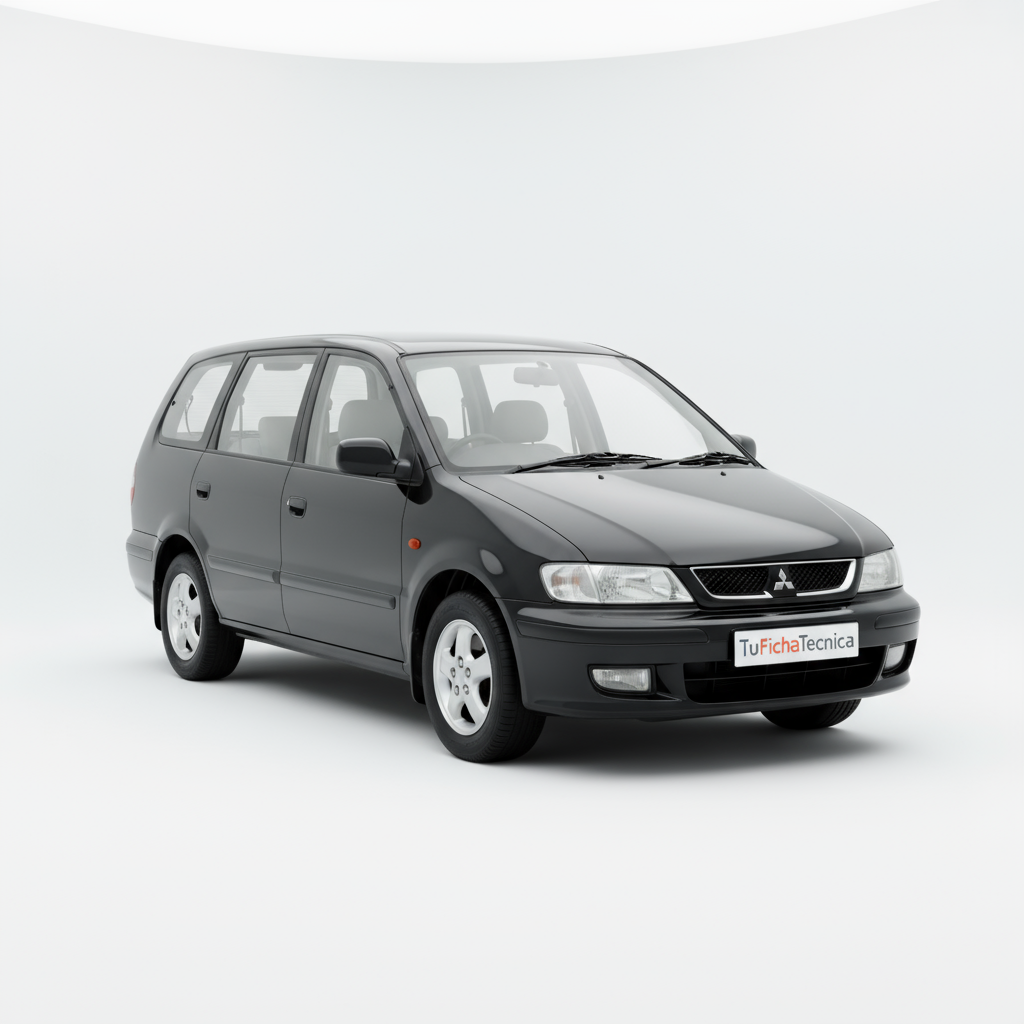
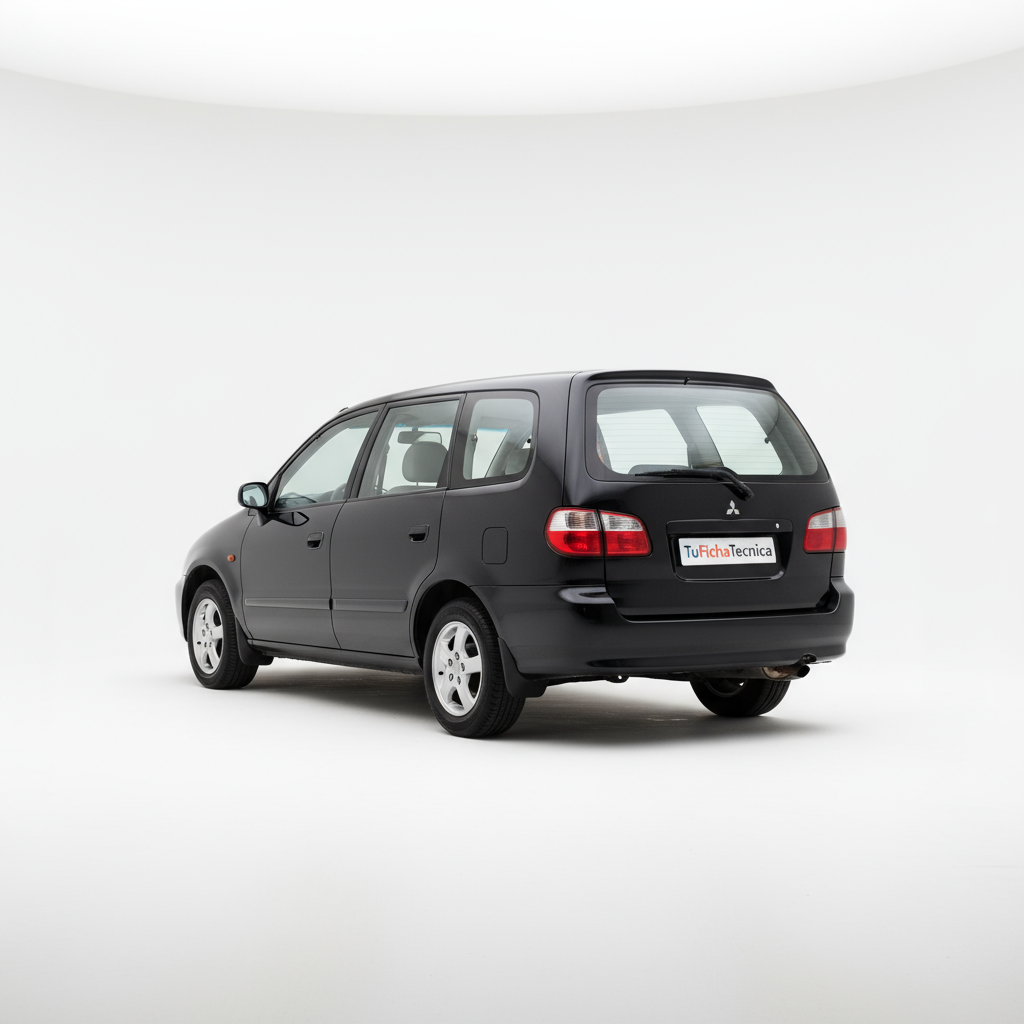
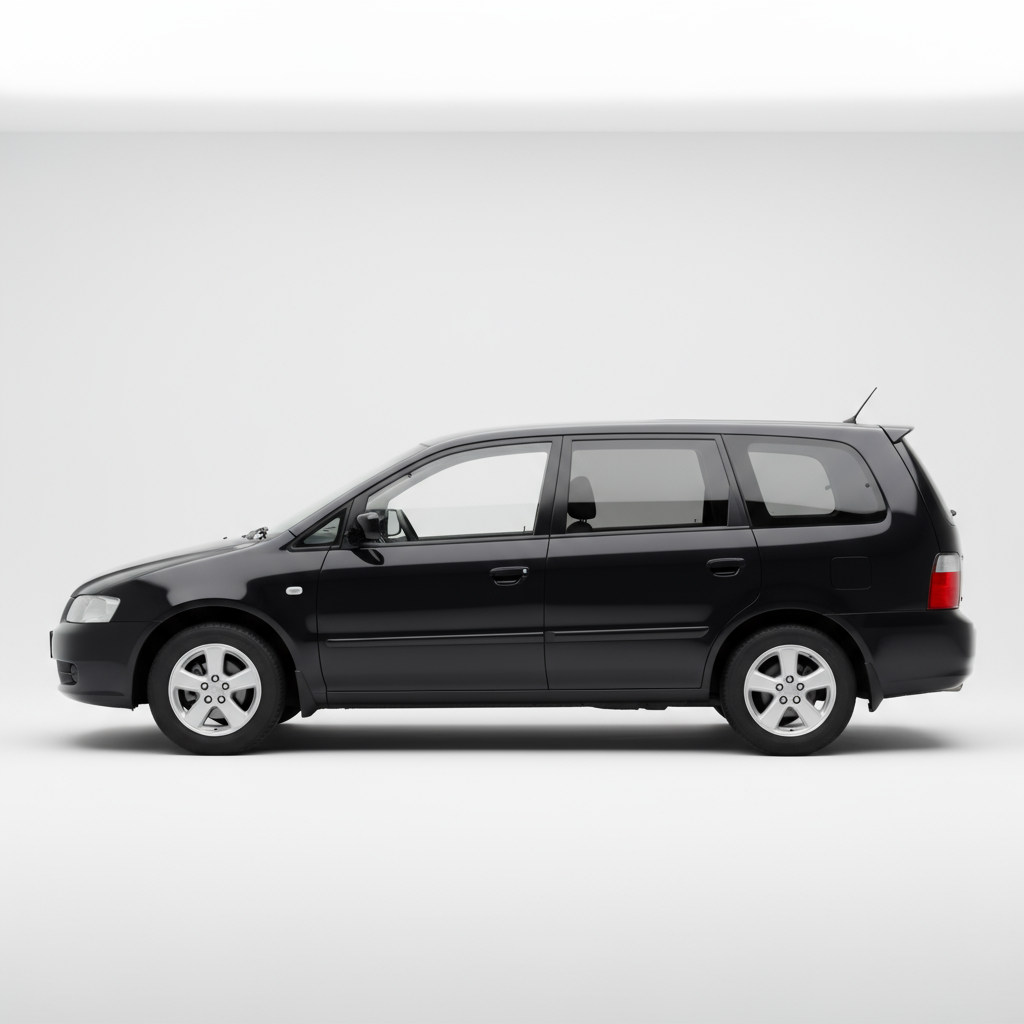
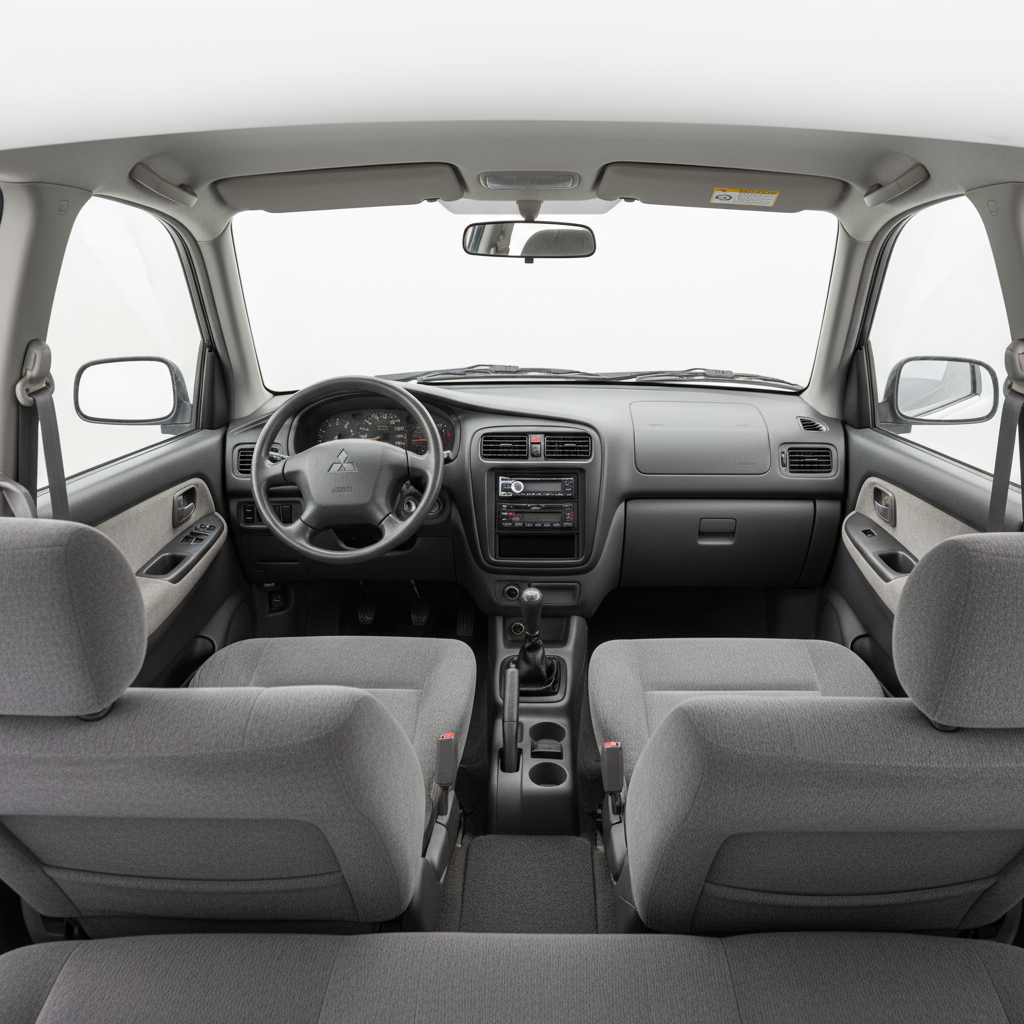
Especificaciones y análisis del Mitsubishi Space Wagon
Power
150HP
Torque
225Nm
Consumption
10l/100
Emissions
-g/km
0-100 km/h
11.8s
Top Speed
185km/h
Weight
1610kg
Price
28,773€
Technical summary
Gasolina
Manual 5v
AWD
6 / - doors
240 L
58 L
110 kW
Current
Technical specifications
Engine
Capacities
Detailed analysis of the Mitsubishi Space Wagon 2.4 GDI GLX 4x4 (6 plazas) · 150 CV (2000-2001)
General description
The 1999 Mitsubishi Space Wagon, in its 2.4 GDI GLX 4x4 6-seater version, is presented as a family minivan with an interesting proposition for its time. Priced at 28,773 euros, this vehicle aimed to offer space, versatility, and the security of all-wheel drive, elements that made it stand out in an increasingly competitive segment. Its 150 HP gasoline engine promised adequate performance for daily use and family trips, without sacrificing a certain ability to tackle less conventional terrains thanks to its 4x4 system.
Driving experience
Behind the wheel of the Space Wagon, the feeling is one of solidity and control. The 4x4 traction, although it doesn't make it a pure off-roader, provides an extra layer of safety and confidence, especially in low-grip conditions. The 150 HP engine, with its direct injection, offers an energetic response and a torque of 225 Nm at 3500 rpm, which translates into good recovery capability. Acceleration from 0 to 100 km/h in 11.8 seconds and a top speed of 185 km/h are respectable figures for a vehicle of its size and configuration. The McPherson strut suspension on the front axle contributes to balanced handling, absorbing road irregularities well and offering remarkable ride comfort for all occupants. The rack-and-pinion steering, although without variable assistance, provides a good connection with the road.
Design and aesthetics
The design of the 1999 Mitsubishi Space Wagon is functional and practical, with lines that prioritize interior space and visibility. Its 4,600 mm length, 1,775 mm width, and 1,650 mm height, along with a wheelbase of 2,780 mm, create a generous cabin. The 6-seater configuration makes it an ideal vehicle for large families or for those who need to transport several passengers comfortably. The trunk, with a minimum capacity of 240 liters, is sufficient for daily luggage, although its versatility is maximized by the possibility of folding down the seats. Aesthetically, it doesn't aim to be a trendsetter, but rather a reliable and discreet companion for everyday life.
Technology and features
In terms of technology, the 1999 Space Wagon incorporates interesting solutions for its time. The 2.4 GDI (Gasoline Direct Injection) engine is a key point, as direct gasoline injection was an advanced technology that allowed for optimized consumption and performance. All-wheel drive (AWD) is another distinctive element, offering greater safety and adaptability to different surfaces. The 5-speed manual transmission, although standard, is robust and reliable. In terms of safety, it features ventilated front disc brakes and rear discs, ensuring effective braking. The presence of stabilizer bars both front and rear improves cornering stability.
Competition
In its time, the Mitsubishi Space Wagon competed in the minivan segment with models such as the Renault Espace, the Chrysler Voyager, or the Volkswagen Sharan. Compared to them, the Space Wagon stood out for its GDI engine, which offered a good combination of power and efficiency, and especially for its 4x4 traction system, an extra that few of its direct rivals offered at that time. This feature gave it an advantage in versatility and safety, especially for users who lived in areas with adverse climates or who occasionally traveled on unpaved roads.
Conclusion
The 1999 Mitsubishi Space Wagon 2.4 GDI GLX 4x4 is a minivan that, despite its age, remains a testament to Japanese engineering focused on functionality and durability. Its combination of an efficient engine for its time, ample interior space for 6 occupants, and the added safety of all-wheel drive make it an interesting option for those looking for a robust and versatile family vehicle. Although its design may seem sober today, its mechanical reliability and its ability to adapt to various situations make it a car worth remembering and, for some, even considering in the used car market.