
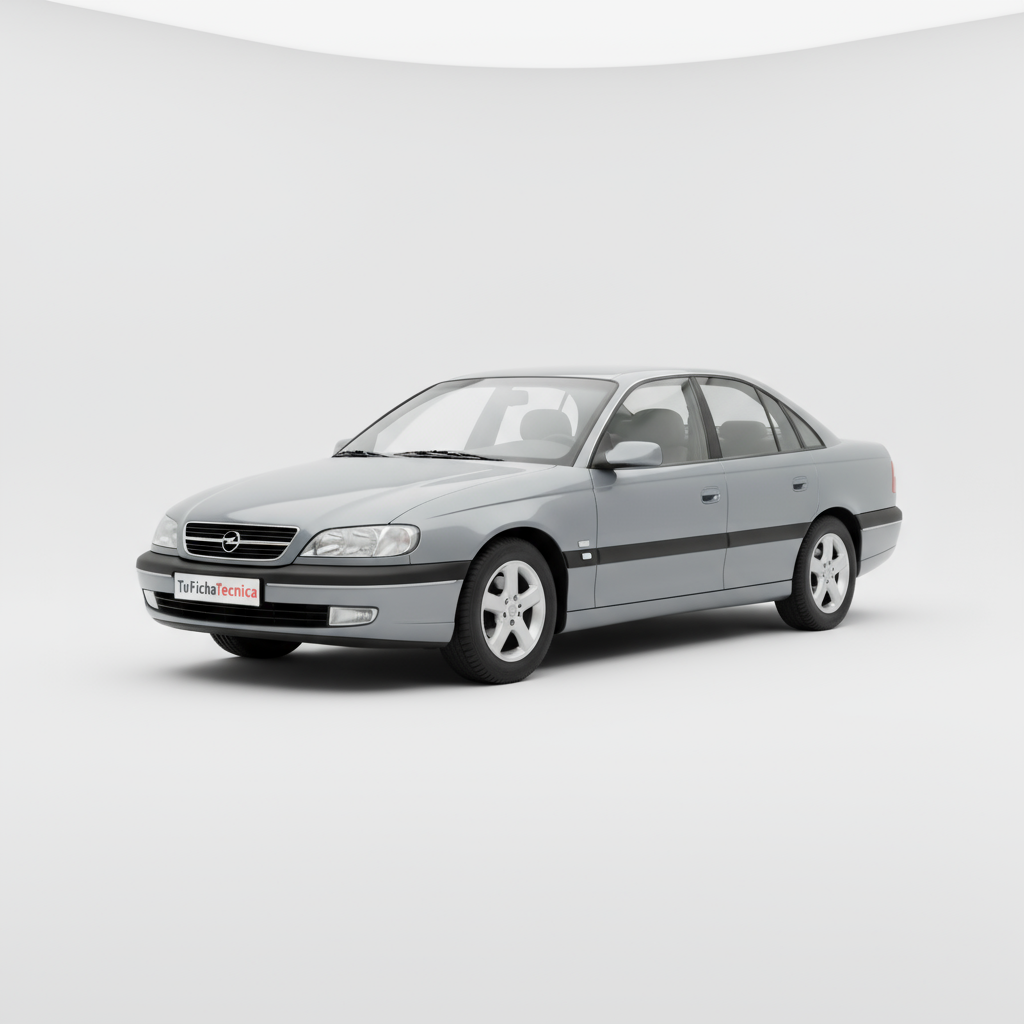
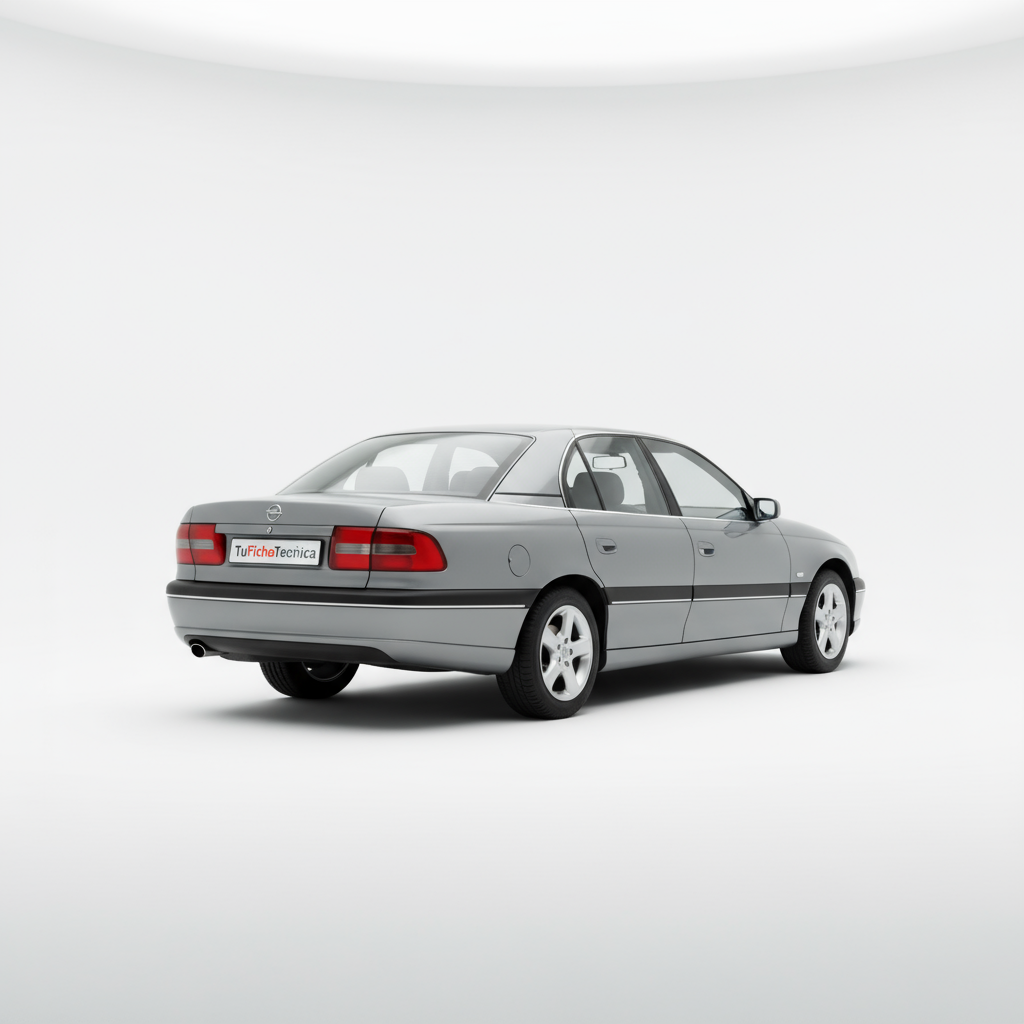
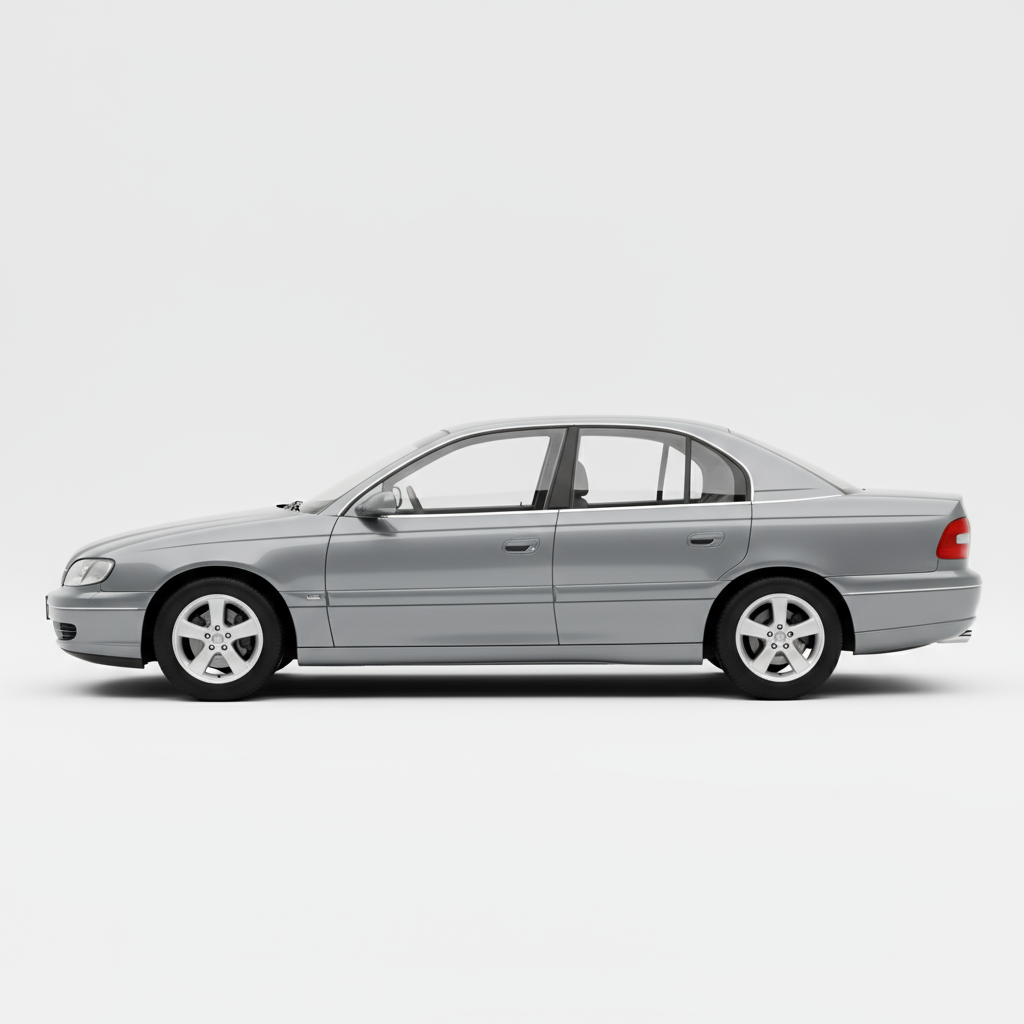
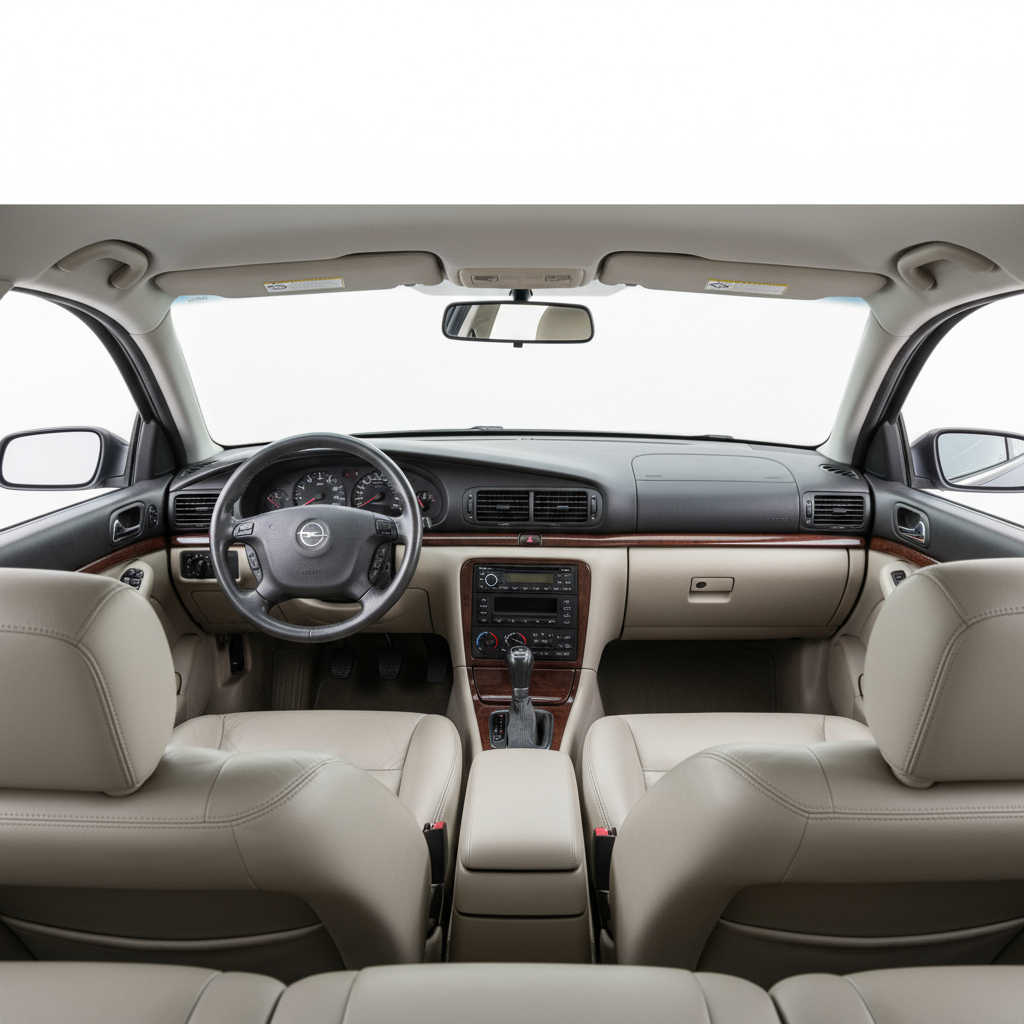
Especificaciones y análisis del Opel Omega
Power
179HP
Torque
240Nm
Consumption
10.6l/100
Emissions
-g/km
0-100 km/h
9.5s
Top Speed
229km/h
Weight
1685kg
Price
34,730€
Technical summary
Gasolina
Manual 5v
RWD
5 / 4 doors
530 L
75 L
132 kW
Current
Technical specifications
Engine
Capacities
Detailed analysis of the Opel Omega Sedan Elegance 2.6 V6 · 179 CV (2000-2003)
General description
The 1996 Opel Omega Sedan Elegance 2.6 V6 is a vehicle that evokes an era of luxury and comfort on the road. With its 179 hp gasoline engine and a 5-speed manual transmission, this rear-wheel-drive sedan promised a distinguished and powerful driving experience. Its price of €34,730 at the time positioned it as an attractive option for those seeking a car with presence and performance.
Driving experience
Driving the Omega 2.6 V6 was an experience that combined the smoothness of a large sedan with the responsiveness of a V6 engine. Acceleration from 0 to 100 km/h in 9.5 seconds and a top speed of 229 km/h, while not making it a pure sports car, did offer the ability to overtake with ease and maintain high-speed cruising with a sense of composure. McPherson strut suspension on the front axle and ventilated disc brakes on both axles contributed to a safe and comfortable ride, ideal for long journeys. The combined consumption of 10.6 l/100km reflected the power of its engine, but also the pleasure of its performance.
Design and aesthetics
The design of the 1996 Opel Omega was characterized by its elegant and timeless lines, typical of a representative sedan of the era. With a length of almost 4.9 meters and a width of 1.77 meters, its presence on the road was imposing. The four doors and five seats offered generous habitability, while the 530-liter trunk guaranteed enough space for luggage. Its aesthetic, although sober, conveyed a sense of solidity and distinction, with a focus on functionality and comfort.
Technology and features
At the technological heart of the Omega 2.6 V6 was a 2597 cc gasoline engine, with 6 cylinders in a longitudinal arrangement and 4 valves per cylinder. Indirect injection and a compression ratio of 10:1 ensured efficient power delivery. Although it lacked modern systems like Stop&Start, its robust and proven mechanics were a pillar of its reliability. The rack-and-pinion steering, although without variable assistance, offered a direct connection to the road, and rear-wheel drive was a distinctive hallmark of its character.
Competition
In its segment, the Opel Omega 2.6 V6 competed with other luxury sedans of the era, such as the BMW 5 Series, the Mercedes-Benz E-Class, or the Audi A6. Compared to them, the Omega offered an alternative with an excellent value for money, remarkable ride comfort, and a V6 engine that, while not the most powerful in its class, did provide a refined and capable driving experience. Its focus on comfort and spaciousness made it a worthy rival in the executive sedan market.
Conclusion
The 1996 Opel Omega Sedan Elegance 2.6 V6 is a car that, despite the passage of time, remains an example of German engineering of its era. It offered a balanced combination of power, comfort, and space, ideal for those seeking a vehicle for long journeys or daily use with a touch of distinction. Its classic design and reliable mechanics make it a car with a particular charm, a true representative of an era when large sedans dominated the roads.