
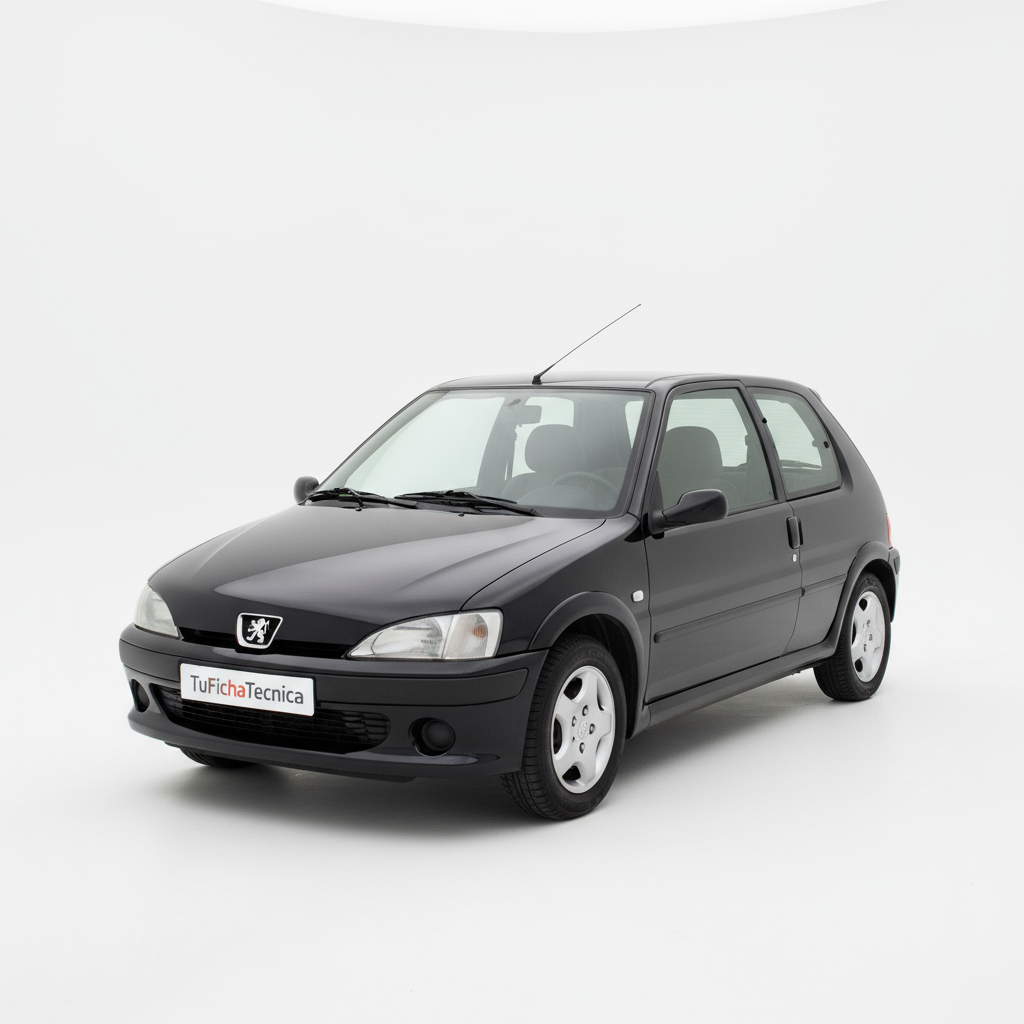
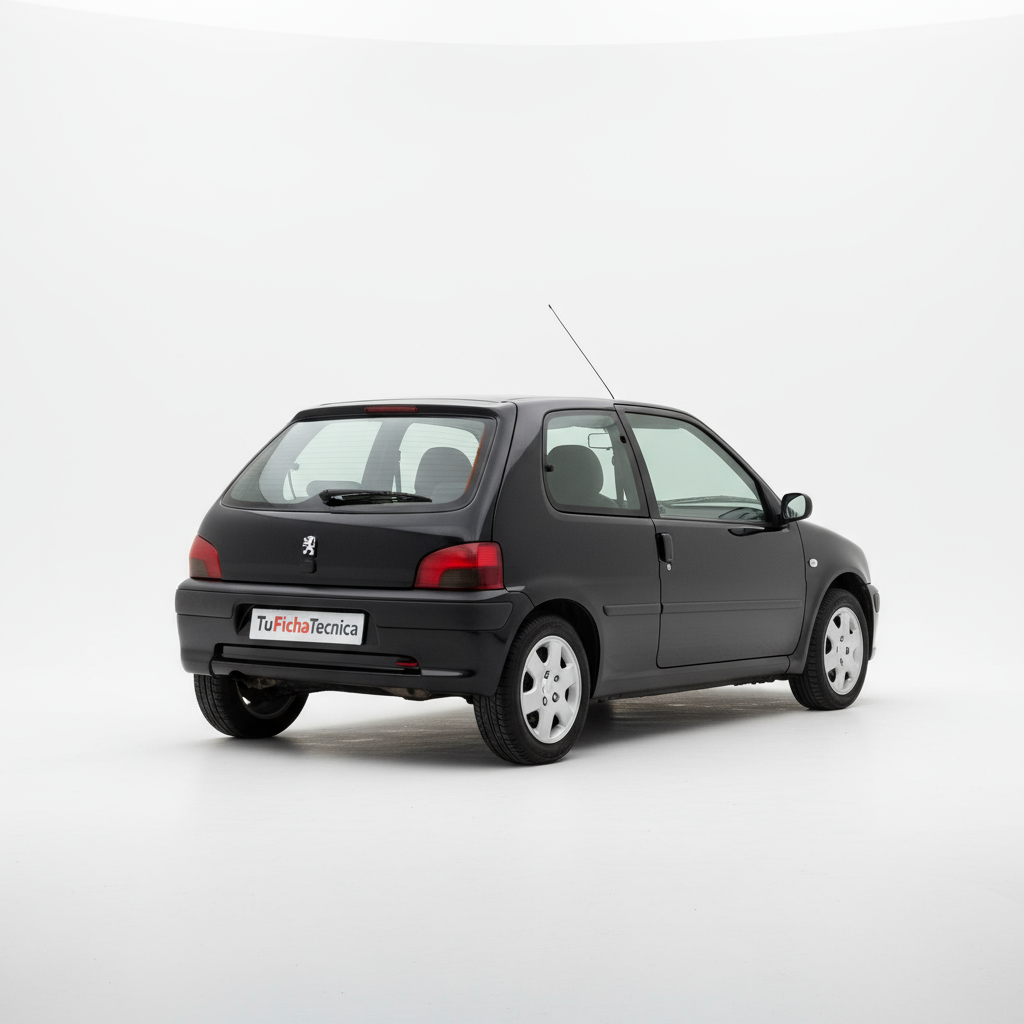
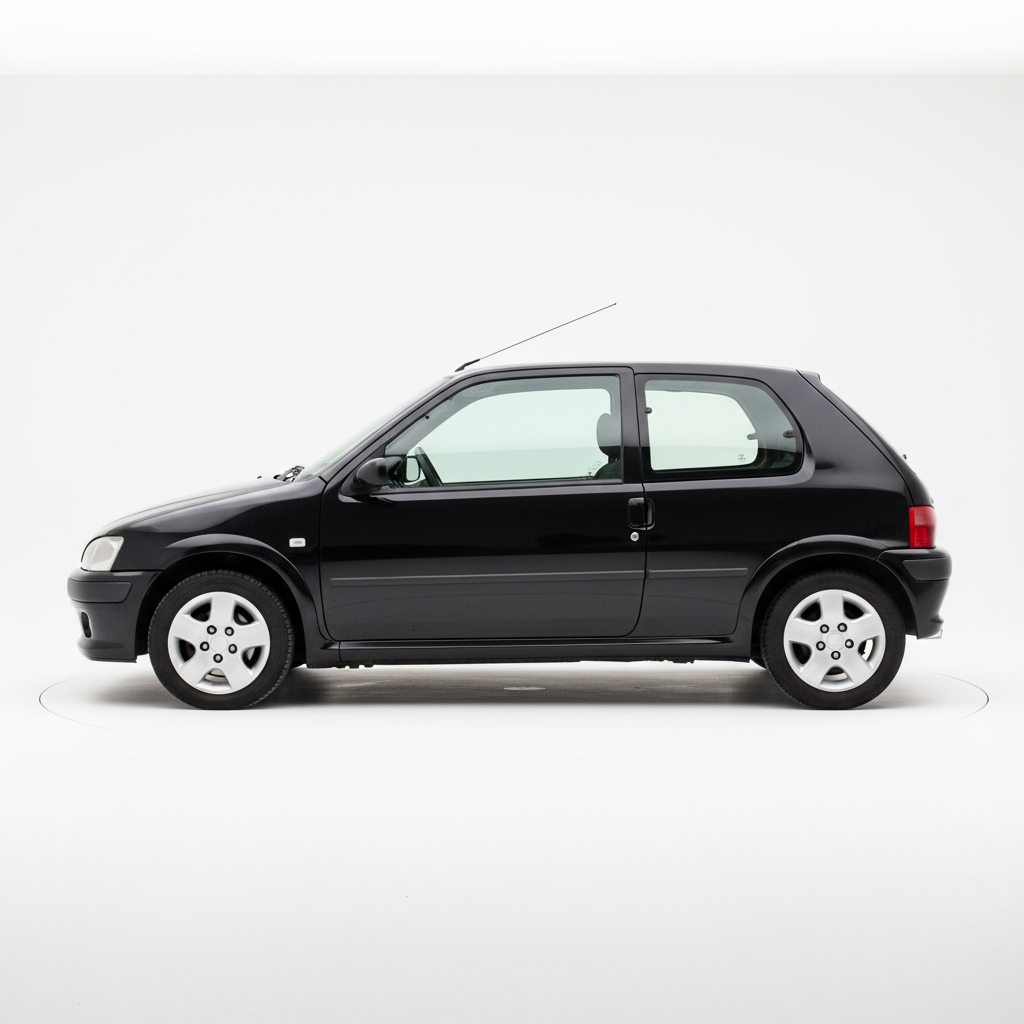
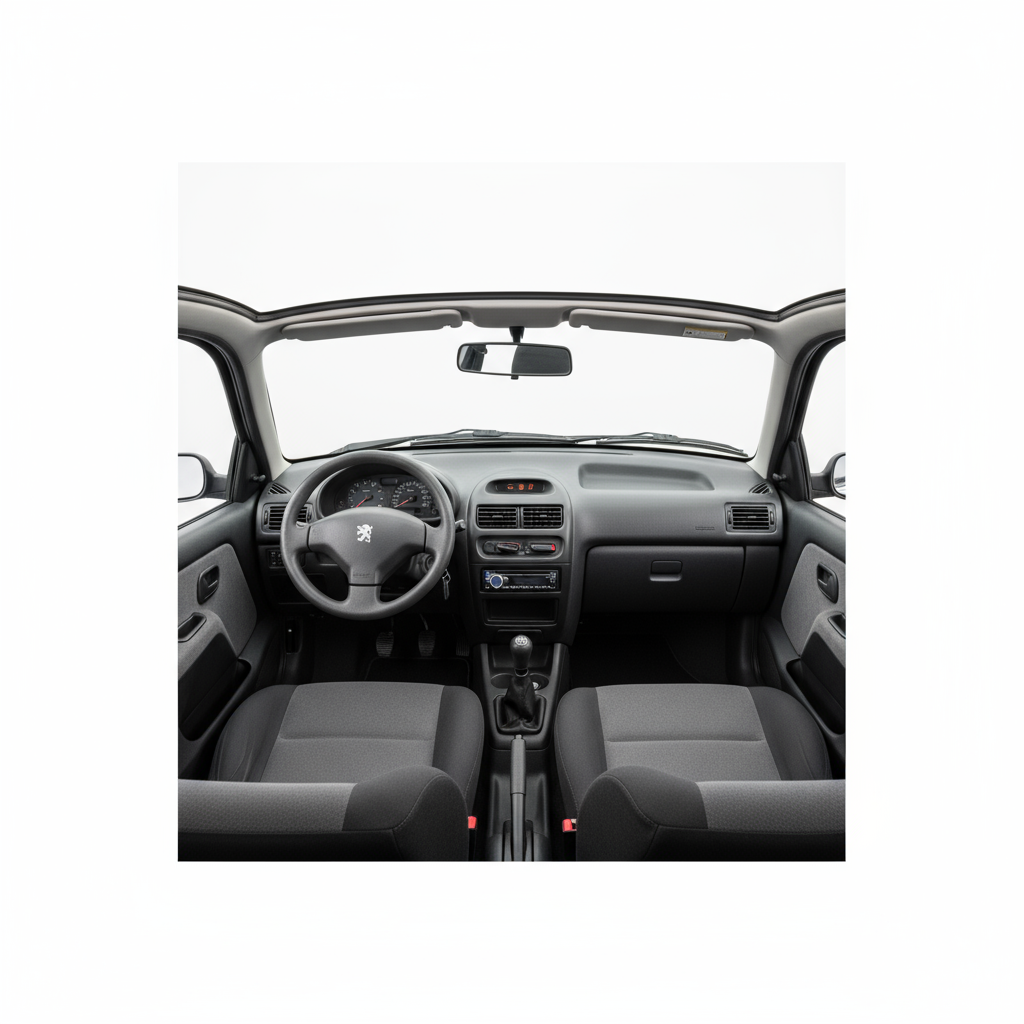
Especificaciones y análisis del Peugeot 106
Power
60HP
Torque
91Nm
Consumption
6.1l/100
Emissions
-g/km
0-100 km/h
14.9s
Top Speed
164km/h
Weight
890kg
Price
8,700€
Technical summary
Gasolina
Manual 5v
FWD
5 / 3 doors
215 L
45 L
44.1 kW
Current
Technical specifications
Engine
Capacities
Detailed analysis of the Peugeot 106 3p Max 1.1 · 60 CV (2000-2004)
General description
The 1996 Peugeot 106 3p Max 1.1 is a car that, despite its age, still evokes a sense of nostalgia and practicality. This small utility vehicle, with its 60 hp gasoline engine, was designed for urban life, offering an economical and agile mobility solution in an era where simplicity was valued. Its presence on the streets of the late 90s and early 2000s was notable, becoming a faithful companion for many drivers looking for a vehicle without great pretensions, but with undeniable charm.
Driving experience
Behind the wheel of the Peugeot 106 3p Max 1.1, the experience is direct and unfiltered. Its 60 hp, though modest, are sufficient to move its 890 kg with ease, especially in urban environments. The 0 to 100 km/h acceleration in 14.9 seconds reminds us that it is not a racing car, but its lightness and rack-and-pinion steering offer surprising agility in traffic. The front McPherson suspension and the rear, though not detailed, contribute to predictable handling. The top speed of 164 km/h is more than adequate for interurban journeys, although it truly shines in the city. The combined consumption of 6.1 l/100km is a plus, making every trip an economical and worry-free experience.
Design and aesthetics
The design of the Peugeot 106 3p Max 1.1 is a reflection of its era: simple, compact, and functional lines. With a length of 3678 mm and a width of 1588 mm, its size makes it an expert in the art of parking in tight spaces. The three doors give it a youthful and sporty look, while its height of 1376 mm and wheelbase of 2385 mm contribute to a balanced silhouette. The 215-liter trunk, though not the largest, is sufficient for daily shopping or a weekend getaway. It is a design that prioritizes practicality and efficiency, without sacrificing a pleasant and timeless aesthetic that still retains its charm today.
Technology and features
In the Peugeot 106 3p Max 1.1, technology focuses on simplicity and reliability. Its 1124 cc gasoline engine, with indirect injection and two valves per cylinder, is an example of robust and proven engineering. The 5-speed manual transmission offers total control over power delivery, while front-wheel drive ensures safe and predictable behavior. The 238 mm front disc brakes and 165 mm rear drums provide adequate braking for its weight and performance. Although it lacks the electronic sophistication of modern cars, its technology is effective and fulfills its purpose admirably, demonstrating that sometimes, less is more.
Competition
In its segment, the Peugeot 106 3p Max 1.1 faced tough competitors such as the Renault Clio, the Citroën Saxo, and the Ford Fiesta. Each offered its own virtues, but the 106 stood out for its agility, low consumption, and compact design. Compared to the Clio, the 106 offered a more direct driving experience; against the Saxo, it shared a platform and many similarities, but with a distinctive Peugeot touch. Against the Fiesta, the 106 positioned itself as a more youthful and carefree alternative. Its price of €8,700 at the time made it a very attractive option for those looking for an economical and reliable car for everyday use.
Conclusion
The Peugeot 106 3p Max 1.1 is more than just a car; it is an icon of an era, a faithful companion that marked the lives of many. Its combination of practical design, agile driving sensations, and simple yet effective technology make it a vehicle with a special charm. Although years have passed, its spirit lives on, reminding us that the true essence of driving lies in the connection between the driver and the machine. It is a car that, despite its modesty, leaves an indelible mark on the hearts of those who knew and enjoyed it.