
Especificaciones y análisis del Peugeot 106
Power
57HP
Torque
95Nm
Consumption
5.3l/100
Emissions
-g/km
0-100 km/h
18.5s
Top Speed
158km/h
Weight
970kg
Price
10,300€
Technical summary
Gasóleo
Manual 5v
FWD
5 / 5 doors
215 L
45 L
42 kW
Current
Technical specifications
Engine
Capacities
Detailed analysis of the Peugeot 106 5p Max 1.5 Diesel · 57 CV (2000-2004)
General description
The Peugeot 106 5p Max 1.5 Diesel, manufactured between 2000 and 2004, is a car that evokes the essence of urban and economical mobility of the late 20th century. With its 57 hp diesel engine, this compact French car was presented as a practical and accessible option for everyday use, standing out for its efficiency and ease of handling in urban environments. It was a vehicle without great pretensions, designed to fulfill its transport function reliably and with contained consumption.
Driving experience
Behind the wheel of the Peugeot 106 1.5 Diesel, the predominant sensation is that of an agile and manageable car, especially in the city. Its 57 hp do not promise great acceleration (18.5 seconds from 0 to 100 km/h), but they are sufficient to move easily in urban traffic. The rack-and-pinion steering, although without assistance in this version, offered a direct connection to the road, transmitting a sense of control. The diesel engine, with its characteristic sound, was willing at low revolutions, ideal for constant starting and stopping. On the road, its maximum speed of 158 km/h allowed interurban journeys, albeit without great displays of power. The front McPherson suspension and the rear suspension, along with the stabilizer bars, contributed to predictable and safe handling, without being excessively soft or hard. It was a car that invited relaxed and efficient driving.
Design and aesthetics
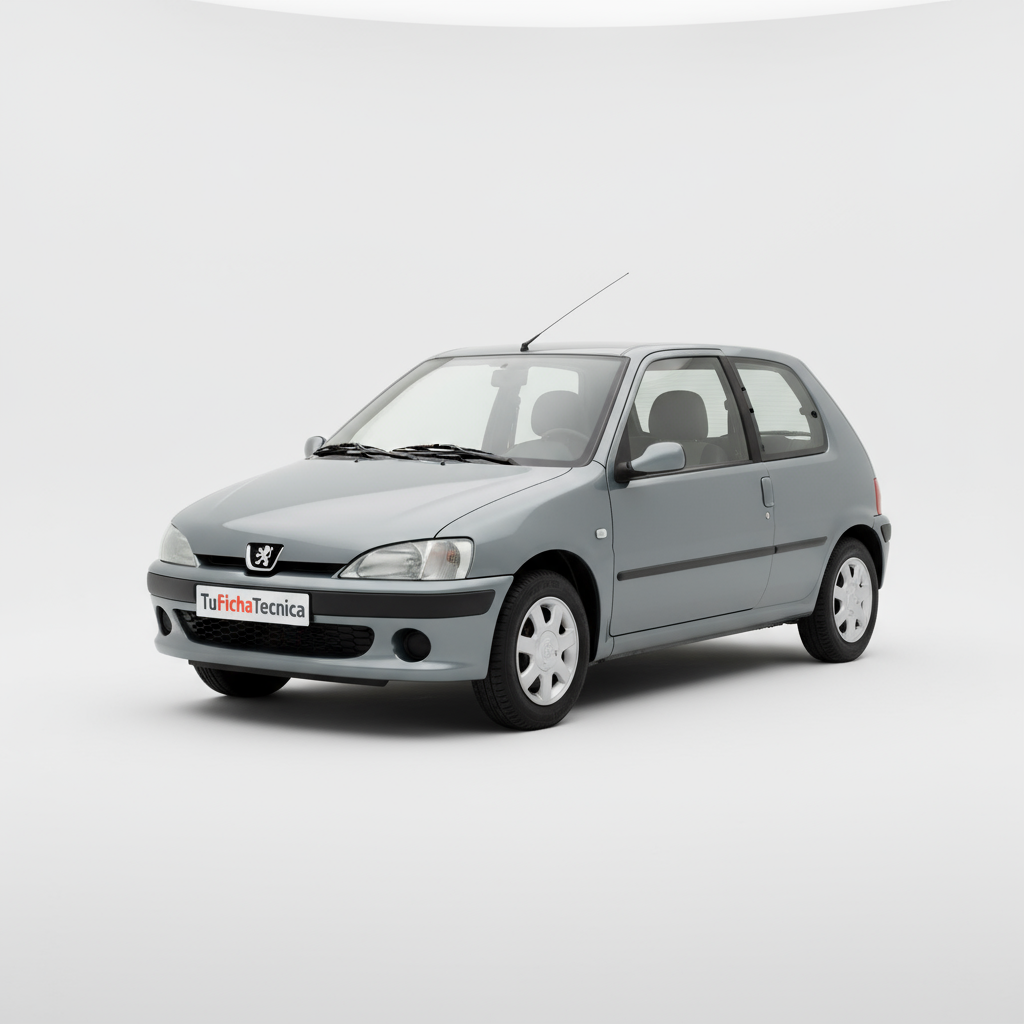
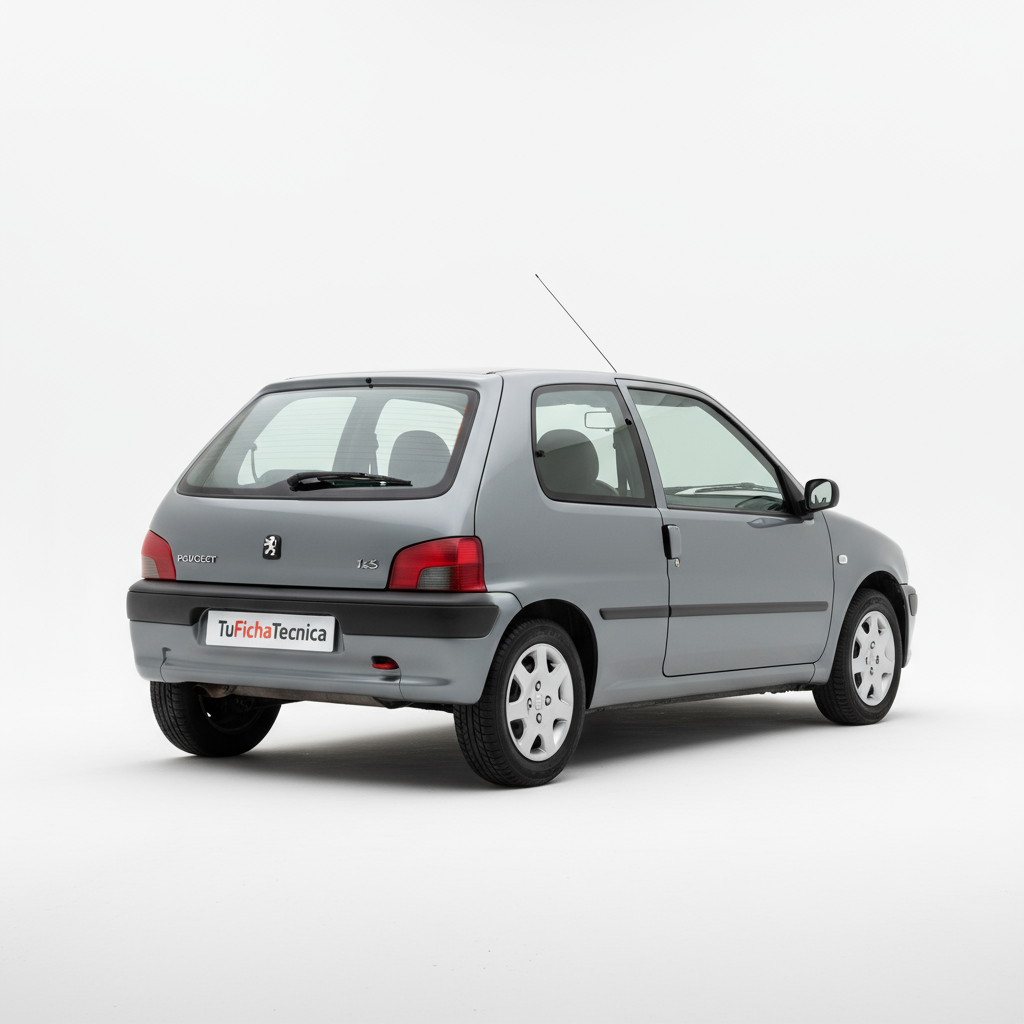
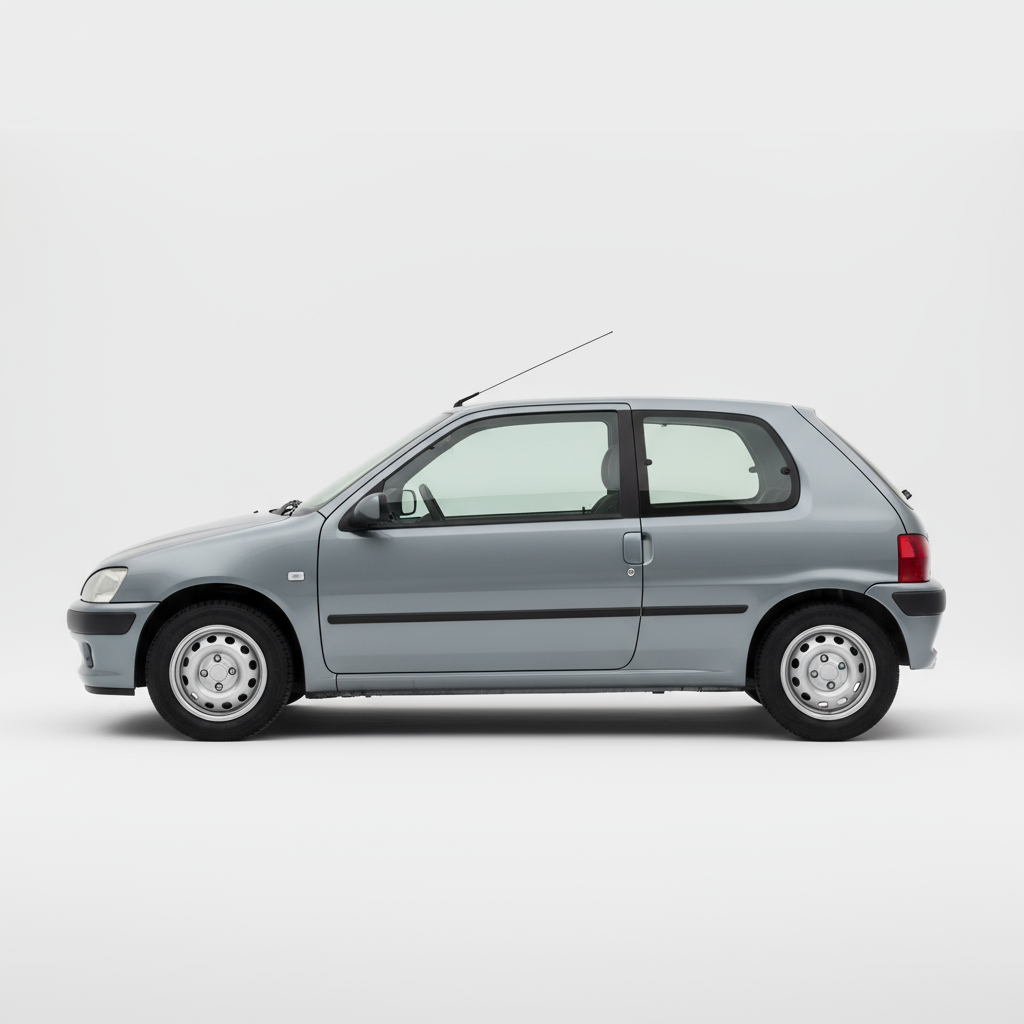
The design of the Peugeot 106 5p Max 1.5 Diesel is a reflection of the automotive aesthetic of its time: simple, compact, and functional lines. With a length of 3678 mm and a width of 1588 mm, its size made it ideal for the city, facilitating parking and maneuverability. The 5-door body offered good accessibility to the cabin, while the 215-liter trunk, although not very large, was sufficient for daily shopping or small getaways. The 165/70 R13 T tires, mounted on 5 x 13 rims, were modest but adequate for the vehicle's weight and power. In general, its design was discreet and timeless, focused on practicality and durability, without superfluous elements that could make it more expensive.
Technology and features
The technology of the Peugeot 106 5p Max 1.5 Diesel was what was expected for a car of its segment and era. Its 1527 cc diesel engine, with indirect injection and 4 cylinders, stood out for its reliability and low consumption, with a combined average of 5.3 l/100km. The 5-speed manual transmission was robust and precise, allowing good use of the engine's power. In terms of safety, it had front disc brakes and rear drums, a standard configuration that offered adequate braking. It did not incorporate advanced electronic driving assistance systems, which made it a more 'analog' and direct car in its handling. Its technology focused on mechanical efficiency and durability, key elements for a daily use vehicle.
Competition
At the time, the Peugeot 106 5p Max 1.5 Diesel competed in a very competitive segment of diesel utility vehicles. Its main rivals were models such as the Renault Clio, the Citroën Saxo (with which it shared platform and many components), the Ford Fiesta, or the Volkswagen Polo. Compared to them, the 106 stood out for its agility, low consumption, and reputation for reliability. Although other models could offer a more modern design or slightly superior equipment, the 106 positioned itself as a very balanced option in terms of cost, maintenance, and practicality, especially for those looking for an economical car for the city.
Conclusion
The Peugeot 106 5p Max 1.5 Diesel was a car that more than fulfilled its purpose: to offer economical and reliable mobility. Its functional design, efficient diesel engine, and agility in the city made it a faithful companion for thousands of drivers. Although it was not a luxury car or a high-performance car, its honesty and low maintenance cost made it very popular. Today, it remains an example of the automotive engineering of its time, a vehicle that, despite the years, can still offer dignified and economical transport. It is a car that, over time, has earned a place in collective memory as a robust and uncomplicated utility vehicle.