
Especificaciones y análisis del Porsche 911
Power
420HP
Torque
560Nm
Consumption
12.9l/100
Emissions
-g/km
0-100 km/h
4.3s
Top Speed
305km/h
Weight
1735kg
Price
153,736€
Technical summary
Gasolina
Manual 6v
AWD
4 / 2 doors
100 L
64 L
309 kW
Current
Technical specifications
Engine
Capacities
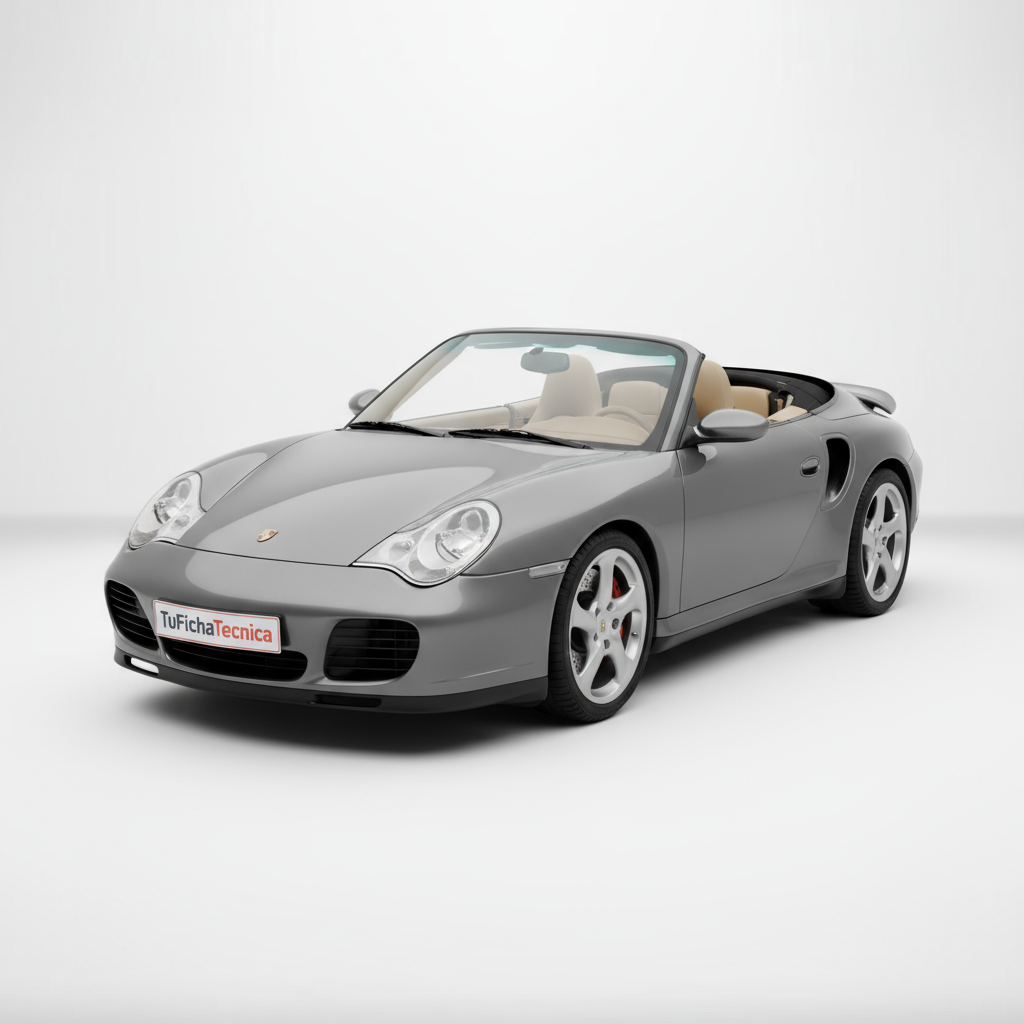
Detailed analysis of the Porsche 911 Turbo Cabrio · 420 CV (2003-2005)
General description
The 1998 Porsche 911 Turbo Cabrio, an automotive gem that combines raw power with the freedom of a convertible. This model, with its 3.6-liter engine and 420 hp, is a statement of intent, a car designed to thrill and to be enjoyed on every journey. Its price of €153,736 in 2005 positioned it as an exclusive vehicle, a dream for many and a reality for a lucky few.
Driving experience
Driving the 911 Turbo Cabrio is a visceral experience. The acceleration from 0 to 100 km/h in just 4.3 seconds pins you to the seat, while the top speed of 305 km/h makes you feel the wind and the adrenaline. The six-cylinder boxer engine, with its indirect injection, turbo, and intercooler, roars with an intoxicating melody. All-wheel drive and a 6-speed manual transmission offer absolute control, allowing the driver to feel every nuance of the road. It's a car that invites you to push it, to feel the power under your right foot, and to enjoy the precision of its steering. The McPherson front suspension and deformable parallelogram rear, along with 330 mm ventilated disc brakes, guarantee exceptional stability and braking capability, even in the most demanding situations. It's a car that makes you feel alive, connecting you with the road in a unique way.
Design and aesthetics
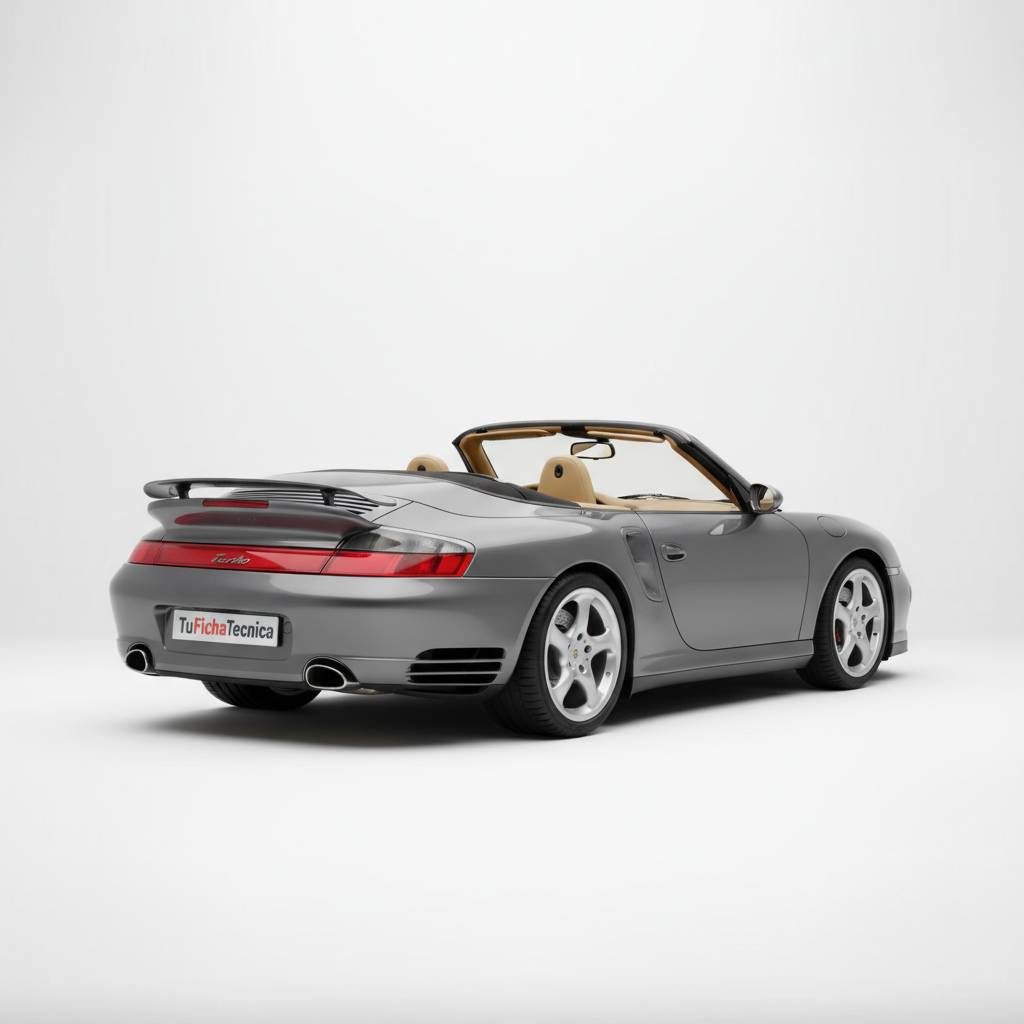
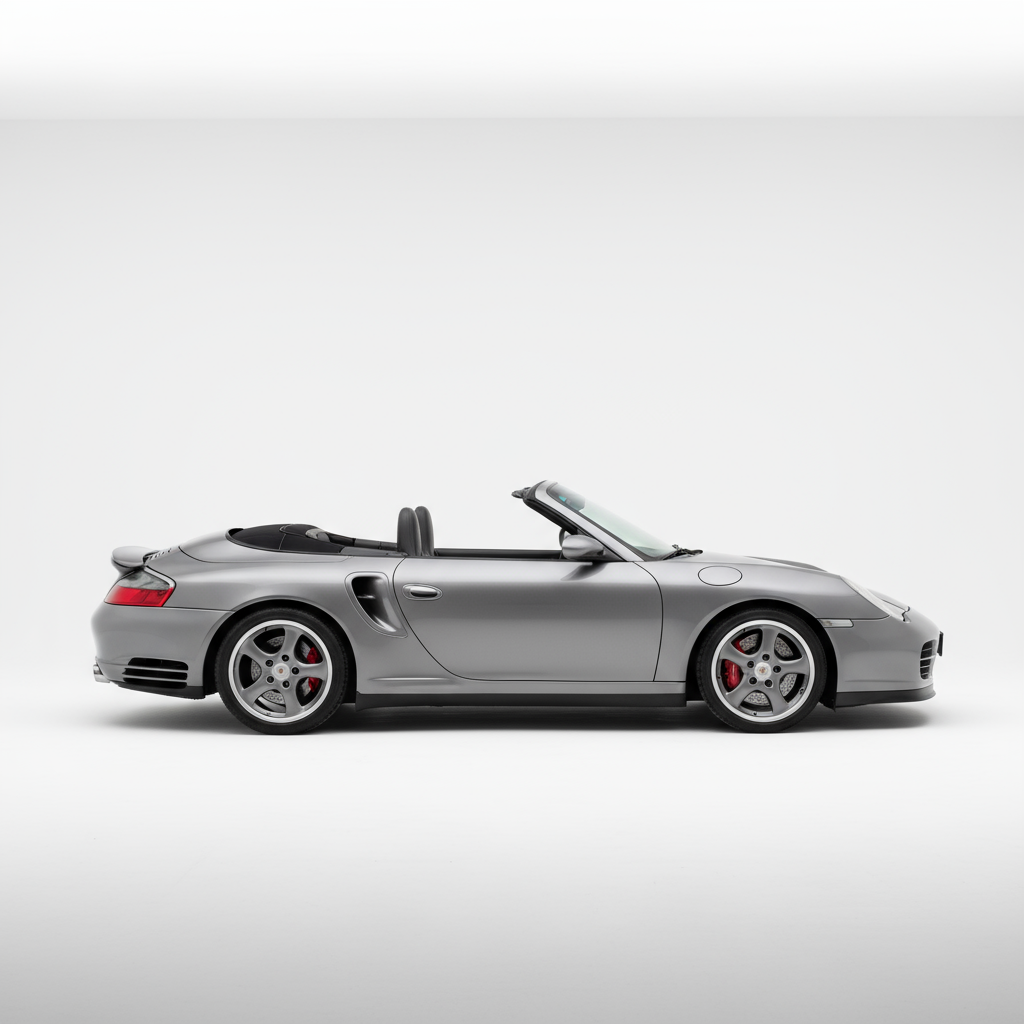
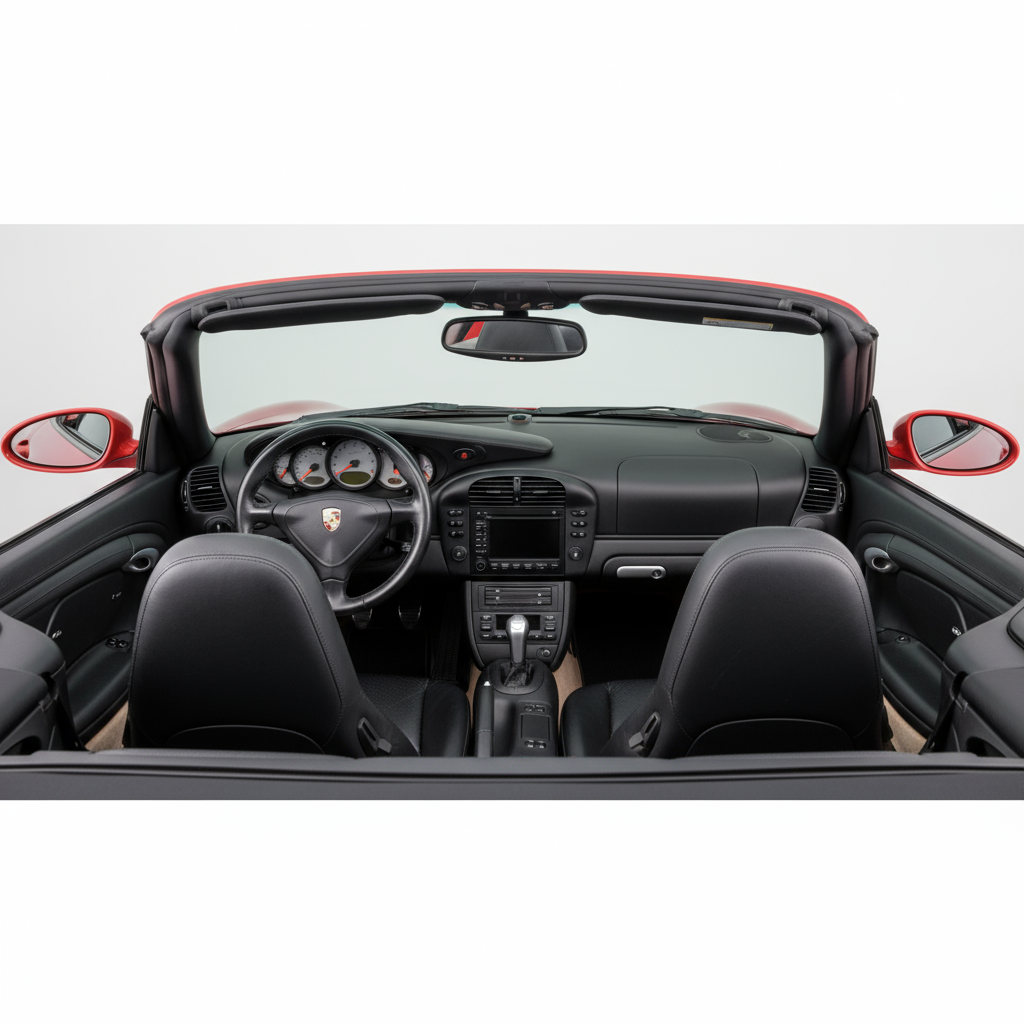
The design of the Porsche 911 Turbo Cabrio is timeless and muscular. Its fluid and aerodynamic lines, combined with the characteristic widenings of the Turbo version, give it an imposing presence. The fabric soft top, which folds elegantly, transforms the car from a sports coupe to a convertible with a simple touch, allowing you to enjoy the sun and wind. The 18-inch wheels, with 225/40 R18 Z tires at the front and 295/30 R18 Z at the rear, are not only aesthetically attractive but also contribute to its exceptional grip. The interior, though classic, is designed with the ergonomics and quality expected from Porsche, with aluminum materials in the engine block and cylinder head that speak of its precision engineering. It's a car that, even today, still turns heads.
Technology and features
Despite being a late 90s model, the 911 Turbo Cabrio incorporated cutting-edge technology for its time. Its 3.6-liter engine with twin turbo and intercooler was an engineering feat, offering impressive power without compromising reliability. Permanent all-wheel drive, a distinctive feature of the 911 Turbos, provided exceptional grip in all conditions. The precise and robust six-speed manual transmission allowed the driver to fully exploit the engine's potential. Ventilated disc brakes on both axles, with a diameter of 330 mm, guaranteed formidable stopping power. Although it lacked modern electronic aids, its mechanical technology was at the top of its class, offering a pure and unfiltered driving experience.
Competition
At the time, the Porsche 911 Turbo Cabrio faced rivals such as the Ferrari 360 Spider, the Lamborghini Gallardo Spyder, and the Aston Martin DB7 Volante. Each offered its own interpretation of luxury and sportiness, but the Porsche stood out for its unique combination of performance, daily usability, and the iconic 911 silhouette. While some rivals might offer more exoticism, the 911 Turbo Cabrio excelled in its balance and its ability to be a high-performance car without being excessively temperamental. It was the choice for those seeking a convertible sports car with a racing heritage and proven reliability.
Conclusion
The 1998 Porsche 911 Turbo Cabrio is more than a car; it's a legend. It combines the thrill of a high-performance sports car with the freedom of a convertible, all wrapped in timeless design and impeccable engineering. Its powerful engine, all-wheel drive, and precise handling make it a pure driving machine. Although its combined consumption of 12.9 l/100km may seem high today, it's a small price to pay for the experience it offers. It's a car that makes you feel special every time you get behind the wheel, a modern classic that continues to captivate automotive enthusiasts. A true icon that has left an indelible mark on automotive history.