
Especificaciones y análisis del Renault Clio
Power
58HP
Torque
93Nm
Consumption
6.2l/100
Emissions
-g/km
0-100 km/h
15s
Top Speed
160km/h
Weight
880kg
Price
9,200€
Technical summary
Gasolina
Manual 5v
FWD
5 / 3 doors
255 L
50 L
43 kW
Current
Technical specifications
Engine
Capacities
Detailed analysis of the Renault Clio 3p 1.2 RT · 58 CV (2000-2001)
General description
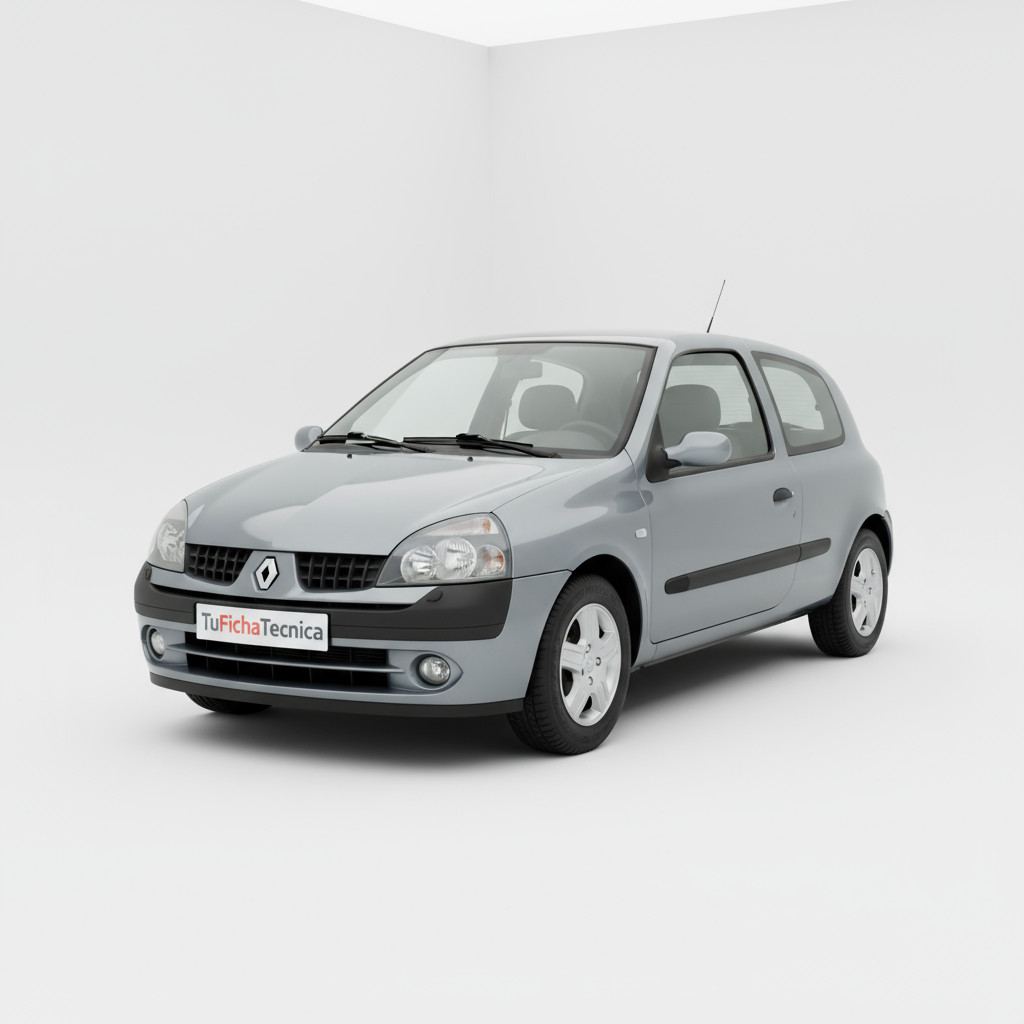
The 1998 Renault Clio 3-door 1.1 Petrol, in its RT version, is a vehicle that marked an era. Priced at 9,200 euros at its launch, this three-door compact offered a simple but effective proposition for urban and extra-urban mobility. Its 1.1-liter, 58 hp engine, combined with a 5-speed manual gearbox, promised an agile and economical driving experience, ideal for daily use.
Driving experience
Behind the wheel of the Clio 3-door 1.1 RT, the sensations are those of an honest and unpretentious car. The steering, although lacking modern assistance, transmits a direct connection to the road. The engine, with its 58 hp, is eager in the city, allowing agile starts and good response in traffic. On the road, its top speed of 160 km/h and acceleration from 0 to 100 km/h in 15 seconds reveal a more relaxed character, inviting calm and efficient driving. The suspension, McPherson type at the front and trailing arm with torsional element at the rear, offers a balance between comfort and stability, absorbing road irregularities without sacrificing the feeling of control. The front disc brakes and rear drum brakes performed their function competently for the time.
Design and aesthetics
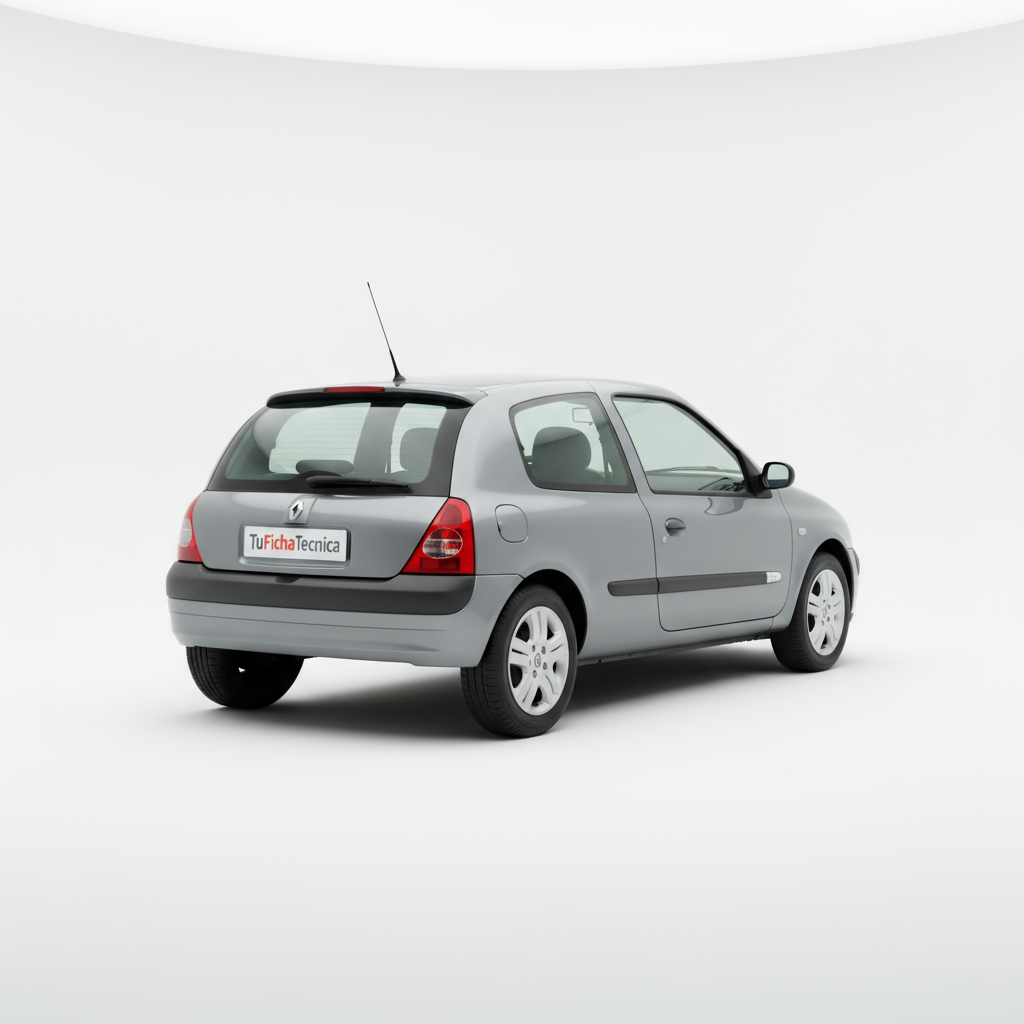
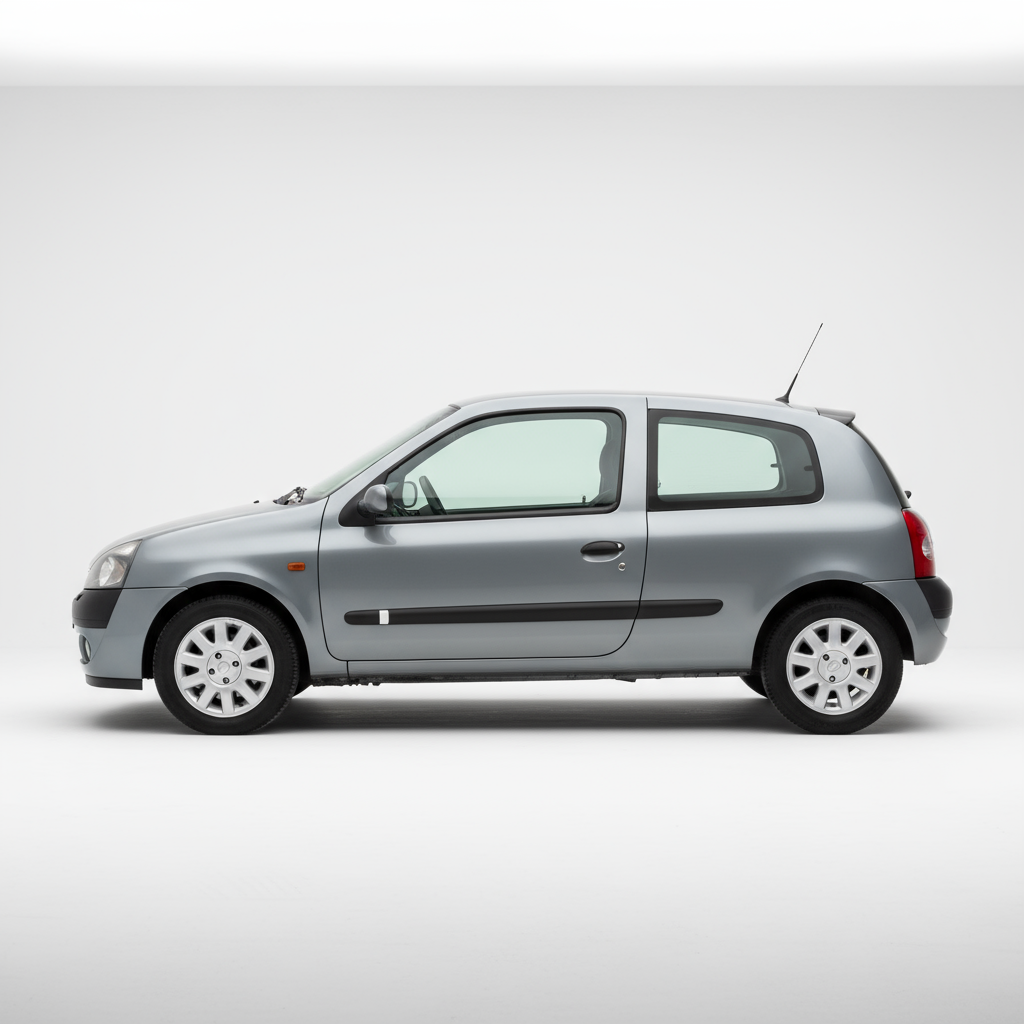
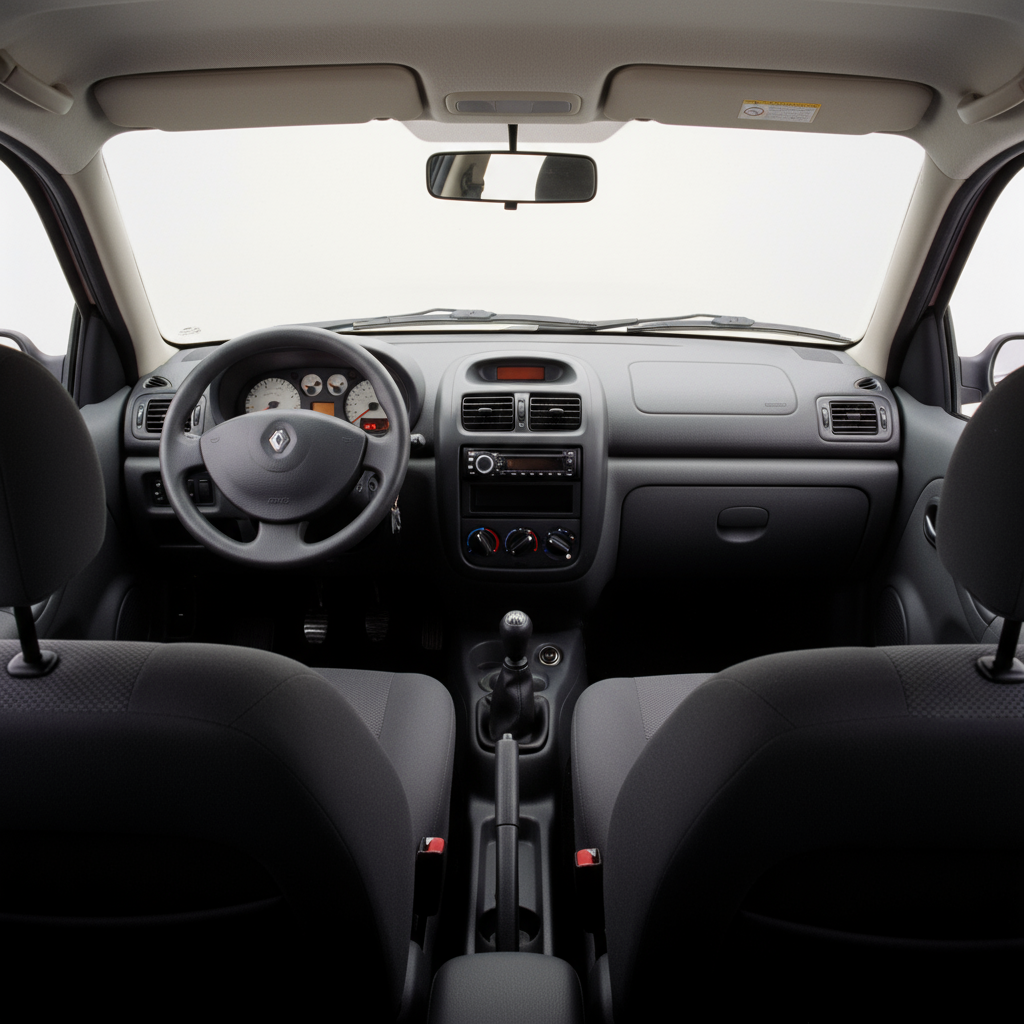
The design of the 1998 Renault Clio is a reflection of late 90s automotive aesthetics. Its lines are soft and rounded, with a compact and functional silhouette. The 3-door body gives it a youthful and dynamic appearance. With a length of 3773 mm, a width of 1639 mm, and a height of 1417 mm, the Clio presents itself as a manageable and easy-to-park car. The interior, although sober, is designed to be practical, with a 255-liter trunk that, while not enormous, is sufficient for daily needs. The 165/65 R14 tires, mounted on 5.5 x 14 wheels, complement its simple and functional aesthetic.
Technology and features
In terms of technology, the 1998 Clio 3-door 1.1 RT is placed in its temporal context. Its 1149 cc gasoline engine, with 4 cylinders and 2 valves per cylinder, uses indirect injection, a proven and reliable technology. The 5-speed manual transmission was a standard at the time, offering direct control over engine power. Although it lacks current sophisticated driving aids, its mechanical simplicity is an advantage in terms of maintenance and durability. The steering, without variable assistance, and the brakes, with a combination of disc and drum, represented the predominant technology in its segment at that time. Its combined consumption of 6.2 l/100km and environmental label B position it as an efficient vehicle for its time.
Competition
At the time, the Renault Clio 3-door 1.1 RT faced tough competition in the supermini segment. Rivals such as the Peugeot 206, Opel Corsa, Volkswagen Polo, and Ford Fiesta offered alternatives with similar characteristics and prices. Each of them sought to win over the public with their own virtues, whether for design, equipment, or performance. The Clio, with its balance between comfort, economy, and a touch of French style, carved out a prominent place in the market, being a popular option for those looking for a practical and reliable car for everyday use.
Conclusion
The 1998 Renault Clio 3-door 1.1 RT is a car that, despite the passage of time, still evokes a sense of nostalgia and appreciation for well-executed simplicity. Its timeless design, reliable engine, and predictable behavior made it a faithful companion for many drivers. It is a testament to an era when cars were designed with a more direct focus on functionality and economy, without completely sacrificing driving pleasure. A modern classic that even today can offer an authentic and unadorned driving experience.