
Especificaciones y análisis del Renault Twingo
Power
58HP
Torque
93Nm
Consumption
6l/100
Emissions
-g/km
0-100 km/h
13.7s
Top Speed
151km/h
Weight
820kg
Price
9,526€
Technical summary
Gasolina
Manual 5v
FWD
4 / 3 doors
168 L
40 L
43 kW
Current
Technical specifications
Engine
Capacities
Detailed analysis of the Renault Twingo 1.2 Privilege · 58 CV (2000-2001)
General description
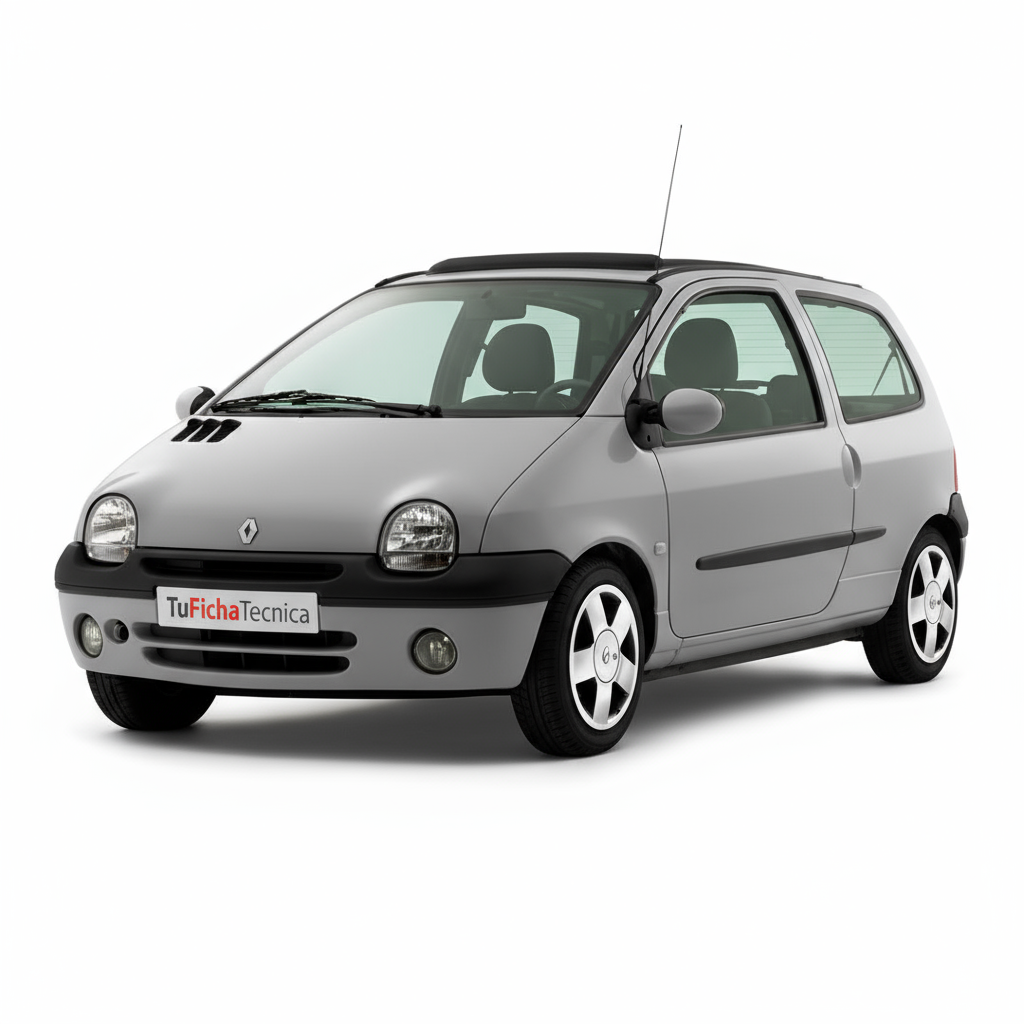
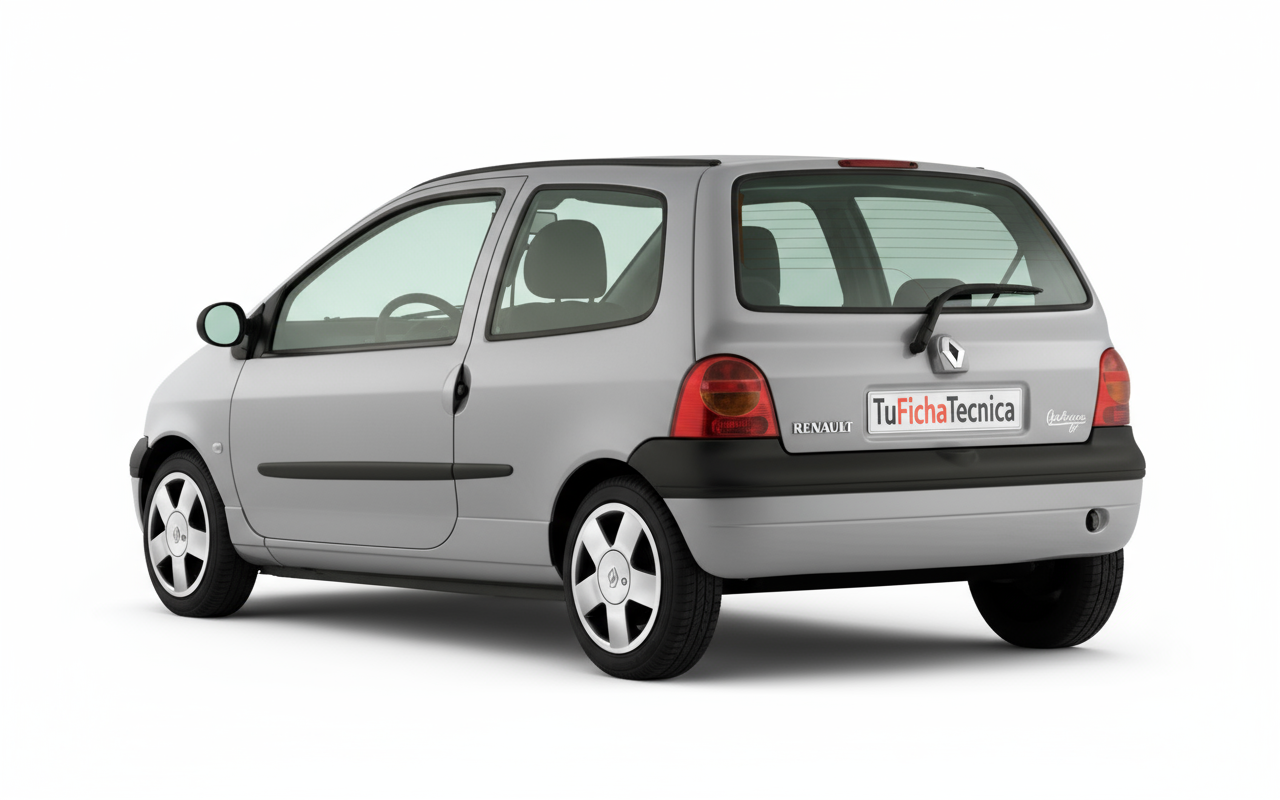
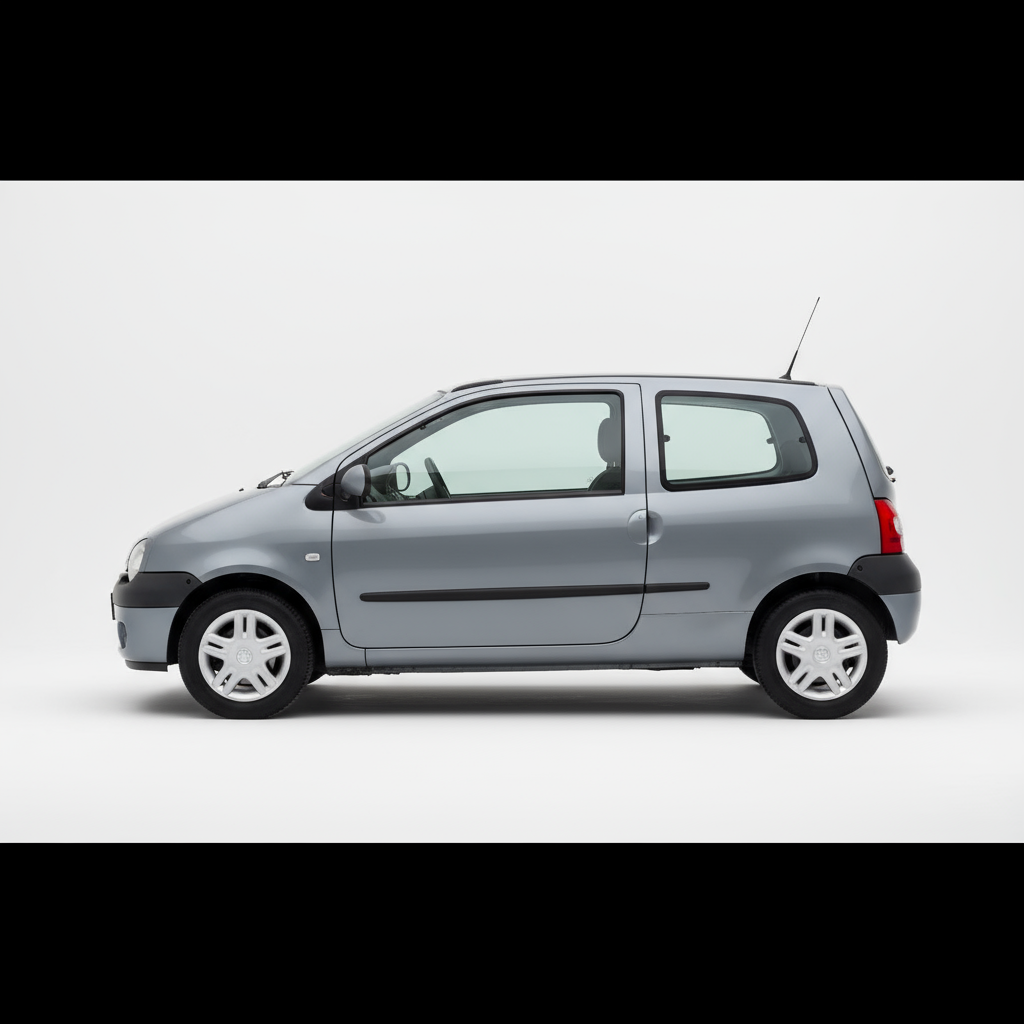
The 1998 Renault Twingo 1.2 Privilege is a car that marked an era, a small urban vehicle that defied conventions with its bold design and focus on practicality. With its 1.1-liter, 58 hp engine, this Twingo wasn't about speed, but about agility and ease of use in the city, offering a lighthearted and personality-filled driving experience.
Driving experience
Driving the Twingo is a surprisingly pleasant experience. Its lightness and compact dimensions make it incredibly agile in urban traffic, allowing for easy maneuvering in tight spaces. The engine, though modest in power, responds with enough verve for daily use, and the steering, though lacking assistance in some versions, transmits a direct connection to the road. The suspension, McPherson type at the front and trailing arm with torsional element at the rear, absorbs irregularities well, offering remarkable comfort for its segment. It's a car that invites you to smile, to enjoy every journey without pretensions.
Design and aesthetics
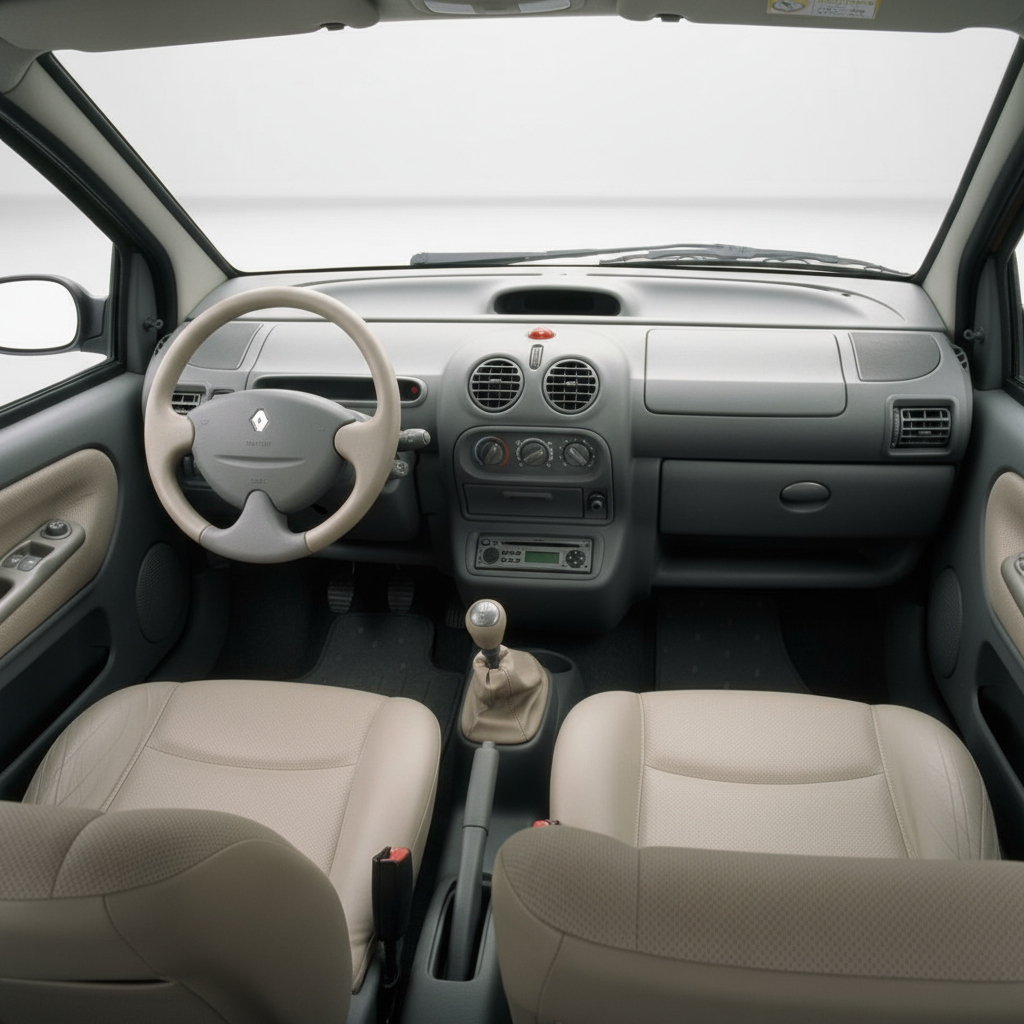
The Twingo's design is, without a doubt, its most distinctive and charismatic feature. Its rounded lines and 'smiling' front give it an unmistakable personality that sets it apart from any other car of its era. The interior is equally innovative, with a minimalist dashboard and a central digital instrument cluster that freed up visual space. The modularity of its seats, especially the sliding rear bench, was a stroke of genius that allowed the space to be adapted for passengers or cargo with astonishing ease, maximizing habitability in such a compact car.
Technology and features
At the time, the Twingo incorporated technological solutions that, although they may seem basic to us today, were innovative for an urban car. The centralized digital instrument cluster was a statement of intent, seeking a clean and futuristic aesthetic. Its 1.1-liter indirect injection engine, with 58 hp, was efficient and reliable, designed for low consumption and simple maintenance. The rack-and-pinion steering, although unassisted in this version, offered a direct response. The interior modularity, with seats that transformed into a bed, was a display of ingenuity in space utilization.
Competition
In the urban segment, the Renault Twingo faced competitors such as the Fiat Seicento, the Ford Ka, or the Volkswagen Lupo. However, the Twingo stood out from them with its bolder design and its focus on modularity and habitability. While others offered more conventional solutions, the Twingo opted for originality and intelligent functionality, creating its own niche and winning the hearts of many for its unique character.
Conclusion
The 1998 Renault Twingo 1.2 Privilege is much more than a simple urban car; it is an icon of design and functionality. Its unmistakable personality, ingenious interior, and agility in the city make it a charming option for those seeking a practical, economical, and original vehicle. Despite its modest power, it offers a rewarding driving experience and surprising versatility for its size. It is a car that, even today, continues to evoke smiles and admiration.