
Especificaciones y análisis del Renault Twingo
Power
58HP
Torque
93Nm
Consumption
6l/100
Emissions
-g/km
0-100 km/h
13.7s
Top Speed
151km/h
Weight
820kg
Price
8,655€
Technical summary
Gasolina
Manual 5v
FWD
4 / 3 doors
168 L
40 L
43 kW
Current
Technical specifications
Engine
Capacities
Detailed analysis of the Renault Twingo Pack · 58 CV (1998-2000)
General description
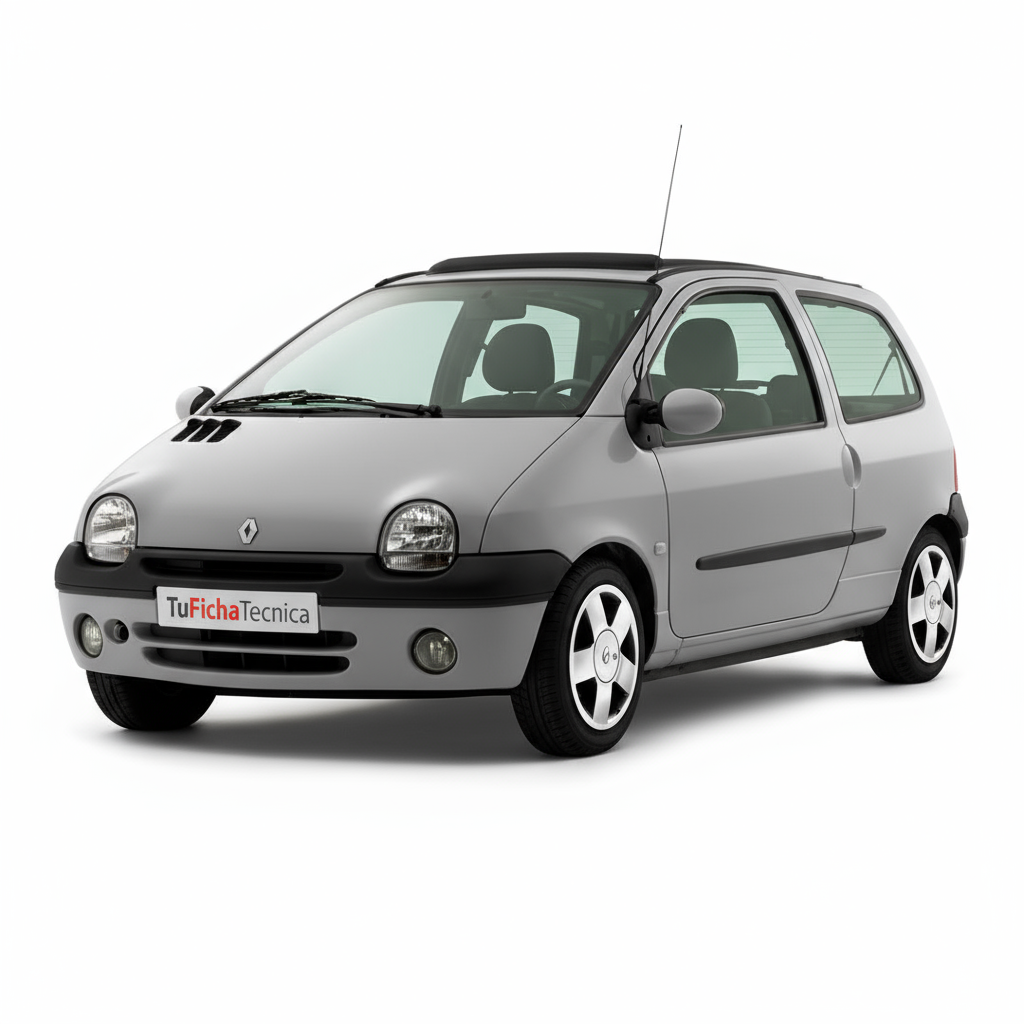
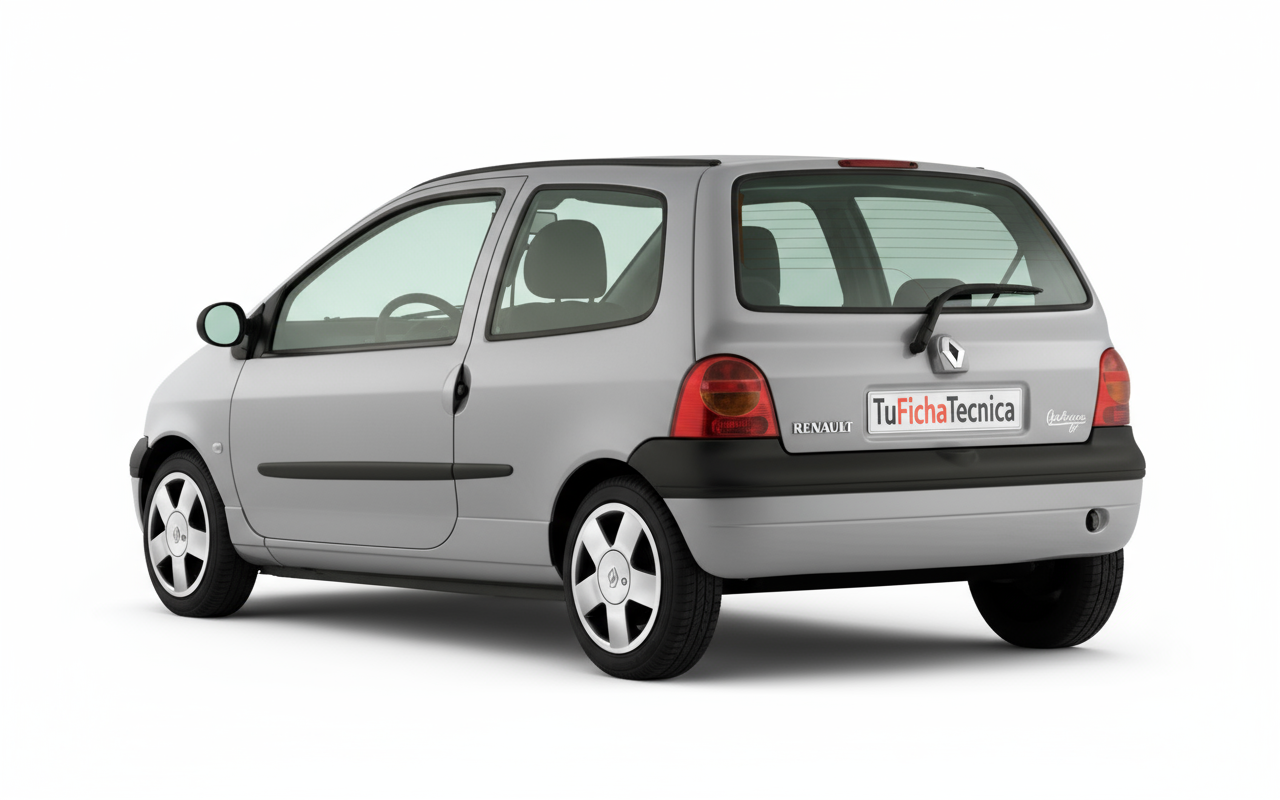
The 1998 Renault Twingo, in its Pack version, is presented as a three-door urban vehicle that, despite its compact size, promised a distinctive driving experience and a design that broke molds in its time. With a 1.1-liter gasoline engine and 58 HP, this Twingo was designed for agility in the city and fuel efficiency, offering a fresh and carefree proposal for everyday use.
Driving experience
Behind the wheel of the 1998 Twingo, the predominant sensation is one of lightness and maneuverability. Its 58 HP, although modest, are sufficient to move its 820 kg weight with ease, especially in urban environments. Acceleration from 0 to 100 km/h in 13.7 seconds and a top speed of 151 km/h suggest that, while not a high-performance car, it more than meets the needs for daily commutes. The suspension, McPherson type at the front and trailing arm with torsional element at the rear, seeks a balance between comfort and stability, albeit without sporting pretensions. The combined consumption of 6 l/100km made it an economical companion at the gas station.
Design and aesthetics
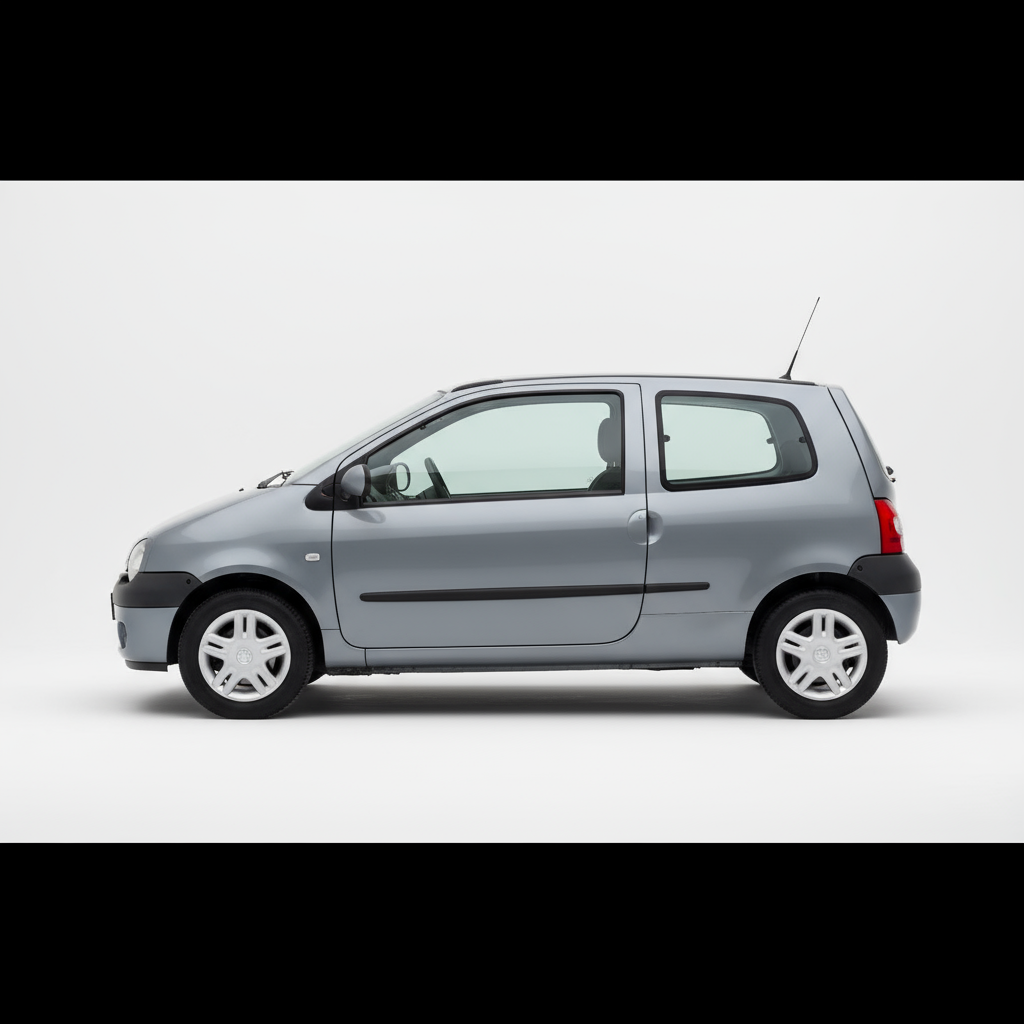
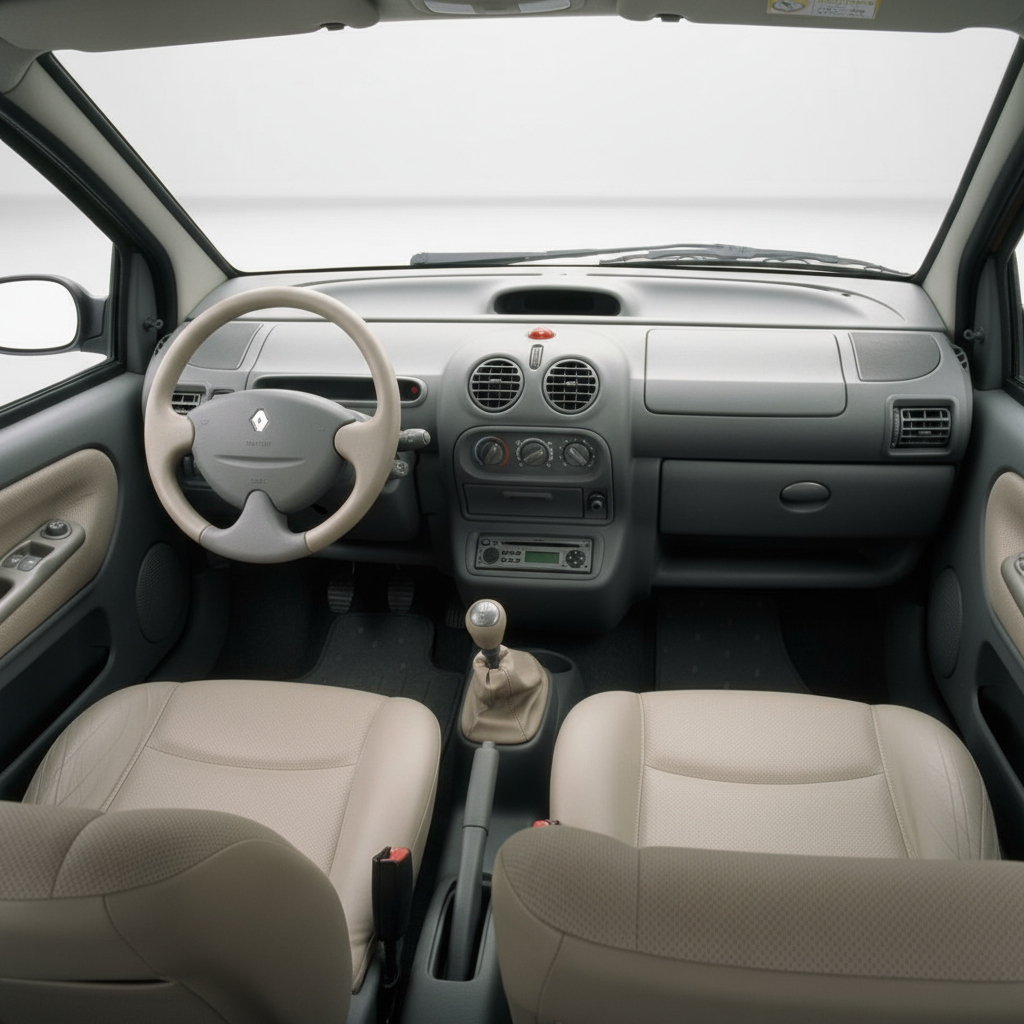
The design of the 1998 Renault Twingo is, without a doubt, one of its most iconic points. Its 'minivan' aesthetic in miniature, with a friendly front and headlights that evoke a smile, clearly differentiated it from its competitors. The three doors accentuate its urban and youthful character. The interior, although not detailed in the data, was known for its modularity and its central dashboard, which freed up space and offered a sense of spaciousness uncommon in cars of its segment. The compact dimensions, with 3433 mm long and 1630 mm wide, facilitated parking and circulation in narrow streets.
Technology and features
In 1998, the Twingo Pack offered functional technology oriented towards practicality. Its 1149 cc gasoline engine with indirect injection and 4 in-line cylinders, together with a 5-speed manual gearbox, represented a proven and reliable mechanical configuration. Although it lacked luxury elements or advanced electronic aids, its simplicity was part of its charm. The steering, although its type or assistance is not specified, was designed to offer good response in the city. Front disc brakes and rear drum brakes were standard for the time in this segment.
Competition
In the 1998 market, the Renault Twingo Pack faced rivals such as the Fiat Seicento, the Ford Ka, or the Volkswagen Lupo. Each with its own proposal, the Twingo stood out for its innovative design, its interior habitability, and its focus on practicality and joie de vivre. While others opted for more conventional lines or a more sporty approach, the Twingo remained true to its unique personality, attracting an audience looking for something different and functional for the city.
Conclusion
The 1998 Renault Twingo Pack is more than just a car; it is an icon of its time. Its bold design, its focus on practicality, and its carefree character made it a favorite for many urban drivers. Although its performance was modest, its agility and efficiency made it an ideal companion for everyday life. It is a car that evokes nostalgia and a smile, a reminder that functionality and personality can go hand in hand in the automotive world.