
Especificaciones y análisis del Saab 9-3
Power
150HP
Torque
320Nm
Consumption
7.2l/100
Emissions
194g/km
0-100 km/h
11.2s
Top Speed
195km/h
Weight
-kg
Price
33,170€
Technical summary
Gasóleo
Automático 6v
FWD
5 / 5 doors
419 L
58 L
110 kW
Current
Technical specifications
Engine
Capacities
Detailed analysis of the Saab 9-3 Sport Hatch 1.9 TiD (150 CV) Linear Sport Aut. · 150 CV (2006-2007)
General description
The 2005 Saab 9-3 Sport Hatch, in its 1.9 TiD 150 HP version with Linear Sport trim and automatic transmission, represents the essence of the Swedish brand: a combination of distinctive design, safety, and a touch of sportiness. This model, with its station wagon body, sought to offer a practical alternative without sacrificing Saab's unique character. With a 150 HP diesel engine and a 6-speed automatic gearbox, it promised a balance between performance and efficiency for its time.
Driving experience
Behind the wheel of the Saab 9-3 Sport Hatch, the feeling is one of solidity and control. The 1.9 TiD 150 HP engine, while not an abundance of power, delivers its 320 Nm of torque at 2000 rpm smoothly and progressively, which facilitates relaxed daily driving. The 6-speed automatic transmission contributes to this smoothness, performing gear changes without abruptness. Acceleration from 0 to 100 km/h in 11.2 seconds and a top speed of 195 km/h place it in an adequate range for long journeys and safe overtakes. The suspension, McPherson type at the front and deformable parallelogram at the rear, along with anti-roll bars, offers a good compromise between comfort and stability, absorbing road irregularities without sacrificing the feeling of poise on the road. The rack-and-pinion steering, although without variable assistance, provides predictable response. The combined consumption of 7.2 l/100km, for a car of its size and year, was reasonable, although in the city it could rise to 10 l/100km. Overall, it is a car that invites you to enjoy the road with a feeling of safety and comfort.
Design and aesthetics
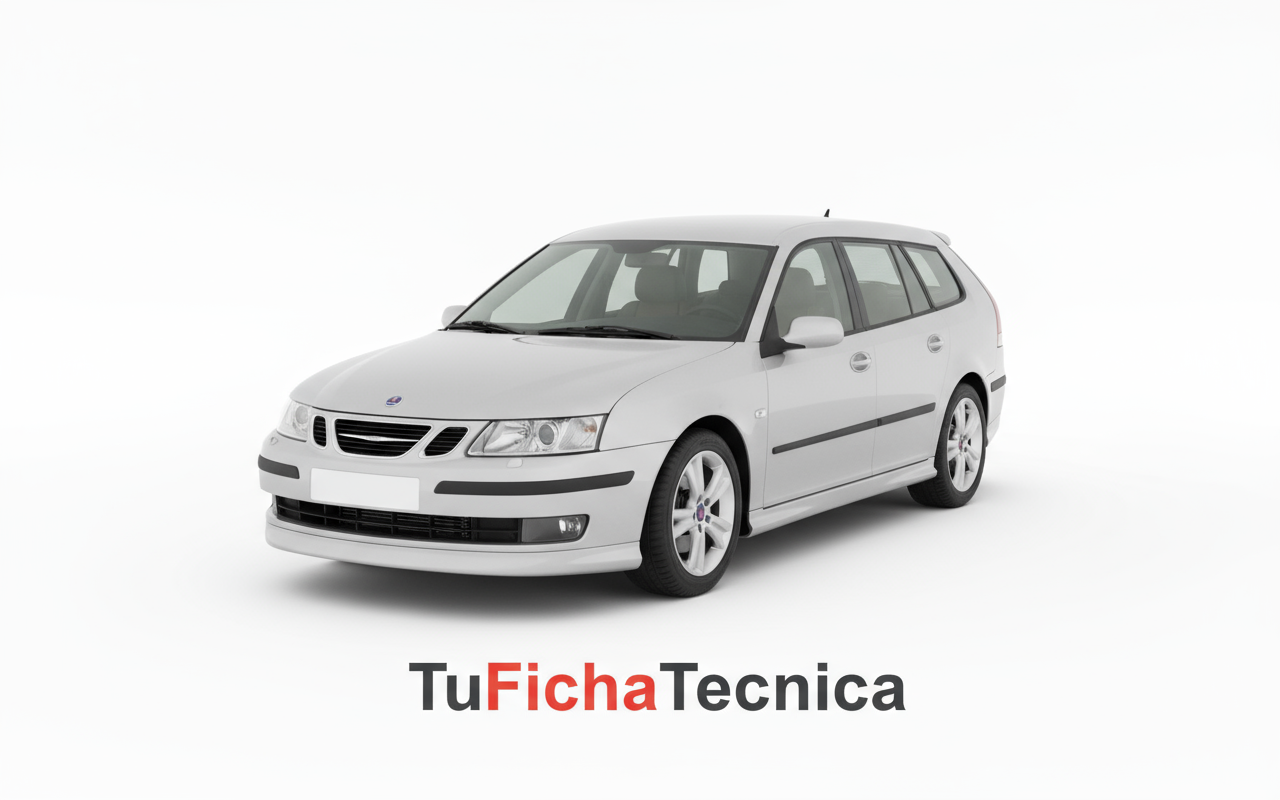
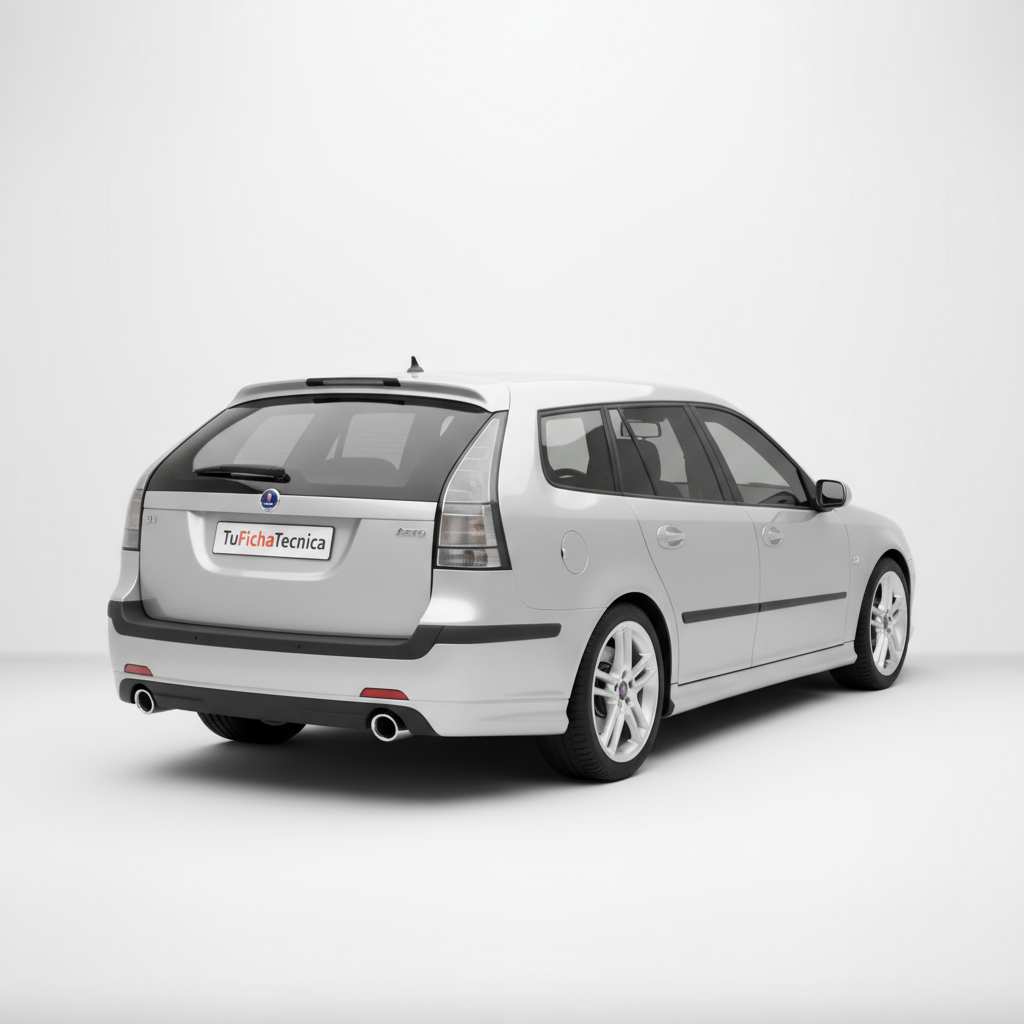
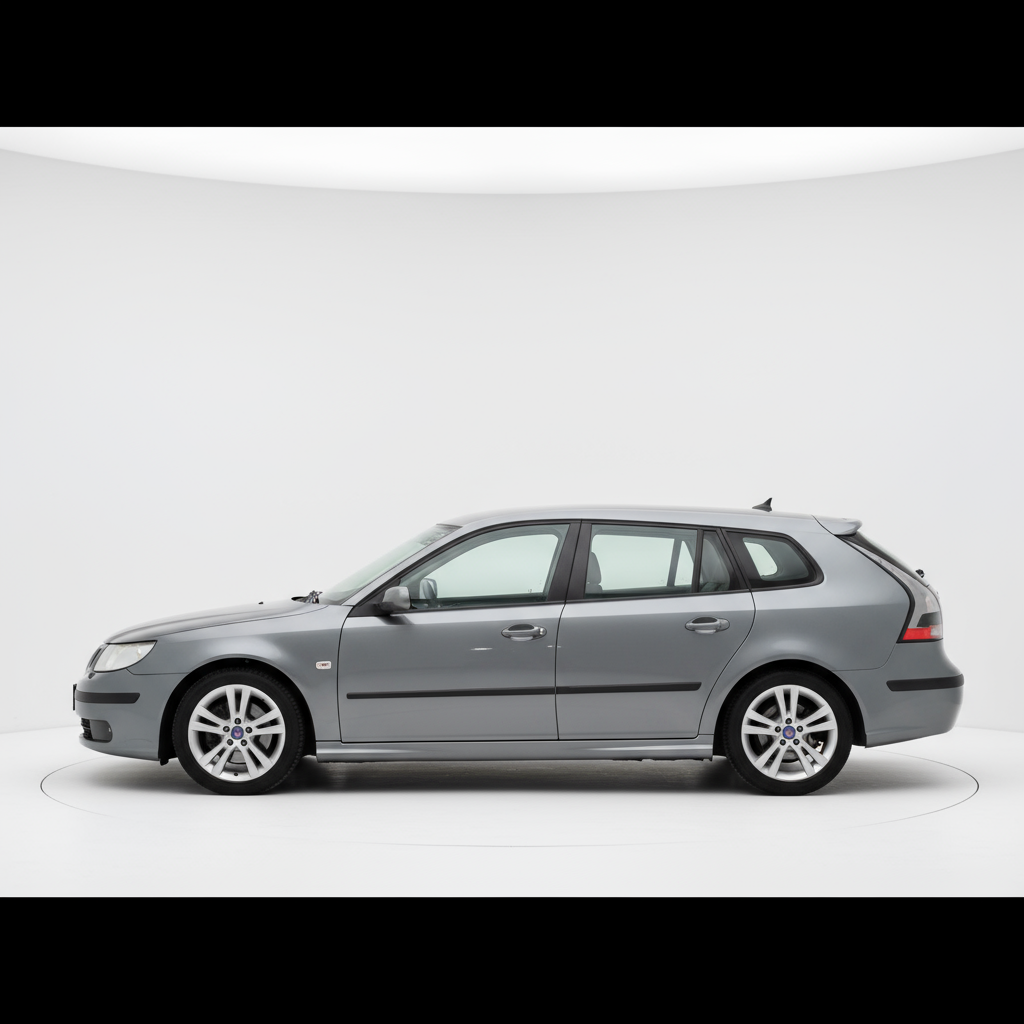
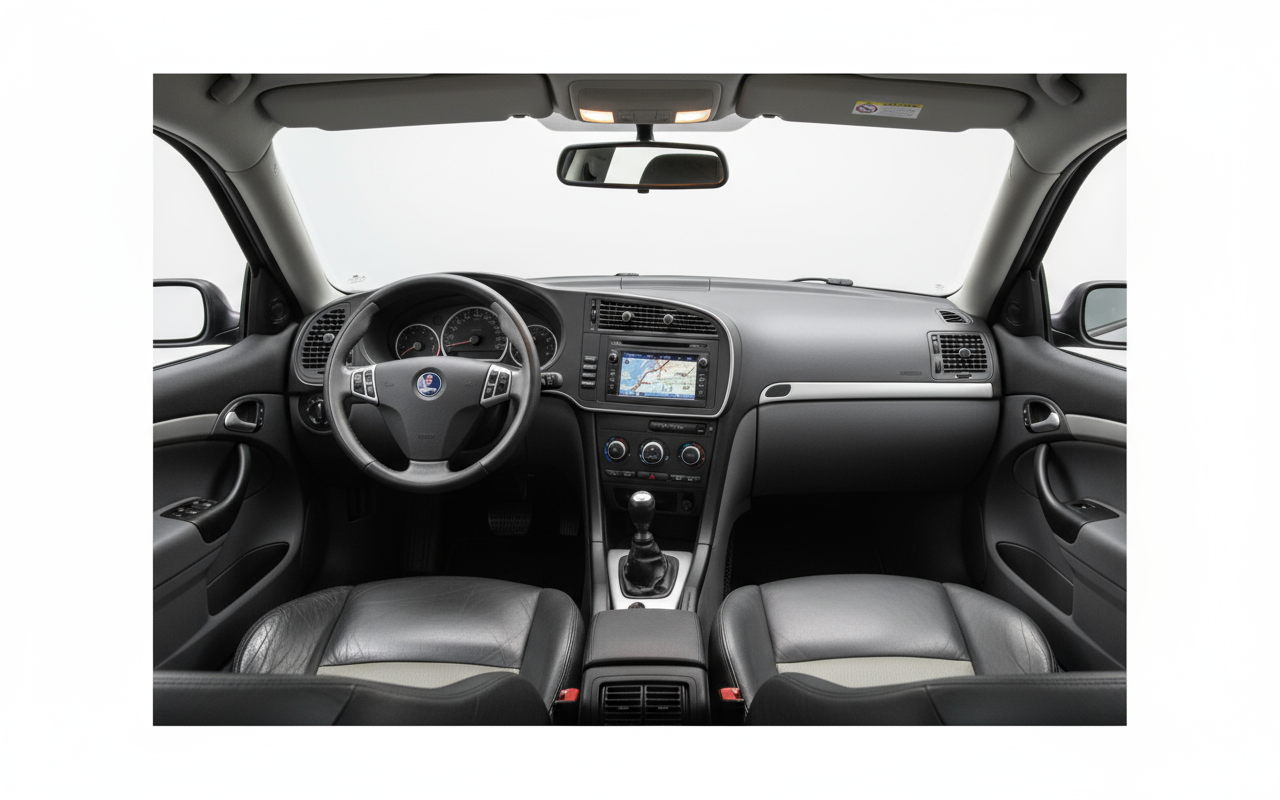
The design of the Saab 9-3 Sport Hatch is unmistakably Saab. Its station wagon body, or 'Sport Hatch' as the brand called it, combines the functionality of a family car with dynamic lines and a profile that evokes a certain sportiness. The front maintains the brand's identity with its characteristic grille and headlights that integrate harmoniously. The rear, with its vertical taillights and tailgate, is not only aesthetically attractive but also facilitates access to a 419-liter trunk, very practical for daily use or travel. The 16-inch wheels with 215/55 R16 tires complement the set, providing a balanced image. Inside, the layout of the dashboard and center console, with its focus on the driver, reflects Saab's aeronautical heritage. The materials and finishes, although not luxurious, convey a sense of quality and durability, with a functional and ergonomic design.
Technology and features
In terms of technology, the 2005 Saab 9-3 Sport Hatch incorporated advanced solutions for its time. The 1.9 TiD 150 HP engine stood out for its common rail direct injection, variable geometry turbo, and intercooler, technologies that optimized combustion and performance. The 6-speed automatic transmission was a strong point, offering a more relaxed and efficient driving experience. In terms of safety, Saab was always a pioneer, and this model was no exception, with a robust chassis and braking systems with 285 mm ventilated front discs and 278 mm rear discs. Although driving assistance systems are not specified, it is expected that it had the usual active and passive safety elements in the premium category of the time. The instrumentation, with its characteristic green lighting and the 'Night Panel' function, which allowed most dashboard lights to be turned off to reduce nighttime distractions, was a distinctive detail of the brand.
Competition
In the mid-size premium station wagon segment, the Saab 9-3 Sport Hatch faced strong competitors such as the Audi A4 Avant, the BMW 3 Series Touring, and the Mercedes-Benz C-Class Estate. Compared to them, the Saab offered an alternative with a more distinctive design and its own personality, far from German sobriety. It also competed with models such as the Volvo V50, with which it shared a focus on safety and comfort, but with a sportier touch in the case of the Saab. Other rivals could include the Volkswagen Passat Variant or the Ford Mondeo Sportbreak, although these were positioned slightly lower in terms of brand positioning. The Saab was distinguished by its focus on ergonomics, safety, and a design that, although not for everyone's taste, had a large number of loyal followers.
Conclusion
The Saab 9-3 Sport Hatch 1.9 TiD 150 HP with automatic transmission is a car that, despite its age, still retains a special charm. It is a vehicle that offers a comfortable and safe driving experience, with a diesel engine that meets performance and efficiency expectations for its segment. Its distinctive design and focus on functionality make it an interesting option for those looking for a family car with personality and a different touch. Although the brand no longer exists, this model is a testament to Swedish engineering and design, a car that, with proper maintenance, can continue to offer much satisfaction to its owners. It is a car for those who value originality and build quality above fleeting trends.