
Especificaciones y análisis del Saab 9-5
Power
190HP
Torque
400Nm
Consumption
6l/100
Emissions
159g/km
0-100 km/h
8.8s
Top Speed
230km/h
Weight
-kg
Price
38,100€
Technical summary
Gasóleo
Manual 6v
FWD
5 / 4 doors
515 L
70 L
140 kW
Current
Technical specifications
Engine
Capacities
Detailed analysis of the Saab 9-5 Sedan Linear 2.0TTiD 190 CV (2011-2012)
General description
The 2010 Saab 9-5, in its Sedan Linear 2.0TTiD 190 hp version, represents the last expression of the Swedish brand before its disappearance. Priced at 38,100 euros at its launch, this vehicle sought to combine Saab's tradition with a more modern and ambitious approach. It is a car that evokes nostalgia and admiration for its uniqueness in the market.
Driving experience
Driving the Saab 9-5 is an experience that feels different. Its 190 hp diesel engine, with a torque of 400 Nm at 1750 rpm, offers a powerful response and acceleration from 0 to 100 km/h in 8.8 seconds, making it agile for its size. The suspension, McPherson type at the front and deformable parallelogram at the rear, along with the stabilizers, provides a balance between comfort and a firm ride. The rack-and-pinion steering, although without variable assistance, transmits a sense of control. The combined consumption of 6 l/100km is reasonable for its power and size, allowing long journeys with good autonomy thanks to its 70-liter tank. It is a car that invites you to enjoy the road with a sense of safety and distinction.
Design and aesthetics
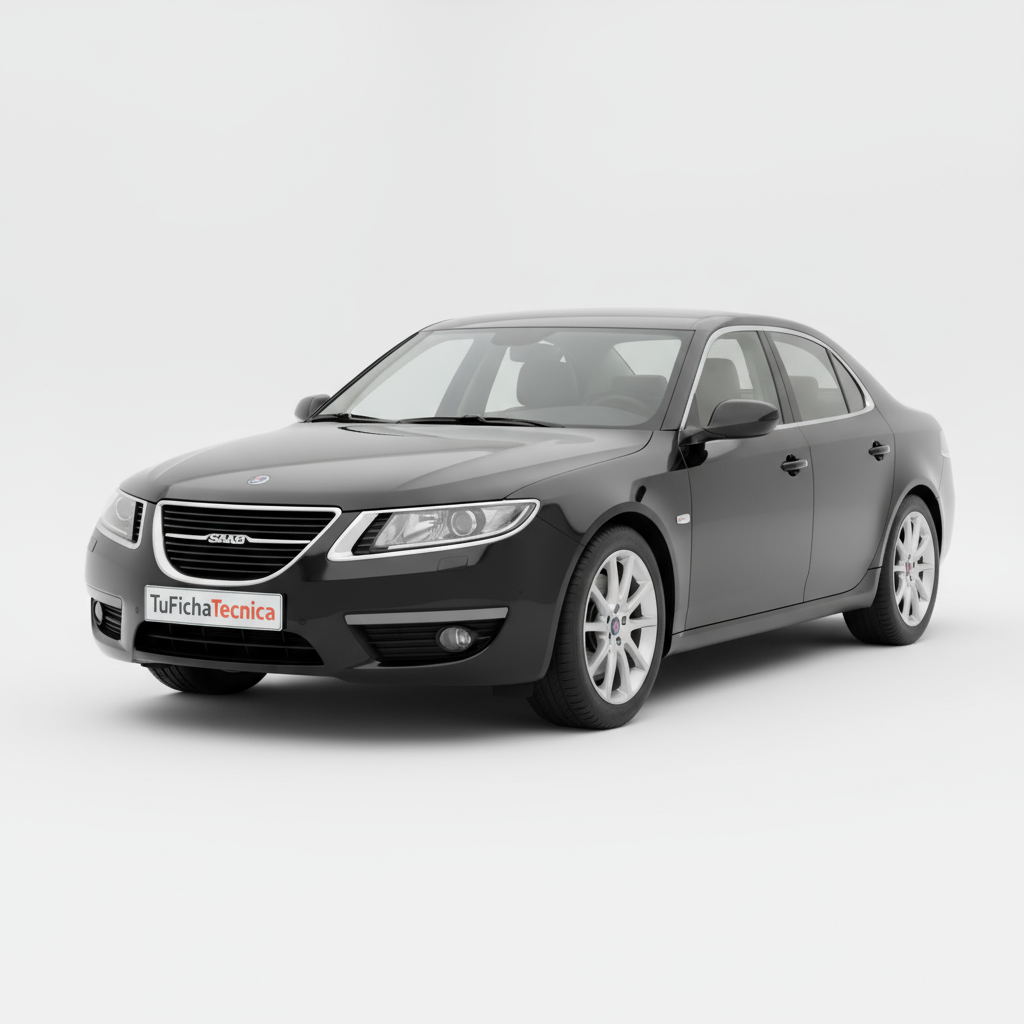
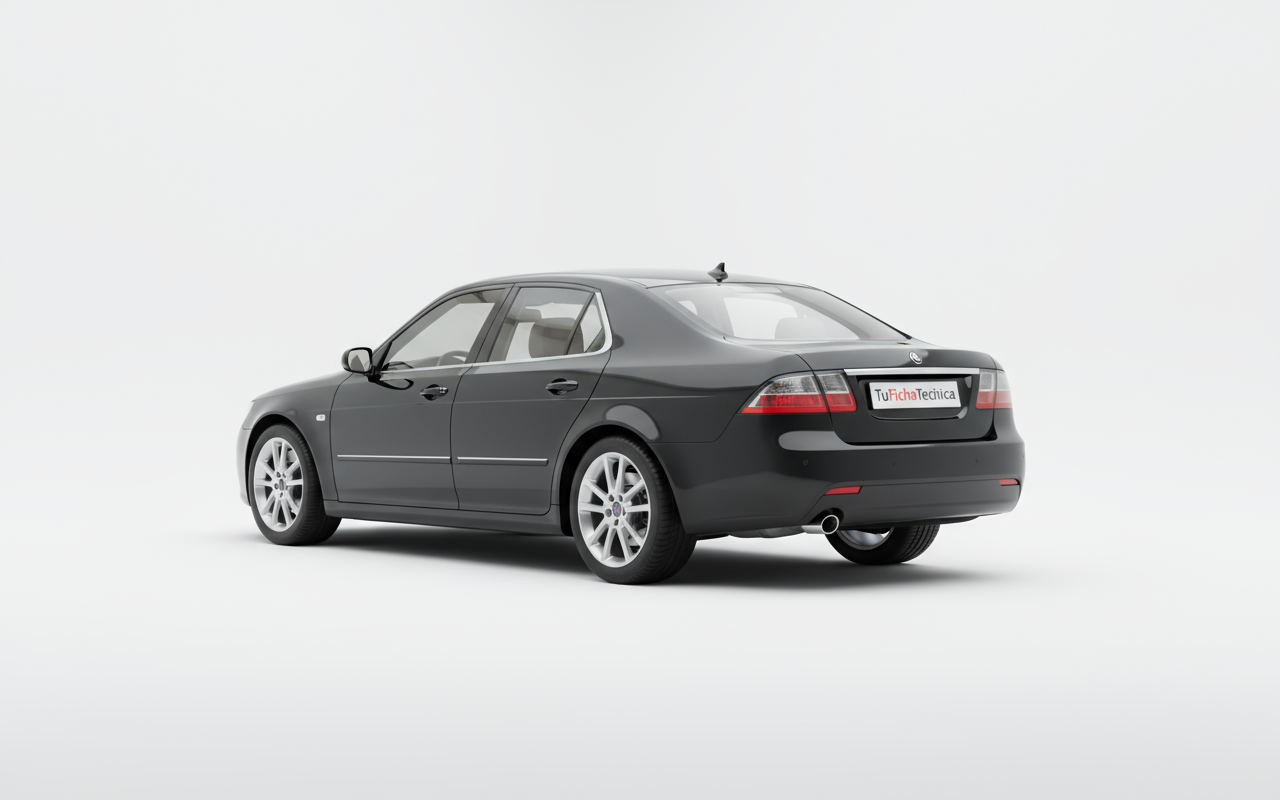
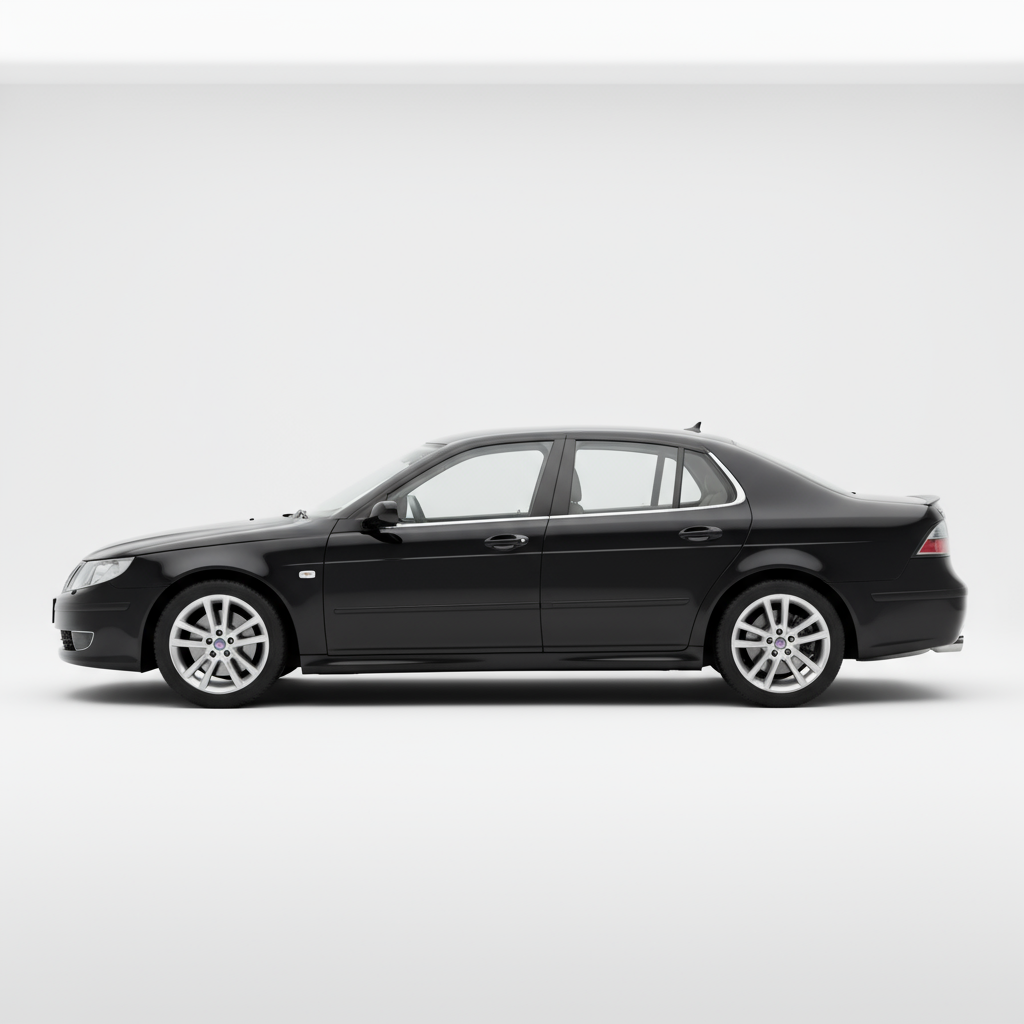
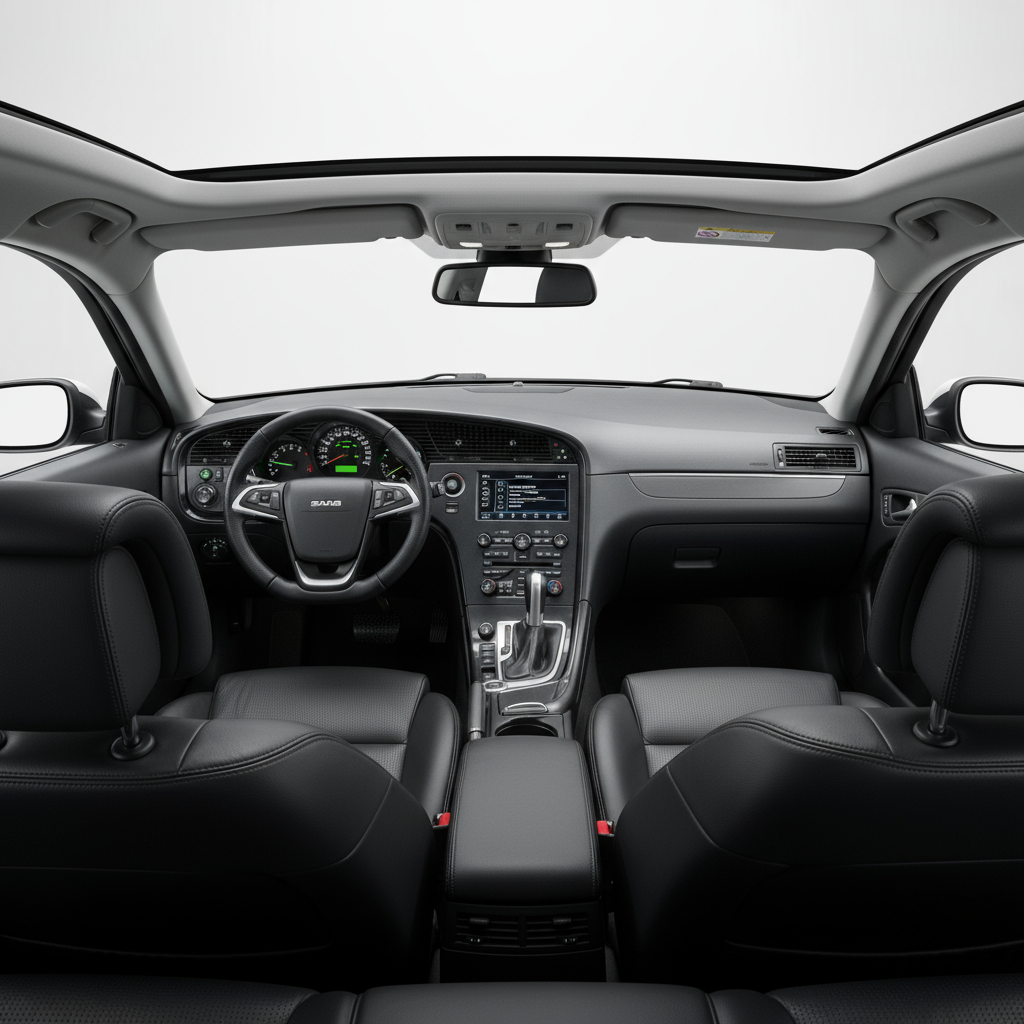
The design of the 2010 Saab 9-5 is unmistakably Saab, but with an evolution towards more contemporary and robust lines. Its 5008 mm length, 1868 mm width, and 1466 mm height give it an imposing presence. The sedan silhouette is elegant and aerodynamic, with details that reflect the brand's aeronautical heritage. The front is distinctive, with a grille that prominently integrates the Saab logo, and the elongated headlights give it a sophisticated touch. The rear maintains sobriety and elegance, with taillights that integrate harmoniously into the whole. The interior, although not detailed in the data, is expected to follow Saab's philosophy of functionality and ergonomics, with a touch of discreet luxury. It is a design that, even today, continues to attract attention for its unique personality.
Technology and features
At the technological heart of this Saab 9-5 we find a 1956 cc diesel engine, with common rail direct injection, variable geometry turbo and intercooler, delivering 190 hp. The 6-speed manual transmission and front-wheel drive (FWD) ensure precise control and adequate efficiency. Although advanced driving assistance systems are not mentioned, Saab's engineering always focused on safety and robustness. The 296 mm ventilated disc brakes at the front and 292 mm discs at the rear guarantee effective braking. The 225/55 R17 tires on 7x17 inch wheels contribute to good grip and stability. It is a technology that, although not the most avant-garde of its time, is solid and reliable, designed to last.
Competition
In its segment, the Saab 9-5 competed with premium sedans from German brands such as the Audi A6, the BMW 5 Series, and the Mercedes-Benz E-Class, as well as with the Volvo S80. Compared to them, the Saab offered a more exclusive alternative with a distinctive character, appealing to those who sought something different from the established. Its unique design and its focus on safety and ergonomics differentiated it, although its smaller dealer network and the uncertainty about the brand's future could have been disadvantages.
Conclusion
The 2010 Saab 9-5 is more than a car; it is a piece of automotive history. It represents the swan song of a brand that always dared to be different. It offers an elegant and distinctive design, a powerful and efficient diesel engine, and a driving experience that combines comfort with a sense of solidity. For Saab lovers, it is a jewel that embodies the essence of the brand: innovation, safety, and a touch of eccentricity. It is a car for those who value individuality and well-thought-out engineering, a vehicle that, despite its sad end, remains a testament to what Saab represented.