

Especificaciones y análisis del Skoda Fabia
Power
68HP
Torque
120Nm
Consumption
7.2l/100
Emissions
-g/km
0-100 km/h
15.8s
Top Speed
162km/h
Weight
1095kg
Price
12,050€
Technical summary
Gasolina
Manual 5v
FWD
5 / 4 doors
438 L
45 L
50 kW
Current
Technical specifications
Engine
Capacities
Detailed analysis of the Skoda Fabia Sedán 1.4 Comfort · 68 CV (2001-2004)
General description
The 2001 Skoda Fabia Sedan 1.4 Comfort presents itself as a sensible and practical option within the compact sedan segment. With its 68 HP gasoline engine and a configuration designed for daily comfort, this model aimed to offer a reliable and economical transportation solution for families. Its design, though discreet, promised functionality and adequate interior space for its time.
Driving experience
Behind the wheel of the Fabia Sedan 1.4 Comfort, the experience is one of tranquility and predictability. Its 68 HP, though modest, are sufficient for agile movement in urban and suburban environments. On the road, it requires anticipation for overtakes and climbs, but its behavior is noble and safe. The suspension, McPherson type at the front and torsion beam with trailing arm at the rear, filters road irregularities well, offering remarkable ride comfort for its segment. The rack-and-pinion steering, without variable assistance, provides a direct connection to the road, although it can feel somewhat heavy during low-speed maneuvers. It is a car that invites relaxed driving, without great sporting pretensions, but with the satisfaction of a comfortable and uneventful journey.
Design and aesthetics
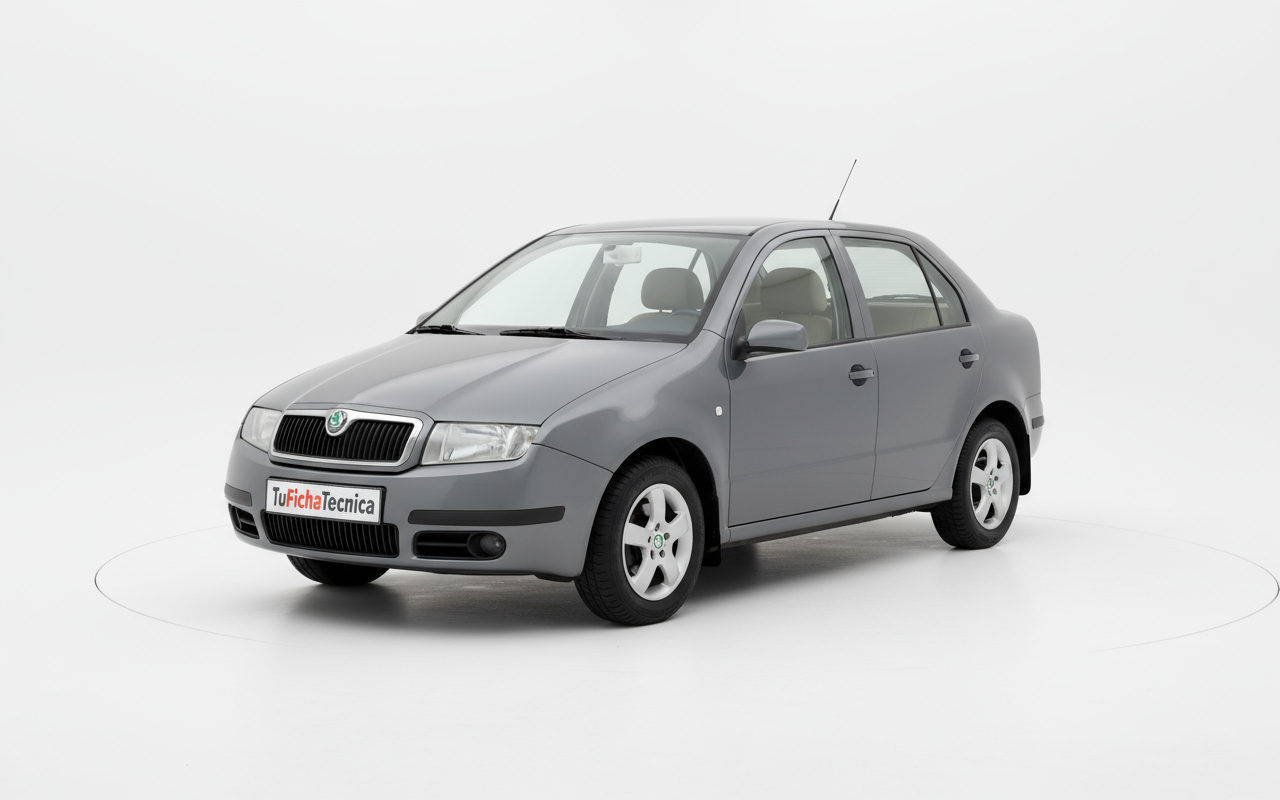
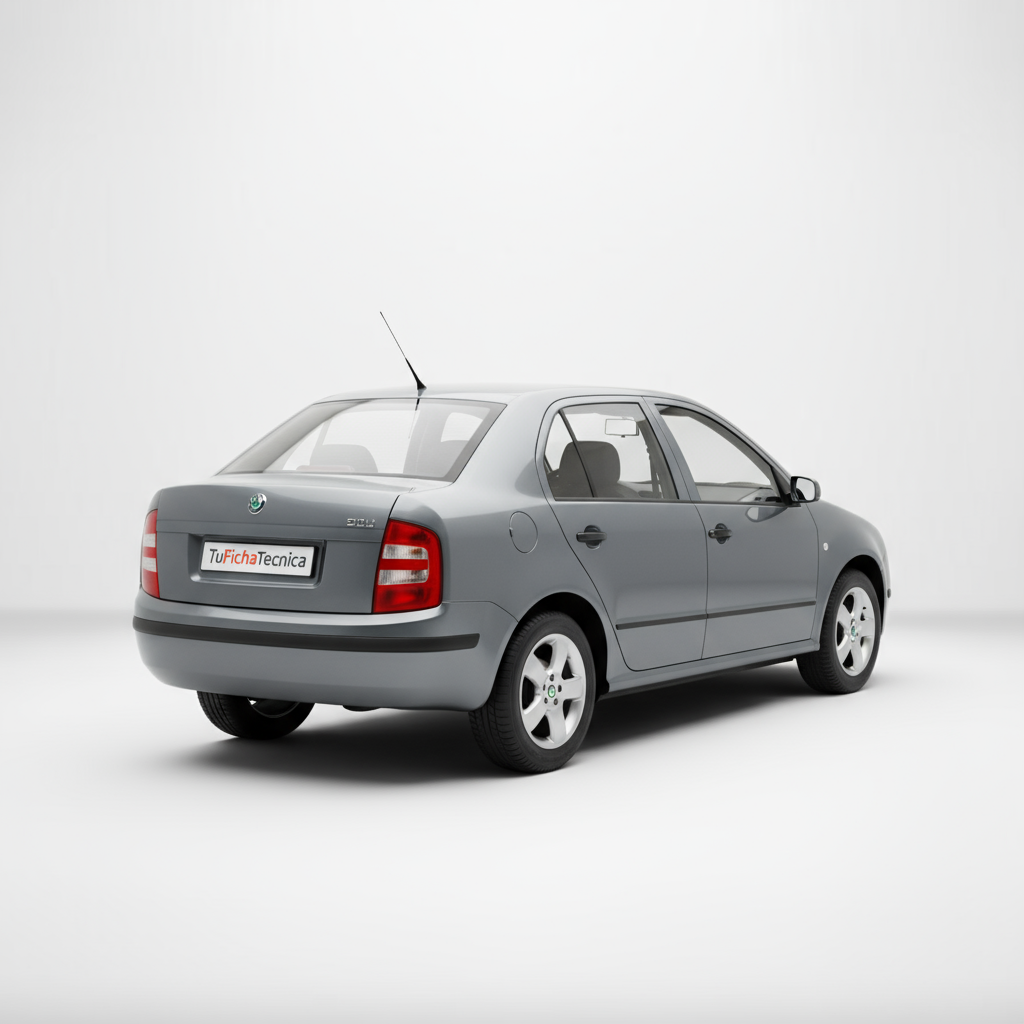
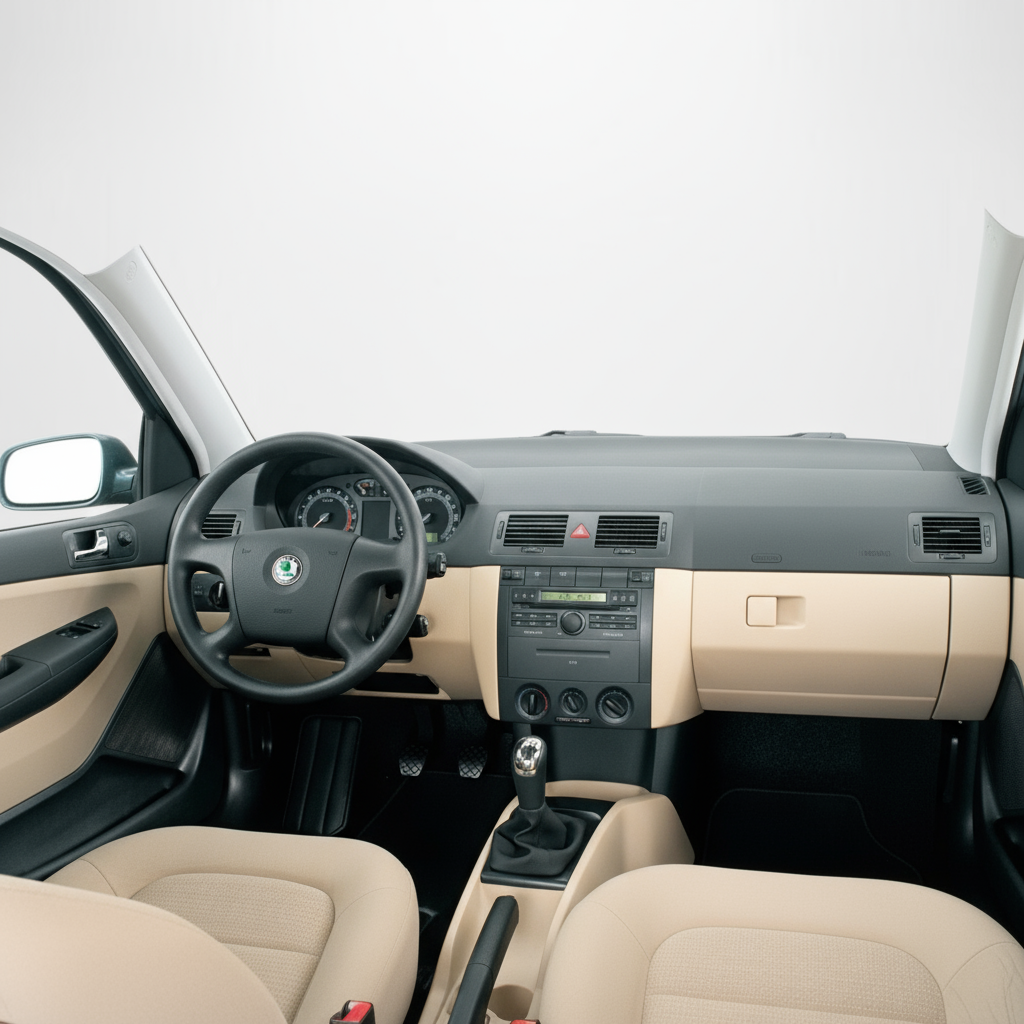
The design of the 2001 Skoda Fabia Sedan is a reflection of the brand's philosophy at the time: sobriety and functionality. Its lines are clean and understated, with a three-box silhouette that prioritizes cargo space. The front features generously sized headlights and a discreet grille, while the rear is characterized by a prominent trunk offering a capacity of 438 liters, a strong point for families. The interior, although simple in its materials, is well assembled and offers correct ergonomics, with the main controls within reach of the driver. It does not seek to dazzle, but to fulfill its purpose efficiently and durably.
Technology and features
In terms of technology, the 2001 Fabia Sedan 1.4 Comfort adheres to the essential and proven. Its 1.4-liter, 68 HP gasoline engine, with indirect injection, is a powerplant known for its reliability and low maintenance. The 5-speed manual transmission is smooth and precise, contributing to a pleasant driving experience. In terms of safety, it incorporates ventilated front disc brakes and rear drum brakes, a standard configuration for the time. We should not expect great technological flourishes, but robust and effective mechanical solutions that guarantee trouble-free operation.
Competition
At the time, the Skoda Fabia Sedan 1.4 Comfort faced competitors such as the Renault Clio Sedan, the Fiat Siena, or the SEAT Córdoba. Compared to them, the Fabia stood out for its overall balance, its interior spaciousness, and the reputation for reliability of the Volkswagen Group, to which Skoda belongs. It offered a practical and economical alternative for those looking for a compact sedan without sacrificing build quality.
Conclusion
The 2001 Skoda Fabia Sedan 1.4 Comfort is a car that, despite its age, remains an interesting option for those seeking a practical, economical, and reliable vehicle. Its functional design, proven engine, and generous trunk make it an ideal companion for daily use and family trips. It is not a car that will captivate with its sportiness or cutting-edge technology, but rather with its honesty and its ability to more than meet the expectations of efficient and trouble-free transportation. It is a testament to pragmatic engineering that prioritizes durability and utility.