
Especificaciones y análisis del Suzuki Samurai
Power
69HP
Torque
103Nm
Consumption
8.5l/100
Emissions
-g/km
0-100 km/h
-s
Top Speed
130km/h
Weight
955kg
Price
9,976€
Technical summary
Gasolina
Manual 5v
AWD
4 / 3 doors
- L
40 L
51 kW
Current
Technical specifications
Engine
Capacities
Detailed analysis of the Suzuki Samurai Gasolina T. lona Lujo · 69 CV (1998-2001)
General description
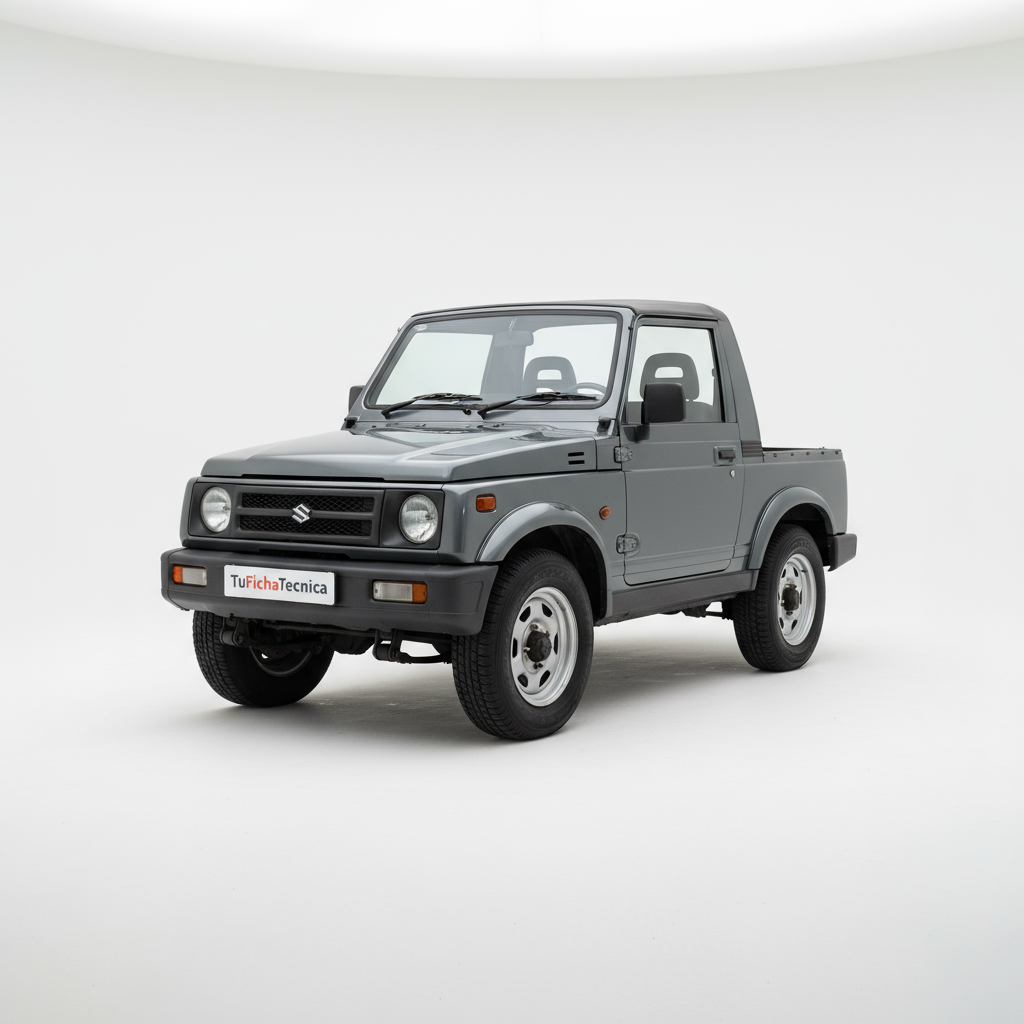
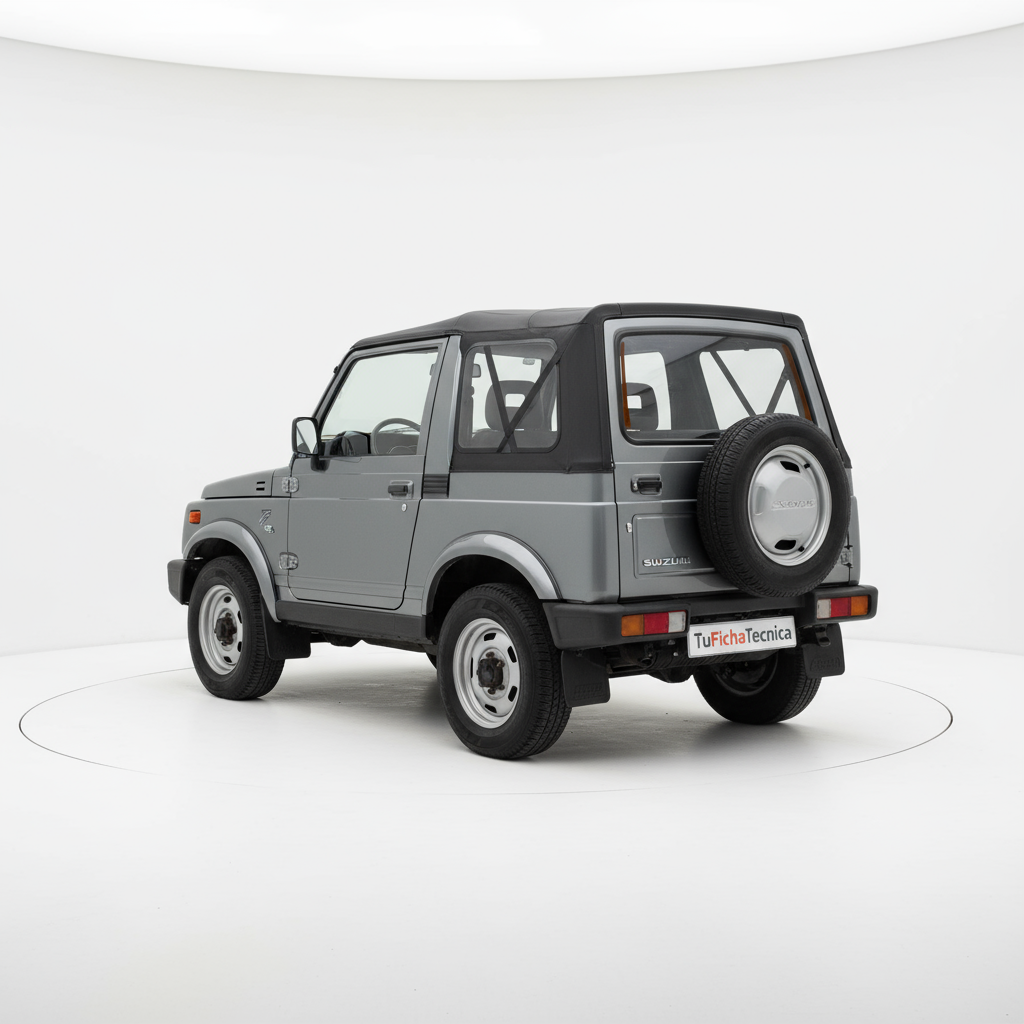
The 1998 Suzuki Samurai, in its canvas top and 'Lujo' (Luxury) trim, is a vehicle that evokes an era of adventure and simplicity. With its 1.3-liter, 69 hp gasoline engine, this compact off-roader presented itself as an accessible and robust option for those looking to escape the asphalt. Its unpretentious design and ability to tackle difficult terrain made it an icon, a faithful companion for exploring uncharted paths and enjoying outdoor freedom.
Driving experience
Driving a Suzuki Samurai is a visceral and authentic experience. The recirculating ball steering, though precise, requires conscious effort, connecting you directly with the road or trail. The rigid axle suspension on both axles, without stabilizers, transmits every imperfection of the terrain, but in return offers unparalleled robustness and surprising off-road capability. The engine, though modest in power, delivers its torque at low revolutions, allowing it to overcome obstacles with determination. A top speed of 130 km/h and an unspecified 0 to 100 km/h acceleration suggest that its natural habitat is not highways, but secondary roads and dirt tracks. The canvas top adds a touch of adventure, allowing you to enjoy the wind and sun, but also exposing occupants to the elements and engine noise. It's a car that makes you feel alive, that invites you to adventure and rewards you with a genuine connection to the environment.
Design and aesthetics
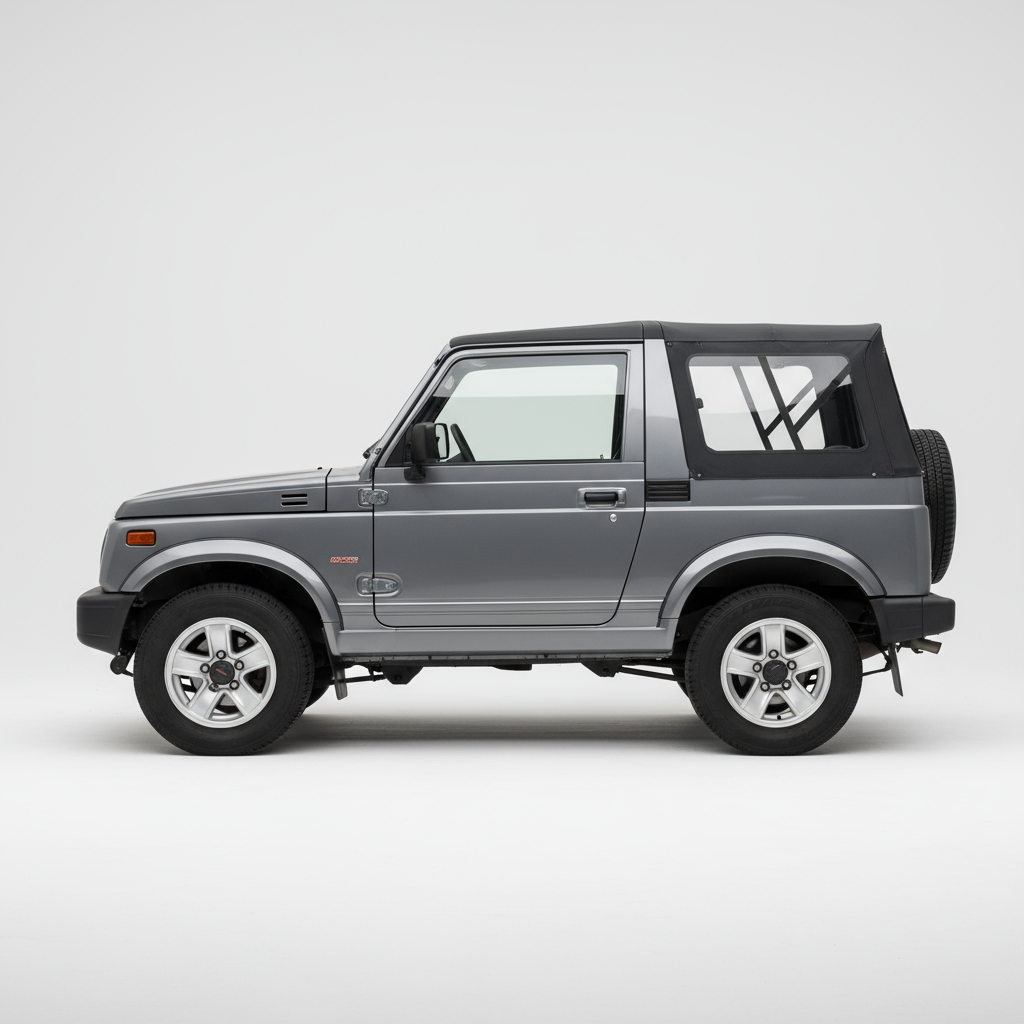
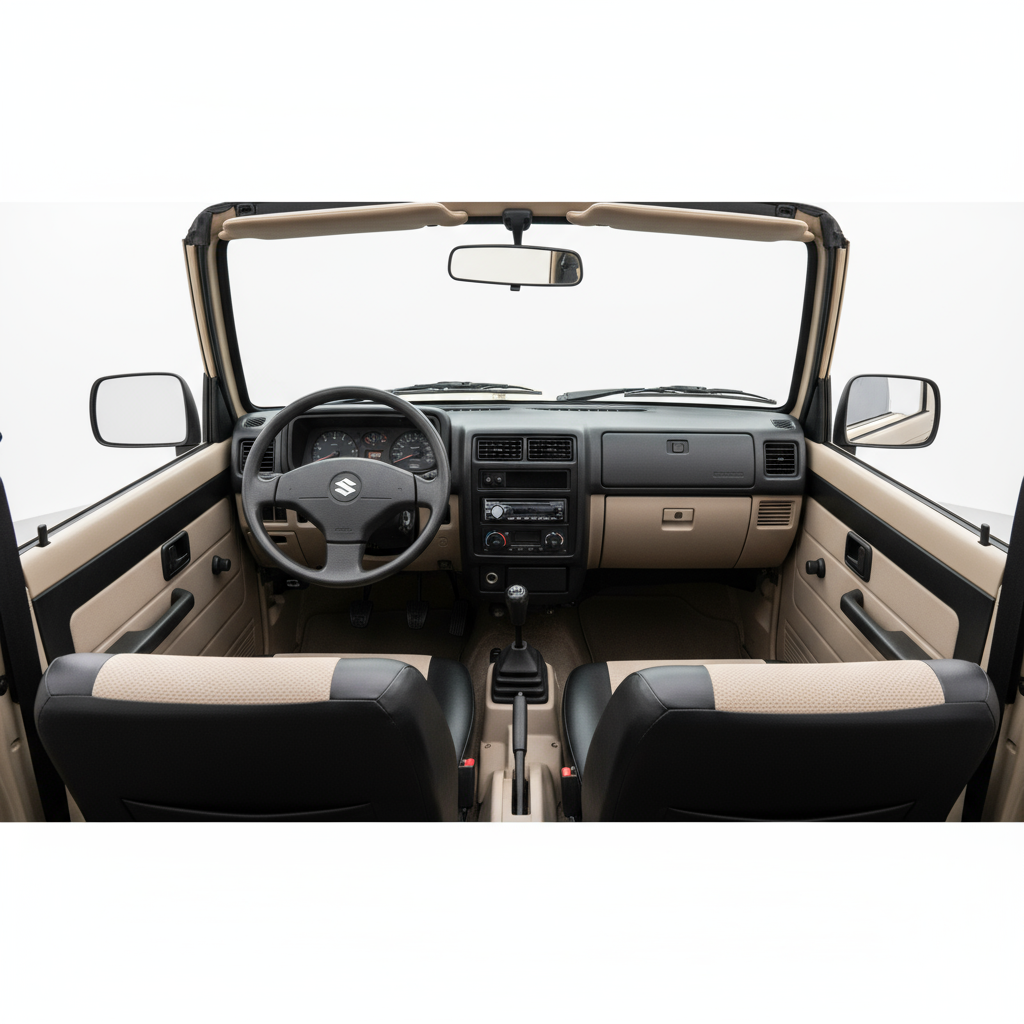
The design of the Suzuki Samurai is purely functional and timeless. Its square and compact lines, with a length of 3470 mm and a width of 1530 mm, make it agile and easy to maneuver in tight spaces. The canvas top version, with its three doors and four seats, emphasizes its playful and adventurous character. The 205/70 R15 Q tires, mounted on 6x15 wheels, give it a robust presence and good traction. The interior design is spartan, focused on durability and ease of cleaning, with essential elements within reach. It does not seek sophistication, but practicality and resistance, reflecting its purpose as a work and leisure vehicle.
Technology and features
The technology of the 1998 Suzuki Samurai is simple and proven. Its 1.3-liter gasoline engine, with indirect injection and 69 hp, is an aluminum block with an aluminum cylinder head, designed to be reliable and easy to maintain. The five-speed manual transmission, combined with all-wheel drive (AWD), gives it excellent off-road capability. The front disc brakes and rear drum brakes, along with the recirculating ball steering, are robust and effective mechanical components for its weight and performance. There are no electronic luxuries or driving aids, making it a car where driver skill is paramount. Its technology focuses on durability and functionality in demanding environments.
Competition
In its time, the Suzuki Samurai competed with other compact and economical off-road vehicles, although few offered its combination of lightness, agility, and off-road capability. Rivals like the Lada Niva shared a similar philosophy of robustness and simplicity, although the Samurai stood out for its greater reliability and a more youthful image. Other vehicles like the Daihatsu Feroza or the Jeep Wrangler (in their more basic versions) were positioned in a slightly higher segment in terms of price and performance, but the Samurai maintained its niche as the most accessible and fun off-roader for recreational use and light work in the countryside.
Conclusion
The 1998 Suzuki Samurai is much more than just a car; it's a statement of intent. It's a vehicle that invites you to disconnect from routine and connect with nature. Its mechanical simplicity, unwavering robustness, and off-road capability make it a timeless classic, appreciated by those who value authenticity and adventure above comfort and sophistication. Although it's not the fastest or most refined car, its charm lies precisely in its untamed character and the freedom it offers. It's a car to enjoy, to explore, and to create unforgettable memories.