
Especificaciones y análisis del Tesla Model S
Power
333HP
Torque
-Nm
Consumption
18.5l/100
Emissions
-g/km
0-100 km/h
5.8s
Top Speed
225km/h
Weight
2102kg
Price
87,400€
Technical summary
Eléctrico
Automático 1v
RWD
5 / 5 doors
745 L
- L
- kW
Current
Technical specifications
Engine
Capacities
Detailed analysis of the Tesla Model S 75 · 333 CV (2016-2017)
General description
The 2016 Tesla Model S 75 burst onto the market as an electric sedan that challenged the established order. With its elegant design and the promise of an emission-free future, this vehicle not only transported but also invited a new way of understanding mobility. Its arrival marked a before and after, positioning Tesla as a benchmark in the automotive industry.
Driving experience
Driving the Model S 75 is an experience that combines the smoothness of an electric car with instant response. The acceleration from 0 to 100 km/h in 5.8 seconds is more than enough to feel a vibrant emotion, while the silence of the electric motor envelops the cabin in an atmosphere of calm. Precise steering and well-tuned suspension, with a deformable parallelogram on both axles, offer a balance between comfort and dynamism, making every journey pleasant and stimulating. The absence of vibrations and the low center of gravity, thanks to the central battery, contribute to a sense of poise and safety on the road.
Design and aesthetics
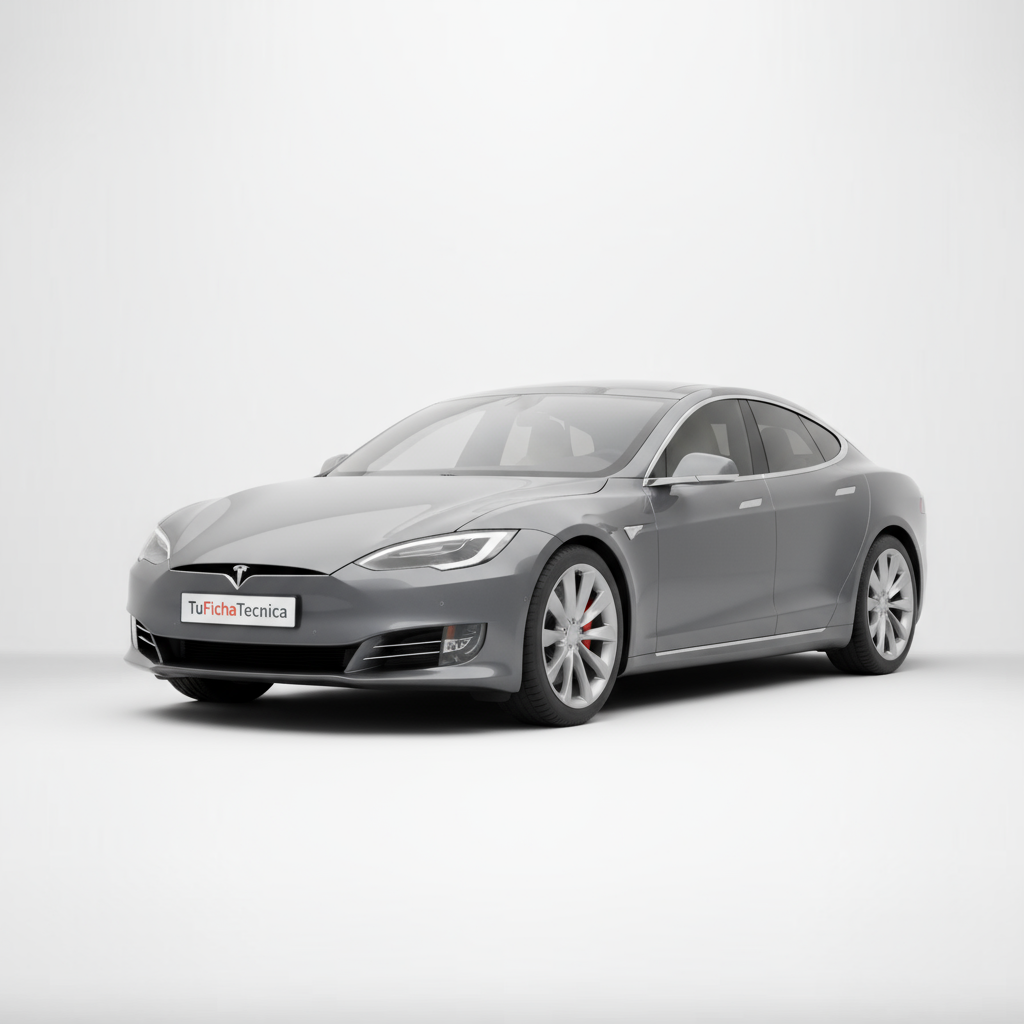
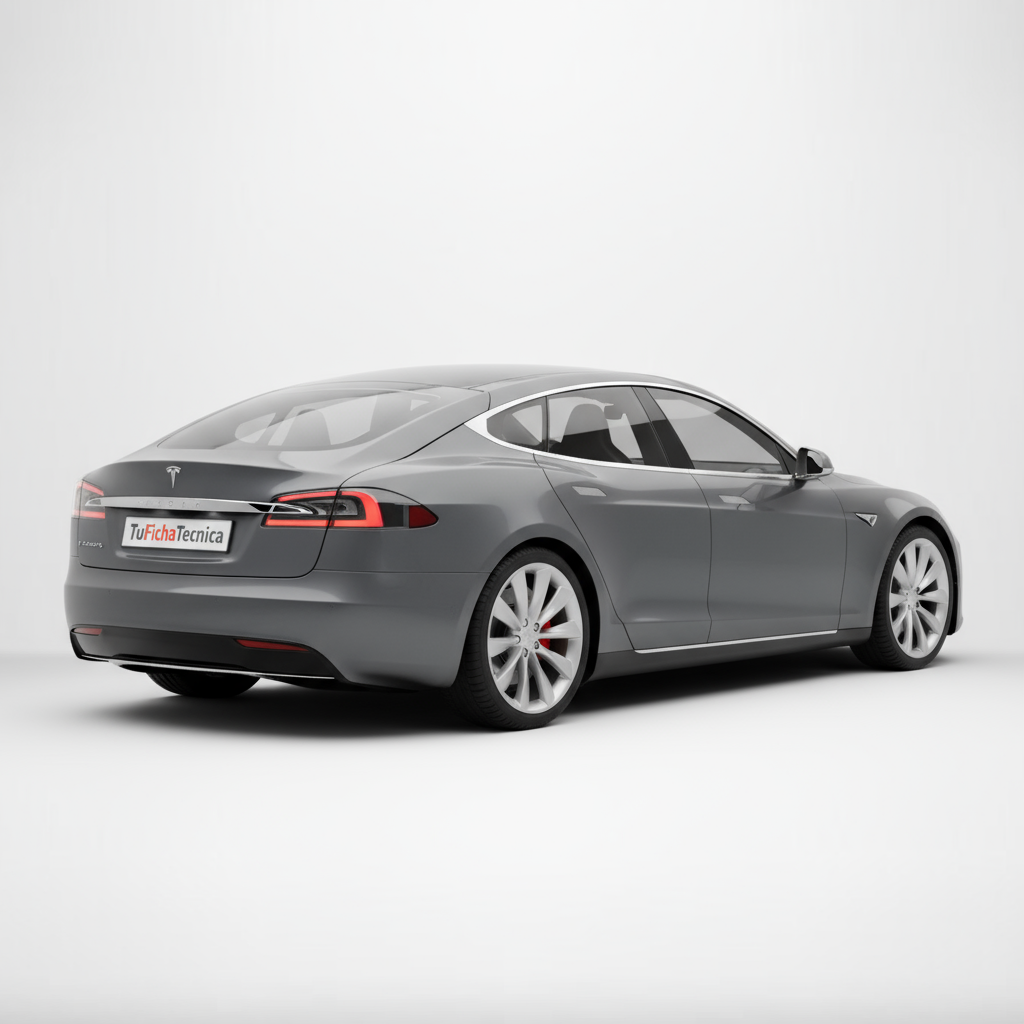
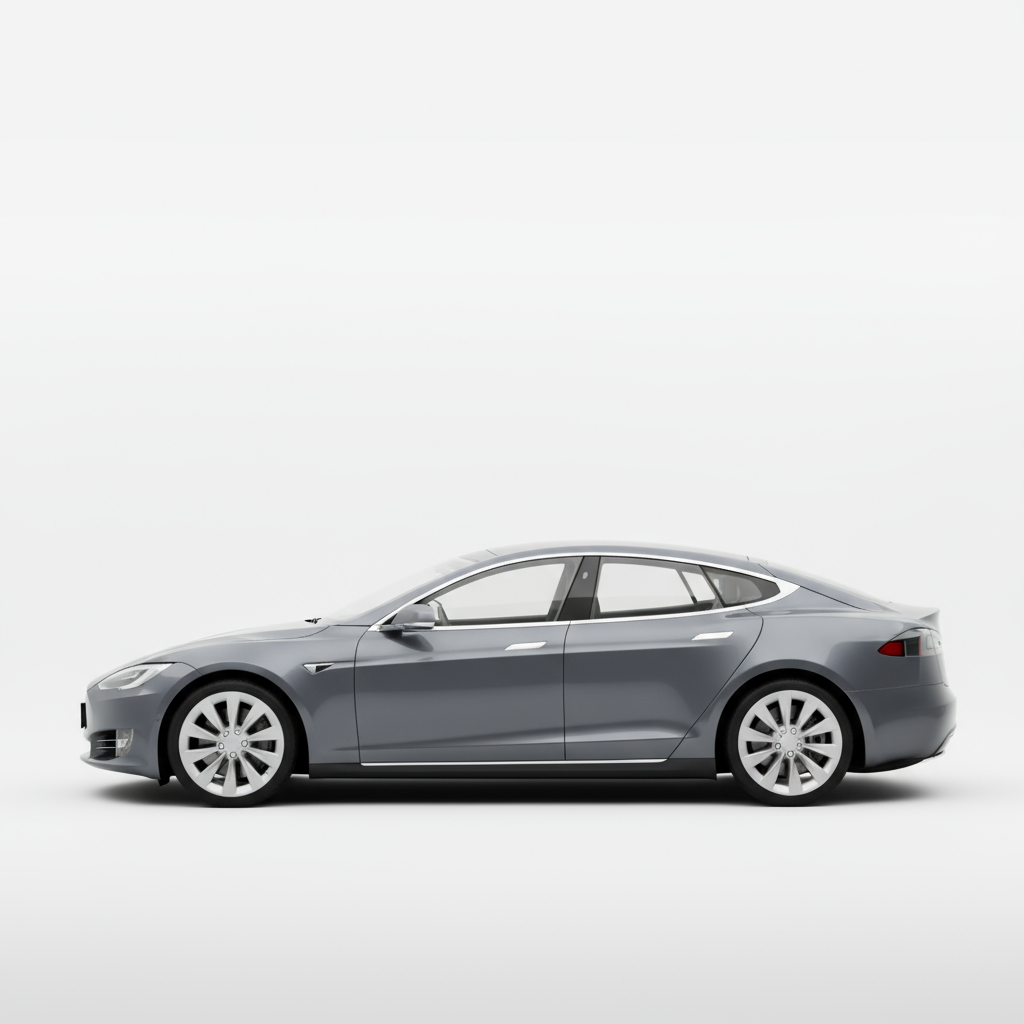
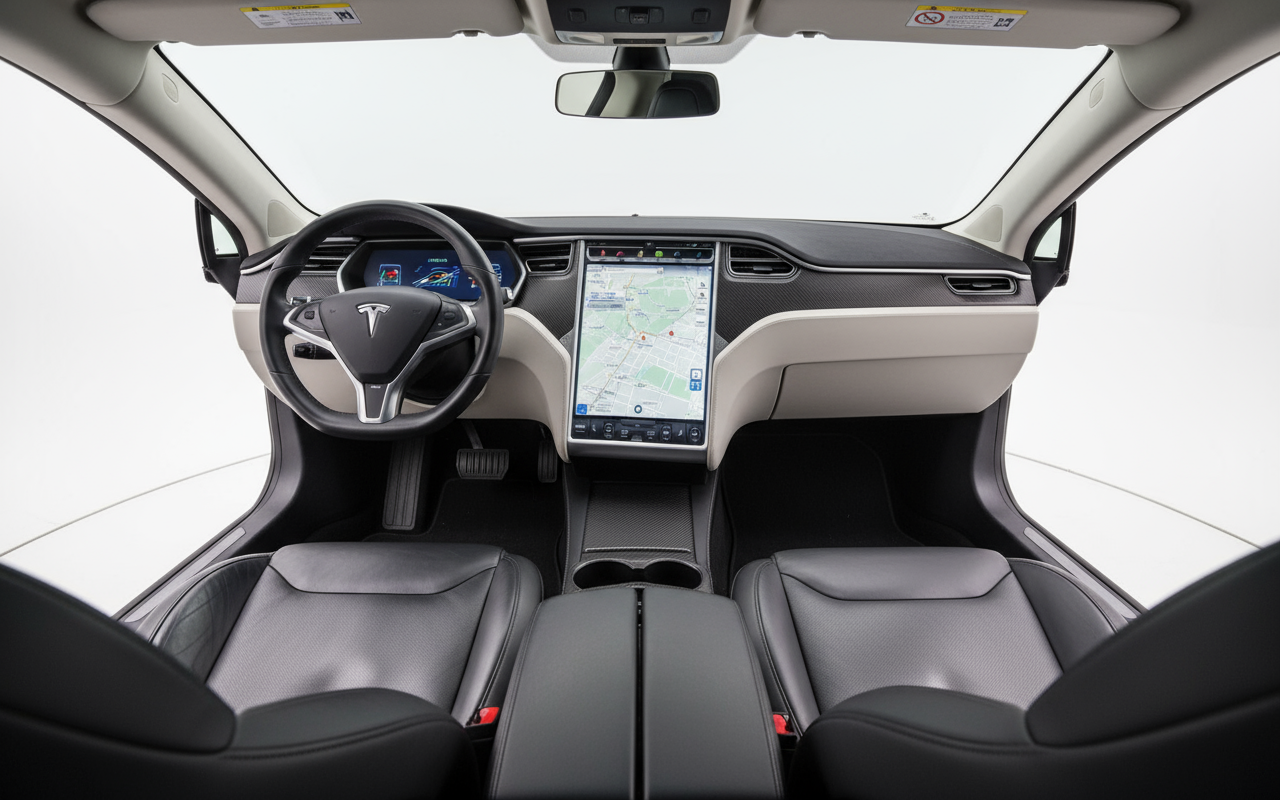
The design of the Tesla Model S 75 is a statement of intent. Its fluid and aerodynamic lines, with a length of almost five meters (4979 mm) and a width of 1964 mm, give it an imposing and sophisticated presence. The absence of a traditional grille at the front, characteristic of electric vehicles, gives it a clean and futuristic aesthetic. The five doors, including a large tailgate, not only enhance its practicality but also integrate harmoniously into its coupé silhouette. The interior, although not detailed here, is known for its minimalism and the prominence of a large central screen that concentrates most functions.
Technology and features
The Model S 75 is a technological showcase. Its electric heart, powered by a 75 kWh usable capacity battery centrally located, offers considerable range and efficient energy management. Rear-wheel drive (RWD) and a single-speed automatic transmission ensure smooth and direct power delivery. Although fast charging times are not specified, a full charge on alternating current in 30 hours suggests domestic charging capability. Ventilated disc brakes, 355 mm front and 365 mm rear, along with speed-sensitive electric power steering, ensure optimal control and top-level active safety. The DGT's '0 emissions' label underscores its commitment to the environment.
Competition
In 2016, the Tesla Model S 75 faced luxury rivals with internal combustion engines, such as the Mercedes-Benz E-Class, the BMW 5 Series, or the Audi A6, which offered established refinement and performance. However, in the nascent segment of high-end electric vehicles, its direct competitors were scarce, giving it an almost unique position. Its proposition of range, technology, and performance clearly differentiated it, attracting an audience looking for more than just a simple means of transport.
Conclusion
The 2016 Tesla Model S 75 was a pioneer, a car that not only demonstrated the viability of luxury electric vehicles but also redefined expectations of what an automobile could be. Its combination of avant-garde design, exciting performance, and innovative technology made it a benchmark. Despite the years, it remains a testament to Tesla's vision and a vehicle that, for many, represents the future of automotive.