

Especificaciones y análisis del THINK City
Power
46HP
Torque
190Nm
Consumption
-l/100
Emissions
-g/km
0-100 km/h
-s
Top Speed
110km/h
Weight
-kg
Price
32,849€
Technical summary
Eléctrico
Automático 1v
FWD
4 / 3 doors
- L
- L
34 kW
Current
Technical specifications
Engine
Capacities
Detailed analysis of the THINK City 4 plazas · 46 CV (2010-2011)
General description
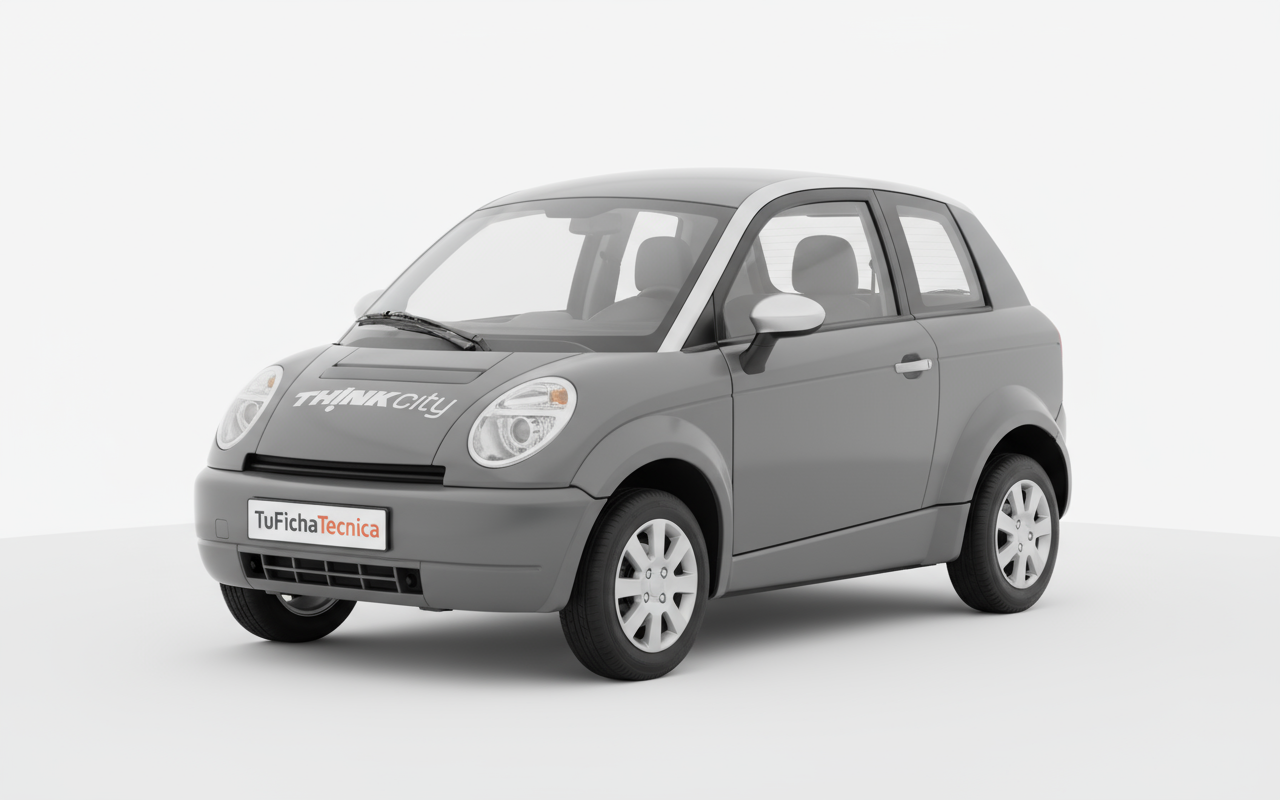
The 2009 THINK City is a vehicle that, at first glance, transports us to an era where electric mobility began to dream of a greener future. This small 3-door, 4-seater urban car, with its 46 HP electric motor, was presented as a bold and different solution for the city, promising a unique driving experience and a minimal ecological footprint. Its price of €32,849 in 2011, with an official discount of €8,215, positioned it as an interesting alternative for those pioneers willing to embrace electrification.
Driving experience
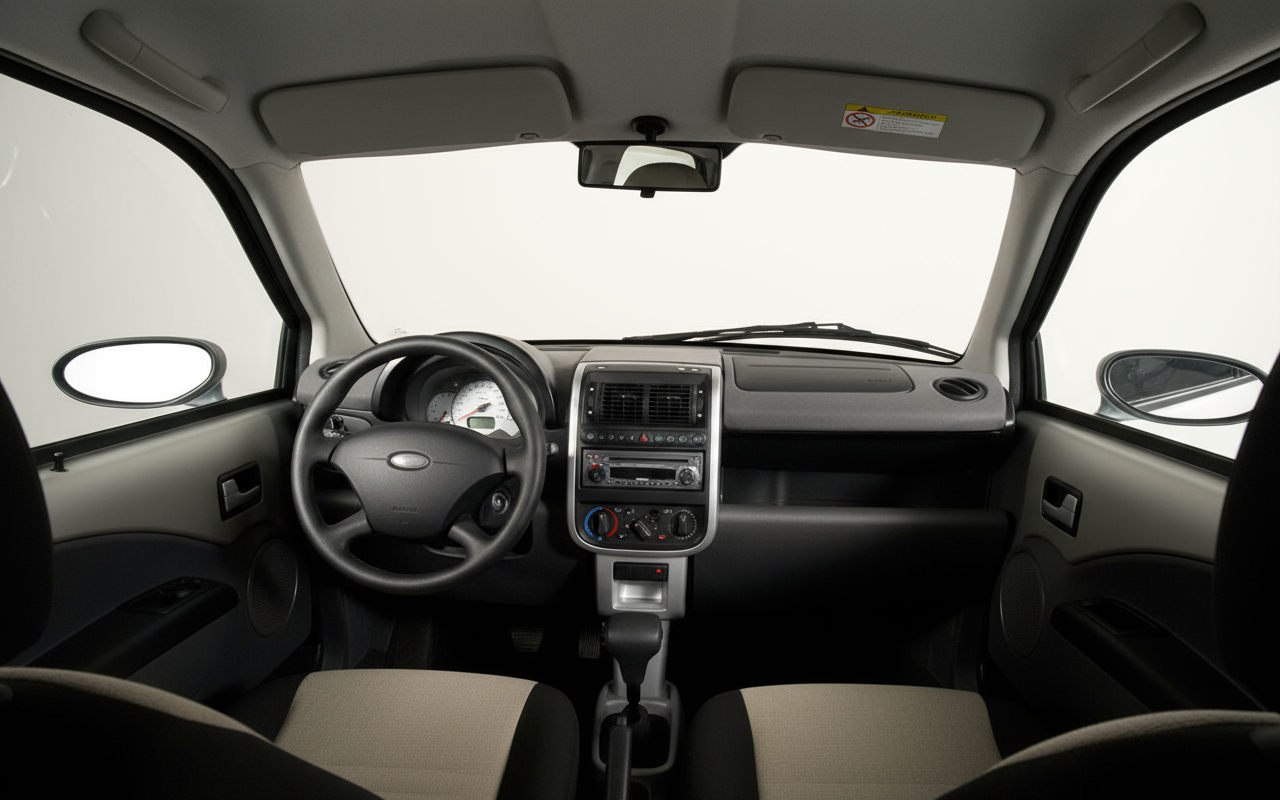
Behind the wheel of the THINK City, the sensation is one of agility and lightness, perfect for the urban environment. Its 46 HP, though modest, feel sufficient thanks to the instant 190 Nm of torque offered by the electric motor. The single-speed automatic transmission simplifies driving, making every journey smooth and uninterrupted. The top speed of 110 km/h is adequate for the city and some interurban excursions, but don't expect great acceleration. The electro-hydraulic steering, although not speed-sensitive, provides comfortable assistance. The McPherson front suspension and independent trailing arm rear suspension, along with 165/65 R14 tires, seek a balance between comfort and stability, although its main focus is urban practicality. The 23 kWh usable battery, centrally located, contributes to good weight distribution and a sense of poise, despite its compact dimensions. Full charging in 10 hours with alternating current makes it ideal for overnight charging at home.
Design and aesthetics
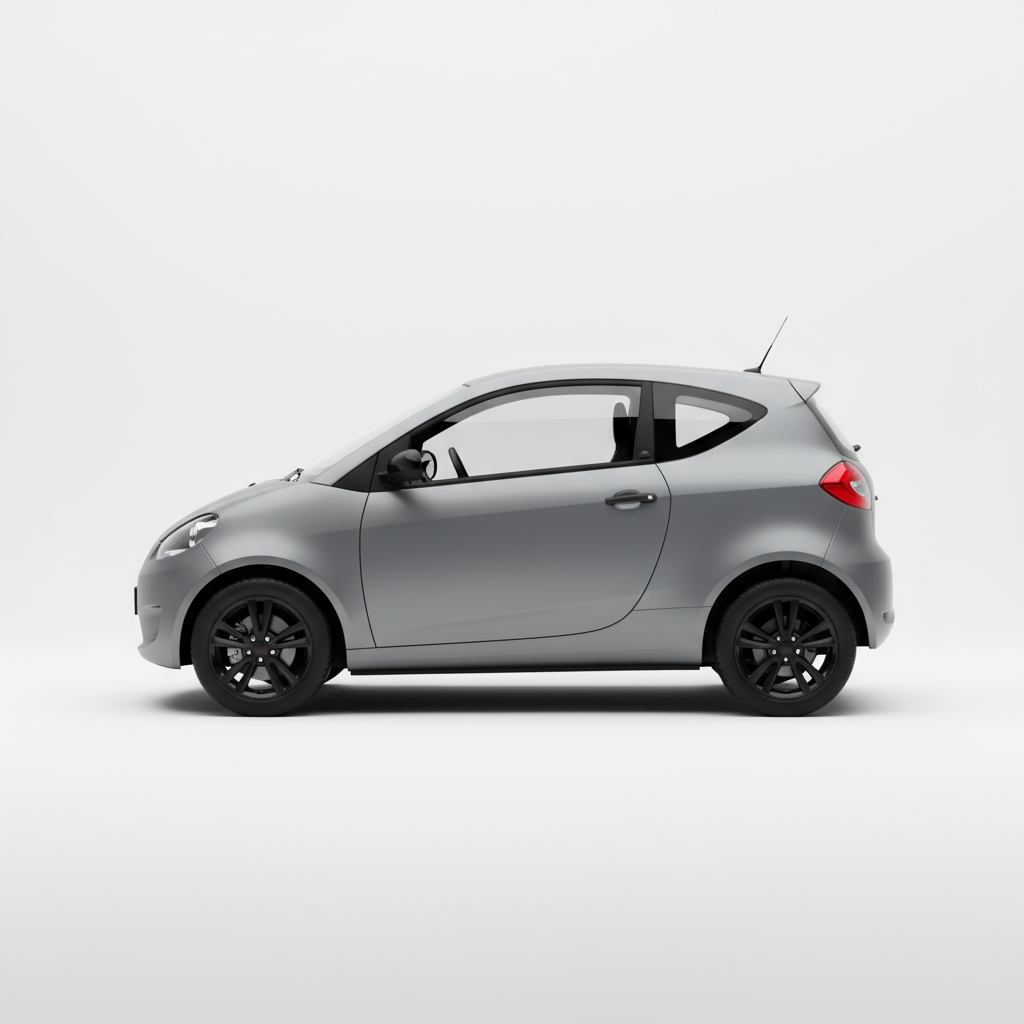
The design of the THINK City is unmistakably functional and compact. Its 3,143 mm length, 1,658 mm width, and 1,596 mm height make it an extremely maneuverable car in traffic and easy to park. The aesthetic is simple, with rounded lines and a silhouette that prioritizes interior space and visibility. The 3 doors facilitate access to the 4 seats, although the rear ones are more suitable for short trips or children. The 9-meter turning circle is an undeniable advantage on narrow city streets. Although it is not a car that seeks to dazzle with its beauty, its design conveys an image of a practical and ecological vehicle, ahead of its time in many aspects.
Technology and features
The technology of the THINK City focuses on its electric propulsion. It is equipped with a 34 kW (46 HP) electric motor and a sodium-nickel ion battery with a usable capacity of 23 kWh, which gives it adequate range for daily city use. The single-speed automatic transmission simplifies the driving experience. Although it lacks the sophistication of modern electric vehicles, such as DC fast charging or a large WLTP range, its technological proposal was solid for its time. Electro-hydraulic steering and front disc brakes and rear drum brakes are proven solutions that ensure reliable operation. Its '0 emissions' label is its greatest technological distinction, positioning it as a pioneer in sustainable mobility.
Competition
At the time, the THINK City faced a nascent market for electric vehicles. Its main rivals were other small urban electric cars that were beginning to appear, such as the Mitsubishi i-MiEV or the Peugeot iOn, which shared a similar philosophy of sustainable urban mobility. It also competed indirectly with internal combustion vehicles of similar size, such as the Smart Fortwo or the Toyota iQ, offering a more ecological alternative with lower daily running costs, albeit with a higher purchase price. Its 4-seater proposal differentiated it from some of its smaller competitors.
Conclusion
The 2009 THINK City is a car that represents an important chapter in the history of electric mobility. Although its specifications may seem modest today, at the time it was a brave and visionary vehicle, designed to offer an efficient and environmentally friendly urban transport solution. Its functional design, its agility in the city, and its electric propulsion make it a car with a particular charm. It is a reminder of how manufacturers began to explore the potential of electric vehicles, laying the groundwork for the revolution we are experiencing today. For those looking for a car with history and a purely urban focus, the THINK City remains an interesting option, a great little pioneer.