
Especificaciones y análisis del Toyota Hilux
Power
171HP
Torque
343Nm
Consumption
7.7l/100
Emissions
203g/km
0-100 km/h
12.1s
Top Speed
170km/h
Weight
2045kg
Price
42,712€
Technical summary
Gasóleo
Manual 5v
AWD
5 / 4 doors
- L
80 L
126 kW
Current
Technical specifications
Engine
Capacities
Detailed analysis of the Toyota Hilux Cabina Doble VXL 171 CV (2014-2016)
General description
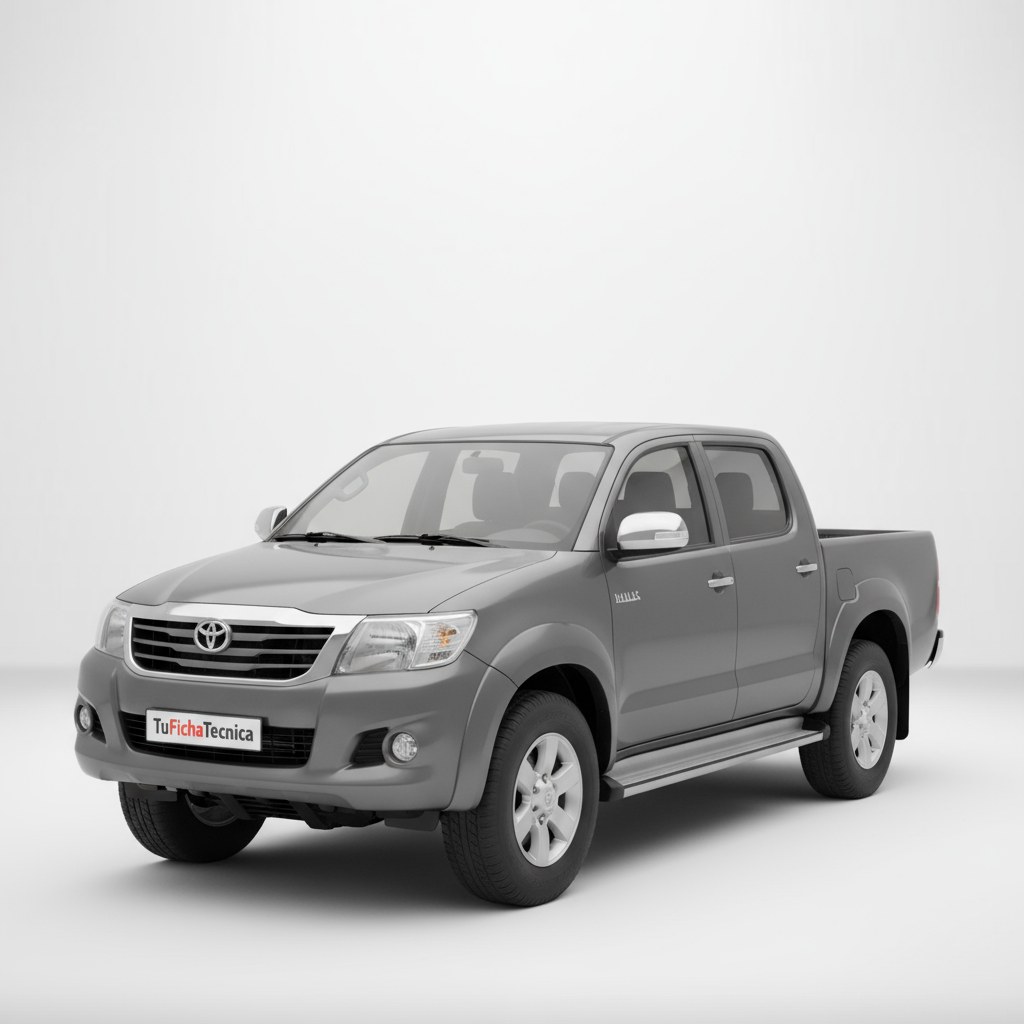
The 2012 Toyota Hilux Double Cab, in its 171 HP VXL version, is a vehicle that embodies robustness and reliability. Designed to face the most demanding challenges, this pick-up not only fulfills its function as a work tool but also offers a driving experience that, although rough, is undeniably rewarding for those seeking a tireless companion. Its imposing presence and its ability to overcome obstacles make it a legend in the world of off-road vehicles.
Driving experience
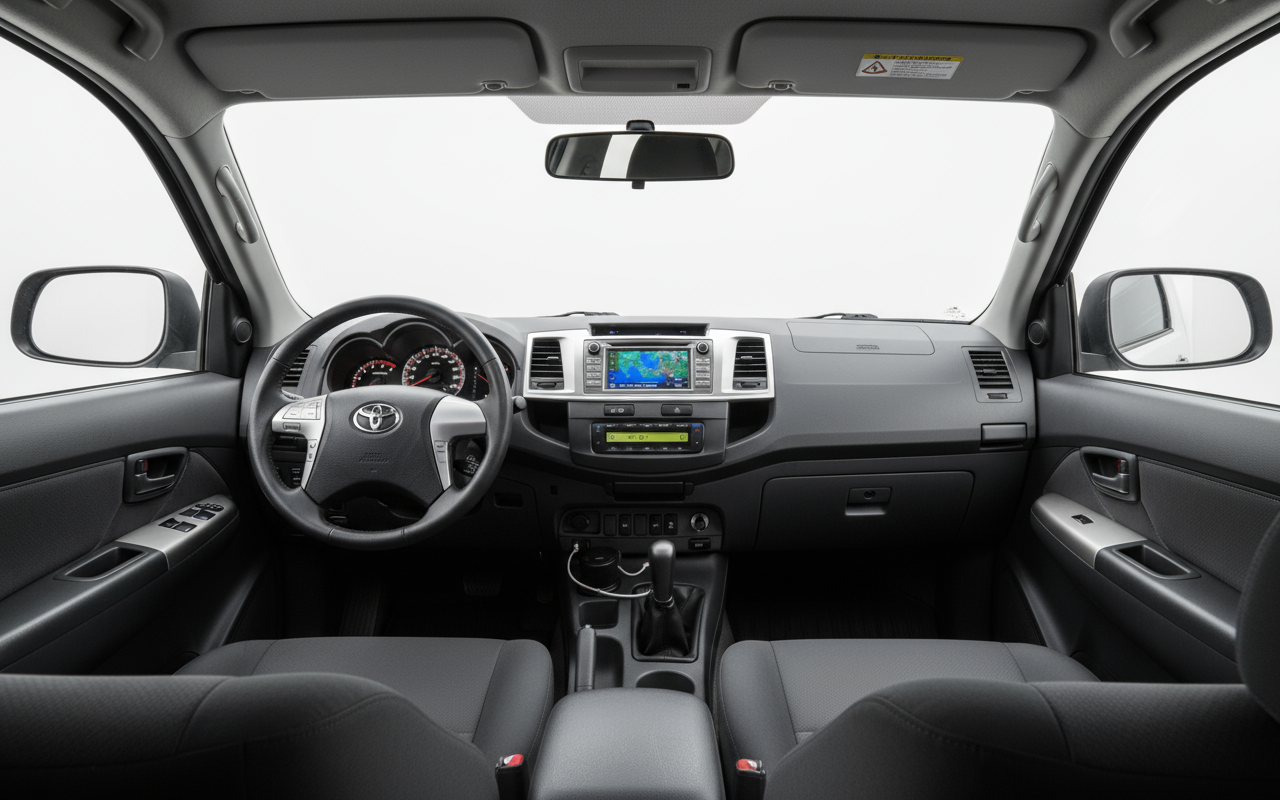
Behind the wheel of the Hilux, the sensation is one of dominance. Its 3.0-liter, 171 HP diesel engine, with a torque of 343 Nm available from 1400 rpm, offers a forceful response that is felt in every acceleration. The 5-speed manual gearbox, although not the most refined, transmits a direct connection to the mechanics. The suspension, designed for load and difficult terrain, may feel firm on asphalt, but it is precisely this firmness that inspires confidence off-road. The hydraulic steering, although not the most precise, fulfills its purpose in a vehicle of these characteristics. It is a car that makes you feel capable of anything, a true companion for adventures and hard work.
Design and aesthetics
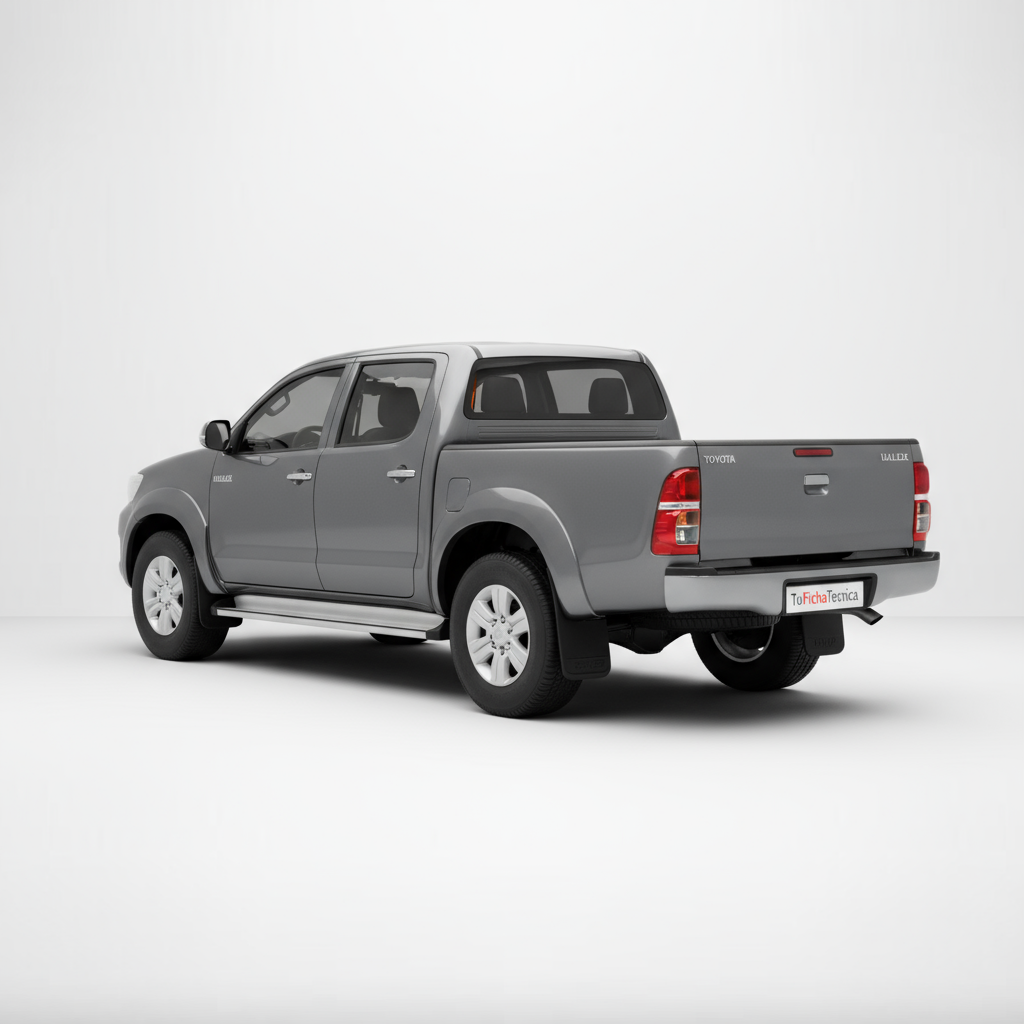
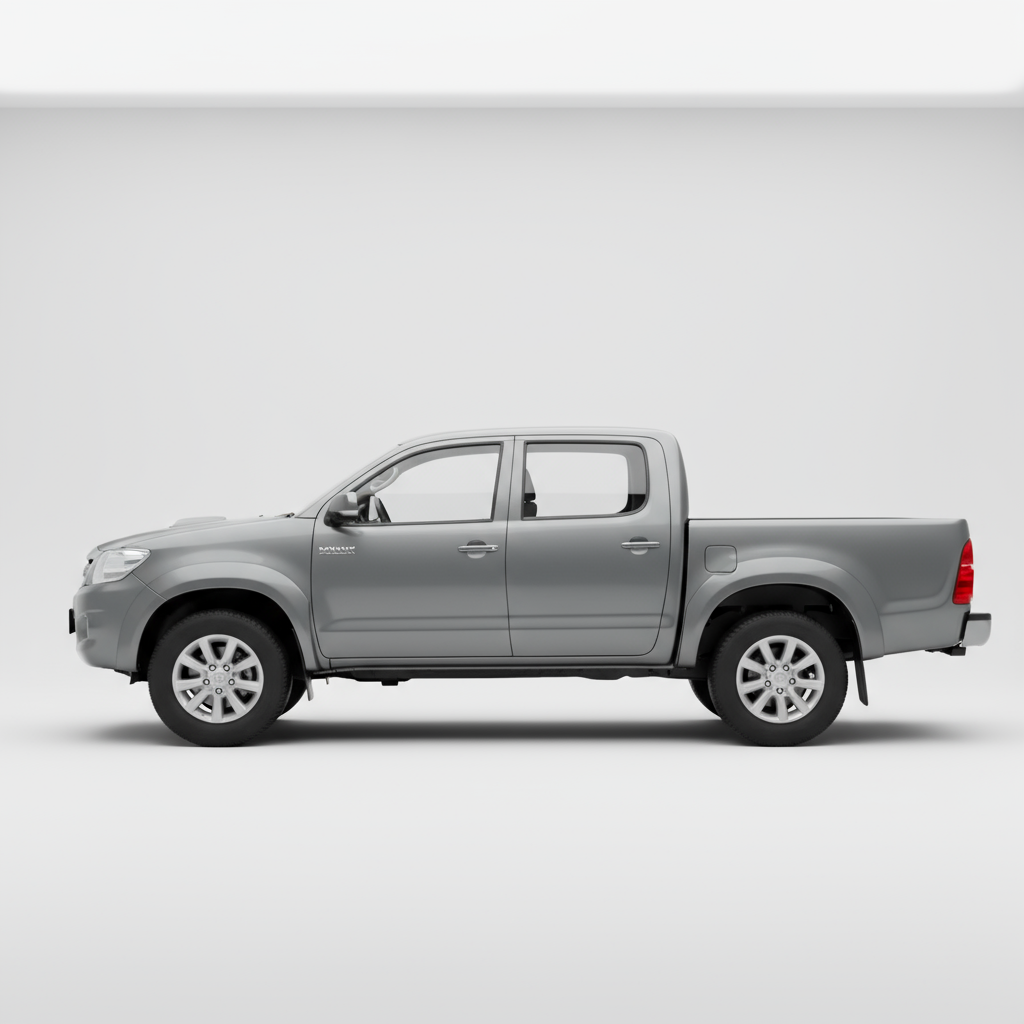
The design of the 2012 Toyota Hilux Double Cab is functional and robust, reflecting its purpose. Its lines are muscular and its front imposing, with a grille that denotes strength. The double cab offers space for five occupants, combining the utility of a cargo vehicle with the versatility of a family car. Although it does not seek aesthetic sophistication, its design is timeless and conveys a sense of unbreakable durability. The 17-inch wheels and high-profile tires reinforce its off-road character, while the exterior details, although sober, contribute to its image as a vehicle prepared for any challenge.
Technology and features
In the 2012 Hilux, technology focuses on durability and functionality. Its common rail direct injection diesel engine, with variable geometry turbo and intercooler, is an example of proven and efficient engineering. All-wheel drive (AWD) is fundamental to its off-road capability, allowing it to overcome complicated terrain with ease. Although it does not have the latest innovations in infotainment or driving aids, its technology focuses on the essentials: a robust chassis, effective suspension (deformable parallelogram front and rigid axle rear) and a reliable braking system (ventilated discs front and drums rear). It is technology designed to last and perform flawlessly in the most adverse conditions.
Competition
The Toyota Hilux competes in a very demanding segment, facing rivals such as the Ford Ranger, the Mitsubishi L200, and the Nissan Navara. Each of them offers its own strengths, but the Hilux stands out for its legendary reliability and its ability to maintain a high resale value. While some rivals may offer greater on-road comfort or more advanced technological equipment, the Hilux remains true to its essence as a tireless work vehicle and pure off-roader, a preferred choice for professionals and adventurers looking for a companion they can blindly trust.
Conclusion
The 2012 Toyota Hilux Double Cab VXL is more than just a vehicle; it is a statement of principles. It represents durability, capability, and confidence at its best. Although its combined consumption of 7.7 l/100km and its emissions of 203 g/km of CO2 place it in a category of moderate efficiency by current standards, its purpose and its performance in extreme conditions justify these figures. It is a car for those who value robustness above all else, who need a vehicle that will not fail them, no matter the challenge. It is a legacy of Japanese engineering that continues to prove its worth year after year.