
Especificaciones y análisis del Toyota iQ
Power
98HP
Torque
123Nm
Consumption
4.8l/100
Emissions
113g/km
0-100 km/h
11.8s
Top Speed
170km/h
Weight
1020kg
Price
14,720€
Technical summary
Gasolina
Manual 6v
FWD
4 / 3 doors
26 L
32 L
72 kW
Current
Technical specifications
Engine
Capacities
Detailed analysis of the Toyota iQ2 1.33 VVT-i Dual · 98 CV (2010)
General description
The 2009 Toyota iQ, in its 1.33 VVT-i Dual version, presents itself as a bold and compact proposition, challenging the conventions of urban vehicles. With its mere 2,985 mm in length, this small Japanese giant seeks to offer an intelligent and efficient mobility solution for the asphalt jungle, without sacrificing a touch of distinction and functionality. Its innovative design and 98 HP gasoline engine promise an agile and surprising driving experience in such a reduced format.
Driving experience
Behind the wheel of the Toyota iQ, the first sensation is one of astonishment at its agility. The 98 HP 1.33 VVT-i engine, combined with a 6-speed manual gearbox, offers a lively response that allows it to move easily in urban traffic and overtake with confidence on the road. The steering is precise and the turning circle of only 7.8 meters makes it a parking master. Despite its size, the McPherson front suspension and the torsion beam rear suspension, along with ventilated front disc brakes and rear discs, provide unexpected stability and ride comfort, making every journey a pleasant and safe experience. Acceleration from 0 to 100 km/h in 11.8 seconds and a top speed of 170 km/h show that this little one is not intimidated by anything.
Design and aesthetics
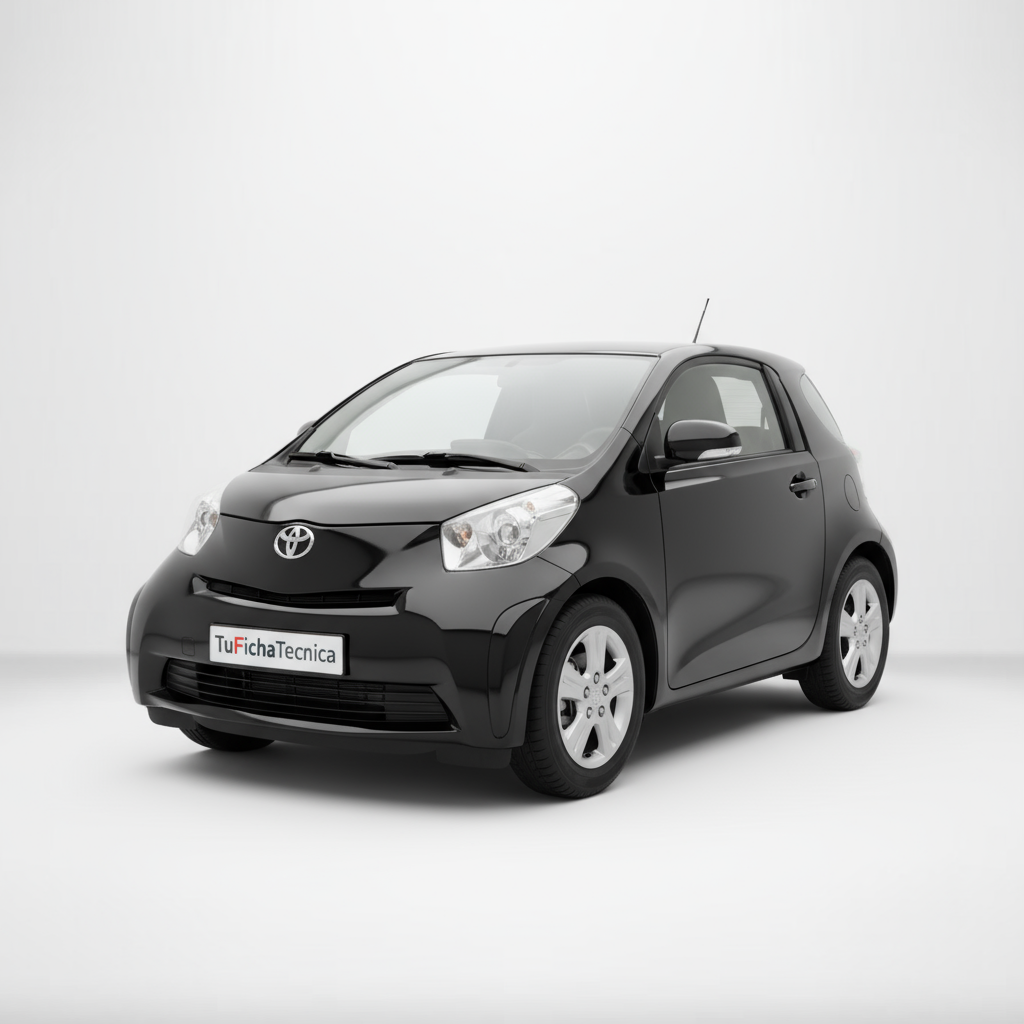
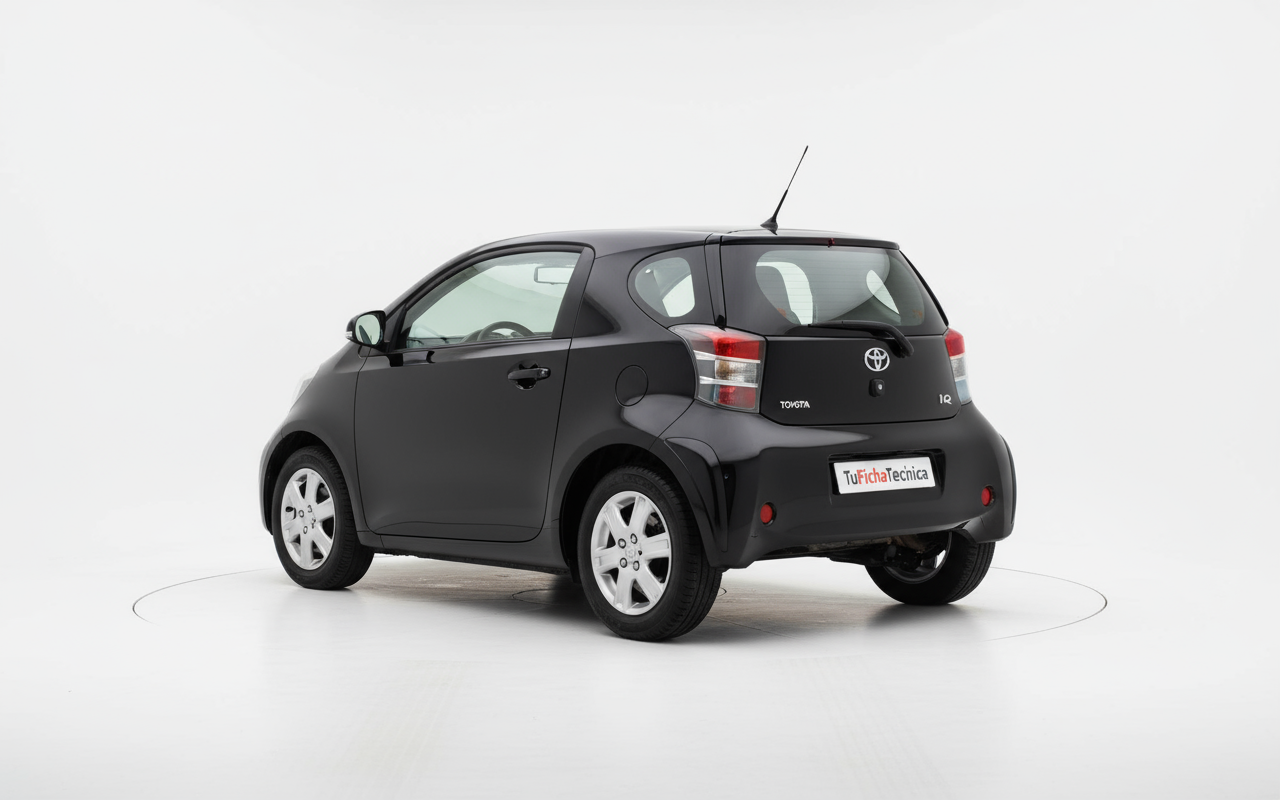
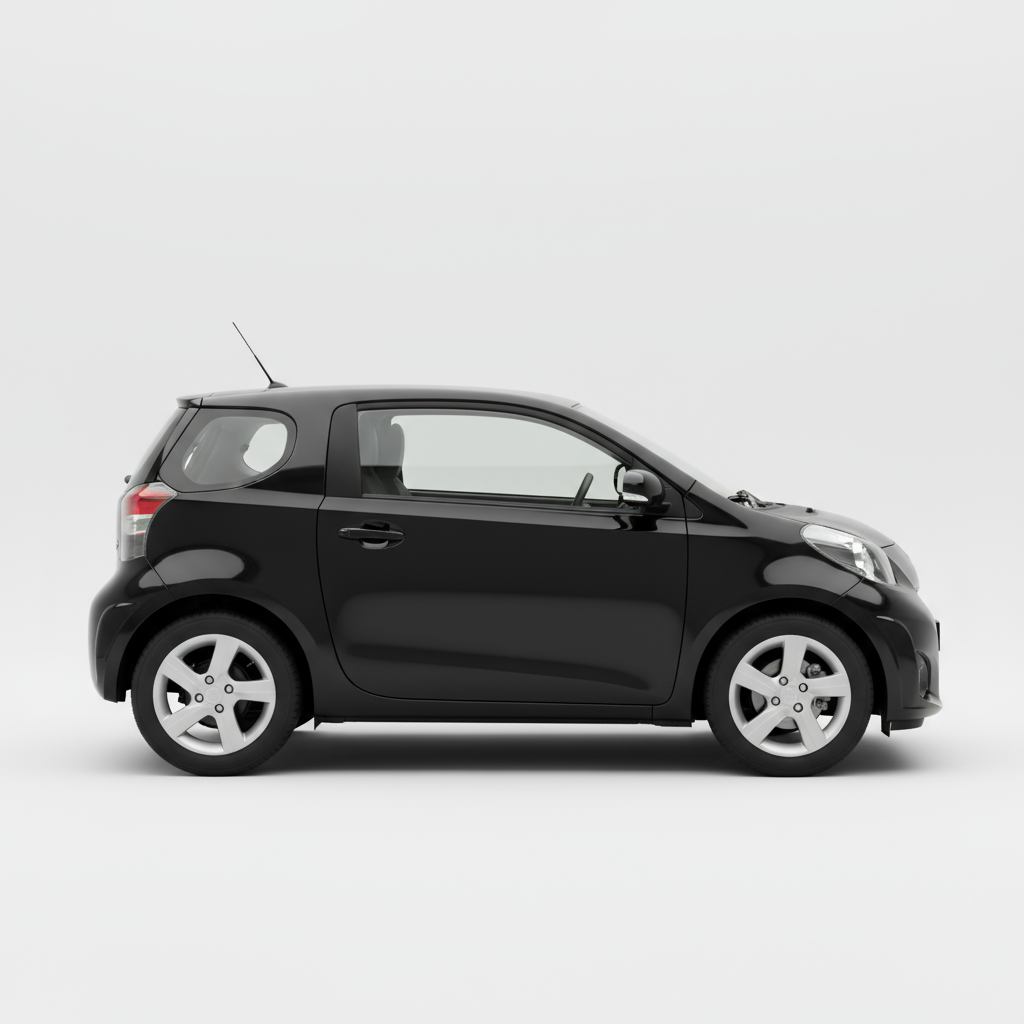
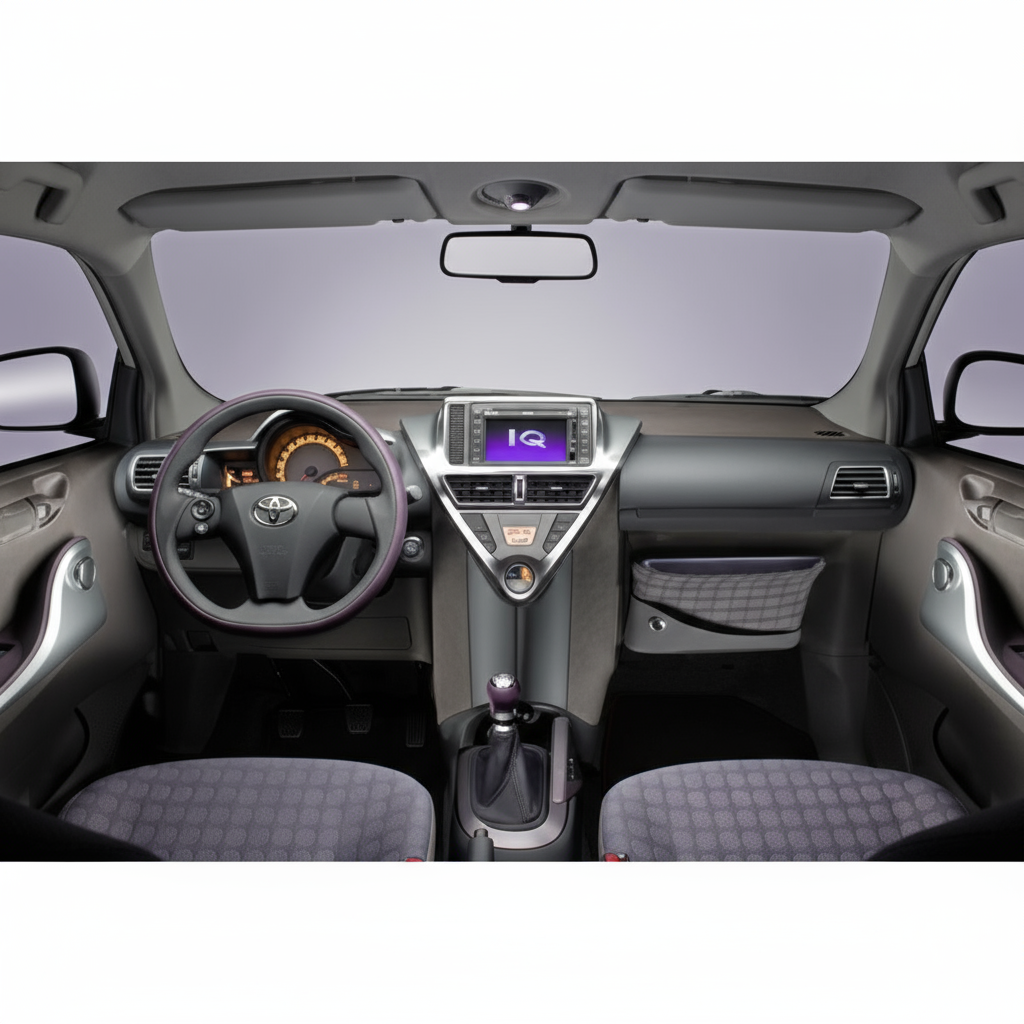
The design of the Toyota iQ is, without a doubt, its most striking calling card. Its ultra-compact proportions, with a length of 2,985 mm, a width of 1,680 mm, and a height of 1,500 mm, make it unmistakable. Despite its size, the designers managed to create a surprisingly spacious cabin for its four occupants, although the 26-liter trunk is merely symbolic. The lines are modern and functional, with an aesthetic that combines urban practicality with a touch of sophistication. The 175/60 R16 tires on 16-inch wheels give it a robust and balanced presence for its size.
Technology and features
Under its compact skin, the Toyota iQ incorporates technology designed for efficiency and comfort. The 1.33 VVT-i Dual gasoline engine, with indirect injection and a compression ratio of 11.5, stands out for its Stop&Start system, which contributes to a combined consumption of 4.8 l/100km and CO2 emissions of 113 g/km, earning it the DGT C label. The 6-speed manual transmission optimizes engine performance, while rack-and-pinion steering ensures exceptional maneuverability. Although it does not have the latest connectivity innovations of today, for its time, it offered a solid and reliable technological package, focused on efficiency and ease of use.
Competition
In the urban microcar segment, the Toyota iQ faced competitors such as the Smart Fortwo, although the iQ offered the advantage of its four seats. Other indirect rivals could be the Fiat 500 or the Renault Twingo, which, although slightly larger, shared the focus on urban mobility and style. However, the iQ stood out for its boldness in design and its proposal to maximize interior space in such a reduced size, offering a unique alternative in the market.
Conclusion
The 2009 Toyota iQ 1.33 VVT-i Dual is much more than a small car; it is a statement of intent. Its innovative design, surprising habitability for its size, and efficient engine make it an ideal option for those seeking intelligent urban mobility with personality. It is a vehicle that, despite its compact dimensions, does not sacrifice driving fun or safety, offering a rewarding driving experience and low consumption. A car that, without a doubt, left its mark on the automotive landscape.