
Especificaciones y análisis del Toyota Yaris
Power
65HP
Torque
90Nm
Consumption
5.4l/100
Emissions
-g/km
0-100 km/h
15.8s
Top Speed
155km/h
Weight
895kg
Price
12,805€
Technical summary
Gasolina
Automático 5v
FWD
5 / 5 doors
205 L
45 L
48 kW
Current
Technical specifications
Engine
Capacities
Detailed analysis of the Toyota Yaris 5p 1.0 T2 MMT · 65 CV (2003-2004)
General description
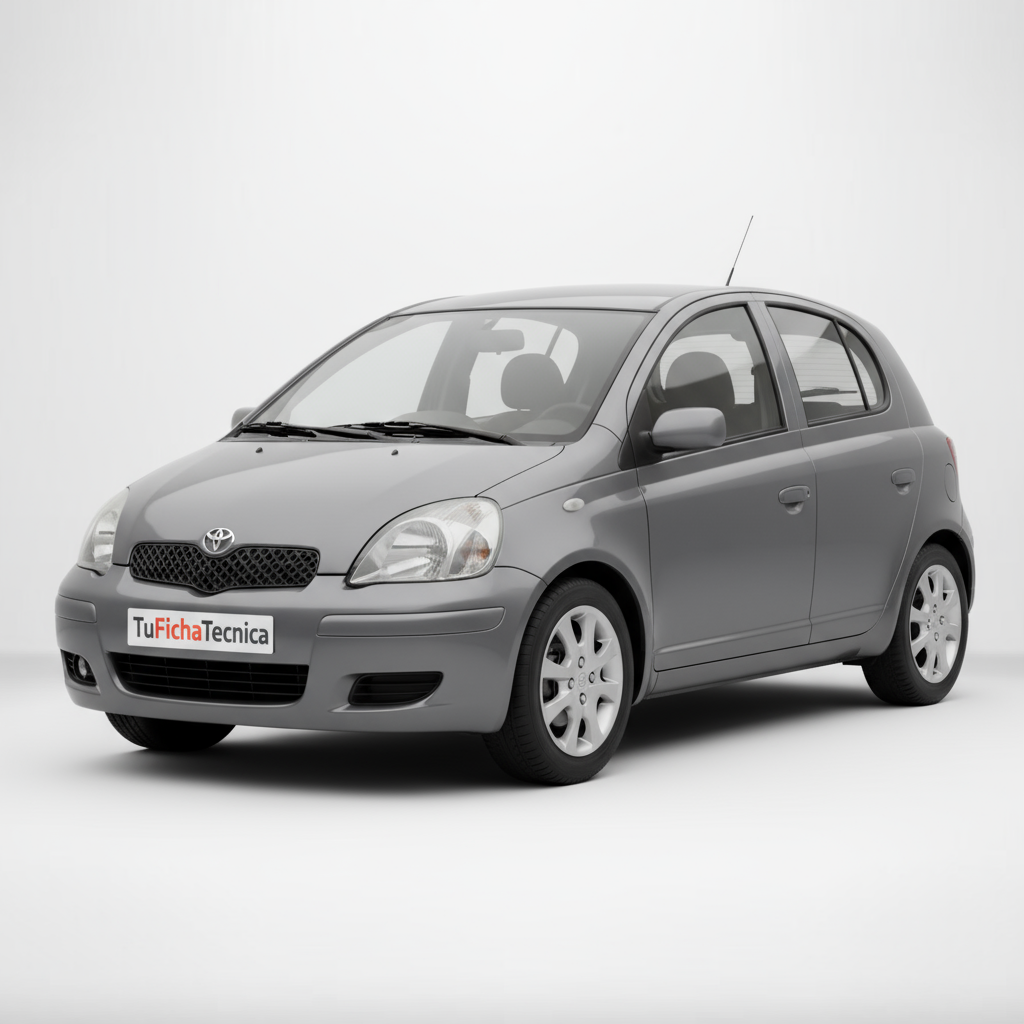
The 2003 Toyota Yaris 5p 1.0 T2 MMT is a vehicle that, at first glance, presents itself as a practical and functional option for urban life. With its five-door body, it promises versatility and ease of access, highly valued characteristics in the utility segment. Its 1.0-liter, 65 hp gasoline engine, combined with a 5-speed automatic transmission, suggests relaxed and efficient driving, ideal for daily city use. This model, priced at 12,805 euros at its launch, sought to offer an accessible and reliable mobility solution, backed by Toyota's reputation for durability and quality.
Driving experience
Behind the wheel of the 2003 Yaris, the predominant feeling is that of an agile and easy-to-handle car. Its 65 hp, though modest, are sufficient for effortless movement in urban environments, where its compact size and good turning radius (9.8 meters) facilitate maneuvers and parking. The MMT automatic transmission, while perhaps not the fastest or smoothest on the market, fulfills its function of freeing the driver from the clutch pedal, providing comfort in traffic. On the road, its performance is more limited, with an acceleration from 0 to 100 km/h in 15.8 seconds and a top speed of 155 km/h, clearly positioning it as a city car for short journeys. The suspension, McPherson type at the front and torsion beam with trailing arm at the rear, offers a balance between comfort and stability, absorbing road irregularities well without sacrificing too much control. The brakes, ventilated disc at the front and drum at the rear, are adequate for its weight and performance.
Design and aesthetics
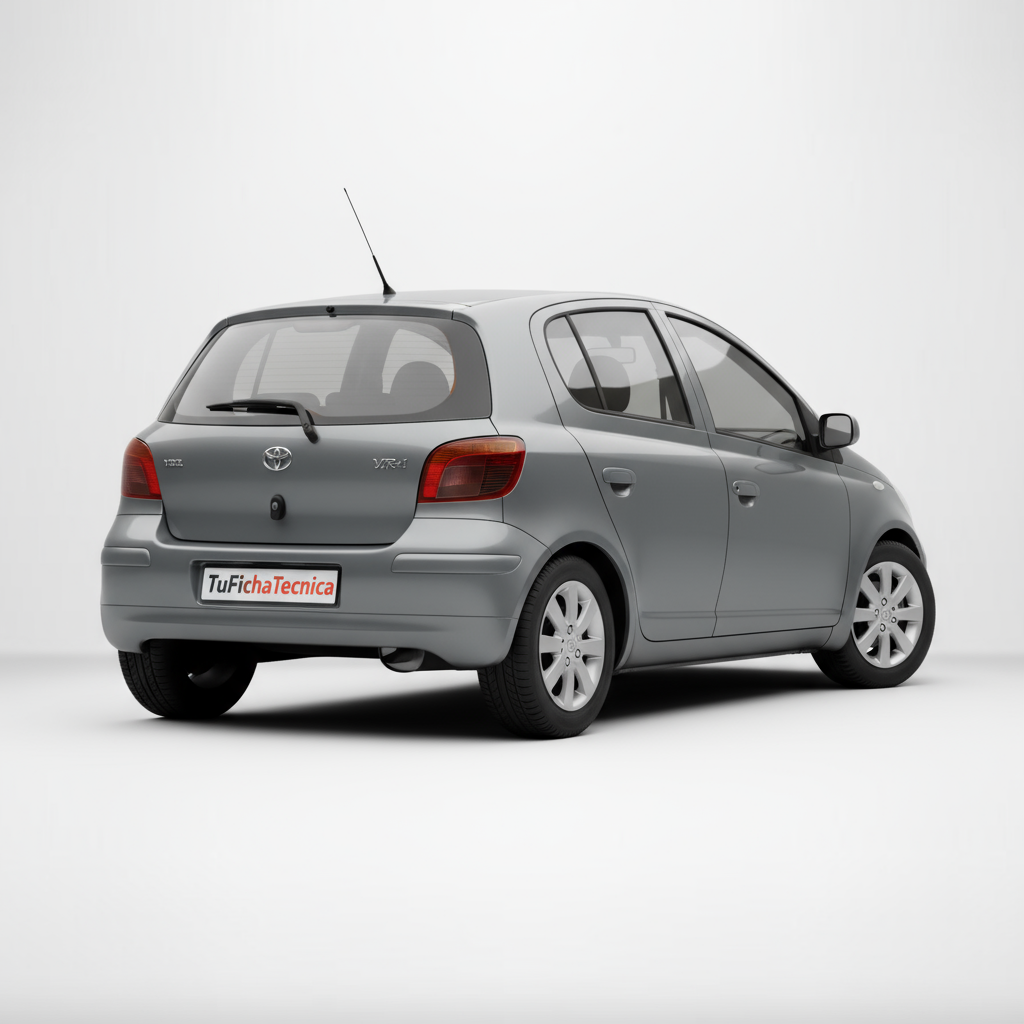
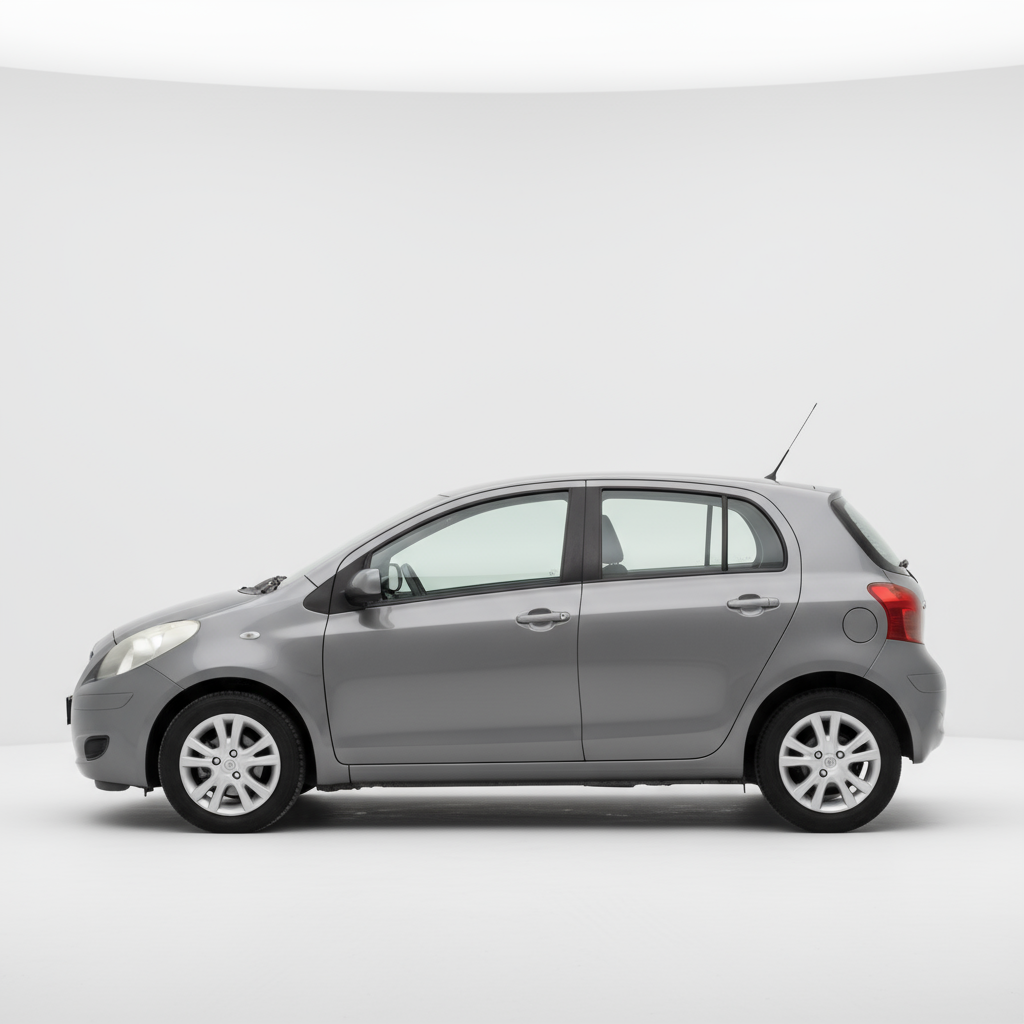
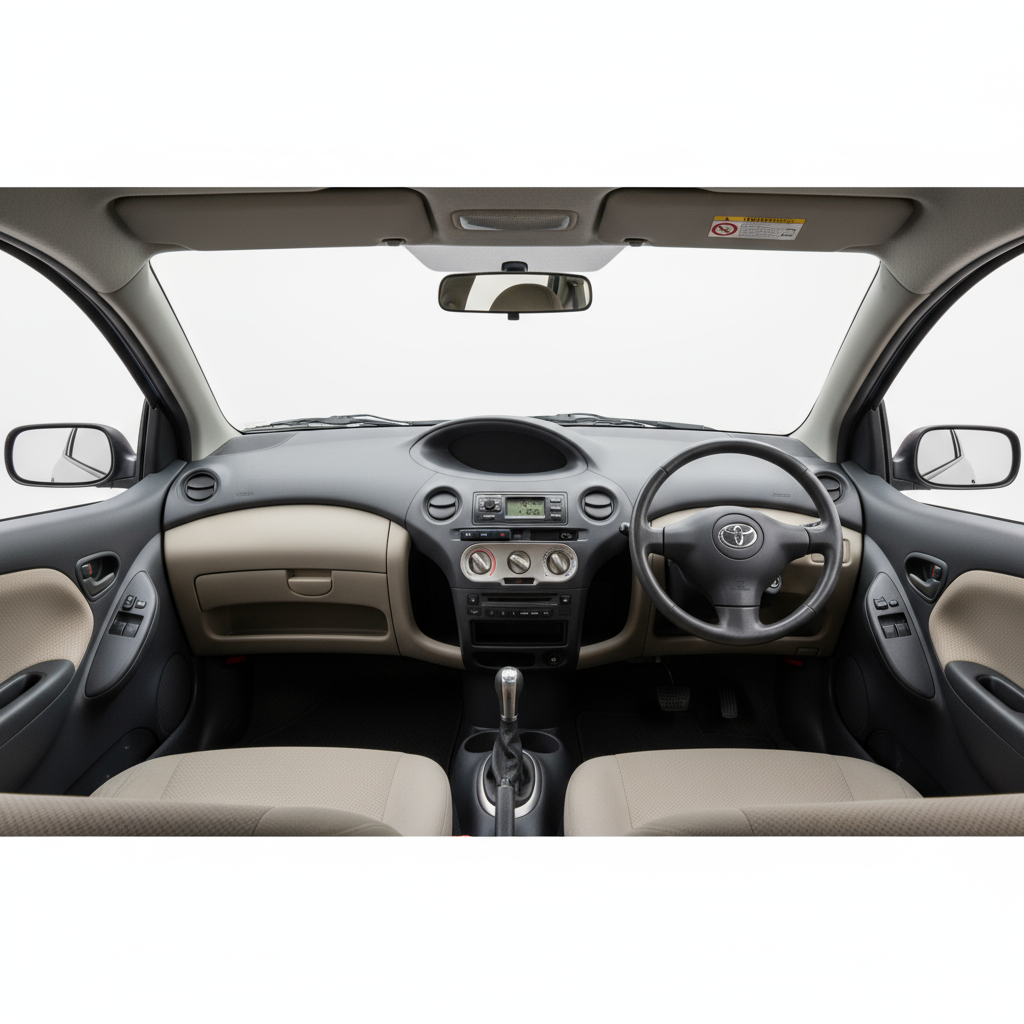
The design of the 2003 Toyota Yaris reflects the aesthetics of the early 2000s, with soft, rounded lines that give it a friendly and functional appearance. Its five-door body maximizes practicality, facilitating access to the rear seats and the trunk. Despite its compact dimensions (3640 mm long, 1660 mm wide, and 1500 mm high), the interior design is conceived to make the most of space, offering surprising habitability for its segment. The front features large, expressive headlights, while the rear maintains a simple line consistent with the rest of the ensemble. Inside, the arrangement of elements is clear and ergonomic, with a dashboard that prioritizes functionality. Although it does not aim to be a cutting-edge design car, its timeless aesthetic allows it to age gracefully.
Technology and features
In terms of technology, the 2003 Toyota Yaris features solutions typical of its era, focused on efficiency and reliability. Its 1.0-liter gasoline engine, with 4 cylinders and 16 valves, incorporates indirect injection and an aluminum block and cylinder head, aiming to optimize weight and performance. The MMT (MultiMode Transmission) is one of its most distinctive features, offering the convenience of an automatic with the efficiency of a manual. Regarding safety, it has ventilated disc brakes at the front and drum brakes at the rear, and stabilizers on both axles to improve dynamic behavior. Although it does not have the advanced driving aids of current vehicles, its basic equipment meets the expectations of a utility car of its generation. The combined consumption of 5.4 l/100km, according to the NEDC cycle, positions it as an economical car for daily use.
Competition
In the competitive utility segment of 2003, the Toyota Yaris faced tough competition. Among its main rivals were models such as the Volkswagen Polo, Ford Fiesta, Renault Clio, and Opel Corsa. Each of them offered their own virtues, whether in design, equipment, or driving dynamics. The Yaris stood out for its reputation for reliability, its surprisingly generous interior space for its size, and the efficiency of its 1.0-liter engine. While some rivals might offer more power or a bolder design, the Yaris opted for practicality, economy of use, and the peace of mind offered by the Toyota brand, making it a very attractive option for those seeking a robust and uncomplicated urban car.
Conclusion
The 2003 Toyota Yaris 5p 1.0 T2 MMT is a car that, despite the years, remains a testament to Toyota's philosophy: reliability, practicality, and efficiency. It is a vehicle that does not seek to dazzle with sporty performance or a groundbreaking design, but rather focuses on offering an honest and durable mobility solution. Its 65 hp engine and automatic transmission make it ideal for the city, where its agility and ease of handling are its greatest virtues. Although its road performance is limited, its low consumption and its reputation as an 'indestructible' car make it a very sensible option for those looking for economical and worry-free transportation. It is a car that more than fulfills its purpose, leaving a feeling of satisfaction for its good performance and its ability to withstand the test of time.