


Especificaciones y análisis del Volkswagen Phaeton
Power
241HP
Torque
315Nm
Consumption
12.1l/100
Emissions
-g/km
0-100 km/h
9.4s
Top Speed
242km/h
Weight
2056kg
Price
68,540€
Technical summary
Gasolina
Automático 5v
FWD
5 / 4 doors
500 L
90 L
177 kW
Current
Technical specifications
Engine
Capacities
Detailed analysis of the Volkswagen Phaeton 3.2 241 CV 5 plazas Tiptronic 5 vel. (2002-2004)
General description
The 2003 Volkswagen Phaeton, in its 3.2 241 hp version, represents Volkswagen's bold foray into the luxury sedan segment. Priced at €68,540, this vehicle not only sought to compete with the big names in luxury but also offered a unique value proposition, combining the brand's discretion with opulence and first-class engineering. Its 3,189 cc, 241 hp gasoline engine, coupled with a 5-speed Tiptronic automatic transmission, promised smooth and refined performance, ideal for long journeys and pleasant driving.
Driving experience
Behind the wheel of the Phaeton, the predominant feeling is one of unwavering calm and solidity. The suspension, with a deformable parallelogram both front and rear, filters out asphalt imperfections with a mastery that few vehicles of its time could match, offering exceptional ride comfort. The V6 engine, although not the most powerful in the range, delivers its 241 hp linearly and progressively, with a torque of 315 Nm available from 2400 rpm, which translates into a forceful but never abrupt response. Acceleration from 0 to 100 km/h in 9.4 seconds and a top speed of 242 km/h are respectable figures for a car of its size and weight (2056 kg). The rack-and-pinion steering with speed-sensitive assistance contributes to a precise and relaxed driving experience, while the ventilated disc brakes on both axles ensure safe and effective stopping. The combined consumption of 12.1 l/100km is a reminder of its nature as a large gasoline sedan.
Design and aesthetics
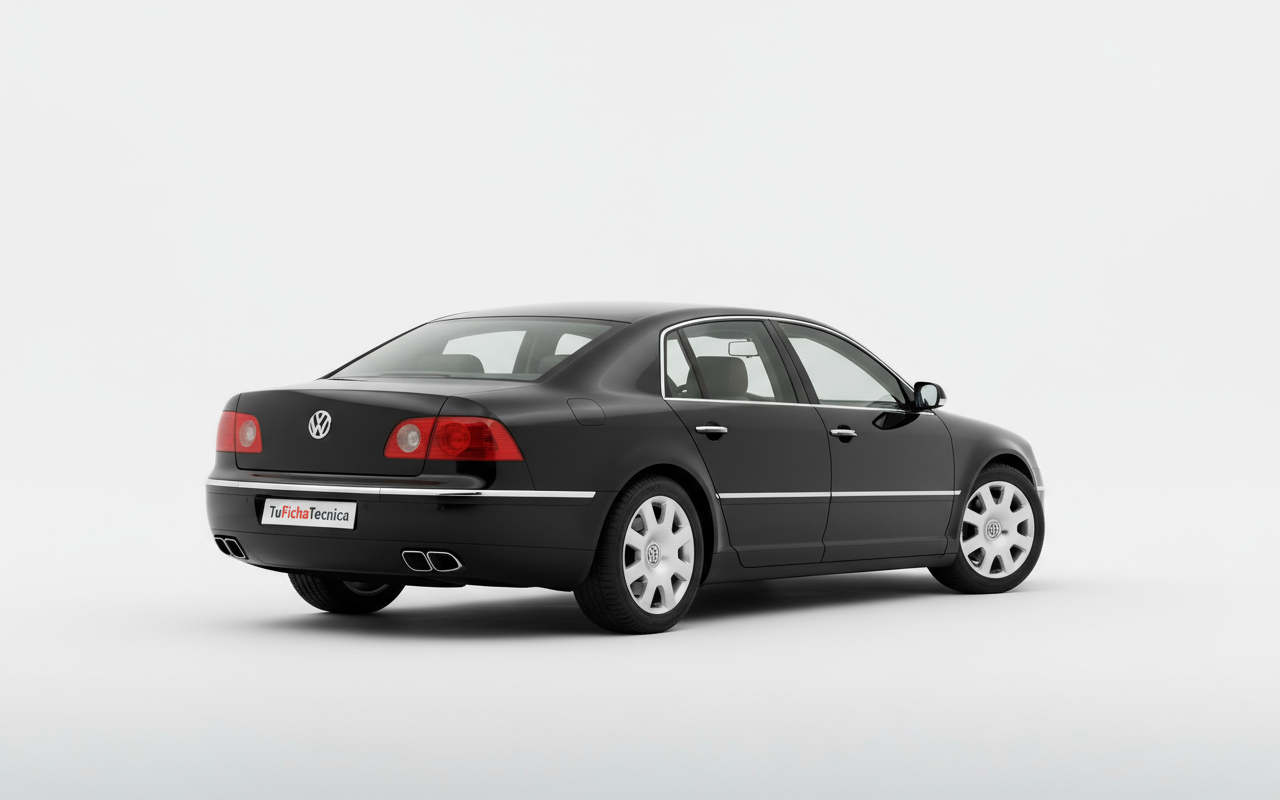
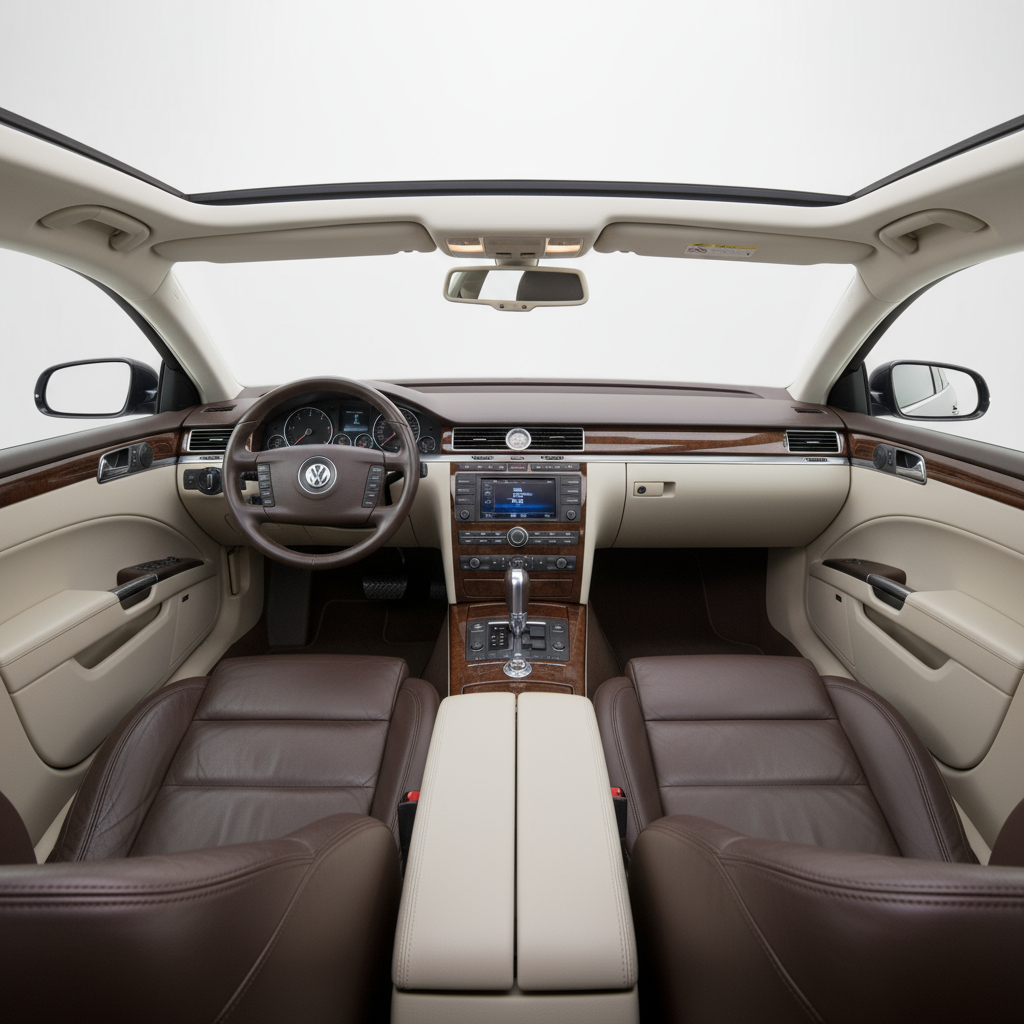
The design of the Volkswagen Phaeton is an exercise in discreet and timeless elegance. Its lines are clean and sober, without fanfare, which gives it an imposing but not ostentatious presence. With a length of 5055 mm, a width of 1903 mm, and a height of 1450 mm, its proportions are those of a classic executive sedan. The interior, with capacity for five seats, is a sanctuary of luxury and comfort, where every detail is designed for the well-being of the occupants. High-quality materials, meticulous finishes, and the spaciousness of the cabin create a sophisticated and welcoming atmosphere. The 500-liter trunk offers generous capacity for luggage, making the Phaeton an ideal companion for long journeys.
Technology and features
The 2003 Phaeton was at the technological forefront of its time. Its 3,189 cc V6 engine, with indirect injection and 4 valves per cylinder, combined efficiency and performance. The 5-speed Tiptronic automatic transmission, with torque converter, ensured smooth and precise gear changes. Although it did not have systems like Stop&Start, its engineering focused on durability and comfort. The independent suspension on both axles, with a deformable parallelogram, and speed-sensitive power steering, were key elements for its exceptional driving dynamics. Large-diameter ventilated disc brakes (323 mm front and 280 mm rear) guaranteed superior braking capability. Inside, although specific infotainment systems are not detailed, a complete set of comfort and safety features was expected, in line with its positioning in the luxury segment.
Competition
At its launch, the Volkswagen Phaeton faced rivals such as the Mercedes-Benz S-Class, the BMW 7 Series, and the Audi A8. These models, already consolidated in the luxury sedan segment, offered brand prestige that the Phaeton, despite its quality, still had to build. However, the Phaeton distinguished itself by offering a comparable level of luxury and refinement, often with a more competitive price and a discretion that some buyers valued. Its focus on robust engineering and absolute comfort made it a serious alternative for those seeking a luxury experience without the ostentation of its direct competitors.
Conclusion
The 2003 Volkswagen Phaeton 3.2 is a luxury sedan that, despite its discreet emblem, offered an exceptional driving experience and level of comfort. Its timeless design, robust engineering, and sumptuous interior made it a formidable vehicle. Although its fuel consumption was high and its acceleration was not the most dazzling, its smooth ride, silence, and ability to devour kilometers with total composure made it ideal for long journeys. It was a misunderstood car at the time, but today it is valued for its build quality and its proposal of discreet luxury. It is a testament to Volkswagen's ambition to compete in the major leagues, leaving a mark of sophistication and comfort.